
 English
 Chinese
 Dutch
 Arabic
 Spanish
 Portuguese
 Russian
 French
 Italian
 German
 Japanese
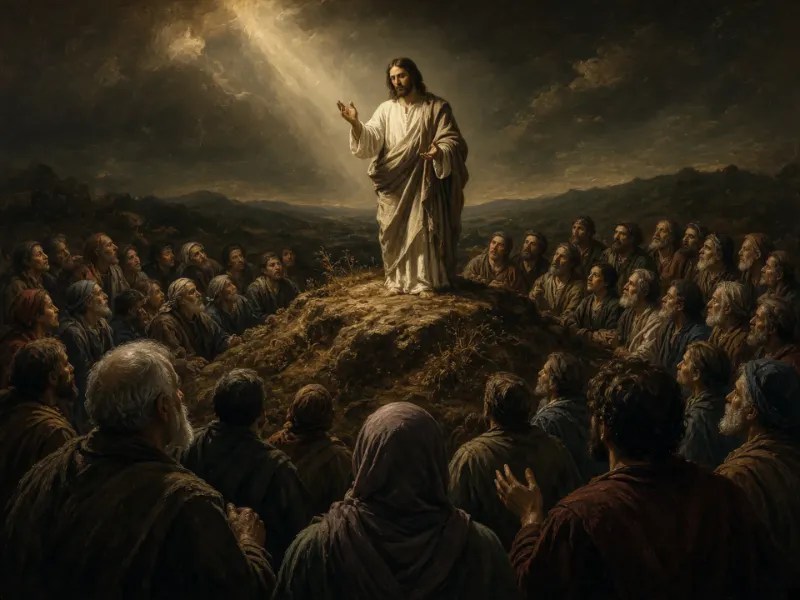
The Ten Commandments in order
The Ten Commandments are the ten words God spoke to Israel at Mount Sinai, after he had brought them out of slavery in Egypt, and Scripture gives them to us in Exodus 20:1–17 and again in Deuteronomy 5:6–21. In the order most English Bibles print them, they are:
- You shall have no other gods before me.
- You shall not make idols.
- You shall not take the name of the Lord your God in vain.
- Remember the Sabbath day, to keep it holy.
- Honor your father and your mother.
- You shall not murder.
- You shall not commit adultery.
- You shall not steal.
- You shall not bear false witness against your neighbor.
- You shall not covet.
God gave these words without numbers, so Jewish, Catholic, Lutheran, and Protestant lists cut the same speech at different places.
| Jewish |
|---|
| (1) I am the Lord, who brought you out of Egypt. (2) No other gods and no idols. (3) The Lord’s name. (4) Sabbath. (5) Honor parents. (6) Murder. (7) Adultery. (8) Stealing. (9) False witness. (10) Coveting. |
| Catholic and Lutheran |
| (1) No other gods, including idols. (2) The Lord’s name. (3) The Lord’s Day. (4) Honor parents. (5) Murder. (6) Adultery. (7) Stealing. (8) False witness. (9) and (10) Coveting, split in two. |
| Protestant and Orthodox |
| (1) No other gods. (2) No idols. (3) The Lord’s name. (4) Sabbath. (5) Honor parents. (6) Murder. (7) Adultery. (8) Stealing. (9) False witness. (10) Coveting, undivided. |
Catholic lists split coveting the way Deuteronomy orders it, with your neighbor’s wife (9) and then his goods (10). Lutheran lists follow Exodus instead, with his house (9) and then his wife and everything else (10). Nobody has removed a commandment or added one. Every tradition keeps all of the words, and they disagree only about where one ends and the next begins.

Where the Ten Commandments are in the Bible
We first hear the commandments in Exodus 20:1–17, where God speaks them from the mountain to the whole people. We hear them again in Deuteronomy 5:6–21, when Moses repeats them forty years later to the next generation, on the edge of the land they are about to enter. When we go through them one by one below, each commandment is quoted from Exodus.
Scripture tells us that God wrote these words himself, for Moses received “the two tablets of the testimony, tablets of stone, written with the finger of God” (Exodus 31:18, ESV; see also Deuteronomy 9:10). When Moses came down and found Israel worshiping a golden calf, he broke those first tablets, and God told him to cut two more and wrote the same words on them again (Exodus 34:1).
Between the two passages there are only two differences. Exodus grounds the Sabbath in creation, because God made the world in six days and rested on the seventh, while Deuteronomy grounds it in the exodus: “You shall remember that you were a slave in the land of Egypt” (Deuteronomy 5:15, ESV). And the coveting command changes its order, for Exodus names your neighbor’s house first and his wife second, and Deuteronomy names the wife first.

What the Ten Commandments are for
In Hebrew, Scripture calls them “the ten words,” aseret ha-devarim (Exodus 34:28; Deuteronomy 4:13; 10:4), and Decalogue, the name that comes to us from Greek, means the same thing.
Before a single “you shall not,” God tells Israel who he is and what he has done: “I am the Lord your God, who brought you out of the land of Egypt, out of the house of slavery” (Exodus 20:2, ESV). So the rescue comes before the commands. Israel did not keep these words in order to be freed; they were given to people who had already been freed.
Read with Egypt in mind, the list looks different. In Egypt, Israel had lived under Pharaoh, with gods who demanded to be fed, brick quotas with no day off, bodies treated as property, and a king who took what he wanted. The ten words describe the opposite life: one God who cannot be bought, a day when no one is driven, parents honored, spouses kept, and neighbors safe from our hands and our tongues and even our wanting. These are the words that keep a freed people from rebuilding Egypt among themselves.
Traditions disagree about whether that opening sentence counts as a commandment of its own, but everyone agrees it is the reason for the rest.
Jesus and the Ten Commandments
When a lawyer asked Jesus which commandment in the Law is the greatest, he answered with two: “You shall love the Lord your God with all your heart and with all your soul and with all your mind. This is the great and first commandment. And a second is like it: You shall love your neighbor as yourself. On these two commandments depend all the Law and the Prophets” (Matthew 22:37–40, ESV).
The ten words already fall along those two lines, with the first commands concerning God and the later ones our neighbor, and in his answer Jesus showed what holds the list together.
He was also plain that he had not come to cancel it: “Do not think that I have come to abolish the Law or the Prophets; I have not come to abolish them but to fulfill them” (Matthew 5:17, ESV). In the Sermon on the Mount he takes two of the commandments and presses them inward, from what the hand does to what the heart wants. Paul, writing to Christians in Rome, lists four of the commandments and says they “are summed up in this word: ‘You shall love your neighbor as yourself’” (Romans 13:9, ESV).

Each commandment
1. You shall have no other gods before me
The first word asks for undivided loyalty.
“You shall have no other gods before me.” (Exodus 20:3, ESV)
Israel had just left a land full of gods, each with a temple and a price. Few of us bow to a statue of the Nile, but we do build our days around something, whether a career, an approval we keep checking, or a fear that sets every plan. The first commandment protects us from serving a master who will never say we have done enough.
2. You shall not make idols
In the second word God forbids us to shape him into something we can hold and manage.
“You shall not make for yourself a carved image, or any likeness of anything that is in heaven above, or that is in the earth beneath, or that is in the water under the earth. You shall not bow down to them or serve them.” (Exodus 20:4–5, ESV)
An idol is a god small enough to carry about and consult when it suits us. We still make them, with ideas as much as with carvings: a God who agrees with our politics, blesses our plans, and never interrupts. The second word keeps us from worshiping our own reflection.
3. You shall not take the name of the Lord your God in vain
The third word guards the name of God.
“You shall not take the name of the Lord your God in vain, for the Lord will not hold him guiltless who takes his name in vain.” (Exodus 20:7, ESV)
The Hebrew verb for “take” means to lift up or carry. Careless swearing breaks this commandment, and the word goes further still, for Israel was sent into the world carrying God’s name, the way a family carries its surname into town. We take that name in vain when we invoke God to win an argument, attach him to a scheme he never blessed, or call ourselves his people while treating others with contempt. That is where the third word stings, because people learn what God is like from those who bear his name.
4. Remember the Sabbath day, to keep it holy
With the fourth word God gives his people a day of rest.
“Remember the Sabbath day, to keep it holy. Six days you shall labor, and do all your work, but the seventh day is a Sabbath to the Lord your God. On it you shall not do any work, you, or your son, or your daughter, your male servant, or your female servant, or your livestock, or the sojourner who is within your gates.” (Exodus 20:8–10, ESV)
Slaves in Egypt never had a day off, and the Sabbath is the command that says a freed people will not live that way. It reaches all the way down the household, to the servant, the foreigner, and the ox. Yet it is the rest many of us will not take: we answer emails on the day meant for worship and family, and call it responsibility. Jesus defended the gift behind the rule when he said, “The Sabbath was made for man, not man for the Sabbath” (Mark 2:27, ESV).
5. Honor your father and your mother
With the fifth word the commandments turn from God to the home.
“Honor your father and your mother, that your days may be long in the land that the Lord your God is giving you.” (Exodus 20:12, ESV)
Honor asks more of us than obedience does, and it belongs to grown children as much as to small ones: the phone call to an aging parent, the patience at a hospital bed, the decision not to mock a father in front of our own kids. It does not require us to pretend a parent did no harm, but it does refuse to throw people away when they stop being useful. Paul noted that this is “the first commandment with a promise” (Ephesians 6:2, ESV), and a people that honors its elders has a future in the land.
6. You shall not murder
The sixth word protects human life.
“You shall not murder.” (Exodus 20:13, ESV)
Older English Bibles read “Thou shalt not kill,” but most modern translations say “murder,” because the Hebrew verb names the wrongful taking of a human life. Every person is made in the image of God, and this command draws a line around that image. Jesus traced the line back to where violence starts: “everyone who is angry with his brother will be liable to judgment” (Matthew 5:22, ESV). Most of us will never raise a hand against anyone, but we do nurse contempt, rehearse insults, and wish someone gone, and the sixth word reaches that far.
7. You shall not commit adultery
The seventh word stands guard over marriage.
“You shall not commit adultery.” (Exodus 20:14, ESV)
A marriage is a promise made in public so that two people can be safe in private. Adultery breaks that safety, and children and whole families live in the wreckage. Jesus again moved the command inward: “everyone who looks at a woman with lustful intent has already committed adultery with her in his heart” (Matthew 5:28, ESV). In an age of screens that is a hard word, and a merciful one too, because faithfulness is lost first in small allowances, long before it is lost in a hotel room.
8. You shall not steal
The eighth word protects what belongs to our neighbor.
“You shall not steal.” (Exodus 20:15, ESV)
Pharaoh took Israel’s labor for nothing, and this command says a freed people will not treat one another that way. It covers the obvious theft and the quieter kinds as well: wages held back, hours padded, a debt we let the other person forget, work passed off as ours. Paul gave the command a positive shape when he said the thief should “labor, doing honest work with his own hands, so that he may have something to share with anyone in need” (Ephesians 4:28, ESV). Honest work turns a taker into a giver.
9. You shall not bear false witness against your neighbor
The ninth word protects the truth about other people.
“You shall not bear false witness against your neighbor.” (Exodus 20:16, ESV)
When Israel first heard this command, it had the courtroom in mind, where one lie could cost a neighbor his land or his life. Today reputations are tried in group chats and in the conversation after someone leaves the room. We bear false witness when we pass along a story we have not checked, shade the facts to look better, or stay silent while someone is falsely accused. A community cannot live together if it cannot trust what its members say about one another.
10. You shall not covet
The last word reaches past what we do into what we want.
“You shall not covet your neighbor’s house; you shall not covet your neighbor’s wife, or his male servant, or his female servant, or his ox, or his donkey, or anything that is your neighbor’s.” (Exodus 20:17, ESV)
No judge can convict anyone of coveting, because it happens entirely inside, and that is why this commandment exposes all of us. Paul said the tenth word was the one that showed him his own heart: “I would not have known what it is to covet if the law had not said, ‘You shall not covet’” (Romans 7:7, ESV). The other commandments grow from this root, since wanting a neighbor’s spouse comes before adultery, and wanting his things comes before theft. The freed slave who spends every day measuring his house against his neighbor’s has found a new Pharaoh.
Frequently asked questions
What are the Ten Commandments in simple terms?
Put simply, they say: worship only God, and do not make idols. Respect God’s name, and keep a day of rest holy. Honor your parents. Do not murder, be faithful in marriage, and do not steal. Do not lie about others, and do not crave what belongs to someone else.
Who wrote the Ten Commandments?
According to Exodus, God spoke the commandments and wrote them on two stone tablets “with the finger of God” (Exodus 31:18), and Moses received the tablets on Mount Sinai and carried them down to the people. Jewish and Christian tradition has long associated Moses with writing down the books that record these events.
Are the Ten Commandments in the New Testament?
They are, though the New Testament never lists all ten in a row. Jesus quotes several of them to the rich young man in Matthew 19:18–19, and he takes up the commands against murder and adultery in Matthew 5. Paul quotes them in Romans 13:9 and Ephesians 6:2, and James in James 2:11, and the New Testament treats them as God’s word still in force.
Why do Catholic and Protestant lists differ?
The Bible gives ten words without numbers, so the traditions divided the same text in different places. Catholics and Lutherans treat “no other gods” and “no idols” as one commandment and split coveting into two, while most Protestant and Orthodox churches count “no idols” separately and keep coveting as one. The words themselves are the same in every list.
Are the Ten Commandments still for Christians?
They are. Jesus said he came to fulfill the Law, not abolish it, and the apostles went on teaching these commands to the churches. Christians do not keep them to earn salvation, any more than Israel kept them to earn the exodus; they are the shape of life for people God has already rescued. Most Christians have kept the fourth commandment by gathering for worship on Sunday, the Lord’s Day, the day of the resurrection, while some churches keep the seventh-day Sabbath.
The ten words were given to people who had just walked out of slavery, and they are still given to us for the same reason, so that a freed people will not go back to living like slaves.


Leave a Reply