
 English
 Chinese
 Dutch
 Arabic
 Spanish
 Portuguese
 Russian
 French
 Italian
 German
 Japanese
No one named Christina appears in the Bible, but the word the name is made from does. Christina is a feminine form of the Latin Christianus, “a Christian,” and the word Christian occurs three times in the New Testament (Acts 11:26; 26:28; 1 Peter 4:16). Behind it stands the title Christ, “the anointed one.”
What does Christina mean?
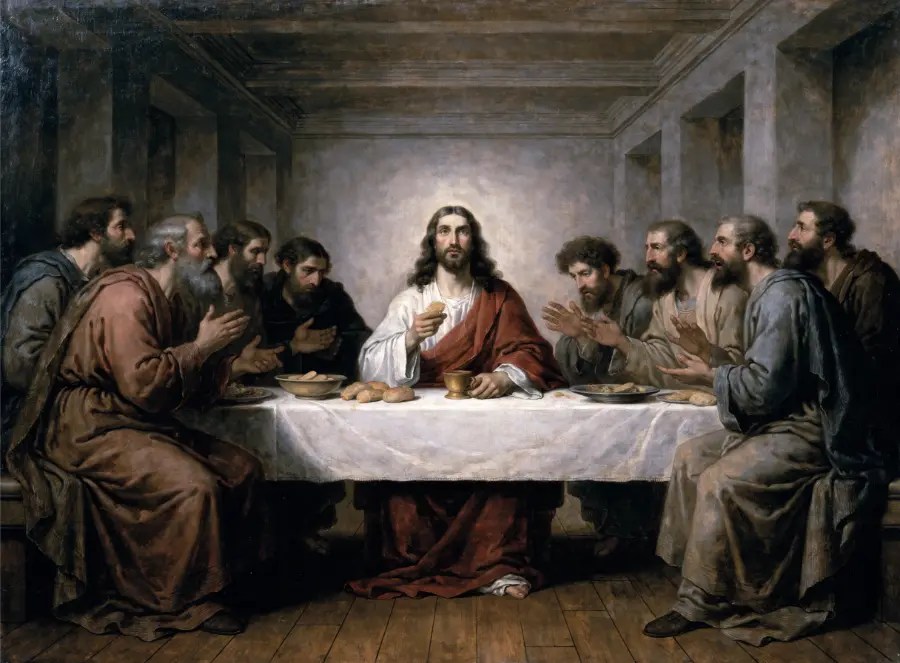
Christina developed from Christiana, the feminine of the Latin name Christianus, “a Christian.” The Latin word comes from the Greek christianos: Christos with the ending -ianos, borrowed from Latin, which marks someone as a follower of a person. The name therefore means “a Christian,” a follower of Christ.
Christ is a title rather than a name. The Greek Christos means “anointed,” and it translates the Hebrew mashiach, Messiah. John’s Gospel makes the link plain. When Andrew tells his brother Simon, “We have found the Messiah,” John explains for his readers that the word means Christ (John 1:41).
A blessing card for Christina
Christina
means a Christian, a follower of Christ
Latin, from Christianus
Not in the Bible
and when he found him, he brought him back to Antioch. So for a full year they met together with the church and taught large numbers of people. The disciples were first called Christians at Antioch.
Acts 11:26 Berean Standard Bible
Christina, may the LORD bless you and keep you. Numbers 6:24
The card is on its way
Look for an email from Christian Pure in the next few minutes.
Where is the word Christian in the Bible?
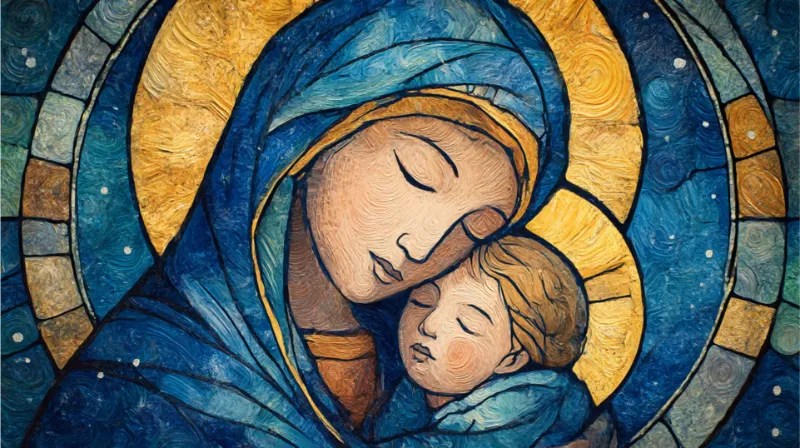
Luke records where the word began. Barnabas brought Saul, later known as Paul, to Antioch in Syria, where for a whole year they met with the church and taught a great many people. Luke adds: “And in Antioch the disciples were first called Christians” (Acts 11:26). He does not say who gave them the name, and some scholars think it began as a nickname used by outsiders.
The word appears twice more. When Paul makes his defence before King Agrippa, the king says to him, “In a short time would you persuade me to be a Christian?” (Acts 26:28). The First Letter of Peter, written to believers facing hostility for their faith, tells them: “Yet if anyone suffers as a Christian, let him not be ashamed, but let him glorify God in that name” (1 Peter 4:16).
By the early second century believers were using the name of themselves. Ignatius, bishop of Antioch, writing to the church in Rome while he was being taken there to be put to death, asked its members to pray “that I may not merely be called a Christian, but really be found to be one.”

Is Christina a Christian name?
Yes. It is Christian in origin and in meaning, since it was formed from the title of Christ, and it has been borne by Christian saints since the early centuries of the Church. It is not a Hebrew name and has no Hebrew form. Its only link with Hebrew is through Christ, the Greek rendering of Messiah.

Christine, Cristina and Kristina
The name has a form in most European languages. Christine is the French form, and in the English-speaking world it was more common than Christina for most of the twentieth century; in the United States Christina has been the more common of the two since 1973. Cristina is the Italian, Spanish, Portuguese and Romanian form, and Kristina is used in Scandinavia and in Russia and much of eastern Europe. None of these forms appears in the Bible.
Among American girls, Christina has been on the list of the 1,000 most popular names in every year since 1880. It peaked at 12th in 1975 and again in 1985, and in 2025 it ranked 770th. Queen Christina of Sweden (1626–1689) gave up her throne in 1654, became a Catholic and settled in Rome, and she is one of only three women buried in the grottoes beneath St Peter’s Basilica.
Saints named Christina
The earliest is Christina of Bolsena, a virgin martyr of the third century. Her legend, written down centuries later, says that her pagan father, a governor, wanted her to serve his gods; she broke his gold and silver idols, gave the pieces to the poor, and survived torture before she was put to death. Little of this can be checked, but excavations at Bolsena in central Italy found the tomb of a female martyr whose name, according to inscriptions there, was something like Christina, and show that she was venerated locally by the end of the fourth century. The Orthodox Church honours her as the Great Martyr Christina of Tyre. Her feast is 24 July, though since 1969 she has not been in the Catholic Church’s general calendar, because almost nothing is known of her beyond her name and burial.
Christina the Astonishing, also called Christina Mirabilis, is a different woman. She lived from about 1150 to about 1224 near Sint-Truiden in present-day Belgium. According to the life written by Thomas of Cantimpré eight years after her death, she was thought to have died after a seizure, rose during her own funeral, and spent the rest of her life in severe penance for the souls in purgatory.
Christina of Stommeln (1242–1312), a mystic from a village near Cologne, lived for a time among the Beguines and was beatified in 1908. Christina of Spoleto (1435–1458) was born Agostina Camozzi. Twice widowed, she turned from a dissolute life around 1450, entered the Augustinian order, took the religious name Cristina, and spent her remaining years in penance and pilgrimage. She died at Spoleto on her way home from Jerusalem, and her cult was confirmed in 1834.


Leave a Reply