
 English
 Chinese
 Dutch
 Arabic
 Spanish
 Portuguese
 Russian
 French
 Italian
 German
 Japanese
The tilma is Juan Diego’s cloak, the cloth that carries the image of Our Lady of Guadalupe. You will find it in Mexico City, above the altar of her basilica, and more than 12 million pilgrims make their way there every December. By the old account Juan Diego was a poor Indian of Cuautitlan who, in December 1531, carried roses to his bishop in that cloak, and when he let them fall, her image was on the cloth. Catholics honour it as his cloak and her image, sceptics say it was painted, and the painters and scientists who have looked at it since 1666 have come to different answers.
Juan Diego did not think himself fit for the errand, and when the bishop would not believe him, he went back to the Lady and asked her to send someone people would listen to, “because I am a nobody, I am a small rope, a tiny ladder, the tail end, a leaf.” She sent him back all the same, and the sign the bishop wanted came on the rough cloak of the man who had called himself a leaf. When John Paul II made him a saint in 2002, he began his homily with Jesus thanking the Father for having hidden “these things from the wise and understanding and revealed them to babes” (Matthew 11:25).
What happened at Tepeyac in December 1531?
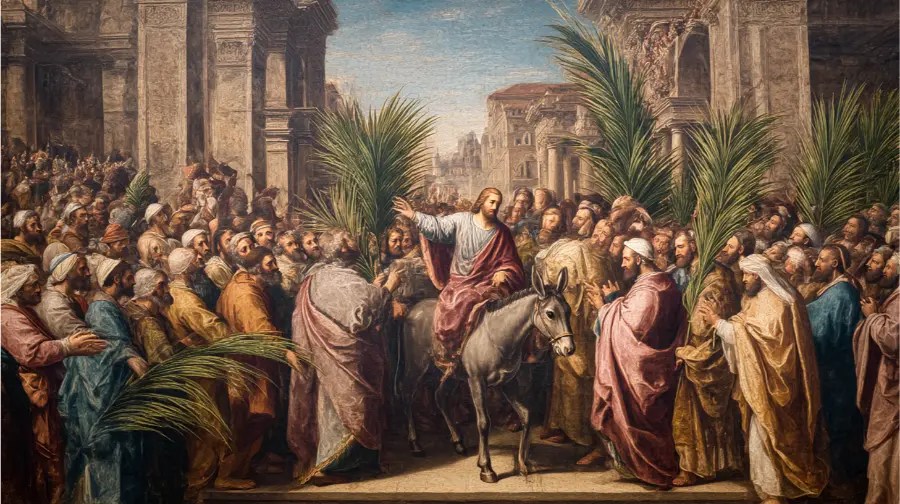
The story is told in Nahuatl in the Nican Mopohua, which sets it ten years after the city of Mexico fell, “in the year fifteen hundred and thirty one, in the early days of the month of December.” On a Saturday before dawn Juan Diego was at the foot of the hill of Tepeyac when he heard singing at the top, like birds, and then a voice calling him, “Juanito, Juan Dieguito.” He climbed toward it, and on the hilltop stood a Lady whose garments “were shining like the sun,” and she told him plainly who she was: “I am the ever virgin Holy Mary, Mother of the True God for whom we live.” She asked for a church on that spot, “that a temple be erected here quickly,” and she sent him to say so to the bishop, a Franciscan named Juan de Zumárraga.
Juan Diego went back up the hill after the bishop turned him away, and it was then that he begged her to choose a messenger of some importance and called himself a small rope and a leaf. She sent him to the bishop a second time, and now Zumárraga asked him for a sign. Before he could bring one, his uncle, Juan Bernardino, fell gravely ill, and on the Tuesday morning, before it was light, Juan Diego took the long way round the hill, “so he could not be seen by her who sees well everywhere.” She came down and met him on that road. “What’s there, my son the least? Where are you going?” she asked him, and once he had told her about his uncle she said, “Let not your heart be disturbed. Do not fear that sickness, nor any other sickness or anguish. Am I not here, who is your Mother? Are you not under my protection?” Those words carry an echo of Jesus speaking to his disciples, “Let not your heart be troubled: ye believe in God, believe also in me” (John 14:1).
She told him that his uncle “is now cured,” and she sent him up to the hilltop. This was “the month of December, in which all vegetation is destroyed by freezing,” yet he found roses of Castile blooming there, and he gathered them into his tilma and took them down to the bishop. Standing in front of Zumárraga, “he unfolded his white cloth, where he had the flowers; and when they scattered on the floor, all the different varieties of rosas de Castilla, suddenly there appeared the drawing of the precious Image of the ever-virgin Holy Mary, Mother of God.” The bishop and the people with him fell to their knees. He kept the cloth in his own chapel at first, and the account ends with the people who came to see it marvelling “because no living person of this world had painted her precious Image.” By tradition the first meeting fell on Saturday 9 December 1531 and the roses on Tuesday 12 December.
All of this reaches us through books printed more than a hundred years after those December days. Miguel Sánchez wrote the story down in Spanish in 1648, and in 1649 Luis Lasso de la Vega printed the Nican Mopohua in Mexico. Tradition gives it to Antonio Valeriano, an Indian scholar who studied at the Holy Cross college at Tlatelolco, and when it was written, and how far it is history, nobody has yet settled.
What is the tilma made of?
The Catholic Encyclopedia of 1910 explains that a tilma is “a long cloak or wrapper used by Mexican Indians,” and it finds Juan Diego’s “as thin and open as poor sacking,” sewn from two strips “about seventy inches long by eighteen wide, held together by weak stitching.” “The seam is visible up the middle of the figure, turning aside from the face,” it adds.
The encyclopedia thought the cloth was “made of vegetable fibre, probably maguey,” but the people who have handled it have never agreed on that. Miguel Cabrera, a painter who examined it in the 1750s, held that it was woven from palm thread and said so against those who called it maguey, and to his touch it was as soft as fine silk, unlike any other cloak of the kind. When some of its fibres were analysed in 1946 they turned out to be agave, though the species could not be told, and in 1975 Ernesto Sodi Pallares named one, Agave popotule.
What has happened to the tilma since 1531?
For some 116 years the cloth hung with nothing to protect it, while tens of thousands of candles burned near it, and by 1647 it was behind glass. In 1766, to fit it into a new frame, 51 centimetres were cut off the cloth.
On an afternoon in about 1784 some silversmiths were working on that frame and spilled aguafuerte, nitric acid mixed with water, on the image. It landed on the crown that was painted on her head in those days and ran down one side, beside the face without reaching it. José Manuel de la Riva came in a few minutes later and was told it had been wiped off with cotton, and when he was allowed to kiss the cloth he could see the “leve daño,” the slight damage, it had taken. On later visits he still saw a stain on the left side of the image, but the paint was not spoiled and the acid had not eaten the cloth. Nobody wrote his account down until 1820.
The physicist Adolfo Orozco and Arturo Rocha Cortés, who has published that account, look at the same stain and see different things. Orozco, who puts the spill in 1785 and calls it a 50 percent solution, counts it among the “miracles associated with the Tilma,” and says that “the acid has not destroyed the fabric of the cloth, indeed it has not even destroyed the colored parts of the image.” Rocha reads the chemistry. Nitric acid dissolves iron, he points out, but it does not necessarily attack other materials, and it can stain anything made from plants or animals yellow, the same reaction that stains a Mexican voter’s finger. As far as he can tell, that yellowing is the mark de la Riva saw.
More than a century after the acid, a man hid dynamite inside a flower arrangement and set it down before the altar of the old basilica. The explosion came at about 10.30 on the morning of 14 November 1921, and it damaged the steps of the altar and its brass candlesticks and hurled down an iron and bronze crucifix of 34 kilos, bending it out of shape. Nothing happened to the image, and the basilica’s own record says that the glass in front of it did not break either. That twisted crucifix is kept today in a case in the new basilica and goes by the name of the Santo Cristo del Atentado, the Holy Christ of the Attack. A hundred years after the blast, one of the basilica’s canons told the newspaper Excélsior that Christ had taken all of it, defended our mother and given her back to us.
In 1926 new laws were about to force the priests out of the churches, and Abbot Feliciano Cortés did not wait for them. He had the tilma lifted down and put up in its place a copy that Rafael Aguirre had painted. The real cloak spent exactly a year, from 30 July 1926 to 30 July 1927, wrapped in silk inside the false back of a little Chinese wardrobe, in somebody’s house in the centre of the city. Her image went out with the rebels of 1926 to 1929 on their banners, as it had gone with Miguel Hidalgo’s insurgents in 1810 and with Zapata’s men in 1914.
The old basilica’s foundations sank until the building became dangerous, and in 1976 the New Basilica was finished beside it. The tilma hangs there now, over the altar, and a moving walkway carries the visitors, thousands of them a day, along beneath it.
What does the image on the tilma show?
Mary stands by herself on the cloth with her hands pressed together in prayer and her eyes lowered. Her tunic is rose and patterned with flowers, her mantle is blue-green and set with 46 stars, gold rays stand out all around her, and under her feet are a crescent moon and an angel. Because she stands alone with the sun, moon and stars of “the great apocalyptic sign,” the 1910 encyclopedia says the image “is taken as representing the Immaculate Conception.” That sign is the one John saw: “And there appeared a great wonder in heaven; a woman clothed with the sun, and the moon under her feet, and upon her head a crown of twelve stars” (Revelation 12:1). On the tilma today she has no crown. Early copies of the image show one, and Philip Serna Callahan, who photographed the cloth in infrared, found signs of repainting where it would have been.
Her skin is brown, and Mexicans call her La Morena for it. In Mexico City in 2002 John Paul II spoke of Our Lady of Guadalupe, “whose mestizo face expresses her spiritual motherhood which embraces all Mexicans.” Some scholars find Aztec meanings in the picture as well. Her mantle is turquoise, a royal colour among the Aztecs, and they take the sunburst behind her to stand for Huitzilopochtli, the Aztec sun god. In Britannica’s words, “The Virgin appears to be emerging from the Sun but does not extinguish its rays.”
Has the tilma been tested by scientists?
The first people to examine the cloak were painters, in 1666 and in 1751, and in the twentieth century came a fibre test, infrared photographs and a microscope.
| Year | Who examined it | What they concluded |
|---|---|---|
| 1666 | Painters, under oath | The whole image, in all its colours, shows through on the back of the cloth |
| 1751 | Miguel Cabrera and six other painters | Four different ways of painting on one cloth; a work not made by human hands |
| 1946 | A fibre analysis | Agave fibre, species unknown |
| 1981 | Philip Serna Callahan, with infrared photographs | The moon, angel, rays, stars and background were added by human hands; the face, hands, robe and mantle he could not explain |
| 1982 | José Sol Rosales, conservator, with a microscope | The image is the work of human craft |
| 1985 | Joe Nickell and John F. Fischer, sceptics | A painting, with apparent underdrawing and flaking paint |
In 1666 painters turned the cloth over and declared on oath that from the back they could see the whole image, every colour of it, and Miguel Cabrera later took that to mean no ground had been laid on the cloth before the paint went on. On 30 April 1751 Cabrera and other painters inspected the image themselves for the abbot and chapter of the shrine. To his eye the head and hands were done in oil, the tunic, the angel and the clouds in tempera, the mantle in the technique painters called aguazo, and the background behind the rays in yet another, worked kind of tempera, and he knew of no painter who had ever put those four together on a single surface. In 1756 he published what he had found as Maravilla americana, with the signed opinions of six colleagues, and their verdict was that no human hand had made it.
Infrared photographs split that verdict in two. Philip Serna Callahan, who published his in 1981 as The Tilma under Infra-red Radiation, wrote that “Sometime after the original image was formed, the moon and the tassel were added by human hands,” and after those, he believed, someone painted in the angel, the sunburst, the stars, the background and the decoration of gold and black lines: “The additions were by human hands and impart a Spanish Gothic motif to the painting.” The figure itself, with its rose robe and blue mantle, its hands and its face, he called “inexplicable,” and he found no drawing under it. He also wrote, of the whole, “Overall, the Virgin of Guadalupe appears to be a tempera painting.”
Callahan had left the figure unexplained. The conservator José Sol Rosales, then director of the Centro de Registro y Conservación in Mexico City, looked at the painting under a microscope in November 1982 and concluded, as Jeanette Favrot Peterson reports in her 2005 study, that the image “was the result of human craft.” Church officials, she writes, suppressed what he found, and a part of it came out in the newspapers twenty years later, in the spring of 2002.
Two sceptics, Joe Nickell and John F. Fischer, answered Callahan in The Skeptical Inquirer in 1985. Even in the parts he had called original they saw stock artistic motifs and what looked like a drawing beneath the paint, as well as “cracking and flaking, such as occurs with paint,” which runs in places along the seam. What they wanted next was for independent laboratories to take samples from the image and test them.
Is the tilma miraculous?
Those who believe it is point to four things. A cloak of coarse cactus fibre should have fallen apart long ago, no brushstrokes can be seen on the image, the stars on her mantle match the sky on the day of the roses, and there are small figures in her eyes.
Callahan made the first argument from the old Indian codices, the painted books, which he said are always found in tatters. Nickell and Fischer’s reply was that books passed from hand to hand to be read might be in worse condition than a cloth mounted with care and kept behind glass from as early as 1647.
The Catholic News Agency reported in 2021, describing an EWTN documentary, that astronomers have matched the stars to the sky of 12 December 1531, but it named no astronomer. Nickell and Fischer read the 46 stars as a stock motif, “signifying the number of years required for building the temple of Jerusalem.”
That same report said that under magnification “shadowy figures have been discerned in Mary’s eyes.” The first of them, what Jody Brant Smith called “the reflected image of a man’s head in the right eye of the Virgin,” was taken first for Juan Diego and then for “a bearded Spaniard,” and as the photographs were enhanced more figures appeared. Smith himself asked whether they were any more “substantial than the human shapes we see in the clouds.”
How does the Catholic Church honour Our Lady of Guadalupe?
Mexico City credited her with the end of an epidemic in 1736 and 1737, and in 1737 it named her its patroness. Seventeen years later Pope Benedict XIV made her the patron of the nation and granted her a Mass and a feast for 12 December. Leo XIII afterwards had the image crowned in his name, and in 1910 Pius X put all of Latin America under her patronage. John Paul II beatified Juan Diego on 6 May 1990, and in 1999, in Ecclesia in America, he wrote that “The appearance of Mary to the native Juan Diego on the hill of Tepeyac in 1531 had a decisive effect on evangelization.” In the same document he welcomed “the proposal of the Synod Fathers” that her feast, as “Mother and Evangelizer of America,” be “celebrated throughout the continent on December 12.”
On 31 July 2002, in Mexico City, he canonised Juan Diego as “the first indigenous Saint of the American Continent,” and he told the story of the roses once more: “As a sign, she gives him precious roses, and as he shows them to the Bishop, he discovers the blessed image of Our Lady imprinted on his tilma.” He called Guadalupe and Juan Diego “a model of perfectly inculturated evangelization,” and he quoted the Mexican bishops, who had said that Christ’s message, through his Mother, “took up the central elements of the indigenous culture, purified them and gave them the definitive sense of salvation.” He quoted Paul as well: “God chose what is low and despised in the world … so that no human being might boast in the presence of God” (1 Corinthians 1:28–29). The man who had begged the Lady to send someone of importance in his place was now the first indigenous saint of a whole continent.
In paragraph 67, which does not name Guadalupe, the Catechism of the Catholic Church speaks of private revelations in general, “some of which have been recognized by the authority of the Church,” and teaches that they “do not belong, however, to the deposit of faith. It is not their role to improve or complete Christ’s definitive Revelation, but to help live more fully by it in a certain period of history.” Catholic Answers goes further than the Catechism, holding that the canonisation “affirmed the sanctity of Juan Diego’s life and the authenticity of the apparitions,” and that the tilma is “regarded as a miraculous relic, defying scientific explanation.” Catholics have their own reasons for bringing their prayers to Mary in the first place, and they are set out in why Catholics ask Mary to pray for them.
Did Juan Diego exist?
Those who doubt it begin with more than a century of silence, for no document tells of the apparition before 1648, and Zumárraga, who was not consecrated bishop until 1534, says nothing in his writings about Juan Diego or Our Lady of Guadalupe. Yet crowds were going to a shrine at Tepeyac long before those books were printed. By 1556 Archbishop Montúfar was promoting devotion at a chapel at Tepeyac, and in that year he held an inquiry into a sermon that had attacked the crowds going to the new shrine. Two witnesses at that inquiry described the image. Father Alonso de Santiago said it was “painted yesteryear by an Indian,” and Juan de Maseques said it “was a painting that the Indian painter Marcos had done.” The report of the inquiry says nothing about Juan Diego or the roses. In 1568 an English prisoner wrote a description of the image, and the earliest exact copy, signed and dated, is the one Baltasar de Echave Orio painted in 1606.
In our own day the doubts have come from inside the basilica too. For thirty years Guillermo Schulenburg had charge of the basilica, and in 1995 he said in an interview with Ixtus, a Jesuit magazine, that Juan Diego “is a symbol, not a reality.” Four years later his signature was on a letter telling the Vatican that the evidence for Juan Diego’s existence was unclear, and the canonisation stopped for a time. The church historian Manuel Olimón Nolasco, one of the seven who had written to the Vatican, said in 2002, “It’s a story, like Cinderella was a story.” Even ZENIT, reporting the case for Juan Diego, says that how much of the Nican Mopohua is history “continues to be vehemently debated,” and admits that nobody can say whether Juan Diego was a nobleman or poor.
Some 30 researchers, sponsored by the Vatican and led by Fidel González Fernández, gathered the evidence on the other side, and on 28 October 1998 they laid it before the Vatican’s Congregation for the Causes of Saints. They had found 27 documents and testimonies from Indian sources and 8 more of mixed Spanish and Indian origin. One was the “Escalada” manuscript, and ZENIT says it serves as a kind of “death certificate” for Juan Diego. The commission argued that many Indian sources had perished, and among the causes it pointed to the fire of 1692 in the archives of Mexico City. Monsignor José Luis Guerrero of the basilica helped with that research, and in 2002 he granted that they had “not as many proofs as we would like,” then went on, “We have proof that it is true.” He called the opponents “racists,” and said of them, “They can’t understand how an Indian, who was nothing, could ever have been chosen by God.” Four years after the commission reported, Juan Diego was a saint.
Suppose the doubters are right. We would lose a piece of history, Tepeyac as it happened and the man we know from it. But the faith does not hang on that, for private revelations, as the Catechism teaches, are not part of the deposit of faith. Whether or not Juan Diego lived, Scripture still tells us that “base things of the world, and things which are despised, hath God chosen” (1 Corinthians 1:28).
Do Protestants believe in Our Lady of Guadalupe?
Lloyd Barba of Amherst College sums up how Protestants differ over her: “The further away we move from a Catholic veneration of saints, the less likely we are to encounter a veneration of Guadalupe in a positive context.” GotQuestions, an evangelical ministry, stands at the far end of that line, and it puts its answer as three questions and three replies: “Did something supernatural occur on Tepeyac Hill and witnessed by Juan Diego? Yes, probably. Did Mary actually appear to him? No. Was the message from God? Based on its disagreements with the Word of God, no.” Its chief objection is that the Lady asked for a church “in her honor,” when “The biblical Mary would never ask for anything to be done in her honor,” and it points to Mary’s own words in Luke, “My soul doth magnify the Lord” (Luke 1:46). It also offers “satanic deception” as a possible explanation of what Juan Diego saw. Behind that objection lies the older argument over what honour may be given to Mary and the saints, which is taken up in what Protestants believe about saints.
At the other end of that line are Protestants who keep her feast. Aztec dancers and mariachis came on 11 December 2022 to Iglesia Luterana Santa María Peregrina in Stockton, California, a Lutheran congregation with a statue of Our Lady of Guadalupe, and its pastor said, “Father Martin Luther said that everything that belonged to Christ was ours, too. The Virgin Mary was his mother. Therefore, she is our mother in faith.” In 2010 Maxwell Johnson, a Lutheran scholar, brought Methodist, Reformed and Lutheran writers together in American Magnificat, and he argues there that Protestant churches could keep a festival of Mary under this title during Advent.
Why do sceptics say the tilma was painted?
Nickell and Fischer make their case from the story as well as from the paint, and they begin with Spain. There, on a river called the Guadalupe, an older legend tells of the Virgin appearing to a shepherd and showing him the way to a statue, and they argue, after Jacques Lafaye, that the story of Tepeyac was borrowed from it. Then they turn to the hill itself, quoting Jody Brant Smith, who wrote that the shrine “had been erected on a hill directly in front of the spot where there had been an important temple dedicated to the Aztec virgin goddess Tonantzin.” The Associated Press in 1999 called that “one of the oldest objections to the cult of the virgin.” Some early clergymen, it reported, claimed the story was “a device cooked up by local Indians” so that they could go on worshipping Tonantzin, “Our Mother,” whose shrine stood at Tepeyac. Nickell and Fischer end by saying that they find “nowhere convincing evidence of its supposedly miraculous nature,” and everywhere “signs of human artistry and fraud.”
When is the feast of Our Lady of Guadalupe?
Her feast is on 12 December, the day the old account gives for the roses. The Church has declared 2031, the five hundredth year since Tepeyac, a Guadalupan Year of Jubilee, and replicas of the tilma will be given to dioceses in North America before it comes.
Christians read the paint on that cloth in different ways, and some of us do not believe Mary appeared on the hill at all. Still, a cloak of plant fibre, sewn up the middle, hangs at what John Paul II called “the Marian heart of Mexico and of America,” and it is the cloak of a man who called himself the tail end. Mary sang of the God who chooses people like him when she was carrying her Son: “For he hath regarded the low estate of his handmaiden: for, behold, from henceforth all generations shall call me blessed” (Luke 1:48).


Leave a Reply