
 English
 Chinese
 Dutch
 Arabic
 Spanish
 Portuguese
 Russian
 French
 Italian
 German
 Japanese
Seventh-day Adventists and Catholics both worship one God in three persons, yet they part on authority, the day of rest and death. Adventists hold to the Bible alone, keep Saturday as the Sabbath and teach that the dead sleep until Christ returns. Catholics read Scripture with Tradition, keep Sunday and believe the soul lives on.
| Question | Seventh-day Adventists | Catholics |
|---|---|---|
| Authority | The Bible only | Scripture and Tradition, taught by the pope and bishops |
| Holy day | Saturday, sunset to sunset | Sunday, the Lord’s Day |
| At death | Unconscious sleep until Christ returns | The soul is judged at once |
| Hell | The lost destroyed, not tormented forever | Eternal punishment, “eternal fire” |
| Mary and the saints | Born of the virgin Mary; the dead are asleep | Mary taken up to heaven; the saints intercede |
| Prophecy | Ellen G. White’s gift of prophecy | Private revelations, not part of the deposit of faith |
| Baptism | Immersion of those who profess faith | Infants and adults; necessary for salvation |
| Communion | With foot-washing; open to all believers | Christ truly present; for Catholics |
| Food | No unclean meats, alcohol or tobacco | Abstinence from meat on Fridays, or another penance |
| Began | United States, 1863, from the Millerites | Traces itself to Christ and the apostles |
| Members | 24,372,139 baptized members (end of 2025) | About 1.422 billion baptized, infants included (2024) |
Where Seventh-day Adventists and Catholics differ
Each answer is quoted from the church’s own documents or from one of our articles.
Authority
Seventh-day Adventist
The Holy Scriptures are the supreme, authoritative, and the infallible revelation of His will. They are the standard of character, the test of experience, the definitive revealer of doctrines, and the trustworthy record of God’s acts in history.
Catholic
It is clear therefore that, in the supremely wise arrangement of God, sacred Tradition, Sacred Scripture and the Magisterium of the Church are so connected and associated that one of them cannot stand without the others.
Salvation
Seventh-day Adventist
Salvation is all of grace and not of works, and its fruit is obedience to the Commandments.
Catholic
Justification is conferred in Baptism, the sacrament of faith. It conforms us to the righteousness of God, who makes us inwardly just by the power of his mercy.
Communion
Seventh-day Adventist
The Lord’s Supper is a participation in the emblems of the body and blood of Jesus as an expression of faith in Him, our Lord and Saviour. In this experience of communion Christ is present to meet and strengthen His people.
Catholic
In the most blessed sacrament of the Eucharist "the body and blood, together with the soul and divinity, of our Lord Jesus Christ and, therefore, the whole Christ is truly, really, and substantially contained."
Leadership
Seventh-day Adventist
The Seventh-day Adventist form of governance is representative, which recognizes that authority rests in the membership and is expressed through duly elected representatives at each level of organization, with executive responsibility delegated to representative bodies and officers for the governing of the Church at each separate level.
From Seventh-day Adventist Church Manual (2025), Church Organization Today
Catholic
The Pope, Bishop of Rome and Peter's successor, "is the perpetual and visible source and foundation of the unity both of the bishops and of the whole company of the faithful."
Day of worship
Seventh-day Adventist
The fourth commandment of God’s unchangeable law requires the observance of this seventh-day Sabbath as the day of rest, worship, and ministry in harmony with the teaching and practice of Jesus, the Lord of the Sabbath.
Catholic
Sunday is expressly distinguished from the sabbath which it follows chronologically every week; for Christians its ceremonial observance replaces that of the sabbath.
Icons and images
Seventh-day Adventist
The veneration of images or icons is not part of the Adventist liturgy. We instinctively dislike the veneration of objects that represent God and Christ because it suggests the violation of the second commandment.
Catholic
The Christian veneration of images is not contrary to the first commandment which proscribes idols. Indeed, "the honor rendered to an image passes to its prototype," and "whoever venerates an image venerates the person portrayed in it."
After death
Seventh-day Adventist
The wages of sin is death. But God, who alone is immortal, will grant eternal life to His redeemed. Until that day death is an unconscious state for all people.
Catholic
The New Testament speaks of judgment primarily in its aspect of the final encounter with Christ in his second coming, but also repeatedly affirms that each will be rewarded immediately after death in accordance with his works and faith.
Divorce
Seventh-day Adventist
Scripture recognizes adultery and fornication (Matt. 5:32) and abandonment by an unbelieving partner (1 Cor. 7:10-15) as grounds for divorce.
Catholic
Divorce is a grave offense against the natural law. It claims to break the contract, to which the spouses freely consented, to live with each other till death. Divorce does injury to the covenant of salvation, of which sacramental marriage is the sign.
Much of what joins and divides these two churches meets at one day of the week. Jesus spoke of that day in words both would gladly repeat: “The sabbath was made for man, and not man for the sabbath: Therefore the Son of man is Lord also of the sabbath” (Mark 2:27–28). Adventists hear the Lord of the Sabbath keeping the seventh day, and keep it with him. Catholics see the same Lord rising on the first day of the week, and gather on the day he made his own. Both want to give God the time he asks of us. They disagree, honestly and deeply, on what that time is.
To see what Seventh-day Adventists teach beside what Catholics teach on 55 questions, open our free tool, Compare Christian Denominations.
Are Seventh-day Adventists Catholic or Protestant?
They are Protestant, and they say so. Their church calls itself “a worldwide Christian protestant denomination,” and its statement of beliefs opens by “Upholding the Protestant conviction of Sola Scriptura.” It grew from the followers of William Miller, whose Bible study led them to expect Christ’s return on October 22, 1844. After that day passed, many went on studying, took up the seventh-day Sabbath, chose the name “Seventh-day Adventists” in 1860 and formed their General Conference in May 1863. A generation later, around 1870, a Bible class in Allegheny, Pennsylvania, began another movement, the subject of how Jehovah’s Witnesses and Adventists differ.
The Catholic Church tells a much older story. It teaches that “The sole Church of Christ [is that] which our Savior, after his Resurrection, entrusted to Peter’s pastoral care,” and that this Church “subsists in … the Catholic Church, which is governed by the successor of Peter and by the bishops in communion with him.” The two churches also differ greatly in size. The Adventist Church counted 24,372,139 members at the end of 2025. The Vatican counted just over 1.422 billion Catholics in 2024.
Bible alone, or Scripture and Tradition?
“Seventh-day Adventists accept the Bible as their only creed,” their church says, and it calls Scripture “the supreme, authoritative, and the infallible revelation of His will.” Every Adventist teaching is meant to stand or fall by a text that any believer can open and read.
Catholics also hold Scripture to be the Word of God, but they do not hold it alone. The Catechism says the Church “does not derive her certainty about all revealed truths from the holy Scriptures alone. Both Scripture and Tradition must be accepted and honoured with equal sentiments of devotion and reverence.” Catholics point to Paul’s word to the Thessalonians, “hold the traditions which ye have been taught, whether by word, or our epistle” (2 Thessalonians 2:15). The task of interpreting both belongs, in Catholic teaching, to “the bishops in communion with the successor of Peter, the Bishop of Rome.”
What about the pope, Mary and the saints?
The Catechism says the Pope, as “Vicar of Christ,” has “full, supreme, and universal power over the whole Church.” The Adventist statement of 1997 calls “papal primacy” one of the Catholic Church’s “extra-biblical teachings.” Both churches confess that Jesus was born of the virgin Mary. Catholics go further: they believe Mary “was taken up body and soul into heavenly glory,” and the Catechism calls devotion to her “intrinsic to Christian worship.” They also believe the saints in heaven “do not cease to intercede with the Father for us.” Adventists hold that the dead are unconscious until the resurrection, so prayer to Mary and the saints has no place in their worship.
Who was Ellen G. White, and what do Catholics make of modern prophets?
Adventists believe that the gift of prophecy “was manifested in the ministry of Ellen G. White,” one of the leaders of the early movement. “Her writings speak with prophetic authority,” their church says, and in the same breath it adds that they “make clear that the Bible is the standard by which all teaching and experience must be tested.” Her many books, The Great Controversy among them, are read for guidance, and by her church’s own rule they answer to the Bible.
The Catholic Church has no prophet in that place. It allows that through the ages there have been “so-called ‘private’ revelations,” some approved by the Church, and it says, “It is not their role to improve or complete Christ’s definitive Revelation, but to help live more fully by it in a certain period of history.” Such revelations, it adds, “do not belong, however, to the deposit of faith.”
Why do Adventists keep Saturday and Catholics Sunday?
Adventists keep the day God blessed at creation. “And God blessed the seventh day, and sanctified it: because that in it he had rested from all his work” (Genesis 2:3). The fourth commandment then said, “Remember the sabbath day, to keep it holy… the seventh day is the sabbath of the Lord thy God” (Exodus 20:8, 10). In the words of their fundamental belief, “The fourth commandment of God’s unchangeable law requires the observance of this seventh-day Sabbath.” They keep it “from evening to evening, sunset to sunset,” and call it “a day of delightful communion with God and one another.”
Catholics keep the day Christ rose. The Catechism calls Sunday “the first of all days, the first of all feasts, the Lord’s Day,” and says that “for Christians its ceremonial observance replaces that of the sabbath.” It quotes Justin Martyr, one of the early Christian writers: “We all gather on the day of the sun, for it is the first day [after the Jewish sabbath, but also the first day] when God, separating matter from darkness, made the world; and on this same day Jesus Christ our Savior rose from the dead.” Church law calls Sunday the day “on which by apostolic tradition the paschal mystery is celebrated,” and asks every Catholic to attend Mass on it. The wider argument over the day is set out in is the Sabbath Saturday or Sunday?
Did Constantine change the Sabbath to Sunday?
Constantine did make a Sunday law, in 321. As the church historian Philip Schaff translates it: “On the venerable Day of the Sun let the magistrates and people residing in cities rest, and let all workshops be closed.” Farmers were allowed to keep working. Ellen G. White wrote that the emperor’s decree made “Sunday a public festival throughout the Roman empire,” and she granted that the day “was honored by Christians” before it. Her charge was that this honor lacked God’s command: “many God-fearing Christians were gradually led to regard Sunday as possessing a degree of sacredness,” she wrote, yet “they still held the true Sabbath as the holy of the Lord.”
Catholics answer that Sunday came to them “by apostolic tradition,” as their Church law says, and they point again to Justin Martyr’s Christians, who gathered “on the day of the sun.” Schaff, a Protestant, agreed that “The observance of Sunday originated in the time of the apostles.” So both churches agree that Christians kept Sunday before Constantine. They disagree over whether the apostles gave that day God’s authority.
What do Adventists teach about Sunday and the mark of the beast?
Adventists expect the Sabbath to become a test of loyalty in the last days. Their church’s 1997 statement on Catholicism says that before Christ comes “this earth will experience a period of unprecedented turmoil, with the seventh-day Sabbath as a focal point.” The statement adds, “we expect that world religions-including the major Christian bodies as key players-will align themselves with the forces in opposition to God and to the Sabbath.” Ellen G. White spoke as plainly. When Sunday observance is enforced by law, she wrote, whoever keeps it against the fourth commandment “will thereby honor popery above God. He is paying homage to Rome.” Only then, in her reading, will anyone “receive ‘the mark of the beast.’” Of Christians in her own day she wrote, “there are now true Christians in every church, not excepting the Roman Catholic communion, who honestly believe that Sunday is the Sabbath of divine appointment. God accepts their sincerity of purpose and their integrity before Him.” Other readings of that prophecy are gathered in what the mark of the beast means.
What happens when we die?
Adventists believe each person is “an indivisible unity of body, mind, and spirit,” with no soul that lives on apart from the body. “Until that day death is an unconscious state for all people,” their fundamental belief says, meaning the day Christ returns and raises his people. They read the Preacher’s words plainly: “the dead know not any thing” (Ecclesiastes 9:5). For Adventists, the next thing a believer knows after death is the voice of Christ calling them from the grave.
Catholics believe the soul “is immortal: it does not perish when it separates from the body at death, and it will be reunited with the body at the final Resurrection.” Each person meets Christ at once: “Each man receives his eternal retribution in his immortal soul at the very moment of his death, in a particular judgment that refers his life to Christ.” They hear in Jesus’ promise to the thief, “Today shalt thou be with me in paradise” (Luke 23:43), a soul alive with Christ that same day. Those who die in God’s friendship but “still imperfectly purified” are made ready in purgatory, which the Catechism says is “entirely different from the punishment of the damned.”
Do Adventists believe in hell?
They believe the lost will be judged and will die a second death, from which there is no return. “They are destroyed forever, not forever burning,” an Adventist explanation puts it. After a thousand years, “fire from God will consume them and cleanse the earth.” Adventists also speak of “eternal separation from God – not eternal suffering.” The Catholic Church teaches that hell lasts and that it is suffering: the souls of those who die in mortal sin “suffer the punishments of hell, ‘eternal fire.’” “The chief punishment of hell is eternal separation from God, in whom alone man can possess the life and happiness for which he was created and for which he longs.” It calls hell a “state of definitive self-exclusion from communion with God,” chosen by those who refuse his love to the end.
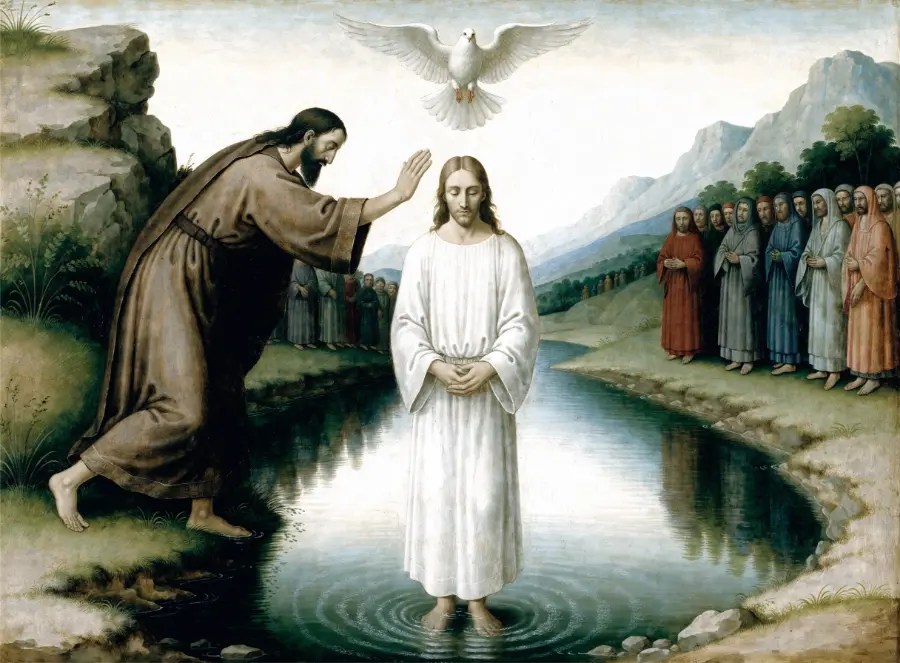
What is the investigative judgment?
It is a teaching found only among Adventists, and it grew from the disappointment of 1844. Daniel heard, “Unto two thousand and three hundred days; then shall the sanctuary be cleansed” (Daniel 8:14). The early Adventists came to believe that the cleansing was not Christ’s return to earth but a new work in heaven. Their fundamental belief says that in 1844 Christ “entered the second and last phase of His atoning ministry,” and calls it “a work of investigative judgment,” which shows who are “asleep in Christ” and who are “abiding in Christ.” When it ends, human probation closes and Christ comes.
Catholics have nothing like it. They believe in a particular judgment at each person’s death and a final judgment when Christ returns in glory.
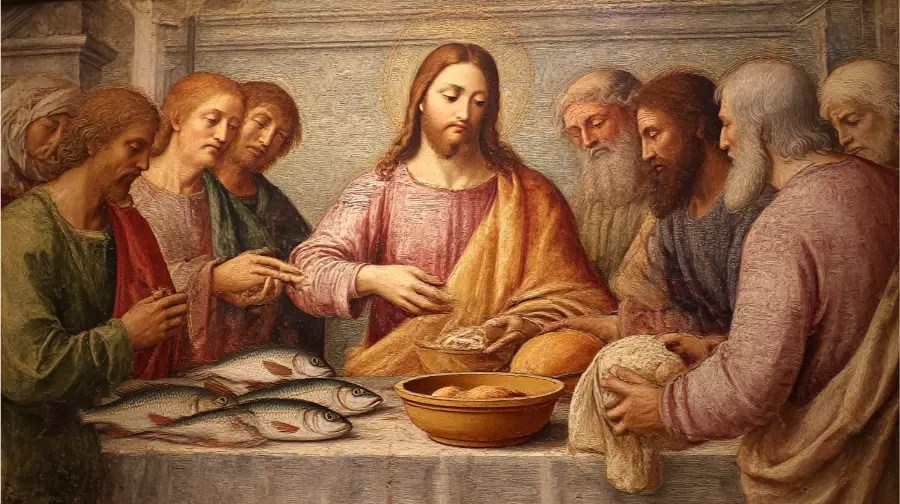
How are we saved, and what do baptism and communion do?
Both churches say salvation is God’s gift in Christ. “Salvation is all of grace and not of works, and its fruit is obedience to the Commandments,” the Adventist belief says, and it promises assurance of salvation to believers who abide in Christ. The Catechism says that “no one can merit the initial grace of forgiveness and justification,” and that justification “is conferred in Baptism, the sacrament of faith,” making us “inwardly just by the power of his mercy.” Moved by the Spirit, a Catholic believer can then merit “the graces needed for our sanctification, for the increase of grace and charity, and for the attainment of eternal life,” always as God’s gift first. Here Adventists, who hold that salvation is wholly of grace, part company with Catholics.
Baptism shows the difference. Adventists baptize “by immersion in water,” only after “an affirmation of faith in Jesus and evidence of repentance of sin.” Catholics baptize infants as well as adults, teaching that “Baptism is necessary for salvation for those to whom the Gospel has been proclaimed,” and that God “himself is not bound by his sacraments.”
At the Lord’s Supper, Adventists first wash one another’s feet, as Jesus told his disciples, “ye also ought to wash one another’s feet” (John 13:14). They believe “Christ is present to meet and strengthen His people,” and their table “is open to all believing Christians.” Catholics believe that in the Eucharist “the whole Christ is truly, really, and substantially contained.” Because they hold that churches born of the Reformation lack the sacrament of Holy Orders, the Catechism says that “Eucharistic intercommunion with these communities is not possible.”
Do Adventists and Catholics have food rules?
Adventists do. Because “our bodies are the temples of the Holy Spirit,” their church asks members to “abstain from the unclean foods identified in the Scriptures,” the meats forbidden in Leviticus 11, and from “alcoholic beverages, tobacco, and the irresponsible use of drugs.” Since the 1860s their church has also pointed to “the benefits of a vegetarian diet,” though its fundamental beliefs do not require one.
Catholic law asks something different: days of penance rather than forbidden foods. “Abstinence from meat, or from some other food as determined by the Episcopal Conference, is to be observed on all Fridays,” the Code of Canon Law says, and Catholics fast as well as abstain on Ash Wednesday and Good Friday. Church law also lets each conference of bishops “substitute other forms of penance, especially works of charity and exercises of piety,” for abstinence and fast.
How do Adventists and Catholics see each other?
Warily, because of history, and with real warmth. The Adventist statement of 1997 says, “We cannot erase or ignore the historical record of serious intolerance and even persecution on the part of the Roman Catholic Church.” It also says, “we gladly acknowledge that sincere Christians may be found in other denominations, including Roman Catholicism,” admits that “at times Protestants, including Seventh-day Adventists, have manifested prejudice and even bigotry,” and ends by stressing “the conviction that many Roman Catholics are brothers and sisters in Christ.”
The Catholic Church says of all Christians born outside its communion, “the Catholic Church accepts them with respect and affection as brothers,” and “All who have been justified by faith in Baptism are incorporated into Christ; they therefore have a right to be called Christians.” The two churches have sat at one table to talk. Between 2001 and 2003, Adventists and the Vatican’s Pontifical Council for Promoting Christian Unity held informal conversations in Geneva, and in 2002 their subject was the Sabbath and Sunday.
The argument over the day is old, and these two churches have not settled it. The Lord of the Sabbath still gives one invitation to those who rest on Saturday and those who rest on Sunday: “Come unto me, all ye that labour and are heavy laden, and I will give you rest” (Matthew 11:28).
Related reading
- Seventh-day Adventist vs Baptist: The Sabbath and the Soul
- Jehovah’s Witnesses vs Seventh-day Adventists: Not the Same
- Baptist vs Catholic Beliefs: Baptism, Communion, the Pope and Salvation
- Limbo vs Purgatory: Purgatory Is Catholic Doctrine; Limbo Was Never Defined
- Catholic vs Christian: Catholics Are Christians Who Differ From Protestants
- What Do Catholics Believe? God, the Mass, the Pope and Mary


Leave a Reply