
 English
 Chinese
 Dutch
 Arabic
 Spanish
 Portuguese
 Russian
 French
 Italian
 German
 Japanese
Seventh-day Adventists keep Saturday as the Sabbath, and so do the Seventh Day Baptists, the Church of God (Seventh Day), the True Jesus Church and Messianic Jewish congregations. In Ethiopia, where two Sabbaths were recognized at a council in 1450, some devout Orthodox believers keep Saturday as well as Sunday. Most other Christians gather on Sunday, the day Christ rose: Catholics, the Orthodox, and Protestants from Lutherans to Pentecostals. Jehovah’s Witnesses hold no day of the week holy at all.
Christians on every side of this question go back to the same line in the Letter to the Hebrews: “There remaineth therefore a rest to the people of God” (Hebrews 4:9). Seventh Day Baptists and the True Jesus Church count it among the verses behind their Saturday, the Assemblies of God turn to the same chapter to speak of the rest Jesus gives to those who acknowledge him, and Jehovah’s Witnesses, who keep no day, read it too. So all of us are reaching for the same rest, and what divides us is which day it belongs to now that Christ has risen, and why.
Where each church stands
Here is the day each church keeps and its reason, in its own words where it has them, with the Saturday churches first.
| Church | Day kept | The reason, in short |
|---|---|---|
| Seventh-day Adventist | Saturday, Friday sunset to Saturday sunset | The fourth commandment “requires the observance of this seventh-day Sabbath” |
| Seventh Day Baptist | Saturday | The seventh day is “sacred time, a gift of God to all people” |
| Church of God (Seventh Day) | Saturday | The Sabbath is “God’s gift to humanity from creation” |
| True Jesus Church | Saturday | “A holy day, blessed and sanctified by God” |
| Messianic Jewish congregations | Friday night or Saturday | Shabbat is Israel’s covenant sign; Gentile members are not required to keep it |
| Ethiopian Orthodox | Sunday; some also keep Saturday | Two Sabbaths recognized in 1450; accounts of today differ, below |
| Catholic | Sunday | Its observance “replaces that of the sabbath” |
| Eastern Orthodox | Sunday | The day of the resurrection; no obligation to keep Saturday |
| Coptic Orthodox | Sunday | “The day of His Resurrection” |
| Presbyterian and Reformed | Sunday | “The Christian sabbath” since the resurrection |
| Anglican, Methodist, Nazarene, UCC | Sunday | The Lord’s Day, kept with worship and rest from needless work |
| Lutheran | Sunday | A church ordinance kept in Christian liberty |
| Most Baptists (Southern Baptist confession) | Sunday | “The first day of the week is the Lord’s Day” |
| Pentecostal (Assemblies of God) | Sunday | One day in seven; no single day is commanded |
| Oneness Pentecostal | Sunday | “not under the old covenant” |
| Salvation Army | Sunday | By tradition; “not bound by any form of legalism” |
| Churches of Christ, Disciples of Christ | Sunday | The Lord’s Supper on the first day of the week |
| Latter-day Saints | Sunday | “Sunday is the Sabbath” |
| Quakers, Amish | Sunday | The usual day of worship |
| Nondenominational | Usually Sunday | No shared confession on the day |
| Jehovah’s Witnesses | None | No day of the week is held holy |
Our free tool, Compare Christian Denominations, sets any two of 22 churches side by side on this question and 54 others.
Who keeps the seventh day, and how they came to it
We can start in England in the early 1650s, when small congregations of Baptists became persuaded that the seventh day “was something which should be honored and celebrated,” and in late 1671 the first church of their tradition in North America was founded at Newport, Rhode Island. The Seventh Day Baptist Statement of Belief says: “We believe that the Sabbath of the Bible, the seventh day of the week, is sacred time, a gift of God to all people, instituted at creation, affirmed in the Ten Commandments and reaffirmed in the teaching and example of Jesus and the apostles.”
On 1 November 1843 the denomination set aside a day of fasting and prayer that God would “arise and plead for his holy Sabbath.” By then one of its members, Rachel Oaks, who later took the name Preston, had come to Washington, New Hampshire, with her daughter and a supply of her church’s literature. A small group of believers there were waiting for Christ’s return, and early in 1844 a number of them began to keep the seventh day. The Adventists’ own encyclopedia says that calling that congregation the birthplace of their church “is not entirely accurate,” since it became Adventist only some time later, and yet the place “has come to be associated with the cradle of Sabbatarian Adventism.” The church that remembers that place counted 24,372,139 members at the end of 2025.
Seventh-day Adventists, following the fourth commandment and the twentieth of their Fundamental Beliefs, keep the seventh day, from sunset on Friday to sunset on Saturday, as a holy day of rest and worship. That belief says the Creator “rested on the seventh day and instituted the Sabbath for all people as a memorial of Creation,” and that God’s law “requires the observance of this seventh-day Sabbath as the day of rest, worship, and ministry in harmony with the teaching and practice of Jesus, the Lord of the Sabbath.” They say it gladly, too, for the same belief calls the Sabbath “a day of delightful communion with God and one another,” and the church’s website calls it “a weekly gift meant to restore, reconnect, and renew.”
The Church of God (Seventh Day) grew from believers in western Michigan in 1858 and organized its General Conference in 1884, and its statement of faith says: “The seventh-day Sabbath is God’s gift to humanity from creation, was written into the Ten Commandments by God’s finger, kept and taught by Jesus, and observed by the apostolic church.” A member of that church guided the founder of the Worldwide Church of God to the seventh day, and in many ways the Sabbath became the foundational doctrine of the church he built. Then in December 1994 its leader announced that Christians do not have to keep the weekly and annual Sabbaths. Many members could not accept that the Sabbath “really didn’t matter,” and in 1995 hundreds of ministers and 12,000 members left to form a different denomination, while the church they left, now Grace Communion International, no longer asks it of anyone.
Alongside these is the True Jesus Church, which began in Beijing in 1917 and holds that “the seventh day of the week (Saturday), is a holy day, blessed and sanctified by God,” kept “for the commemoration of God’s creation and salvation, and with the hope of eternal rest in the life to come.” Messianic Jewish congregations keep Shabbat as Jews who believe Jesus is the Messiah. The Messianic Jewish Rabbinical Council’s Standards of Observance say that “one should participate in a weekly Friday night or Saturday service,” because “Shabbat is a sign of God’s eternal covenant with the people of Israel,” and the same council “does not believe that Gentiles are required to observe these practices,” though it calls them “permissible” for Gentile members who choose them. Other Messianic bodies set their own standards, so one congregation may differ from the next.
The two days have a long history in Ethiopia. In 1450, at the Council of Debre Mitmaq, the Emperor Zara Yaqob made peace with the monastic house of Ewostatewos, and in the words of a recent study of the Ethiopian church, “the Two Sabbaths were recognized by the Crown.” Today Britannica says that among Ethiopian Orthodox Christians “the Saturday Sabbath (in addition to Sunday) is observed by some devout believers.” The church’s own 1970 history, printed on its website, says that “as in the rest of the Christian world Sunday is observed as a day of rest,” and that “in former times Saturday, the Biblical Sabbath, was also observed,” and the same text still asks that morning and evening prayers “should be said in church, especially on Saturdays and Sundays.” So Saturday keeps a place beside Sunday in that church, and how many still rest on it the sources do not settle.

Why Saturday? The case from Scripture
Ask a Saturday keeper why, and the answer starts where the Bible starts, on the seventh day of creation: “And God blessed the seventh day, and sanctified it: because that in it he had rested from all his work which God created and made” (Genesis 2:3). At Sinai the blessing became a commandment: “Remember the sabbath day, to keep it holy. Six days shalt thou labour, and do all thy work: But the seventh day is the sabbath of the Lord thy God” (Exodus 20:8–10). They read that as part of a law that does not change, and they point out that God named a day there, the seventh, and did not say one day in seven.
Then they follow Jesus into Nazareth, where “as his custom was, he went into the synagogue on the sabbath day, and stood up for to read” (Luke 4:16), and Paul into Antioch in Pisidia, where he and his companions “went into the synagogue on the sabbath day, and sat down” (Acts 13:14). When the Pharisees challenged his disciples, Jesus told them, “The sabbath was made for man, and not man for the sabbath: Therefore the Son of man is Lord also of the sabbath” (Mark 2:27–28), and Adventists have taken that title into their own belief, as we saw.
From all this the Seventh Day Baptists conclude that “In no place does the Bible tell us of this change in the law from the seventh to the first day of the week.” Of the Book of Acts they add, “There is no mention of a change in the Sabbath from the seventh day to the first day of the week.” Ellen White, whose writings Adventists hold to carry prophetic authority, went further into the history, writing that “in the first centuries the true Sabbath had been kept by all Christians,” and that Sunday was at first only “a festival in honor of the resurrection of Christ,” with “the Sabbath being still sacredly observed.”
Why most churches gather on the first day
The Sunday churches begin somewhere else, at the tomb, when, “In the end of the sabbath, as it began to dawn toward the first day of the week, came Mary Magdalene and the other Mary to see the sepulchre” (Matthew 28:1). They notice how the first day keeps coming back after that. At Troas, “upon the first day of the week, when the disciples came together to break bread, Paul preached unto them” (Acts 20:7), Paul asked the Corinthians to set money aside “upon the first day of the week” (1 Corinthians 16:2), and John on Patmos “was in the Spirit on the Lord’s day” (Revelation 1:10). And they read Paul’s words about days: “Let no man therefore judge you in meat, or in drink, or in respect of an holyday, or of the new moon, or of the sabbath days: Which are a shadow of things to come; but the body is of Christ” (Colossians 2:16–17).
Saturday keepers read those verses another way, and the Adventist church’s Biblical Research Institute points out that the meeting at Troas ran past midnight, so which day it fell on “will depend on the system that Luke used to reckon the day,” and on one reckoning “the service took place on what we would call today Saturday night.” On Colossians it says the people doing the judging were false teachers who imposed “regulations,” and that “one cannot theorize, based on Col 2:16, that Paul was promoting or teaching the abolition of the Sabbath commandment.” Of John on Patmos it suggests that “the Lord’s Day” is “another way of referring to the seventh-day Sabbath,” while granting there is “not sufficient data” in Revelation to be certain, and Seventh Day Baptists say that “it is the seventh day Sabbath which is the Lord’s day according to Exodus 20:10.”
The Sunday churches have their own reply about the synagogue visits, and one Orthodox diocese writes of Jesus that “as a Jew He went to the synagogue on the Sabbath to be among the Jews and to preach to them where they gather,” and of Paul that he “went on the Sabbath to reason with and persuade not to worship with them.” The Coptic Orthodox Diocese of the Southern United States says, “We celebrate the Eucharist on the first day of the week, which is Sunday, the Day of the Lord, The day of His Resurrection.”
One of the earliest full pictures we have of a Christian Sunday comes from Justin Martyr, who died a martyr at Rome about the year 165, and he wrote it to the emperor, to explain what Christians do. “And on the day called Sunday,” he wrote, “all who live in cities or in the country gather together to one place, and the memoirs of the apostles or the writings of the prophets are read, as long as time permits.” Bread and wine are brought and thanks are given, a portion goes to those who could not come, and what is collected goes to “the orphans and widows” and to “all who are in need.” Then he tells the emperor why that day: “But Sunday is the day on which we all hold our common assembly, because it is the first day on which God, having wrought a change in the darkness and matter, made the world; and Jesus Christ our Saviour on the same day rose from the dead.” An early church manual, the Didache, puts it in one breath: “every Lord’s day gather yourselves together, and break bread, and give thanksgiving.”
Catholics have kept those words of Justin close and quote them at this very point in their teaching. The Catechism of the Catholic Church calls Sunday “the first of all days, the first of all feasts, the Lord’s Day,” and says that Sunday “is expressly distinguished from the sabbath which it follows chronologically every week; for Christians its ceremonial observance replaces that of the sabbath.” The Orthodox Church in America says that “The Saturday Sabbath is appropriate to the Old Testament,” and it goes on, “We are under no more obligation to follow the Saturday Sabbath than we are to follow Old Testament dietary restrictions.”
Is Sunday the Christian Sabbath? The Sunday churches differ
You might expect everyone who gathers on Sunday to mean the same thing by it, and they do not. The Amish, like most Christians, worship on Sunday, the day of the resurrection, and Quakers generally gather for worship on Sunday, which some of them call First Day. Beyond that the churches part ways, for some teach that the Sabbath commandment now falls on the first day. The Westminster Shorter Catechism, used by Presbyterian and Reformed churches, teaches that “from the beginning of the world to the resurrection of Christ, God appointed the seventh day of the week to be the weekly sabbath; and the first day of the week ever since, to continue to the end of the world, which is the Christian sabbath.” For members of The Church of Jesus Christ of Latter-day Saints, Sunday is the Sabbath, a holy day to rest from usual work and to worship God.
Others call it the Lord’s Day and keep the old rest in it, and when they describe that rest the word “unnecessary” keeps coming back. The United Methodist Confession of Faith says, “We believe the Lord’s Day is divinely ordained for private and public worship, for rest from unnecessary work, and should be devoted to spiritual improvement, Christian fellowship and service.” The Church of England’s Canon B 6 says that “the Lord’s Day, commonly called Sunday, is ever to be celebrated as a weekly memorial of our Lord’s Resurrection,” kept “by attendance at divine service, by deeds of charity, and by abstention from all unnecessary labour and business.” The Church of the Nazarene’s Manual asks its members to avoid “profaning of the Lord’s Day by participation in unnecessary secular activities.”
Rest and worship go together again in the Evangelical Catechism of 1929, which the United Church of Christ keeps as part of its heritage and which teaches that “God requires that we hallow the Lord’s Day by resting from worldly employment, by diligently going to church, and by using the day for the welfare of ourselves and others.” Nondenominational churches share no confession on the day, and the nearest they come to a common statement is a 1970 resolution of the National Association of Evangelicals, which said that “our nation historically has observed the Lord’s Day as a day of worship and rest” and urged Christians to “re-examine the Word of God” on how its teaching applies.
Then there are the churches that keep Sunday in Christian liberty, and for them no commandment ties the church to that day. The Lutheran Church–Missouri Synod’s Brief Statement says: “The observance of Sunday and other church festivals is an ordinance of the Church, made by virtue of Christian liberty.” Reformed churches have spoken on this side as well as on the Westminster side. The Second Helvetic Confession, a Protestant confession of the Reformed churches from 1566, says that the Lord’s Day, “ever since the apostles’ time, was set aside” for the church’s meetings “and for a holy rest,” and it adds, “we celebrate the Lord’s Day and not the Sabbath as a free observance.”
Many Pentecostals and the Salvation Army hold to that same freedom while keeping the old rest. The Assemblies of God teach: “While we are not commanded to observe Sunday as the specific day of rest and worship, the principle of the Sabbath is that one day in seven should be set aside for physical and spiritual renewal.” The Salvation Army’s positional statement for the United Kingdom and Ireland says that “Sunday has traditionally become the special day of the week which Salvationists have kept aside as a time to rest, worship and pray corporately, whilst affirming that we are not bound by any form of legalism with regard to when or how the Sabbath should be observed.” Some reach the same place by way of the two covenants. The Oneness Pentecostal tract Should Christians Keep the Sabbath? says that “early believers chose the day of Christ’s resurrection to emphasize that they were not under the old covenant, which the Sabbath symbolized, but under the new covenant, which His resurrection instituted.”
For others still, Sunday is above all the day of the risen Lord and of his Table. Most Baptists worship on Sunday in honor of the resurrection, and the Baptist Faith and Message, the confession of the Southern Baptist Convention, says, “The first day of the week is the Lord’s Day,” and that “it commemorates the resurrection of Christ from the dead.” Others gather for the Table itself, which sets the day. The Disciples of Christ, in their 1991 statement A Word to the Church on the Lord’s Supper, say that “the church today, as in apostolic times, is called to gather at the Lord’s Table on the first day of the week,” and Churches of Christ eat the Lord’s Supper every Sunday to remember Christ and proclaim his death.
Jehovah’s Witnesses keep no Sabbath and hold no day of the week holy. They meet twice a week at their Kingdom Hall, and they read the rest promised in Hebrews 4 as God’s own rest, which a person enters by faith; our page on Jehovah’s Witnesses and weekend work tells you how that works out in their week.
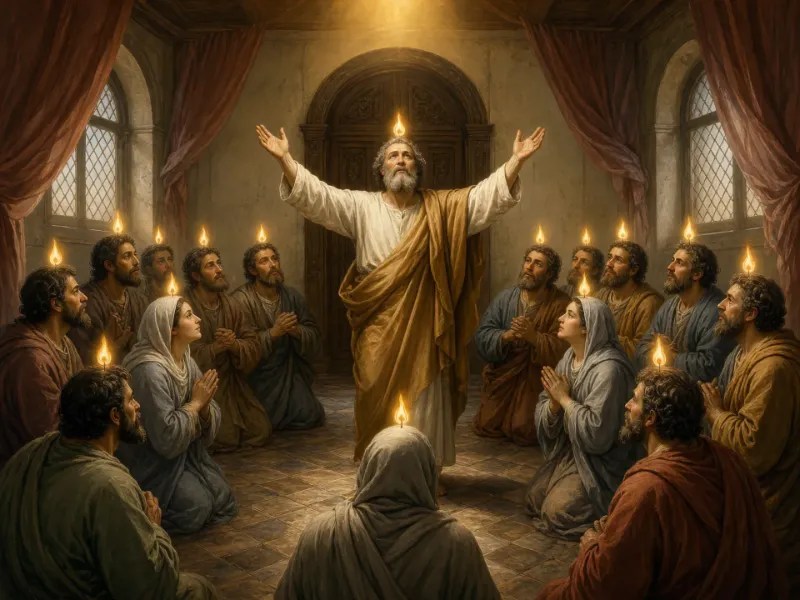
Did Constantine or the Catholic Church change the Sabbath?
You will hear it said that they did, so let us put the dates in order. Nobody on either side disputes which day is the seventh; “We do believe that Saturday is the seventh day,” the Coptic diocese writes, and “No Orthodox nor Catholic church claims otherwise.” The Sunday gatherings Justin described were already the custom of his day, and Constantine’s civil law forbidding work on Sunday came on 7 March 321, more than a century and a half after Justin’s death. It commanded “all judges and townships and all occupations of trade rest on the venerable day of the sun,” and let “those who are situated in the rural districts” go on working their fields. The Adventist ministers’ journal Ministry, which quotes the law, reads it as “one of a series of steps by which men were led to celebrate Sunday as a day of rest after the manner in which the Sabbath was kept by the people of God.”
As for the Catholic Church, its Catechism traces Sunday back to the apostles, saying that “This practice of the Christian assembly dates from the beginnings of the apostolic age.” The Orthodox, who do not answer to Rome, say the same of their own Sunday, that “This practice was established by the apostles themselves.” Saturday keepers answer that the Bible records no such change, and that Sunday took the Sabbath’s place only slowly, by the series of steps the Adventist journal described.
Saturday stayed in the life of the church long after that day in March. A synod at Laodicea in Asia Minor, held about 363, ruled that “Christians must not judaize by resting on the Sabbath, but must work on that day, rather honouring the Lord’s Day,” and nobody forbids what nobody is doing, so some Christians were still resting on Saturday. Communion on Saturday went on nearly everywhere except at Rome and Alexandria. Socrates, a church historian born in Constantinople towards the end of the fourth century, wrote that “almost all churches throughout the world celebrate the sacred mysteries on the sabbath of every week, yet the Christians of Alexandria and at Rome, on account of some ancient tradition, have ceased to do this,” and his fellow historian Sozomen adds that those churches met on the Sabbath “as well as on the first day of the week.”
We all read those same records and come away with different answers. Sunday churches see the first day kept from the apostles onward and Saturday fading as a weekly custom, and Saturday churches see a Sabbath slowly pushed aside. If you want to follow the case each side makes, verse by verse, we have a page on whether the Sabbath is Saturday or Sunday, and another on what the Sabbath day is.
Justin and the brothers who kept the Sabbath
The same Justin who told the emperor about Sunday was once asked by a Jew named Trypho whether someone who believed in Christ and still wished to keep the law of Moses could be saved. He said such a person would be saved, so long as he did not press Gentile believers to do the same. He thought those believers were keeping the law “through weak-mindedness,” and he said so. Yet if they “choose to live with the Christians and the faithful,” he went on, not urging others “to keep the Sabbath, or to observe any other such ceremonies, then I hold that we ought to join ourselves to such, and associate with them in all things as kinsmen and brethren.” He knew there were Christians of his day who would have nothing to do with such people and would not give them hospitality, and of those Christians he said, “I do not agree with them.”
We still keep different days, and we still sit down with the same letter, where the promise has not changed: “There remaineth therefore a rest to the people of God. For he that is entered into his rest, he also hath ceased from his own works, as God did from his” (Hebrews 4:9–10).
Related reading
- Compare Christian Denominations: what 22 churches teach on 55 questions
- Seventh-day Adventist vs Catholic: Sabbath, Death and Authority
- Seventh-day Adventist vs Baptist: The Sabbath and the Soul
- Jehovah’s Witnesses vs Seventh-day Adventists: Not the Same
- Is Jesus Our Sabbath Rest?
- When Did Jesus Rise From the Dead? Day and Time


Leave a Reply