
 English
 Chinese
 Dutch
 Arabic
 Spanish
 Portuguese
 Russian
 French
 Italian
 German
 Japanese
Christian Pure wrote this page. We have no connection with St John’s Church, Bangalore, or the Church of South India.
We can tell you that the first room at St John’s Church in Bengaluru, the city long called Bangalore, was sixteen feet wide, and that in the spring of 1853 more than a hundred people were crowding into it, but we cannot tell you what happens at its Harvest Festival, because as far as we can find nobody has written it down. The one record we have is a notice the church put on Instagram on 29 September 2026, inviting people to its Annual Thanksgiving Festival, as it also calls the day, on Sunday 11 October. The church’s own story is recorded all the way back to that room, and the festival is a custom kept every year across the Church of South India, which St John’s belongs to, so we can tell you a good deal about both of those.
A room filled to excess
In the early 1850s the Rev R. Posnett, assistant chaplain at St Mark’s, decided that one end of the British Cantonment needed a parish of its own. Pensioned soldiers of the East India Company lived out there with their Anglo-Indian children, and the schools of the Cantonment would not take those children. So with money from officers of the Company he put up one room, 47 feet by 16, on low ground near some kilns, where the children had their lessons, the old soldiers came for books, and everyone came to worship God on Sundays and Wednesdays.
By the spring of 1853 it could not hold them, and on 23 April Posnett wrote to the Bishop of Madras that “this room is now filled to excess, the attendance for the last few months is ranging from 100 to 115,” and that 52 girls and 16 boys were being taught there, and he was writing about a room sixteen feet wide.
He asked the Church Building Society and the general in command, Major General Sewell, for help with a proper chapel and school, and he was refused. So he went to the congregations, and they gave Rs 2,669 and 11 annas, ten pounds of it sent from England by the Rev C. G. Townsend of Hatfield. In October 1853 he bought a plot near the Roman Catholic church for Rs 100, and on 28 May 1854 three new schools opened on it. They grew into St John’s High School, which began with children the Cantonment schools had refused and by the church’s account now has about 3,000 students.
The Red Church on St John’s Hill
Posnett left in September 1854 and the Rev B. S. Clarke and the Rev D. J. Rogers took up the work. The body of the church was finished by 1856, built for 300 people, and the next year the government gave leave to enlarge it for 420, so they needed more room almost as soon as they had it. Bishop Thomas Dealtry of Madras consecrated it on 12 April 1858 and dedicated it to St John the Evangelist. Mootocherry, as that end of the Cantonment was called, became St John’s Hill, the road to the south became St John’s Church Road, and the people living around it gave the church a name of their own in Tamil, Sigapoo Oosimatha Koil, the Red Church.
The Church Building Society promised Rs 1,200 toward half the estimated cost of a tower and spire, and when Clarke asked the congregation for the rest the poverty of the place came out. The people at St John’s were the poorer folk of Mootocherry. The better-off went to St Mark’s, and as they saw it a tower, a spire and a clock belonged on St Mark’s if they belonged anywhere in Bangalore, so the appeal went unanswered. Clarke, Rogers and the bishop’s son, the Rev T. Dealtry, who became the first chaplain, then put in Rs 1,000 among themselves, and the tower was up by the end of 1858, at Rs 3,852, which brought the whole building to Rs 15,477. The record does not say where the rest of the tower money came from.
The large chancel and the portico came in 1895 and 1896, and there is a memorial in front of the church from the First World War, where the wreaths are laid on Remembrance Day. The church counts itself the third oldest Protestant church in Bangalore, and the Deccan Herald in 2013 counted it the fourth. A restoration approved in 2020, using traditional materials, was finished in a year and three months, right through the lockdown.
What the congregation did with its collection
From its early years the congregation collected to help the poor pupils in its own school with books and uniforms, and the record for 1886, less than thirty years after the tower appeal failed, shows where the money went. Of a total collection of Rs 545-11-3, in rupees, annas and pies, Rs 256-15-4 went to the School Fund and Rs 145-15-0 to the Poor Fund, which by our arithmetic is just under three-quarters of everything given. A century later, in 1990, Mrs K. D. Stephens left her house on Clarke Road to the church to be a home for the aged.
What is the Harvest Festival in South Indian churches?
It is usually a Sunday when a congregation thanks God for the year’s provision and brings what it has to give, and Church of South India congregations keep it every year under either name, Harvest Festival or Thanksgiving. Each parish chooses its own day. In Hyderabad it runs from mid-October to mid-November, and in the reports we have read from Chennai one parish kept it in August, another in September and another in October.
In Hyderabad the people bring the best of their produce and offer it at the altar. In Chennai they bring what the house has. At the Church of the Good Shepherd in Mylapore each family came with clothes, household goods or provisions, and some brought small gold jewels, and at St Thomas Tamil Church in San Thome the gifts included silk sarees, a keyboard and a mixer grinder, which we suppose is what a harvest looks like in a city. After the service at Good Shepherd there was breakfast, and stalls of food and games, and then everything that had been given was auctioned for the church, and the day ended with some 2,000 packets of mutton biryani, cooked on the church grounds and sold there.
A Church of South India treasurer in Hyderabad told the Deccan Chronicle that the celebration “preserves our Indian identity,” since their forefathers lived by farming and keeping cattle, and the paper says the tradition began in rural India. Anglican and Baptist churches in that city keep it too. At St Martin-in-the-Fields in London they trace the Anglican harvest service to Robert Hawker of Morwenstow in Cornwall, who began one in 1843, the year before Henry Alford wrote “Come, ye thankful people, come.” We have not found a dated record of how the custom reached the churches of India, or how much of it came from England and how much grew up among Indian farmers.
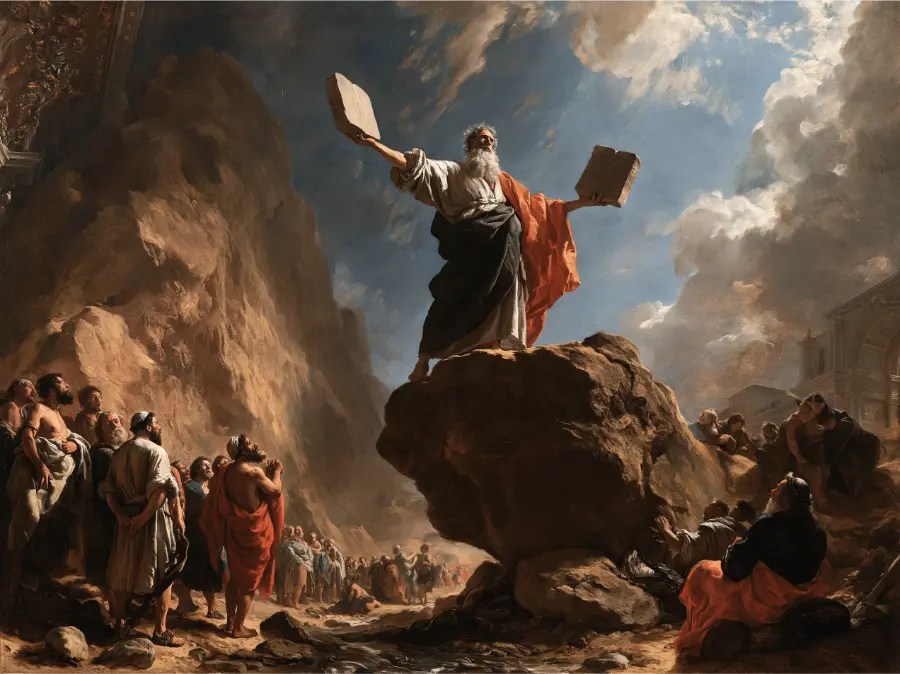
Scripture had asked for it long before any of them, and the Bible’s verses on harvest run from Genesis to the Gospels. When Moses told Israel how to bring the first of the harvest into the sanctuary, he did not stop at the gift: “Thou shalt rejoice in every good thing which the Lord thy God hath given unto thee, and unto thine house, thou, and the Levite, and the stranger that is among you” (Deuteronomy 26:11). Moses counts the stranger in with the family, and St John’s began as a room for children the Cantonment’s schools had counted out.

What we know of the festival at St John’s
That brings us back to St John’s, and to how little we can say. The notice of 29 September is all there is. It called the people to the festival on Sunday 11 October, tagged it #HarvestFestival2026, so that we know the two names mean one day, and said the day would support Phase 2 of the Community Centre and Auditorium. St Mark’s Cathedral, where Posnett was assistant chaplain, lists an Annual Harvest Festival of its own. We found no published account of how long St John’s has kept the festival, or what order the day follows, or whether it ends in an auction like the ones in Chennai, and we will not guess. The church’s own notices are the place to look for next year’s date.
That notice carried a line from Isaiah, printed as “Enlarge the place of your tent,” which the King James Bible goes on to finish, “spare not, lengthen thy cords, and strengthen thy stakes” (Isaiah 54:2). We cannot tell you what that Sunday was like. We can tell you what they were asking for, because it is in the notice, and it was more room, which is what Posnett was writing to the Bishop of Madras about 173 years earlier, with more than a hundred people in a room sixteen feet wide.


Leave a Reply