 English
 Chinese
 Dutch
 Arabic
 Spanish
 Portuguese
 Russian
 French
 Italian
 German
 Japanese
Catholics believe what the Nicene Creed says, and on a Sunday you can hear them say it, standing up together, priest and people. They say that there is one God, Father, Son and Holy Spirit, that Jesus Christ became man for us, was crucified and rose on the third day, that the Church is one, holy, catholic and apostolic, and that the dead will rise. Catholics are Christians, and of that creed their Catechism says, “It remains common to all the great Churches of both East and West to this day.” What marks them out most clearly is the pope, who they believe holds the place of Peter, and with him they hold that Christ gave the Church seven sacraments, that the bread and wine of the Mass become his body and blood, that Mary and the saints pray for us, and that those who die in God’s friendship but are not yet made holy are purified before they see his face.
By the Vatican’s own count there were just over 1.422 billion baptized Catholics in 2024, up from about 1.406 billion the year before, and that is about 17.8 per cent of the people on earth. The word “catholic” means “universal,” and they are not all Roman, for the Catechism sets the Latin way of worship beside the Byzantine, Alexandrian or Coptic, Syriac, Armenian, Maronite and Chaldean, and all of those are at home in the one Church.
If you want to know what all those people believe, the place to look is the altar. “In brief, the Eucharist is the sum and summary of our faith,” the Catechism says, and at a Sunday Mass the creed is said and the Scriptures are read, the pope is named, Mary and the saints are remembered, the dead are prayed for, and the priest speaks Christ’s own words over bread and wine.
God and his word
The Trinity and Jesus
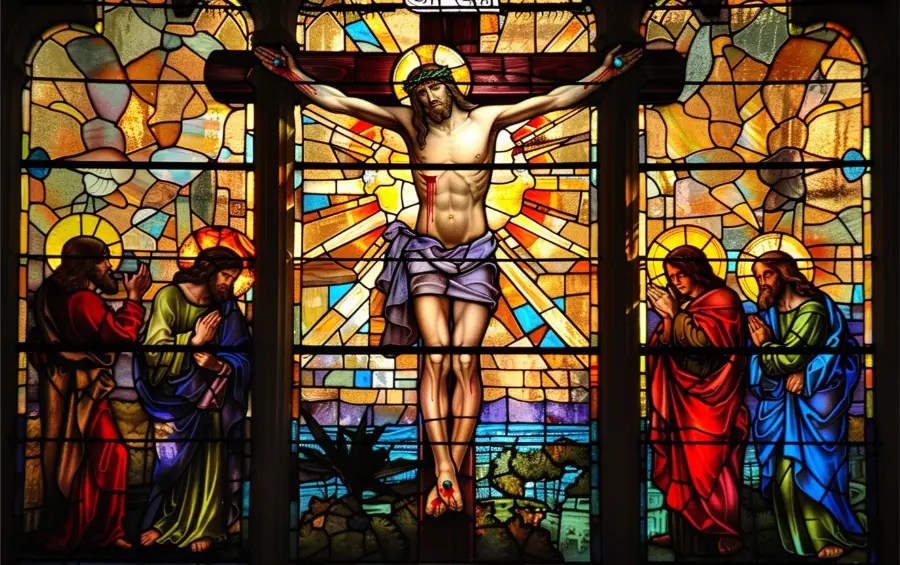
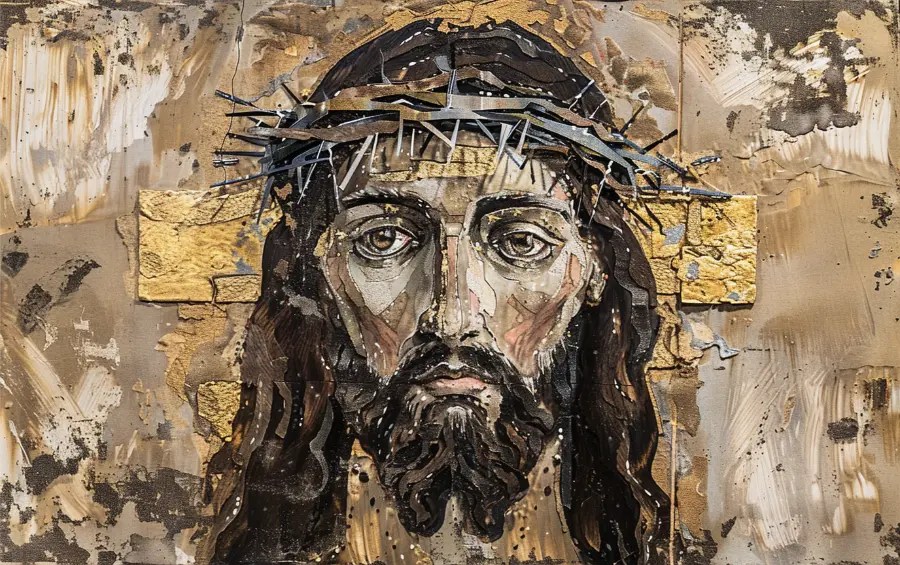
A Mass begins when the priest and the whole gathering make the sign of the cross together, so before anyone has read or preached a word, everybody in that church has named the Father, the Son and the Holy Spirit. The Catechism calls the Trinity “the central mystery of Christian faith and life,” and Catholics say of it what the Orthodox and most Protestants say: “We do not confess three Gods, but one God in three persons.” Of Jesus they say, “He became truly man while remaining truly God,” and you will not get a Catholic to let go of either half of that sentence.
The one place the Latin creed parts from the East is a single phrase about the Holy Spirit, who it says “proceeds from the Father and the Son (filioque).” The Catechism tells us that the phrase “does not appear in the Creed confessed in 381 at Constantinople” and that it remains, “even today, a point of disagreement with the Orthodox Churches.”
From Catechism of the Catholic Church, 253
Scripture and Tradition
After the sign of the cross come the readings, and they climb to the Gospel, which the Church’s instructions for the Mass call “the high point of the Liturgy of the Word.” A Protestant who picked up the Bible those readings come from would find more in it than in the one at home. “The Church accepts and venerates as inspired the 46 books of the Old Testament and the 27 books of the New,” the Catechism says, and that comes to 73, seven more than the 66 in a Protestant Bible.
The larger difference is in what Catholics read that Bible alongside. Paul told the Thessalonians to “hold the traditions which ye have been taught, whether by word, or our epistle” (2 Thessalonians 2:15), and Catholics take that “by word” as seriously as the epistle. What the apostles handed on aloud they call Tradition, and the Church says she “does not derive her certainty about all revealed truths from the holy Scriptures alone.” Tradition, Scripture and the Church’s teaching office, which they call the Magisterium, “are so connected and associated that one of them cannot stand without the others.” Many Protestants would stop us right there, and the Presbyterians’ Westminster Confession says why: the supreme judge in every dispute about religion “can be no other but the Holy Spirit speaking in the Scripture.”
From Episcopal vs Catholic: The Real Differences, Compared
Grace and salvation
Grace, faith and works
If anyone has told you that Catholics think they can earn their way to God, it is worth hearing how the Catechism talks about it. “Grace is favor, the free and undeserved help that God gives us,” it says, and “no one can merit the initial grace of forgiveness and justification.” That grace comes to us in Baptism, “the sacrament of faith,” and Catholics believe it goes to work inside the person who receives it, because God “makes us inwardly just by the power of his mercy.” Someone living in that grace can grow in it, and now the Catechism uses that same word, merit, and says that “we can then merit for ourselves and for others the graces needed for our sanctification.” Someone can also lose it, because mortal sin “results in the loss of charity and the privation of sanctifying grace.”
Paul wrote that “a man is justified by faith without the deeds of the law” (Romans 3:28), James wrote that “by works a man is justified, and not by faith only” (James 2:24), and for centuries Lutherans and Catholics stood on opposite sides of the question, with condemnations on the books from the sixteenth century. Then on 31 October 1999 the Lutheran World Federation and the Catholic Church signed a joint declaration and said together, “By grace alone, in faith in Christ’s saving work and not because of any merit on our part, we are accepted by God and receive the Holy Spirit, who renews our hearts while equipping and calling us to good works.” The declaration itself says that it does not cover everything either church teaches on justification. It claims agreement on the basic truths, and says that the remaining differences in how each church explains them “are no longer the occasion for doctrinal condemnations.”
From Catechism of the Catholic Church, 1992
Who can be saved
Catholics have a hard saying, “Outside the Church there is no salvation,” and the Catechism does not bury it. It prints those words as a heading and then tells us what they mean, “that all salvation comes from Christ the Head through the Church which is his Body.” For the person who knows all this and walks away, the edge stays sharp, because “they could not be saved who, knowing that the Catholic Church was founded as necessary by God through Christ, would refuse either to enter it or to remain in it.”
The Catechism speaks quite differently of the person who never had that chance: “Those who, through no fault of their own, do not know the Gospel of Christ or his Church, but who nevertheless seek God with a sincere heart, and, moved by grace, try in their actions to do his will as they know it through the dictates of their conscience – those too may achieve eternal salvation.” And the Baptist or Presbyterian down the road, baptized and believing, is a brother to them, for of such believers the Catechism says, “they therefore have a right to be called Christians, and with good reason are accepted as brothers in the Lord by the children of the Catholic Church.”
From Catechism of the Catholic Church, 846 to 847
The seven sacraments
Baptism and the seven
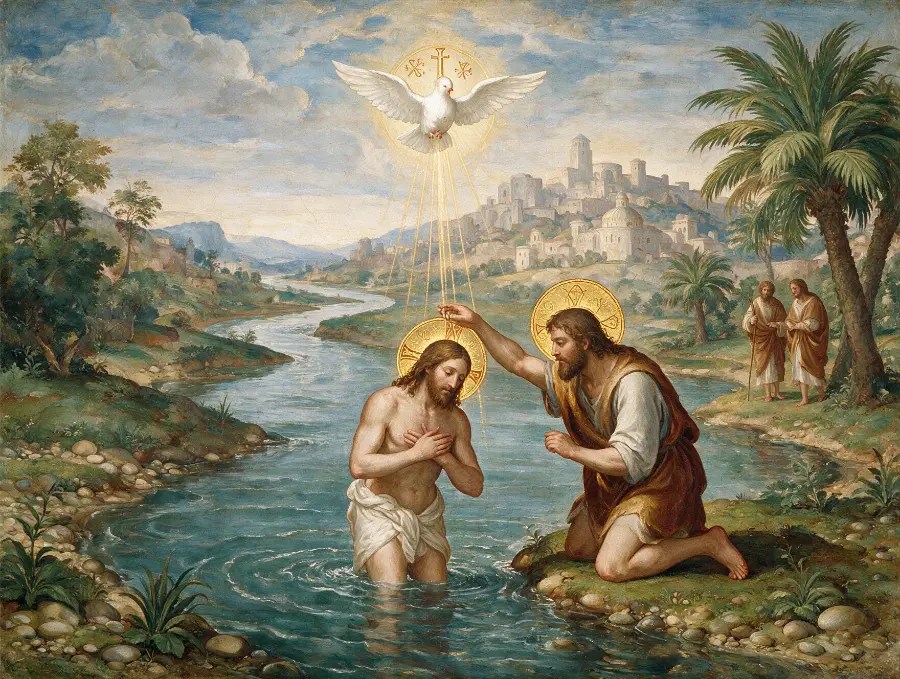
Catholics count seven sacraments, “Baptism, Confirmation (or Chrismation), the Eucharist, Penance, the Anointing of the Sick, Holy Orders and Matrimony,” and they believe Christ himself instituted every one. Between them the seven reach the whole length of a life, since “they give birth and increase, healing and mission to the Christian’s life of faith.” A Christian life starts with water. The person being baptized goes down into it three times, or has it poured three times over the head, and Catholics hold that anyone who has heard the Gospel and has had the chance to ask for Baptism needs it in order to be saved. The same paragraph of the Catechism goes on, “God has bound salvation to the sacrament of Baptism, but he himself is not bound by his sacraments.”
A Catholic baby is baptized long before she can say what she believes, where the Baptists, whose statement of faith says “Christian baptism is the immersion of a believer in water,” wait for a person old enough to believe. She has done nothing to earn anything, and to a Catholic that is the beauty of it: “The sheer gratuitousness of the grace of salvation is particularly manifest in infant Baptism.” When a child dies without Baptism, the Church “can only entrust them to the mercy of God, as she does in her funeral rites for them,” and the Catechism goes straight on to the hope she holds: “the great mercy of God who desires that all men should be saved, and Jesus’ tenderness toward children which caused him to say: ‘Let the children come to me, do not hinder them,’ allow us to hope that there is a way of salvation for children who have died without Baptism.”
From Baptist vs Catholic Beliefs: Baptism, Communion, the Pope and Salvation
The Eucharist
On the night before he died Jesus took bread and told his friends, “Take, eat; this is my body” (Matthew 26:26), and Catholics believe that is what it is. In the Eucharist, the Catechism says, “the body and blood, together with the soul and divinity, of our Lord Jesus Christ and, therefore, the whole Christ is truly, really, and substantially contained.” When the Council of Trent came to say what happens, it spoke of “a change of the whole substance of the bread into the substance of the body of Christ our Lord and of the whole substance of the wine into the substance of his blood,” and that change the Church has “fittingly and properly called” transubstantiation. They call the Mass a sacrifice as well, by which they mean that the one sacrifice of the cross is made present on the altar. “The victim is one and the same,” the Council said, and “only the manner of offering is different.”
Go into a Catholic church on an empty weekday and you will find a lamp before the tabernacle, which canon law says is to “shine continuously” as a sign that Christ is present there. On a Sunday the people around you are bound to be there, unless something serious keeps them away, an illness, say, or small children to care for. And if you come as a guest from another church in the United States, the bishops’ guidelines say to you, “We welcome our fellow Christians to this celebration of the Eucharist as our brothers and sisters,” and go on to say that members of churches not yet fully united with them are ordinarily not admitted to Communion, so you would stay in your seat.
From Catechism of the Catholic Church, 1374 to 1376
Confession
Before a Catholic goes up to receive there is a question to ask, because “Anyone conscious of a grave sin must receive the sacrament of Reconciliation before coming to communion.” So the way to the altar sometimes runs through the confessional. “Only God forgives sins,” the Catechism says, and it goes on to say that Christ “gives this power to men to exercise in his name.” Catholics hear that in the moment the risen Jesus breathed on his disciples and said, “Receive ye the Holy Ghost: Whose soever sins ye remit, they are remitted unto them” (John 20:22–23). So they tell their sins to a priest, believing that “bishops and priests, by virtue of the sacrament of Holy Orders, have the power to forgive all sins,” and the Church asks every one of them “faithfully to confess serious sins at least once a year.”
From Catechism of the Catholic Church, 1461
Marriage and children
Jesus said of husband and wife, “What therefore God hath joined together, let not man put asunder” (Matthew 19:6), and Catholics mean to keep that to the letter, so a husband and wife who are both baptized and have consummated their marriage can never have it dissolved. If it breaks down, a Church court can examine it, and if the court finds that a true marriage never existed it can say so, which is what people mean by an annulment, and those two are then free to marry. A person who divorces and marries again without that finding is in a situation the Catechism says goes against God’s law, and cannot receive Communion while it lasts. They stay in the pew while the others go up, and priests and the whole community are told to show them “an attentive solicitude, so that they do not consider themselves separated from the Church.”
A husband and wife who want to space their children may do so, and the Catechism allows them the methods that rest on watching for the infertile days and keeping to them, while it rules out sterilization and contraception. Abortion it refuses altogether: “Since the first century the Church has affirmed the moral evil of every procured abortion. This teaching has not changed and remains unchangeable.”
From Anglican vs Catholic: Why the Church of England Is Not Roman Catholic
The pope, the bishops and the priests
The pope
A Catholic hears the pope named at every Mass, wherever in the world that Mass is said, because he “is associated with every celebration of the Eucharist, wherein he is named as the sign and servant of the unity of the universal Church.” Catholics trace his office to what Jesus said to Simon, “thou art Peter, and upon this rock I will build my church” (Matthew 16:18), and to what he said next, “I will give unto thee the keys of the kingdom of heaven” (Matthew 16:19). “The Lord made Simon alone, whom he named Peter, the ‘rock’ of his Church,” the Catechism says, and the pope, as Peter’s successor, “is the perpetual and visible source and foundation of the unity both of the bishops and of the whole company of the faithful.”
When Catholics call the pope infallible they mean that Christ gave the Church “a share in his own infallibility” to keep her in the true faith, so that the pope cannot teach error when, “as supreme pastor and teacher of all the faithful,” he “proclaims by a definitive act a doctrine pertaining to faith or morals.” The same gift is present in the bishops together with him, above all in an ecumenical council.
From Catechism of the Catholic Church, 881 to 891
Priests
The one who says Christ’s words over the bread will always be a man, and Catholics hold that this was settled when Jesus chose the Twelve. “Only a baptized man (vir) validly receives sacred ordination,” the Catechism says, because “The Lord Jesus chose men (viri) to form the college of the twelve apostles.” Pope John Paul II wrote in 1994 that “the Church has no authority whatsoever to confer priestly ordination on women and that this judgment is to be definitively held by all the Church’s faithful.”
Whether he may have a wife depends on which part of the Church he serves. Latin priests “are normally chosen from among men of faith who live a celibate life,” while in the Eastern churches “married men can be ordained as deacons and priests,” and the Catechism calls that simply “a different discipline.”
From Can Women Become Catholic Priests?
Mary and the saints
Mary
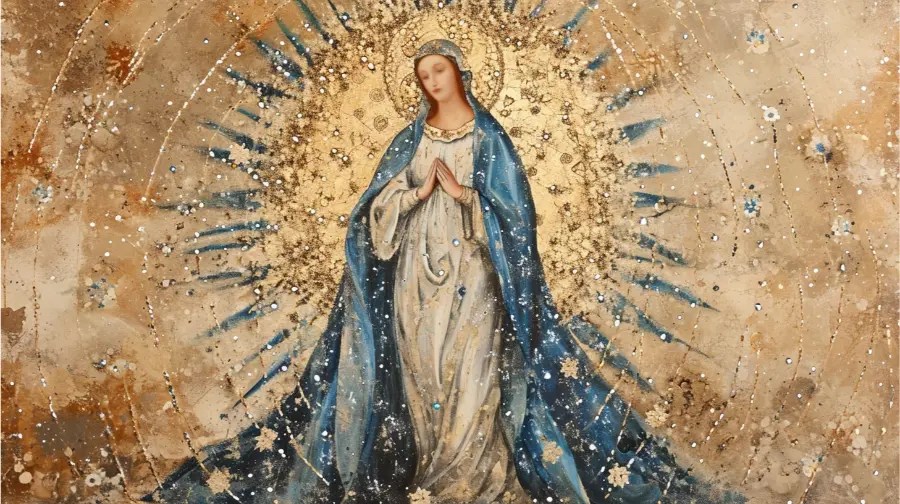
Everything Catholics say about Mary starts with her Son, for as the Catechism puts it, “What the Catholic faith believes about Mary is based on what it believes about Christ.” The child she bore was “none other than the Father’s eternal Son,” which is why they call her Mother of God. From there they go on to say things that many other Christians will not. They believe she was “preserved immune from all stain of original sin” from the moment she was conceived, as Pope Pius IX defined in 1854. They believe she stayed a virgin all her life, and when the Gospels speak of the brothers of Jesus, the Church answers that these were “close relations of Jesus, according to an Old Testament expression.” And they believe that at the end of her life she was “taken up body and soul into heavenly glory.”
She said herself that “all generations shall call me blessed” (Luke 1:48), and Catholics mean to be among them. They honour her and ask her prayers in the Hail Mary and the rosary, and at every Mass, where “the Church is as it were at the foot of the cross with Mary.” They will tell you this is something other than worship, for it “differs essentially from the adoration which is given to the incarnate Word and equally to the Father and the Holy Spirit,” and that her Son remains “the one and only mediator between God and men.”
From Protestant vs Catholic: How Their Beliefs and Worship Differ
Saints, statues and images
The Letter to the Hebrews says we are “compassed about with so great a cloud of witnesses” (Hebrews 12:1), and Catholics believe those witnesses have not stopped thinking about us. The saints, as the Catechism has it, “contemplate God, praise him and constantly care for those whom they have left on earth,” and so Catholics go to them as we would go to a friend and ask for prayer: “We can and should ask them to intercede for us and for the whole world.” The statues and icons in their churches belong to that same friendship. A Catholic looking at a statue of a saint is looking through it, for “the honor rendered to an image passes to its prototype,” and what is given is “not the adoration due to God alone.”
From Catechism of the Catholic Church, 2132
Death and what comes after
Purgatory
A person can die loving God and still not be finished, and Catholics take that seriously. “All who die in God’s grace and friendship, but still imperfectly purified, are indeed assured of their eternal salvation; but after death they undergo purification, so as to achieve the holiness necessary to enter the joy of heaven.” They call this Purgatory, and it is “entirely different from the punishment of the damned,” since everyone in it is already saved. The Catechism points to Paul’s builder, who “shall be saved; yet so as by fire” (1 Corinthians 3:15), and to the Second Book of Maccabees: “It is therefore a holy and wholesome thought to pray for the dead, that they may be loosed from sins” (2 Maccabees 12:46).
So the dead have a place at the altar too, for the Mass “is also offered for the faithful departed” so that “they may be able to enter into the light and peace of Christ.” Indulgences come in here too, for Catholics believe a sin can be forgiven and still leave what they call temporal punishment to be dealt with, and an indulgence, gained through the Church under set conditions, removes part or all of that punishment, for someone living or someone who has died. The Westminster Confession knows only heaven and hell: “Besides these two places, for souls separated from their bodies, the Scripture acknowledgeth none.”
From Protestant vs Catholic: How Their Beliefs and Worship Differ
Heaven and hell
Paul said that “now we see through a glass, darkly; but then face to face” (1 Corinthians 13:12), and that face-to-face seeing is what Catholics mean by heaven, “the ultimate end and fulfillment of the deepest human longings, the state of supreme, definitive happiness.” After the last judgment, they believe, “the righteous will reign for ever with Christ, glorified in body and soul.”
They believe in hell as well, and they say what is worst about it: “the chief punishment of hell is eternal separation from God, in whom alone man can possess the life and happiness for which he was created and for which he longs.” The Catechism calls it remaining apart from God “for ever by our own free choice,” and it will not tell us who has made that choice, for “we must entrust judgment of persons to the justice and mercy of God.”
From Catechism of the Catholic Church, 1035
In the end it comes back to the altar, and to what Jesus said in the synagogue at Capernaum, “Except ye eat the flesh of the Son of man, and drink his blood, ye have no life in you” (John 6:53). John tells us that “many of his disciples went back, and walked no more with him,” and that Jesus turned to the Twelve and asked, “Will ye also go away?” The Catechism says that question “echoes through the ages, as a loving invitation.” Peter’s answer is the one Catholics carry up the aisle: “Lord, to whom shall we go? thou hast the words of eternal life” (John 6:68).
How Catholics differ from their neighbours
- Protestant vs Catholic: How Their Beliefs and Worship Differ
- Orthodox vs Catholic: How the Two Churches Differ and Why They Split
- Evangelical vs Catholic: Born Again, Baptism and the Bible Compared
- Baptist vs Catholic Beliefs: Baptism, Communion, the Pope and Salvation
- Lutheran vs Catholic: Faith Alone, the Pope and Communion Compared
- Episcopal vs Catholic: The Real Differences, Compared
- Methodist vs Catholic: How John Wesley’s Heirs Differ From the Catholic Church
- Pentecostal vs Catholic: Authority, Sacraments and Tongues
- Presbyterian vs Catholic: Every Real Difference, Compared
- Jehovah’s Witnesses vs Catholics: How the Two Faiths Differ
See every answer for Catholics and compare with another church
More from this seriesDenominations ComparedSee all 117 articles

Leave a Reply