你是否曾感到自己像个局外人,一个异乡的陌生人?你是否曾感到巨大的压力,为了在似乎不认同你价值观的世界中生存,不得不去适应、去妥协你内心深处的信仰?在这些时刻,我们的内心渴望一个榜样,渴望证明在信仰完整的情况下,不仅能生存,还能茁壮成长是可能的。圣经为我们提供了这样一位人物——先知但以理,他的生平故事读起来就像是在充满敌意的世界中保持勇气的蓝图。
本文将带您回顾先知但以理的生平与时代,探索历史事实、不可思议的故事以及令人惊叹的预言,这些使他的书成为圣经中最引人入胜的篇章之一。我们将不仅揭示发生了什么 至 但以理,还要揭示他的生命意味着什么 而是为了我们 今天,当我们寻求在充满挑战的世界中保持坚定不移的信仰时。从烈火窑到狮子坑,从强大帝国的兴衰到永恒君王的应许,但以理的故事是对上帝不可动摇的主权以及因完全委身于祂而获得的强大平安的永恒见证。

先知但以理是谁?
要真正领会但以理故事的力量,我们必须首先认识他本人。他不是神话或传说,而是一个真实的人,以非凡的信仰面对巨大的考验。他的一生始于民族自由的黄昏,度过在世界上最强大帝国的中心,但他从未忘记他是谁——以及他属于谁。
流亡中的高贵青年
但以理是一位年轻的犹太贵族,可能来自犹大王室,大约在公元前605年被巴比伦国王尼布甲尼撒掳走。¹ 当他的生活被剧烈颠覆时,他可能只是一个十几岁的少年,也许只有14或15岁。⁴ 他是第一批被驱逐出境的人,这是犹大长期违背上帝、进行属灵叛逆的悲剧性后果,先知们早已预言了这一审判。⁵ 想象一下那种创伤:被从家园、家人和祖国中强行带走,被迫行军数百英里,来到征服了他们民族的帝国首都。
坚定不移的人格
即使在这些毁灭性的环境下,但以理的品格依然熠熠生辉。他是圣经中为数不多的主要人物之一,关于他没有任何负面记录,这证明了他强大的正直。⁵ 他的希伯来名字“但以理”意为“上帝是我的审判者”,这一原则定义了他的一生。⁷ 从他在圣经中第一次出现到最后一次,他的一生都在宣告他的忠诚只属于上帝,无论他侍奉哪位国王,无论他周围是什么文化。他是一个谦卑、智慧超群、勇气在信念之火中锻造出来的人。¹⁰
灌输与抵抗
到达巴比伦后,但以理和他最亲密的三个朋友——哈拿尼雅、米沙利和亚撒利雅——被选中参加一个为期三年的特殊培训计划,旨在为他们在宫廷服务做准备。⁵ 这不仅仅是教育,更是一种系统的灌输尝试。其目的是剥夺他们的希伯来身份,将他们改造成忠诚的巴比伦人。这个过程的一个关键部分是更改他们的名字以尊崇异教神灵。但以理被改名为伯提沙撒,意为“伯的王子”,这个名字与巴比伦的主神有关。²
正是在流亡之初,但以理做出了一个将定义他余生的决定。他“立志不以王的膳和王所饮的酒玷污自己”。¹² 这种皇家饮食很可能违反了犹太洁净律法,或者涉及了先献给偶像的食物。⁴ 这是他的第一次考验,他那种安静、尊重但坚定的抵抗,为他一生的忠诚树立了榜样。
叙事对这次关于食物的初步、看似微小的考验的关注是非常重要的。它确立了整本书的基础主题:英雄般的信仰并非诞生于单一的危机时刻,而是通过一生中微小、持续的顺服选择建立起来的。但以理和他的朋友们后来在面对烈火窑或狮子坑时所表现出的勇气,是在餐桌上选择上帝的安静纪律中锻造出来的。这为今天的信徒提供了一个有力且易于理解的教训,表明伟大的信仰生活始于简单、日常的正直行为。
一生的侍奉
上帝尊荣了但以理的忠诚,赐予他和他的朋友们非凡的知识、智慧和属灵洞察力,包括理解和解释梦境与异象的超自然能力。¹⁰ 这种天赋将但以理推向了权力的最高层,他在那里忠诚且卓越地服务了近70年。⁵ 他非凡的职业生涯跨越了历史上几位最强大国王的统治时期,从尼布甲尼撒及其继任者伯沙撒统治下的强大巴比伦帝国,到米底亚人大流士和居鲁士大帝统治下的米底-波斯帝国。¹⁵ 他是一个活生生的见证,证明了一个人可以
在 身处世界——即使是在权力的中心——却不 启示 属于世界。
| 事实 | 详情 | 经文参考 |
|---|---|---|
| 希伯来名字及含义 | 但以理,“上帝是我的审判者” | 但以理书 1:6-8 |
| 巴比伦名字及含义 | 伯提沙撒,“伯的王子” | 但以理书 1:7-4 |
| 家谱 | 贵族或王室,来自犹大支派 | 但以理书 1:3-1 |
| 大致寿命 | 约公元前620年至约公元前530年 | 但以理书 1:1, 9:23 |
| 侍奉地点 | 巴比伦,巴比伦帝国和波斯帝国的首都 | 但以理书 1:1-5 |
| 关键性格特征 | 谦卑、智慧、正直、勇气、虔诚 | 但以理书 2:28, 6:4, 9:3-11 |
| 侍奉的国王 | 尼布甲尼撒、伯沙撒、米底亚人大流士、居鲁士大帝 | 但以理书 2–6:15 |

但以理流亡期间,巴比伦的生活是怎样的?
为了充分欣赏但以理和他的朋友们的勇气,我们必须了解他们所居住的世界。那不是一个中立的环境;那是一种旨在吸收并抹去他们独特信仰的文化。巴比伦的辉煌既是奇迹,也是属灵的雷区,在那里,对上帝的忠诚是一种激进且危险的行为。
巴比伦的辉煌与权力
新巴比伦帝国,特别是在尼布甲尼撒二世统治下,是当时无可争议的超级大国。¹⁸ 巴比伦城是一个建筑奇迹,是一个由巨大的双重城墙保护的庞大都市。其传奇的游行大道两旁排列着绘有狮子和龙的绚丽蓝色釉面砖,通向宏伟的伊什塔尔门。¹⁹ 考古发现证实了尼布甲尼撒建筑工程的宏伟,验证了但以理记载的历史背景,并为但以理书4:30中国王的傲慢夸耀提供了可信度:“这大巴比伦不是我用大能大力建为京都……吗?”¹⁹ 社会结构高度严密,从顶层的国王和祭司,到商人、工匠,再到底层的农民和奴隶,等级分明。²²
多神论和偶像崇拜文化
巴比伦的日常生活与对众多神灵的崇拜深深交织在一起。²⁰ 虽然马杜克是城市的主神,但无数其他神灵在作为主要经济和宗教中心的大型寺庙群中受到尊崇。²⁰ 国王本人是一个核心的宗教人物,涉及向偶像献祭食物的仪式是社会结构的一部分。²³ 这种背景使得但以理在第一章中拒绝国王的食物不仅仅是一种饮食选择;这是对支撑巴比伦权力的整个宗教体系的拒绝。它突显了以色列上帝所要求的排他性、盟约忠诚与帝国包罗万象的多神论之间的鲜明对比。
波斯的过渡与琐罗亚斯德教的影响
但以理的长寿意味着他见证了历史上伟大的转折点之一:公元前539年巴比伦被崛起的米底-波斯帝国攻陷。⁷ 这一事件正如但以理所预言的那样发生,带来了重大的文化转变。波斯帝国深受琐罗亚斯德教教义的影响,这是一种将世界视为至高善神(阿胡拉·马兹达)与对立邪灵之间宇宙战场的宗教。²⁵ 这种二元论的世界观强调真理、秩序和正义。²⁶
虽然波斯人通常对其他宗教更为宽容——居鲁士大帝允许犹太流亡者返回耶路撒冷重建圣殿的法令就是著名的证明——但他们自己的法律和宗教框架创造了新的考验。²⁷ 例如,但以理书第6章中的冲突不是关于偶像崇拜,而是关于法律和忠诚。这表明,上帝子民所面临的压力可能会随着文化的不同而改变形式,但保持忠诚的基本挑战依然存在。
但以理和他的朋友们所面临的不同考验——巴比伦统治下的烈火窑和波斯统治下的狮子坑——并非偶然。它们植根于统治帝国的特定法律和宗教价值观。在但以理书第3章中,巴比伦国王尼布甲尼撒要求 礼拜 金像,这是一种典型的文化偶像崇拜傲慢行为。拒绝者的惩罚是被火烧死,这是巴比伦的一种已知做法。²⁸ 几十年后,在但以理书第 6 章中,冲突发生了转移。波斯官员利用法律本身陷害但以理,说服大流士王签署了一项
不可更改的法令 ,规定除国王外,向任何神祈祷都是犯罪。¹³ 问题不仅在于偶像崇拜,还在于上帝的律法与玛代和波斯人不可更改的律法之间的冲突。²⁹ 惩罚是被扔进狮子坑,这是一种与波斯人相关的处决方式,因为他们认为火是神圣的元素,不会将其用于死刑。²⁹
通过记录这些不同的考验,但以理书提出了一个强有力的神学观点:上帝的主权延伸到人类权力的每一种形式。他能将他的子民从一个帝国的公然偶像崇拜中拯救出来,也能将他们从另一个帝国的法律陷阱中拯救出来。对于今天的信徒来说,这是一个强有力的保证,无论我们面临的文化压力具体是什么,上帝拯救的大能都是绝对的。

但以理生平中最鼓舞人心的故事有哪些?
但以理书的前半部分充满了圣经中最令人难忘和建立信心的故事。这些不仅仅是古代英雄主义的传说;它们是上帝大能以及祂对那些完全信靠祂的人的亲切关怀的活见证。每一个故事都揭示了活出坚定不移的信仰意味着什么的另一个侧面。
烈火窑:不惧怕火的信心(但以理书第 3 章)
烈火窑的故事是一出关于集体勇气的有力戏剧。尼布甲尼撒王以一种极度傲慢的行为,建造了一座巨大的金像,并命令他所有的官员跪下敬拜它。但以理的三个朋友——沙得拉、米煞和亚伯尼歌——坚决拒绝。他们对愤怒的国王的回应是圣经中伟大的信仰宣言之一:“即便如此,我们所事奉的上帝能将我们从烈火的窑中救出来……即或不然,王啊,你当知道我们决不事奉你的神,也不敬拜你所立的金像”(但以理书 3:17-18)。³⁰
他们的信心不是与上帝的交易。他们信靠上帝的 拯救能力 ,但他们的顺服并不以该结果为条件。³² 他们选择尊崇上帝,即使这意味着死亡。当他们被扔进比平时热七倍的火窑中时,奇迹发生了。他们不仅毫发无损——头发没有烧焦,衣服上也没有烟味——而且国王看到第四个人与他们一起在火中行走,其形状“好像神子”。³⁰ 这是一幅美丽的图画,应许耶稣就在我们试炼的中心与我们同在。结果令人震惊:一位异教国王荣耀了以色列的上帝,证明了我们个人的忠诚可以产生影响整个王国的影响力。³⁰
墙上的字:骄傲在败坏以先(但以理书第 5 章)
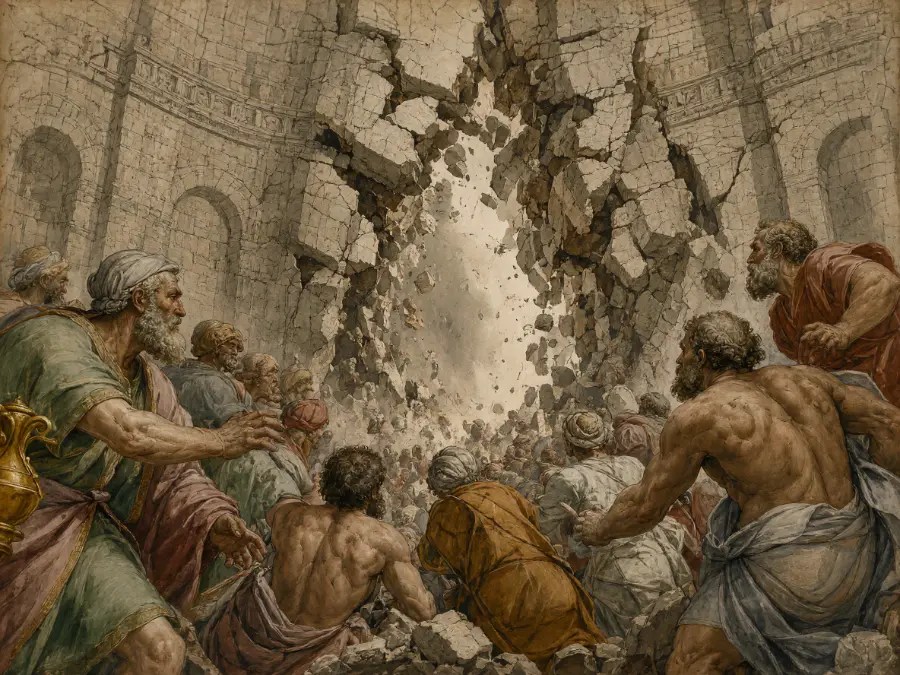
几十年后,另一位国王坐在巴比伦的宝座上。尼布甲尼撒的继任者伯沙撒举行了一场奢华、醉酒的宴会。¹³ 在极度傲慢的时刻,他下令拿来从耶路撒冷上帝圣殿中偷来的神圣金银器皿。他和他的贵族、妻子和妃嫔们用这些圣杯喝酒,为他们的金、银、铜、铁、木、石偶像干杯。³⁴ 这不仅仅是狂欢;这是一种蓄意的亵渎行为,是对以色列上帝的直接挑战。³⁵
突然,宴会在恐惧中戛然而止。一只人手的手指出现,开始在宫殿的墙上写下一条神秘的信息:弥尼,弥尼,提客勒,乌法珥新。³⁶ 国王的智者们都无法解释它。但以理,现在是一位受人尊敬的长者,被召见。他大胆地斥责国王的傲慢,提醒他上帝是如何使尼布甲尼撒谦卑的,这是伯沙撒未能吸取的教训。¹³ 但以理随后解释了神圣的判决:国王的统治已经被
数算 并终结;他已经被 称量 在天平上,显出亏欠;他的王国将被 分开的 分裂并赐给玛代人和波斯人。³⁴ 圣经以令人不寒而栗的结局记录道:“当夜,迦勒底王伯沙撒被杀”。²⁴ 这个故事作为一个永恒的警告,即上帝是所有人类权力和骄傲的最终审判者。
狮子坑:坚定不移的祈祷生活(但以理书第 6 章)
故事再次转移,这次到了大流士王统治下的玛代波斯帝国。但以理因其卓越的品质被提升到高位,引起了其他行政官员的强烈嫉妒。⁹ 由于在他的职业或个人生活中找不到任何过错,他的敌人设计了一个邪恶的阴谋,利用他的信仰来对付他。他们操纵国王签署了一项不可更改的法令,禁止任何人在 30 天内向除国王以外的任何神或人祈祷。¹³
但以理知道法律已经签署。他知道惩罚是死亡。然而,他没有退缩。他“回到自己家里,他楼上的窗户开向耶路撒冷。一日三次,双膝跪在他上帝面前,祷告感谢,与素常一样”(但以理书 6:10)。³⁹ 他始终如一、纪律严明的祈祷生活对他来说比生命本身更宝贵。⁴⁰
被扔进饥饿的狮子坑中,但以理奇迹般地被保全了。第二天早上,他向惊讶的国王解释说,上帝的一位天使“封住了狮子的口”。³⁸ 这种强大的拯救行为,就像从火窑中获救一样,促使另一位强大的异教国王颁布法令,尊崇但以理的上帝为“永生上帝”,其“国度永不败坏”。⁴¹ 这是上帝为那些单单信靠祂的人提供保护的有力见证。
综观这三个著名的故事,它们提供的不仅仅是孤立的勇气例子。它们揭示了一种神学上的演进,展示了上帝的国度与这个世界的国度之间不断升级的冲突。烈火窑的故事展示了上帝对公众迫害和强迫偶像崇拜的大能。墙上的字揭示了上帝对个人傲慢和亵渎的主权审判。狮子坑展示了上帝对个人私下正直和始终如一的奉献的亲切保护。它们共同描绘了一幅全面的图景,向信徒保证,上帝是我们公开立场中的捍卫者,是我们对抗骄傲者的审判者,也是我们日常个人信仰行走中的保护者。

但以理的主要预言是什么?它们对今天的我们意味着什么?
虽然但以理一生的故事令人振奋,但他书的后半部分转向了一系列令人叹为观止的预言,这些预言几个世纪以来一直吸引并引导着信徒。这些充满奇怪野兽和神秘时间线的异象,并不是要成为给好奇者解开的谜题。它们是神圣的启示,是拉开历史的帷幕,向人们展示上帝完全掌控一切,祂的最终目的必将实现。
预言蓝图:四个王国与第五个王国
但以理预言的核心支柱是揭示了四个伟大的世界帝国,它们最终都将被粉碎并被永恒的上帝之国所取代。⁴² 这一真理在两个强有力的平行异象中得到了揭示。
- 尼布甲尼撒关于大像的梦(但以理书第 2 章): 在这个异象中,尼布甲尼撒王看到了一座巨大、耀眼的雕像。它的头是金的,胸膛和手臂是银的,肚子和大腿是铜的,腿是铁的,脚是铁和泥的脆弱混合物。²⁴ 但以理将这座雕像解释为一系列世俗王国,从尼布甲尼撒自己的巴比伦帝国(金头)开始。⁴⁵ 从历史上看,这些王国被理解为巴比伦、玛代波斯、希腊和罗马。⁴² 这个异象从人类的角度代表了这些王国:一种辉煌的、人造的权力和辉煌的形象。⁴⁷
- 但以理关于四兽的异象(但以理书第 7 章): 多年后,但以理有了自己的异象,涵盖了同样的历史跨度,但却是从上帝的角度。他看到四只怪兽从混乱的海中升起:一只长着鹰翅的狮子(巴比伦)、一只凶猛的熊(玛代波斯)、一只敏捷的四头豹子(希腊)和一只长着铁牙和十角的恐怖、无法描述的野兽(罗马)。⁴⁸ 这个异象揭示了人类帝国在不顺服上帝时的真实本质:它们是暴力的、掠夺性的和破坏性的。⁵¹
这两大异象之间意象的转变,是一个强有力的神学教训。世界往往将权力、财富和帝国描绘成光荣且令人向往的事物——一座耀眼的金像。但上帝的视角通过祂的先知揭示,当这些追求与祂隔绝时,它们就变得狰狞而野蛮。这鼓励信徒以属灵的洞察力审视世俗权力,并将最终的希望寄托在永恒的上帝之国,而非人类转瞬即逝的王国上。
- 不可阻挡的王国: 这两个异象的高潮都是上帝王国的戏剧性降临。在《但以理书》第2章中,一块“非人手凿出来的石头”击碎了金像脆弱的双脚,整个金像被砸得粉碎。随后,这块石头变成了一座充满全地的大山。²⁴ 在《但以理书》第7章中,当兽受审判后,“亘古常在者”(圣父上帝)将永恒的统治权赐给了“一位像人子的”。⁴⁸ 这是所有圣经预言的核心希望:人类的王国必将兴衰更替,但我们上帝和祂基督的国度必将得胜,存到永远。⁴³
“七十个七”的预言:弥赛亚的时间表(《但以理书》第9章)
《但以理书》第9章中记载的预言,或许是整本旧约中最具体、最令人惊叹的预言。当但以理正在祷告并承认他百姓的罪,反思耶利米关于70年被掳的预言时,天使加百列向他显现,带来了新的启示。⁵⁴
加百列揭示了一个新的预言时钟,即为以色列民和耶路撒冷城所定的“七十个七”——即490年。这段时期的目的是“止住罪过,除净罪恶,赎尽罪孽,引进永义,封住异象和预言,并膏至圣者”(《但以理书》9:24)。²⁸
这一预言被广泛理解为弥赛亚第一次降临的精确时间表。490年的时钟始于重建耶路撒冷的命令,这是波斯王亚达薛西在公元前445年或444年颁布的法令。⁵⁵ 预言随后指出,在这些“七”中的六十九个(总共483年)之后,“受膏者”弥赛亚将出现,然后被“剪除”。²⁸ 令人惊奇的是,从亚达薛西的法令算起483年,直接指向了耶稣基督传道的时期,特别是祂凯旋进入耶路撒冷,随后不久便是祂的受难——即祂被“剪除”。⁵⁵
该预言还提到了最后一个“七”(七年时期),许多圣经学者认为这一时期尚未应验,对应于新约中所描述的末世大灾难时期。⁵⁶
对于今天的信徒来说,这些预言是鼓励的深井。它们不仅仅是历史的好奇点,更是上帝掌管历史每一个细节的坚实保证。⁵³ 祂从起初就指明末后,祂的救赎计划绝不会落空。在一个常常感到混乱和不确定的世界里,但以理的预言提醒我们,历史并非一系列随机事件,而是一个正走向荣耀结局的故事:我们主之国度的全面且最终的建立。

但以理异象中的“人子”是谁?为什么这对基督徒很重要?
在但以理那令人叹为观止的异象中,有一个人物以独特而强大的意义脱颖而出:即《但以理书》第7章中“一位像人子的”。这个源于但以理异象的头衔,成为了耶稣认同自己身份的最重要方式之一,使其成为连接旧约与新约的关键桥梁。
人子异象(《但以理书》7:13-14)
在但以理目睹了四个兽国可怕的异象后,场景转移到了天上的法庭。他看到“亘古常在者”——圣父上帝的头衔——坐在火焰的审判宝座上。⁴⁹ 那是一个展现终极权威与能力的场景。
接着,一个惊人的事件发生了:“有一位像人子的,驾着天云而来,被领到亘古常在者面前”(《但以理书》7:13)。随后,这位人物被赐予了永恒的权柄、荣耀和国度。异象宣告,各国、各族、各方的人都要侍奉祂,祂的国度永不灭亡。⁵²
谁是人子?
从表面上看,亚兰语短语 bar enash, ,即“人子”,可以简单地指代一个人,在旧约的其他地方(例如《以西结书》)也是这样使用的。但《但以理书》第7章的上下文清楚地表明,这绝非普通人。祂“驾着天云而来”,这在旧约中始终与上帝本人联系在一起。⁶⁰ 祂接受万民的敬拜,这是唯独上帝才配得的尊荣。⁶⁰ 因此,这位人物既呈现出人的外貌,又具备神性的本质与权柄。
耶稣,人子
这个来自但以理书的强大而神秘的头衔,成为了耶稣最喜欢用来指代自己的方式。祂在福音书中使用了超过80次“人子”这一头衔,远多于任何其他称呼。⁵⁹ 当祂使用这个短语时,祂是有意且直接地将自己与但以理异象中那位神圣、荣耀且永恒掌权的君王等同起来。⁵¹
最戏剧性的例子是在祂受公会审判时。当大祭司质问祂是否是弥赛亚、上帝的儿子时,耶稣引用《但以理书》第7章给出了一个改变世界的回答:“我是……你们必看见人子坐在那权能者的右边,驾着天上的云降临”(《马可福音》14:62)。⁵¹ 对祂的控告者来说,这无疑是自称为但以理预言中那位神圣的存在,即那位将审判世界并永远统治的君王,这被视为亵渎。
兼具神性与受苦的头衔
这个头衔的精妙之处在于,它在完美的张力中承载了两个强大的真理。它指向耶稣真实的道成肉身(“人子”),同时宣告祂神圣的权柄与永恒的王权(“驾云降临”)。⁷ 但耶稣对这个头衔做了一件无人预料到的激进之事。祂将这种终极权能与荣耀的形象,与受苦这一崭新且令人震惊的概念融合在了一起。
耶稣一再教导说:“人子必须受许多的苦,被弃绝……并且被杀,过三天复活”(《马可福音》8:31)。⁵⁹ 祂揭示了通往《但以理书》第7章永恒宝座的道路,正是通过十字架的牺牲。祂重新定义了弥赛亚身份,不是通过政治权力的征服,而是通过服侍、谦卑和救赎性的受苦所取得的胜利。对于信徒来说,这就是福音的核心。我们的君王不是用刀剑征服的,而是通过舍弃自己的生命来战胜罪恶与死亡的。这教导我们,在上帝的国度里,向上的路是向下的,真正的权柄在于像人子为我们所做的那样,为他人舍命。

《但以理书》是什么时候写的?为什么这很重要?
在圣经学者中,很少有话题能像《但以理书》的成书日期那样引发如此多的讨论。虽然这看起来像是学术界的技术性辩论,但关于但以理书何时写成的问题,对我们理解上帝和祂的话语有着深远的影响。其核心在于对超自然预言真实性的探讨。
两种主要观点
关于该书的成书日期,主要有两种立场:
- 传统的公元前6世纪观点: 这一长期持有的观点得到了保守派学者和该书自身见证的支持,即先知但以理是在巴比伦被掳期间,大约公元前540-530年写下了这本书。³ 这意味着但以理关于玛代-波斯、希腊和罗马帝国兴衰的详细预言,是在这些事件实际发生前几百年写成的。
- 批判性的公元前2世纪观点: 许多现代世俗学者和批评家认为,这本书写于更晚的时期,即在希腊国王安条克四世(Antiochus IV Epiphanes)对犹太人进行残酷迫害期间,大约在公元前167-164年。²⁴ 根据这种观点,关于波斯和希腊帝国的“预言”根本不是预言,而是事件发生后才写下的历史,这是一种被称为vaticinium ex eventu, or “prophecy after the event”.⁶¹
Why the Date Is So Important
The core issue that separates these two views is the possibility of God divinely revealing the future.⁶² If Daniel wrote in the 6th century B.C., his stunningly accurate predictions are among the most powerful proofs in all of Scripture for the divine inspiration of the Bible and God’s sovereign knowledge of all history. But if the book was written in the 2nd century B.C., this powerful evidence is explained away, and the book is seen as a clever work of historical fiction designed to encourage its original readers, rather than a supernatural revelation.⁶⁴
Evidence for the Traditional 6th-Century Date
Despite the prevalence of the critical view in secular academia, the evidence for the traditional 6th-century date is remarkably strong and has been bolstered by modern discoveries.
- Linguistic Evidence: The style of the book’s languages points to an earlier date. The Aramaic used in chapters 2-7 is an older, “Imperial Aramaic” style consistent with the 6th and 5th centuries B.C., not the later style of the 2nd century.²⁹ The book also contains numerous Old Persian and Babylonian words that a 6th-century court official like Daniel would know intimately, but a 2nd-century writer in Judea would not.²⁹ Conversely, the book contains only three Greek words (all for musical instruments), which is highly unlikely for a book supposedly written deep in the Greek period when Hellenistic culture was pervasive.²⁹
- Historical Accuracy: The author of Daniel displays a precise, eyewitness-level knowledge of 6th-century Babylonian life, culture, and politics—details that were once challenged by critics but have since been confirmed by archaeology.⁵ For example, critics long claimed the book was in error for naming Belshazzar as king, as he was not in any known king lists. But the discovery of the Nabonidus Cylinder in the 19th century confirmed that Belshazzar was the son of King Nabonidus and served as his co-regent, ruling in Babylon—exactly as the book portrays.¹⁹
- 外部证据: The discovery of the Dead Sea Scrolls provided powerful evidence for an early date. The scrolls contain copies of Daniel that have been dated to the 2nd century B.C..⁶⁶ This makes it extremely improbable that the book could have been written, circulated widely, and gained the status of revered Scripture all within the span of a few decades.⁶⁶ the first-century Jewish historian Josephus records a tradition that the Book of Daniel was shown to Alexander the Great when he came to Jerusalem in the 4th century B.C., which, if accurate, would place the book’s existence long before the 2nd-century date.²⁹
The debate often reveals more about a person’s worldview than it does about the evidence itself. The prophecies in Daniel are so clear and have been so precisely fulfilled that critics feel they 必须 have been written after the fact. This line of reasoning, But inadvertently pays a high compliment to the book. The fact that the primary argument against its authenticity is its “impossible” accuracy serves as a powerful testimony to its divine origin. For the person of faith, the Book of Daniel is a rock-solid anchor, proving that we serve a God who holds all of history in His hands.

天主教会对《但以理书》持什么立场?
The Book of Daniel holds a special place of honor within the Catholic valued for its powerful stories of faith, its powerful prophecies, and its rich contribution to the Church’s prayer and liturgy. The Catholic understanding of the book includes some important elements that differ from many Protestant traditions.
Canon and Authorship
The Catholic Church affirms that the Book of Daniel is a divinely inspired and canonical part of Sacred Scripture.⁶⁷ Regarding its authorship, the Church acknowledges the ongoing scholarly discussion about its composition. But the traditional view—that the prophet Daniel himself was the author of the work during the Babylonian exile—has been the strong and prevailing position within Catholic thought.⁶⁷ The primary purpose of the book, from a Catholic perspective, is to provide strength and comfort to God’s people during times of persecution by revealing God’s ultimate control over all earthly powers and the certain triumph of His eternal kingdom.⁶⁷
The Deuterocanonical Additions
The Catholic Bible includes three sections within the Book of Daniel that are not found in the Hebrew Masoretic Text or in most Protestant Bibles. These are known as the “deuterocanonical” parts, meaning they belong to the “second canon.” The Catholic at the Council of Trent, definitively affirmed that these texts are fully inspired and belong in the Bible.⁶⁷
These three additions are:
- The Prayer of Azariah and the Song of the Three Young Men (Daniel 3:24-90): This beautiful passage is inserted into the story of the fiery furnace. It contains a heartfelt prayer of repentance by Azariah (Abednego) and a magnificent hymn of praise sung by all three men from within the flames. This “Canticle of the Three Young Men” is a beloved part of the Church’s official daily prayer, the Liturgy of the Hours, particularly for Sunday morning prayer.⁶¹
- The Story of Susanna (Daniel 13): This chapter tells the gripping story of a virtuous and beautiful woman named Susanna who is falsely accused of adultery by two corrupt community elders after she rejects their advances. Sentenced to death based on their false testimony, her life is saved by the wisdom of the young Daniel, whom God inspires to cross-examine the elders separately. He exposes their lies, Susanna is vindicated, and the wicked elders receive the punishment they intended for her.⁷¹ The story is a powerful lesson on God’s justice, the protection of the innocent, and a model of chastity and trust in God. Early Church Fathers saw Susanna as a symbol, or “type,” of the persecuted Church and even of Christ himself, who was also falsely accused and unjustly condemned.⁷¹
- The Story of Bel and the Dragon (Daniel 14): This final chapter contains two narratives in which Daniel uses his God-given wisdom to expose the foolishness of idolatry.⁷⁴ In the first story, he proves that the great Babylonian idol, Bel, is not a living god by cleverly revealing that its priests and their families are secretly consuming the food offerings left for it at night.⁷⁵ In the he destroys a great serpent or “dragon” that the Babylonians worship, demonstrating that it is a mere mortal creature, not a deity.⁷⁵ The termDrakon in the original Greek can refer to a large snake or reptile, and snake worship was common in the ancient world.⁷⁷ These stories serve as a sharp and insightful critique of paganism.
These deuterocanonical stories are not seen as random additions but as thematic extensions of the book’s core message. They move the conflict between divine wisdom and human corruption from the royal court into the legal and religious spheres of life. They powerfully reinforce the idea that faithfulness to God and reliance on His wisdom are the keys to overcoming falsehood and injustice in every area of society, providing a rich and practical application of the book’s timeless truths.
Liturgical Use
The Book of Daniel is woven into the fabric of Catholic worship. Passages from Daniel are read at Mass throughout the liturgical year, especially during the seasons of Lent and the final weeks of Ordinary Time. The vision of the “Son of Man” from Daniel 7 is fittingly proclaimed on the Solemnity of Our Lord Jesus Christ, King of the Universe, directly linking Daniel’s prophecy to the Church’s worship of Jesus as the eternal King.⁶⁹ The use of these sacred texts in the liturgy continually reminds the faithful of God’s sovereignty, the call to live with integrity, and the firm hope we have in the coming of God’s eternal kingdom.

在世俗世界中,我们如何能像但以理一样忠实地生活?
The life of Daniel is more than just an ancient story; it is a timeless manual for faithful living, especially for believers who find themselves in a culture that does not share their deepest convictions. Daniel’s experience as an “exile” in Babylon provides a powerful and practical model for how we can be a faithful presence in our own secular world.
Lessons from a Life of Prayer (Daniel 6 & 9)
At the very core of Daniel’s resilience was his deep and disciplined prayer life. It was the source of his wisdom, his courage, and his endurance.
- Prayer as a Non-Negotiable Priority: For Daniel, prayer was not a last resort or a casual activity; it was the central habit of his life. Even as one of the highest officials in a global empire, he made time to get on his knees three times a day to pray and give thanks.⁴⁰ When a law was passed making his prayer life a capital offense, he did not change his routine. His communion with God was more important than his own safety, teaching us that a consistent, prioritized prayer life is the foundation for a courageous faith.
- Prayer Rooted in Humility: When Daniel prayed for the restoration of his people in Daniel 9, his prayer was not one of demand, but of powerful humility. He identified himself with the sins of his nation, confessing, “we have sinned,” and based his entire appeal not on Israel’s merit, but on God’s “abundant compassion”.⁸⁰ This models for us a posture of prayer that acknowledges our complete dependence on God’s grace and mercy.
- Prayer as a Spiritual Battle: In a remarkable passage in Daniel 10, we get a rare glimpse behind the curtain of the physical world. An angel, sent with an answer to Daniel’s prayer, reveals that he was delayed for 21 days, resisted by a demonic “prince of the kingdom of Persia,” until the archangel Michael came to his aid.⁸¹ This is a stunning reminder that prayer is not a passive exercise; it is an active engagement in a spiritual battle. It teaches us the importance of perseverance in prayer, knowing that our requests are heard instantly in heaven but may face opposition in the spiritual realm.⁸³
Faithful Presence in “Exile”
The Book of Daniel is a masterclass in how to be “in the world, but not of the world”.⁸⁴ Daniel’s life shows us how to navigate a foreign culture without either compromising our faith or withdrawing into isolation.
- Engage with Excellence, Don’t Assimilate: Daniel and his friends did not retreat from Babylonian society; they engaged it. They learned its language and literature, excelled in their education, and worked with integrity in its government, seeking the welfare of the city where God had placed them.⁸⁵ They were found to be “ten times better” than all their peers, earning the respect of pagan kings.²⁸ Their example calls us to pursue excellence in our own vocations—in our workplaces, schools, and communities—as a powerful form of witness, demonstrating the goodness and wisdom of our God without being absorbed by the world’s values.⁸⁷
- Courage Forged by Conviction: Daniel’s life was anchored by a deep resolve to honor God above all else (Daniel 1:8). He knew where to draw the line, and he had the courage to hold that line with both grace and grit.¹² To live faithfully in a secular age requires us to prayerfully establish our own convictions based on God’s Word and to ask for the courage to live them out with wisdom and love, trusting God with the results.
- The Necessity of Community: Crucially, Daniel did not stand alone. He had a small community of faith—his three friends—who stood with him, prayed with him, and faced the fire with him.⁸⁵ They formed a “God-honoring subculture” that gave them the strength to resist the immense pressure to conform. This is a vital lesson for us: we cannot survive, let alone thrive, in spiritual exile on our own. We need to lean on a community of fellow believers for encouragement, accountability, and support.
The very structure of the Book of Daniel offers a final, powerful pastoral lesson. The author intentionally places the encouraging stories of God’s miraculous deliverance in chapters 1-6 受割礼之前 introducing the complex and often difficult visions of future conflict in chapters 7-12.¹⁷ This is a brilliant strategy. It first builds our faith by grounding us in the historical reality of God’s power to save His people in tangible ways. Only after establishing this foundation of trust does the book move to the long-term prophetic timeline. The message is clear: The God who saved Daniel and his friends from the furnace and the lions’ den is the same God who will see His people through all the trials of history until His final victory. Do not be afraid. Trust Him.

结论
The story of Daniel, the noble youth taken into exile, resonates through the centuries with a message of unwavering hope and courageous faith. He was a man who lived at the center of worldly power but whose heart was centered on God. In a culture designed to erase his identity, he stood firm. In the face of life-threatening danger, he trusted. In the presence of arrogant kings, he spoke truth with humility and boldness.
His life teaches us that God is sovereign over all of history, from the rise and fall of the mightiest empires to the quietest details of our personal lives. His prophecies assure us that though the kingdoms of this world may rage, they are temporary. The Kingdom of our God and His Son, the “one like a son of man,” is eternal and will ultimately triumph.
Daniel is more than a distant hero. He is a model for what is possible for any believer who, like him, resolves to honor God above all else. His life is a call to us—to live with integrity in our daily choices, to cultivate a life of consistent prayer, to engage our world with excellence and grace, and to place our ultimate hope not in the shifting sands of this age, but in the unshakable rock of God’s coming Kingdom. May we, like Daniel, be found faithful, and may we live with the quiet confidence that the God of Daniel is our God, and He is with us always.