
 German
 English
 Chinese
 Dutch
 Arabic
 Spanish
 Portuguese
 Russian
 French
 Italian
 Japanese
Baptists, Churches of Christ, Pentecostals, Seventh-day Adventists, Latter-day Saints and Jehovah’s Witnesses baptize only by immersion: the whole person goes down under the water and comes up again. Orthodox and Coptic Christians immerse too, three times, once at each name of the Trinity. Catholics immerse or pour. Lutherans, Methodists, Nazarenes, Episcopalians, the United Church of Christ and the Presbyterian Church (U.S.A.) allow more than one way, the Presbyterian Church in America pours or sprinkles, and the Mennonites’ 1963 confession says they generally pour. Quakers and the Salvation Army do not baptize with water at all.
Every church that baptizes uses water and the name of God, and nearly all of them say over the water the words Jesus gave at the end of Matthew’s Gospel, “baptizing them in the name of the Father, and of the Son, and of the Holy Ghost” (Matthew 28:19). So what divides us is a narrower question than it first seems: does the way the water reaches a person belong to the sign itself? For some of us baptism is a burial and a rising, and a person has to go under to be buried. For others it is a washing in God’s name, and water poured over a baby’s head washes as truly as a river.
| Kirche | How it baptizes | In seinen eigenen Worten |
|---|---|---|
| Südliche Baptisten | Nur Untertauchen | “the immersion of a believer in water” |
| Church of Christ | Nur Untertauchen | Baptize means “to dip, to immerse, to plunge” |
| Assemblies of God | Nur Untertauchen | “baptism by immersion is commanded by the Scriptures” |
| Vereinigte Pfingstkirche (Oneness) | Immersion, in Jesus’ name | “The scriptural mode of baptism is immersion” |
| Siebenten-Tags-Adventisten | Nur Untertauchen | “fully immersed under water” |
| Calvary Chapel (nondenominational) | Nur Untertauchen | “full-immersion water baptism of believers” |
| Jünger Christi | Immersion, as its founders taught | “baptism by immersion as the accepted form” |
| Heilige der Letzten Tage | Immersion, by priesthood authority | “Baptism by immersion in water by one having authority” |
| Jehovas Zeugen | Nur Untertauchen | “Baptism is complete water immersion” |
| Orthodox | Drei Untertauchungen | “immersed three times in the water” |
| Koptisch-orthodox | Drei Untertauchungen | “immersed in water three times” |
| Katholisch | Three immersions, or pouring three times | Immersion “the most expressive way”; pouring “from ancient times” |
| episkopale | Immersion or pouring | The minister “immerses, or pours water upon, the candidate” |
| Lutherisch (Missouri-Synode) | Any way, with water and the Word | The manner “does not determine whether a Baptism is valid” |
| United Methodist; Nazarene | Besprengung, Übergießen oder Untertauchen | Both: “may be administered by sprinkling, pouring, or immersion” |
| Vereinigte Kirche Christi | Any of the three, by choice | “the mode of baptism is a matter of choice” |
| Presbyterianische Kirche (U.S.A.) | Pouring, sprinkling or immersion | “visibly and generously” |
| Presbyterian Church in America | Pouring or sprinkling | “by pouring or sprinkling it on the head of the child” |
| Mennonite (1963 confession) | Usually pouring | “we generally practice pouring” |
| Amische | No statement on the way | Dordrecht Confession: “baptized with water” |
| Quakers (Evangelical Friends) | No water baptism | “an inward receiving of the Holy Spirit” |
| Heilsarmee | No water baptism | “baptised into the one body by the Holy Spirit” |
Unser kostenloses Tool, Christliche Konfessionen vergleichen, sets any two of 23 churches side by side on how they baptize and on 54 other questions.
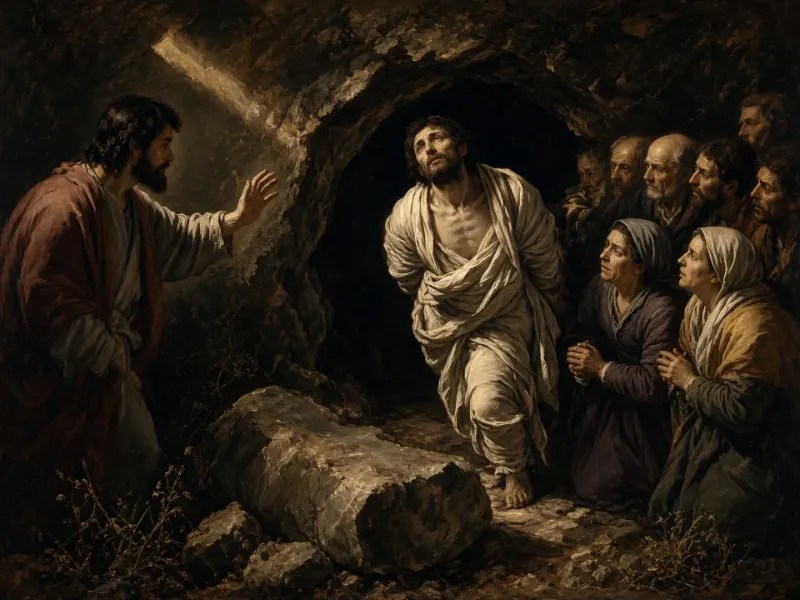
What does the Bible say about immersion and sprinkling?
Start with the word itself, because on that the two sides are closer than we might expect. The Catechism of the Catholic Church says that “to baptize (Greek baptizein) means to ‘plunge’ or ‘immerse’; the ‘plunge’ into the water symbolizes the catechumen’s burial into Christ’s death, from which he rises up by resurrection with him.” Batsell Barrett Baxter, explaining the Churches of Christ, says the word “literally means, ‘to dip, to immerse, to plunge.’” The Catholic Church agrees with him about the word and still allows pouring, so the argument was never only about a dictionary. The Missouri Synod Lutherans reply that “it is not possible to prove that the term ‘baptize’ always refers to immersion,” and they point to verses where it means a washing.
The churches that immerse begin with Paul. “Know ye not, that so many of us as were baptized into Jesus Christ were baptized into his death? Therefore we are buried with him by baptism into death: that like as Christ was raised up from the dead by the glory of the Father, even so we also should walk in newness of life” (Romans 6:3–4). A burial needs a grave, they reason, and the water is the grave. Jehovah’s Witnesses say, “By going under the water, the person is showing that he has died to his former way of life.” Then they read the baptisms the Bible tells as stories. Jesus “went up straightway out of the water” (Matthew 3:16). John baptized at Aenon “because there was much water there” (John 3:23). And on the desert road Philip and the eunuch “went down both into the water,” and when he had baptized him they “were come up out of the water” (Acts 8:38–39).
The churches that pour read other stories. On the day of Pentecost “about three thousand souls” were baptized (Acts 2:41), and the Missouri Synod notes that this happened “in Jerusalem, where no river exists and no mention is made of other large quantities of water.” The jailer at Philippi washed the wounds of Paul and Silas “the same hour of the night,” and “was baptized, he and all his, straightway” (Acts 16:33). A whole household was baptized in the middle of the night, and the Catholic Encyclopedia of 1907 says the circumstances “seem to preclude the use of immersion.” The verses both sides pray over are gathered in our Bibelverse über die Taufe.

How did the first Christians baptize?
The oldest instruction we have outside the New Testament is in the Didache, the Teaching of the Twelve Apostles, which scholars now date no later than the end of the first century or the start of the second. In J. B. Lightfoot’s translation it tells the church to baptize “in the name of the Father and of the Son and of the Holy Spirit in living (running) water. But if thou hast not living water, then baptize in other water; and if thou art not able in cold, then in warm. But if thou hast neither, then pour water on the head thrice in the name of the Father and of the Son and of the Holy Spirit.” So running water came first, then any water at all, and pouring when there was not enough for anything else. The Missouri Synod draws from it that “very early in Christian history methods other than immersion were used and allowed.”
In the third century a man named Magnus wrote to Cyprian, the bishop of Carthage, about Christians who had been baptized on their sickbeds, and he asked “whether they are to be accounted legitimate Christians, for that they are not to be washed, but sprinkled, with the saving water.” Cyprian answered him humbly, for “my diffidence and modesty prejudges none,” he said, and then he gave his own view: “nor ought it to trouble any one that sick people seem to be sprinkled or affused, when they obtain the Lord’s grace, when Holy Scripture speaks by the mouth of the prophet Ezekiel, and says, Then will I sprinkle clean water upon you.”
Immersion stayed the usual way for a long time after that. The Catholic Encyclopedia says that “In the Latin Church, immersion seems to have prevailed until the twelfth century,” and that infusion and aspersion, pouring and sprinkling, “were growing common in the thirteenth century and gradually prevailed in the Western Church,” while “The Oriental Churches have retained immersion.” Even the Church of England’s prayer book of 1662 told the priest to “dip it in the Water discreetly and warily,” and to pour only for a child certified weak. The Methodist part of that story is told in warum Methodisten besprengen.
In 1644 seven Baptist congregations in London put out a confession of faith. They were, in their own words, “commonly, but unjustly, called Anabaptists,” and they wrote that “The way and manner of the dispensing of this ordinance the Scripture holds out to be dipping or plunging the whole body under water: it being a sign, must answer the thing signified.” A sign, they meant, has to look like what it means.
Which churches baptize only by immersion?
These churches hold to Paul’s picture of the grave, and most of them baptize only people old enough to believe. The Baptist Faith and Message of the Southern Baptist Convention says, “Christian baptism is the immersion of a believer in water in the name of the Father, the Son, and the Holy Spirit.” Baxter gives the Churches of Christ three reasons. The first is the Greek word. The second is that immersion was what the church did in the apostles’ day. The third is Paul, because “only immersion conforms to the description of baptisms as given by the apostle Paul in Romans 6:3-5 where he speaks of it as a burial and resurrection.” The Christian Church (Disciples of Christ) quotes its Commission on Theology from 1987, “Those who founded the Disciples movement taught baptism by immersion as the accepted form,” though the church’s own page does not say whether Disciples still require it.
The Assemblies of God says in its Statement of Fundamental Truths, “The ordinance of baptism by immersion is commanded by the Scriptures.” Oneness Pentecostals of the United Pentecostal Church International agree about the water and differ about the words. Their Articles of Faith say, “The scriptural mode of baptism is immersion,” given “in the name of our Lord Jesus Christ,” and they take Peter’s “be baptized every one of you in the name of Jesus Christ” (Acts 2:38) as the way of keeping Jesus’ command, “thus obeying and fulfilling Matthew 28:19.” Why they read the name that way is in Apostolisch vs. Pfingstlich.
Four more churches say what the Baptists say about the water, and some of them add a condition. Seventh-day Adventists ask for faith and repentance first: their fifteenth Fundamental Belief says baptism “is by immersion in water and is contingent on an affirmation of faith in Jesus and evidence of repentance of sin.” Nondenominational churches have no shared statement, but the Calvary Chapel Association, one fellowship of them, names “the full-immersion water baptism of believers” as one of the two ordinances Christ gave the church. The Church of Jesus Christ of Latter-day Saints adds the authority of the one who baptizes, for “Baptism by immersion in water by one having authority is the first ordinance of salvation and exaltation in the gospel of Jesus Christ.” And Jehovah’s Witnesses say on jw.org that “Baptism is complete water immersion,” and that “All the baptisms recorded in the Bible involved complete water immersion.”

Why do Orthodox, Coptic and Catholic Christians baptize three times?
These three churches give the water three times, once for each name of the Trinity. The Orthodox Church in America describes the moment: “after the solemn proclamation of ‘Alleluia’ (from Hebrew, meaning ‘God be praised’), the person is immersed three times in the water in the name of the Father, the Son and the Holy Spirit.” It reads the water the way Paul did, for “Through the act of immersion, the baptized person dies to this world and is born again in the resurrection of Christ into eternal life.” Orthodox babies are baptized this way too, and the godparent receives the child out of the water.
The Coptic Orthodox Church teaches that “Baptism is a Holy Sacrament by which we are born again by being immersed in water three times in the name of the Holy Trinity; the Father, the Son and the Holy Spirit.” Its priest dips the child “until the child is completely immersed,” once at each name. Yet a dying newborn is not made to wait. The child is baptized at once, and since not every condition of the rite can be kept for a dying child, the child “may be baptized by wiping the whole body by water instead of immersion.” If the baby lives, “the Baptism is correct and should not be repeated.”
The Catholic Church keeps the same threefold order and has a second way, which is the one the Didache allowed, water poured three times. Its Catechism says, “Baptism is performed in the most expressive way by triple immersion in the baptismal water. However, from ancient times it has also been able to be conferred by pouring the water three times over the candidate’s head.”
Which churches pour or sprinkle?
The churches in this group do not tie baptism to one way of giving the water. What they ask for is water, the name of God, and, in two of them, plenty of water. The Episcopal Church’s Book of Common Prayer of 1979 says the Celebrant, or an assisting priest or deacon, “immerses, or pours water upon, the candidate,” saying, “I baptize you in the Name of the Father, and of the Son, and of the Holy Spirit.” Lutherans of the Missouri Synod say, “the manner of Baptism (that is, immersion, pouring, sprinkling, etc.) does not determine whether a Baptism is valid, any more than the manner of distributing the Lord’s Supper (common cup, individual glasses) affects the validity of this Sacrament.”
Presbyterians hold the Westminster Confession, which says, “Dipping of the person into the water is not necessary; but baptism is rightly administered by pouring, or sprinkling water upon the person.” The Presbyterian Church in America tells its ministers in its Book of Church Order to baptize a child “by pouring or sprinkling it on the head of the child, without adding any other ceremony.” The Presbyterian Church (U.S.A.) keeps the same confession, and its Directory for Worship says water “shall be applied to the person by pouring, sprinkling, or immersion. By whatever mode, the water should be applied visibly and generously.”
Three more churches name all three ways and let any of them be used. United Methodists teach in By Water and the Spirit that “the water of baptism may be administered by sprinkling, pouring, or immersion,” with “enough generosity to enhance our appreciation of its symbolic meanings.” The Church of the Nazarene uses nearly the same words in its Articles of Faith, “Baptism may be administered by sprinkling, pouring, or immersion,” and the United Church of Christ says, “In the United Church of Christ, the mode of baptism is a matter of choice.”
The Mennonite Confession of Faith of 1963 finds its reason at Pentecost: “Since baptism with the Holy Spirit is a pouring out, we generally practice pouring as our mode of water baptism.” Peter had just given the crowd the prophet’s words, “I will pour out of my Spirit upon all flesh” (Acts 2:17). The Amish have published no statement on the mode that we could find, and the Dordrecht Confession of 1632, which they hold, says only that believers must “be baptized with water, in the most worthy name of the Father, and of the Son, and of the Holy Ghost.”

Do Quakers and the Salvation Army baptize?
Neither baptizes with water. The Salvation Army’s Handbook of Doctrine says, “Early in our history, The Salvation Army was led of God not to observe specific sacraments, that is baptism and the Lord’s Supper, or Holy Communion, as prescribed rituals,” and it teaches that “All who are in Christ are baptised into the one body by the Holy Spirit.” Evangelical Friends of the Mid-America Yearly Meeting believe “that baptism is an inward receiving of the Holy Spirit in which He becomes Lord over all.” Who baptizes babies and who waits for a believer is set out in infant baptism: which churches baptize babies.
If I was sprinkled as a child, will I be baptized again?
That depends on the church we are joining. The churches that allow every way of giving the water accept one another’s baptisms. The Missouri Synod “recognizes and accepts the validity of baptisms properly administered (i.e., using water in any quantity and/or mode, together with the Trinitarian invocation instituted by Christ, Matt. 28:19) in all Christian churches.” The United Church of Christ “recognizes the validity of all baptisms, therefore there is no need for re-baptism,” and the Presbyterian Church (U.S.A.) says, “Baptism is received only once.” The Catholic Church holds immersion, pouring and sprinkling “all to be valid,” as the Catholic Encyclopedia puts it, and the encyclopedia adds that those sprinkled on their sickbeds in the early church “were not to be rebaptized.”
The churches that immerse only see it another way. The Baptist Faith and Message of the Southern Baptists says what baptism is, “the immersion of a believer,” and makes it “prerequisite to the privileges of church membership and to the Lord’s Supper.” It says nothing about a Christian sprinkled in another church, and since it calls each church “an autonomous local congregation,” that question is answered by the Baptist church we join. Jehovah’s Witnesses answer it outright. “If a person is baptized on the basis of religious teachings that conflict with the Bible, that baptism would not be recognized by God,” they say, and to be baptized again “would be the right thing to do.” Latter-day Saints teach that baptism “must be performed by one having priesthood authority.”
So a Christian sprinkled as a baby in a Lutheran church and immersed years later in a Baptist one has been baptized once or twice, depending on whom we ask. Paul’s word stands over both of them, “One Lord, one faith, one baptism” (Ephesians 4:5), and the Salvation Army, which uses no water at all, quotes it too. Whether the water closed over our heads or ran down our foreheads, both sides are trying to keep that one verse, and they part over what it asks of the water.

Weiterführende Literatur
- Christliche Konfessionen vergleichen: Was 23 Kirchen zu 55 Fragen lehren
- Baptistische vs. katholische Überzeugungen zu Taufe, Abendmahl und Erlösung
- Lutheraner vs. Baptisten: Zwei Ansichten zu Taufe, Abendmahl und Glaube
- Presbyterian vs Baptist: infant baptism, elders and congregations
- Christi Gemeinde vs. Baptisten: Taufe, Musik und Erlösung
- Lassen sich Jehovas Zeugen taufen? Ja, durch vollständiges Untertauchen


Schreibe einen Kommentar