
 Japanese
 English
 Chinese
 Dutch
 Arabic
 Spanish
 Portuguese
 Russian
 French
 Italian
 German
Catholics, Orthodox Christians and Reformed Christians believe David is in heaven. Scripture never tells us outright that he went there. What we do hear is Nathan’s answer when David confessed what he had done to Uriah. God had forgiven him. These churches see in David a man who died trusting God’s promise of the Messiah, dependent on the same grace we need. The evangelical writers at Got Questions turn to Paul’s words in Romans 4 to answer a slightly different question. How could a man who had done this be saved? By faith, Paul says.
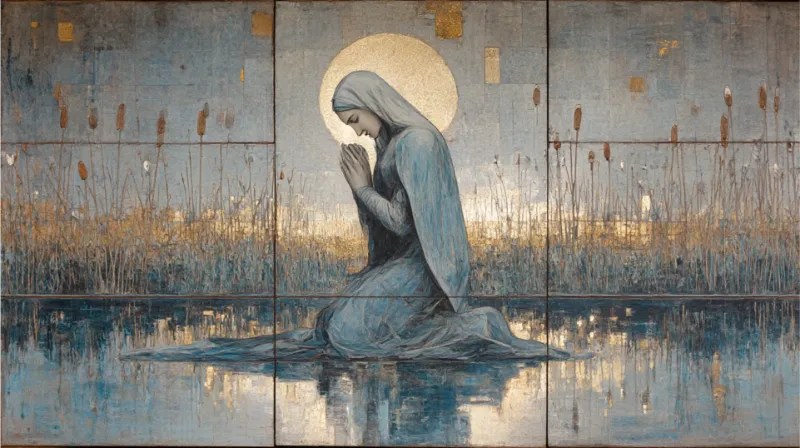
We also have David’s own words about dying, and they came on the day he and Bathsheba lost their baby. While the child was sick, David fasted and lay all night on the ground asking God to spare him. On the seventh day the baby died, and the servants were afraid to tell his father. Yet when David understood, he got up, washed, went to the house of the LORD to worship and then came home to eat. His servants asked what we might have asked. Why had he refused food while the child lived, only to eat now that he was dead? David answered them with a question of his own, “can I bring him back again? I shall go to him, but he shall not return to me” (2 Samuel 12:23).
Did David expect to see his son again?
David knew his son would never come home to him. What did he mean, then, when he said he would go to his son? Matthew Henry began with what the two would certainly share, “First, To him to the grave.” David himself says no more about where they might meet. But Henry also heard a father’s hope in those words, “Secondly, To him to heaven, to a state of blessedness, which even the Old Testament saints had some expectation of.” For a parent who has already had to say goodbye to a child, the comfort Henry offered was that they might see each other again and never have to say goodbye a second time. As he put it, “We shall be with them shortly, to part no more.”
Before the child fell ill, Nathan had told David that God forgave him. In the same conversation he told David that because of what he had done, his son would die (2 Samuel 12:13–15). Nathan spoke those words to David. If you have buried a child, no one can take what Nathan said to this father and tell you it explains your loss. You may still wish David had said more about whether we will know our loved ones in heaven. We can look back to Christ’s empty tomb. David had yet to see that promise fulfilled. What stays with me is where he went that day. The God he went to worship was the very one he had begged to spare his son.
How could God forgive David for what he did to Bathsheba and Uriah?
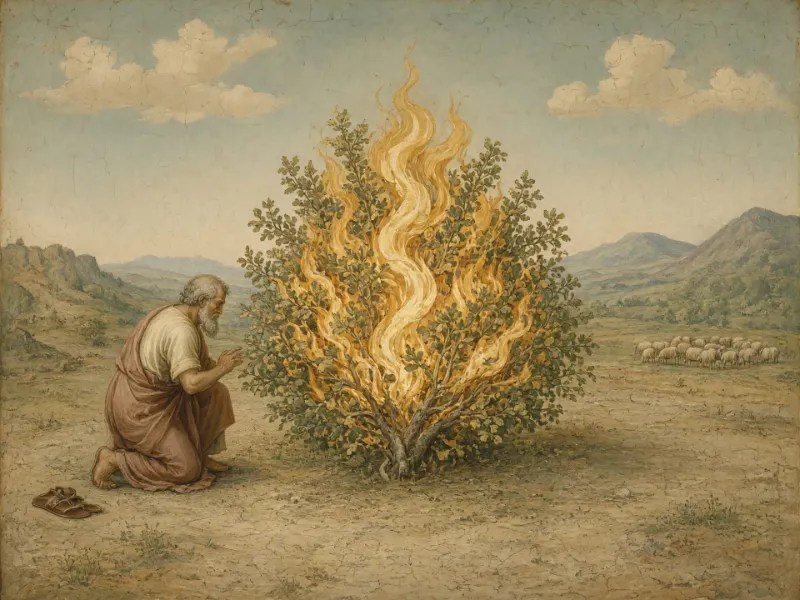
預言者 ネイサン told David about a poor man’s lamb that used to drink from his cup and lie against his chest. A rich man with flocks of his own had taken that lamb to feed a guest. David was so angry he wanted the thief put to death. Listen to the oath he swore before he knew whom he was judging. “As the LORD liveth, the man that hath done this thing shall surely die” (2 Samuel 12:5). Only then did Nathan tell him who the rich man was. “Thou art the man” (2 Samuel 12:7).
David had taken Bathsheba and sent her husband Uriah to die by the swords of the Ammonites. What could he say now, with his own oath still fresh? “I have sinned against the LORD,” David said. Nathan answered him, “The LORD also hath put away thy sin; thou shalt not die” (2 Samuel 12:13). Uriah was dead, and David could never give him back to Bathsheba. Yet the prophet who had the courage to tell the king what he had done was also the one God sent to tell him he was forgiven.
We can still pray with David about what it takes to begin again. The heading Augustine read over Psalm 51 takes us back to the meeting between the two men. “A Psalm of David himself, when there came to him Nathan the prophet.” David knew by then that God had forgiven him. Still he prayed, “Create in me a clean heart, O God; and renew a right spirit within me” (Psalm 51:10). Preaching on the psalm in Carthage, Augustine observed that “many men will to fall with David, and will not to rise with David”. If we find ourselves thinking that even David did such a thing, it’s worth remembering the rest of his story. Are we willing to admit what we’ve done as freely as he did when Nathan came?
God had warned David through Nathan that “the sword shall never depart from thine house” (2 Samuel 12:10), and violence troubled his family for the rest of his life. Had God really forgiven him if all that still followed? Augustine knew that question too. “Sometimes God in this world chastises for his sin him that He pardons in the world to come.” Centuries after David died, when Paul wanted to explain what it is to have faith that God will count us righteous, he turned first to Abraham, who “believed God, and it was counted unto him for righteousness” (Romans 4:3). Then, of all people, he let David tell us what it is like to be forgiven.
“Even as David also describeth the blessedness of the man, unto whom God imputeth righteousness without works, Saying, Blessed are they whose iniquities are forgiven, and whose sins are covered. Blessed is the man to whom the Lord will not impute sin” (Romans 4:6–8, quoting Psalm 32). These are the lines the evangelical writers at Got Questions have in mind when they say, “Paul then shows that David was also saved by faith.” The man whose words Paul gives us to make our own is the very man who sent Uriah to his death. When David speaks of the happiness of someone God has forgiven, he knows it for himself.
Why does Peter say David “is not ascended into the heavens”?
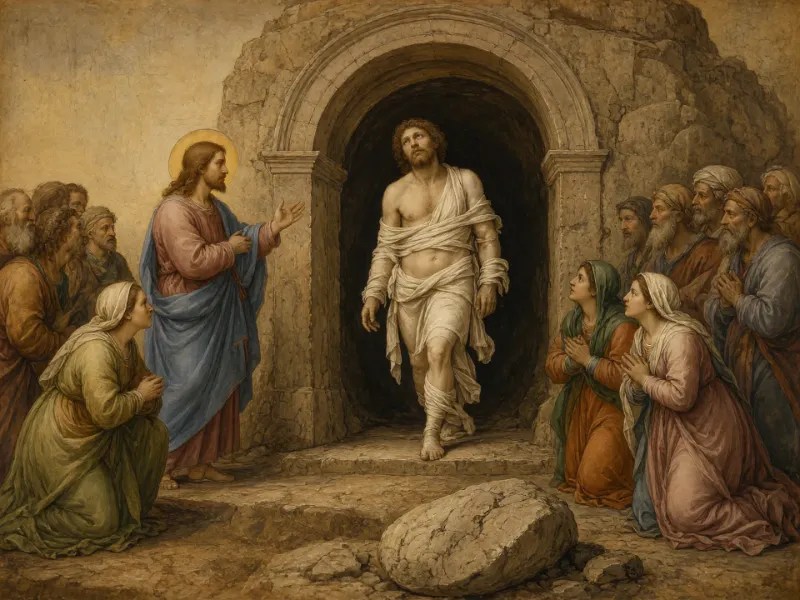
At Pentecost Peter’s listeners heard him repeat a promise from one of David’s psalms, “thou wilt not leave my soul in hell, neither wilt thou suffer thine Holy One to see corruption” (Acts 2:27, from Psalm 16:10). Whose body could David have meant? Peter reminded them, “Let me freely speak unto you of the patriarch David, that he is both dead and buried, and his sepulchre is with us unto this day” (Acts 2:29). Paul says much the same of David, who “fell on sleep, and was laid unto his fathers, and saw corruption” (Acts 13:36).
The people listening to Peter knew where David was buried in Jerusalem. Now Peter stood before them as a witness to what God had done for Jesus. “This Jesus hath God raised up,” he told them (Acts 2:32). David, “being a prophet,” had looked ahead and “spake of the resurrection of Christ” (Acts 2:30–31). Then Peter turned to Psalm 110:1. Who had taken his seat beside God? “For David is not ascended into the heavens: but he saith himself, The Lord said unto my Lord, Sit thou on my right hand” (Acts 2:34). Matthew Henry understood Peter to mean just that when he wrote, “As David did not rise from the dead, so neither did he ascend into the heavens, bodily, as Christ did.”
Jehovah’s Witnesses understand Peter to be saying where David himself is now. They read his words alongside Jesus’ words in John 3:13, “No man has ascended into heaven,” and conclude “that good people who died before him, such as Abraham, Moses, Job, and David, did not go to heaven”. What hope, then, would a Witness hold out for the father who had buried his son? In the words of their church, “Instead, they had the hope of being resurrected to life on earth.”
Even with David’s tomb so near, Peter can speak of him as a patriarch and a prophet, and can hear the voice of Christ in the psalm David gave us. We can still pray the words Peter drew on from Psalm 16, “my flesh also shall rest in hope” (Psalm 16:9). When Hebrews names David among the faithful (Hebrews 11:32), listen for the word that brings us into his story. God meant for us to receive what he promised together, so that “they without us should not be made perfect” (Hebrews 11:40).
What do five churches teach about David after death?
| 教会 | What the church teaches about David | その言葉通りに |
|---|---|---|
| 天主教 | With God, among the just Christ freed when he went down to the dead | “holy souls, who awaited their Saviour in Abraham’s bosom” (Catechism 633) |
| 正教会 | Among the saints | “steadfast faith in the coming of the promised Messiah” |
| 長老派および改革派 | In heaven since the hour he died | “received into the highest heavens” (Westminster Confession 32.1) |
| エホバの証人 | In the grave, awaiting resurrection on earth | “did not go to heaven” |
| 末日聖徒 | Fallen from the highest blessing | “fallen from his exaltation, and received his portion” (Doctrine and Covenants 132:39) |
For Catholics and Orthodox Christians, the hope David had when he died leads us to what Jesus did when he went down to the dead. The Catholic Catechism explains why Scripture calls the place of the dead “hell,” also called Sheol or Hades. It was “because those who are there are deprived of the vision of God,” and that was true “for all the dead, whether evil or righteous, while they await the Redeemer.” Even those who loved God were waiting to see his face. Christ went to them in death, and “He opened heaven’s gates for the just who had gone before him” (Catechism 633 and 637).
If we look for David’s name in those paragraphs, we won’t find it. But remember what Peter called him at Pentecost. David was a prophet (Acts 2:30), and the Catechism says, “The patriarchs, prophets and certain other Old Testament figures have been and always will be honoured as saints in all the Church’s liturgical traditions” (Catechism 61). In the Orthodox icon of Holy Saturday we can see what it means for Christ to come for those who have died. Of Christ in Hades the Orthodox Church in America writes, “With arms outstretched He is joining hands with Adam and all the other Old Testament righteous whom He has found there. He leads them from the kingdom of death.”
Orthodox Christians who pray David’s psalms in church can hear his name on both sides of Christmas. On the Sunday before Christmas they remember “The holy Prophet-King David, son of Jesse”. They keep his feast with Joseph the Betrothed and James, the brother of the Lord, on the Sunday after Christmas, or on December 26 when Christmas falls on a Sunday. Listen to what the Orthodox Church in America remembers about the man whose prayers we still borrow. “The life of the Prophet David was darkened by a grievous falling,” it says, and names what he did to Bathsheba and how he sent Uriah to his death. “He was also an example of great repentance.” The church points us to Psalm 51, where we can hear him ask for that clean heart, and tells us how his life ended. “King David died in great old age with steadfast faith in the coming of the promised Messiah.”
Presbyterian and Reformed Christians believe David went to God the hour he died. How could he already be with God when Christ had yet to come? The Westminster Confession says the promises and sacrifices God gave his people were enough “to instruct and build up the elect in faith in the promised Messiah, by whom they had full remission of sins, and eternal salvation” (7.5). David could trust Christ on the strength of God’s promise just as we trust the Christ who came. “The justification of believers under the old testament was, in all these respects, one and the same with the justification of believers under the new testament” (11.6).
Think again of the tomb Peter’s listeners knew. On the Reformed understanding, David could already see God’s face while his body still lay in Jerusalem. At death, the Confession says, “the souls of the righteous, being then made perfect in holiness, are received into the highest heavens,” where they are “waiting for the full redemption of their bodies” (32.1). What David still waits for is the day God will raise his body too.
When Latter-day Saints say David fell from his exaltation, what do they believe he lost? Think of the hope a family has of staying together even after death. The Church puts it this way. “Eternal life, or exaltation, is to live in God’s presence and to continue as families.” That was the blessing David lost when he took Bathsheba from Uriah. Does that mean he went to hell? The passage Latter-day Saints turn to leaves that question open.
In Doctrine and Covenants 132:39, recorded in 1843, the Lord says he gave David his wives and concubines through Nathan. David did no wrong in those marriages, the verse says, “save in the case of Uriah and his wife”. It is for what David did to those two that the Lord says “he hath fallen from his exaltation, and received his portion.”
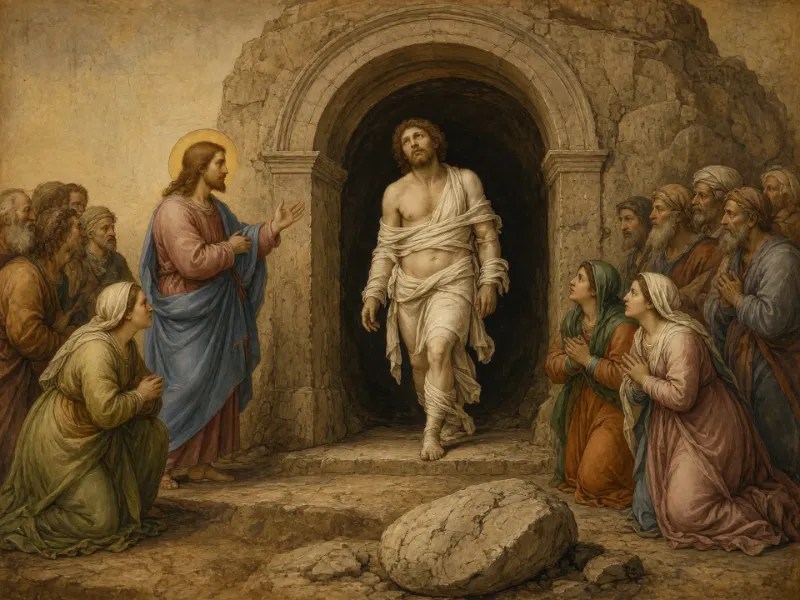
Why is David called “a man after God’s own heart”?
Samuel was speaking to Saul when he told him his kingdom would come to an end. Of the man who would be king after Saul, Samuel said, “the LORD hath sought him a man after his own heart” (1 Samuel 13:14). We might wonder how anyone could still say that of David after what he did to Uriah. Yet long after David’s death, Paul stood in a synagogue in Antioch and repeated God’s words about him, “I have found David the son of Jesse, a man after mine own heart, which shall fulfil all my will” (Acts 13:22). If we want to know what God saw in David, we can begin with the day Nathan came to him. The man who needed a clean heart knew whom to ask for one.
Jesus asked the Pharisees a question about the Christ whom David had looked forward to, “How then doth David in spirit call him Lord?” (Matthew 22:43). The shepherd boy who became “the sweet psalmist of Israel” put his hope in the Son who would sit at God’s right hand. In “the last words of David” we hear what he still counted on, “Although my house be not so with God; yet he hath made with me an everlasting covenant, ordered in all things, and sure: for this is all my salvation, and all my desire” (2 Samuel 23:1, 5).


コメントを残す