
 English
 Chinese
 Dutch
 Arabic
 Spanish
 Portuguese
 Russian
 French
 Italian
 German
 Japanese
The Old Testament holds the promises, and the New tells how they were kept. The Old, written mostly in Hebrew before Christ, holds the Scriptures Jesus read. The New is 27 books in Greek, written after his resurrection about his life and the first churches, and Christians read both as one story.
Jesus himself showed us how. On the first Easter Day, two disciples walked to Emmaus, talking over everything that had happened, and a stranger joined them. “And beginning at Moses and all the prophets, he expounded unto them in all the scriptures the things concerning himself” (Luke 24:27). The only Bible they had was what we call the Old Testament, and the risen Lord opened it to them page by page. The New Testament grew out of reading the Scriptures that way.
What are the main differences between the Old and New Testaments?
| Question | Old Testament | New Testament |
|---|---|---|
| Books | 39 (Protestant); 46 (Catholic); more in Orthodox Bibles | 27 (Protestant and Catholic) |
| Language | Hebrew, with parts of Daniel and Ezra in Aramaic; some of the Catholic and Orthodox books in Greek | Greek |
| Written | Before Christ | From about AD 50 to the 90s |
| Tells of | Creation, Abraham’s family, Israel, the law, kings and prophets | Jesus’ life, death and resurrection, and the first churches |
| Covenant | With Noah, Abraham, and Israel at Sinai | The new covenant in Christ’s blood |
| Looks | Forward to a promised king and saviour | Back to Christ, and ahead to his return |
| In the Jewish Bible? | Its Hebrew books, as the Tanakh | No |
The two Bibles count differently because Catholic Bibles include seven books, among them Tobit, Judith, Wisdom, Sirach and 1 and 2 Maccabees, that Protestant Bibles do not. The story behind that is told in the seven books in Catholic Bibles but not Protestant ones. Orthodox Christians accept these books too, as what the Orthodox Church in America calls “the longer canon,” and add a few more, such as the Prayer of Manasseh. Protestant and Catholic Bibles have the same 27 books in the New Testament.
The languages follow the people. The Old Testament was written in Hebrew, which the Westminster Confession calls “the native language of the people of God of old,” and a few chapters of Daniel and Ezra are in Aramaic. Some of the longer canon was written in Greek: the Catholic Encyclopedia says the whole Book of Wisdom “was composed in Greek,” and so, it judges, was 2 Maccabees. The New Testament was written in Greek, the language “most generally known to the nations” in the first century. Paul’s first letter to the Thessalonians dates from about AD 51, and Revelation probably took its final form near the end of the emperor Domitian’s reign (AD 81–96).
The Old Testament is also the Bible of the Jewish people, who call it the Tanakh, after its three parts: Torah (Teaching), Nevi’im (Prophets) and Ketuvim (Writings). My Jewish Learning calls it “the founding document of the people of Israel.” Jewish readers do not call it “old”; for them it is the whole of Scripture. How its books line up with the Christian Old Testament is set out in the Old Testament and the Tanakh.
Why are they called “testaments”?
Because “testament” is an old word for covenant. The Greek word in the New Testament is diathēkē; the Latin Vulgate rendered it testamentum, the word behind our English “testament,” and the King James Bible translates it both “covenant” and “testament.” A covenant is a bond God makes with his people, sealed by his promise. He made one with Noah, with Abraham (“to be a God unto thee, and to thy seed after thee,” Genesis 17:7), and with Israel at Sinai, where Moses sprinkled the people and said, “Behold the blood of the covenant, which the Lord hath made with you” (Exodus 24:8).
Then, centuries later, God spoke through Jeremiah: “Behold, the days come, saith the Lord, that I will make a new covenant with the house of Israel, and with the house of Judah … I will put my law in their inward parts, and write it in their hearts” (Jeremiah 31:31, 33). On the night before he died, Jesus took a cup and gave it to his disciples with words that echo both Sinai and Jeremiah: “This cup is the new testament in my blood, which is shed for you” (Luke 22:20). The names of the two halves of our Bible echo that table. The Old Testament is the story of the covenants God made with his people. The New is the story of the covenant Jesus sealed with his own blood.
Is the God of the Old Testament different from the God of the New?
No. Christians have always confessed one God in both, and the question is older than we might think. In the early Church, Irenaeus reports, a teacher named Marcion called the God of the law and the prophets “the author of evils,” and taught that Jesus came from a higher Father above him. Irenaeus called it “the most daring blasphemy against Him who is proclaimed as God by the law and the prophets.” The Catechism of the Catholic Church still says that the Church “has always vigorously opposed the idea of rejecting the Old Testament under the pretext that the New has rendered it void (Marcionism),” and the Church of England’s Articles put it in a single line: “The Old Testament is not contrary to the New.”
The Old Testament has its battles and its judgments, and the New has its warnings too. But the God who passed before Moses on Sinai named himself “merciful and gracious, longsuffering, and abundant in goodness and truth” (Exodus 34:6). “I am the Lord, I change not,” he says through Malachi (Malachi 3:6). What changed was how close he came. “God, who at sundry times and in divers manners spake in time past unto the fathers by the prophets, hath in these last days spoken unto us by his Son” (Hebrews 1:1–2). The voice in the burning bush and the voice on the road to Emmaus belong to the same God.
Do Christians still follow the Old Testament law?
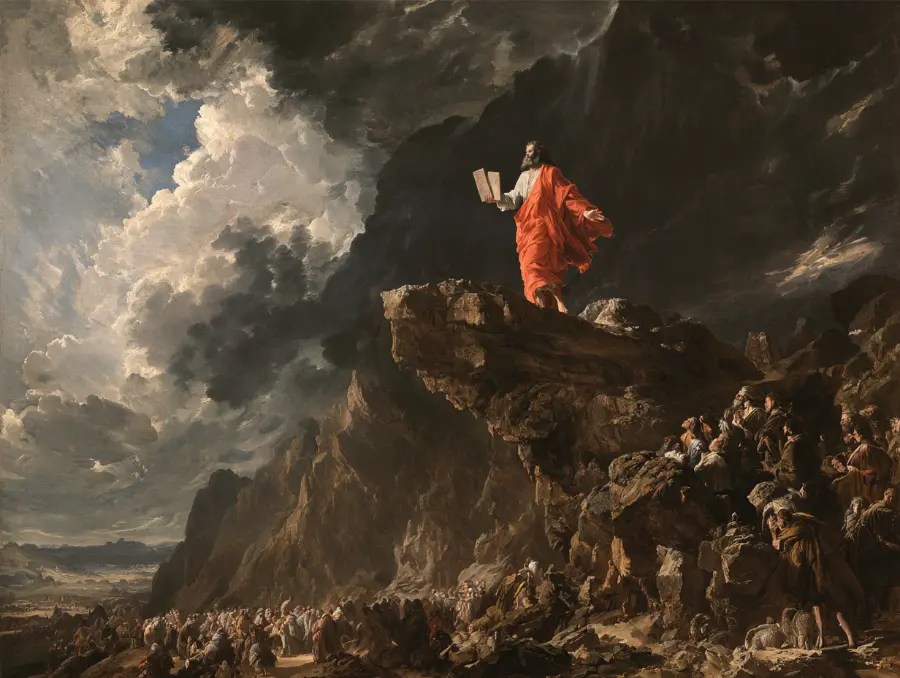
Christians keep the law’s heart, the love of God and of neighbour, and the churches explain the rest each in its own way. Jesus said, “Think not that I am come to destroy the law, or the prophets: I am not come to destroy, but to fulfil” (Matthew 5:17). Asked for the greatest commandment, he answered from the law itself, with the love of God from Deuteronomy and the love of neighbour from Leviticus: “On these two commandments hang all the law and the prophets” (Matthew 22:40).
The apostles met in Jerusalem to decide what to ask of Gentile believers, and wrote that “it seemed good to the Holy Ghost, and to us, to lay upon you no greater burden than these necessary things”: to keep from food offered to idols, from blood, from things strangled and from fornication (Acts 15:28–29).
The Church of England’s Article 7 draws a line that many Protestants share: the law’s ceremonies and rites “do not bind Christian men,” its civil laws need not be adopted by any nation, “yet notwithstanding, no Christian man whatsoever is free from the obedience of the Commandments which are called Moral.” The Catholic Catechism says the Old Law’s “moral prescriptions are summed up in the Ten Commandments,” and that “according to Christian tradition, the Law is holy, spiritual, and good, yet still imperfect,” because it shows what must be done but “does not of itself give the strength, the grace of the Spirit, to fulfill it.” Lutherans read Scripture through two words, law and gospel; their Formula of Concord says “the distinction between the Law and the Gospel is to be maintained in the Church with great diligence as an especially brilliant light.” The law shows our sin, and the gospel brings “a joyful message which does not reprove or terrify, but comforts consciences.”
One commandment the churches keep differently is the Sabbath. Most Christians keep Sunday as the Lord’s Day; the Westminster Confession says the Sabbath “from the resurrection of Christ, was changed into the first day of the week.” Seventh-day Adventists keep Saturday. “The fourth commandment of God’s unchangeable law requires the observance of this seventh-day Sabbath,” their fundamental beliefs say, “as the day of rest, worship, and ministry in harmony with the teaching and practice of Jesus, the Lord of the Sabbath.” Whichever day we keep, none of us offers the sacrifices of Leviticus any longer, because Christ “offered one sacrifice for sins for ever” (Hebrews 10:12). There is more on how Jesus kept and completed the law in Jesus and the fulfilment of the Law.
How does the New Testament fulfil the Old?
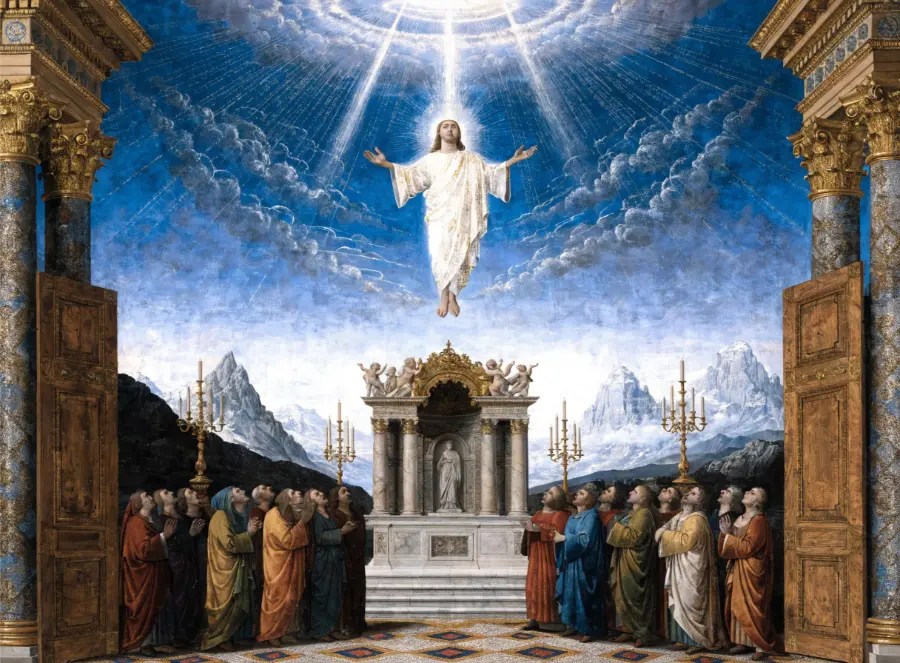
That same Easter evening, back in Jerusalem, Jesus told his disciples that “all things must be fulfilled, which were written in the law of Moses, and in the prophets, and in the psalms, concerning me” (Luke 24:44). The New Testament writers keep showing us where. When Herod asked where the Christ would be born, the scribes did not guess. They pointed to Micah: “But thou, Bethlehem Ephratah … out of thee shall he come forth unto me that is to be ruler in Israel” (Micah 5:2; Matthew 2:5–6). When the first Christians spoke of the cross, they heard it in Isaiah: “he was wounded for our transgressions, he was bruised for our iniquities … and with his stripes we are healed” (Isaiah 53:5). Peter wrote of Christ, “by whose stripes ye were healed” (1 Peter 2:24).
The Church has read the whole Old Testament this way from the beginning, finding in God’s works for Israel figures of what he would do in Christ. The Catechism quotes an old saying, from Augustine: “the New Testament lies hidden in the Old and the Old Testament is unveiled in the New.” It adds a caution worth keeping: the Old Testament “retains its own intrinsic value as Revelation,” and is not only a set of clues. “The Lord is my shepherd; I shall not want” (Psalm 23:1) was Israel’s prayer long before it was ours.
Why should Christians read the Old Testament?
Because it was the Bible of Jesus and his apostles. When Paul told Timothy that “from a child thou hast known the holy scriptures, which are able to make thee wise unto salvation through faith which is in Christ Jesus” (2 Timothy 3:15), the scriptures Timothy had known from childhood were the books we call the Old Testament. “For whatsoever things were written aforetime were written for our learning,” Paul wrote, “that we through patience and comfort of the scriptures might have hope” (Romans 15:4).
It is also the story of the people through whom the promise came. Paul says of Israel, “to whom pertaineth the adoption, and the glory, and the covenants, and the giving of the law, and the service of God, and the promises,” and from whom Christ came “as concerning the flesh” (Romans 9:4–5). He warns believers from other nations not to look down on the branches of that tree: “thou bearest not the root, but the root thee” (Romans 11:18). We read the Old Testament as people grafted into an old and holy family.
And we read it the way those two disciples learned to read it, with the Lord beside us. When they finally knew him, they asked each other, “Did not our heart burn within us, while he talked with us by the way, and while he opened to us the scriptures?” (Luke 24:32).


Leave a Reply