
 English
 Chinese
 Dutch
 Arabic
 Spanish
 Portuguese
 Russian
 French
 Italian
 German
 Japanese
The Bible roots marriage in the creation story, where a man and his wife become one flesh, and Jesus goes back to that story when he is asked about divorce. The letters set out what husbands and wives owe each other (Ephesians 5:25-33, 1 Peter 3:7), and Proverbs 5:18-19 and Hebrews 13:4 call for delight and faithfulness.
Two passages often read at weddings, 1 Corinthians 13:4-7 and Ecclesiastes 4:12, do not mention marriage: the first describes love among believers, and the second the companionship of two people.
Where marriage begins
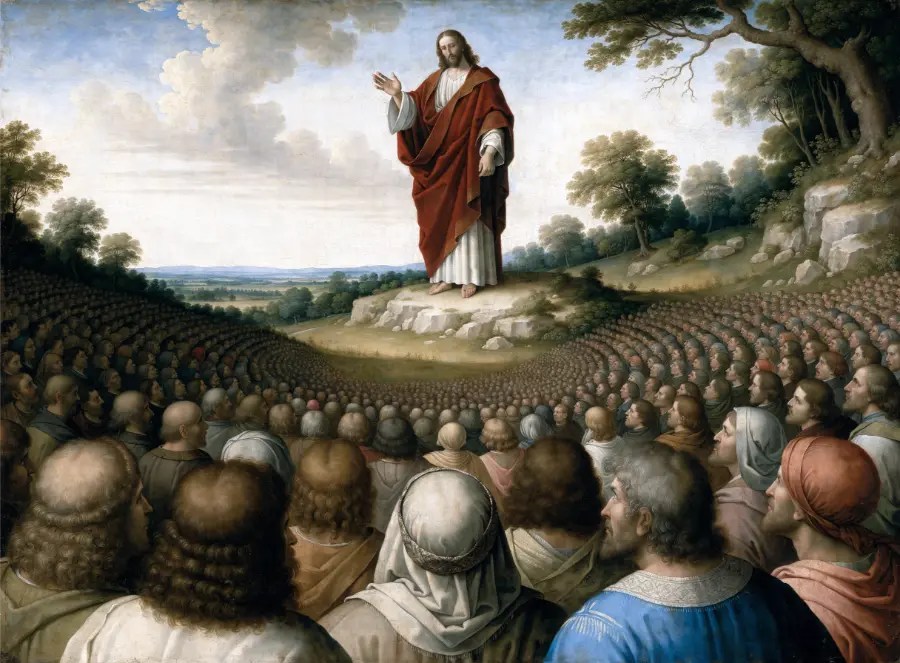
Genesis 2:24
“Therefore a man shall leave his father and his mother and hold fast to his wife, and they shall become one flesh.”
Reflection: The verse follows the making of the woman and the man’s words, “This at last is bone of my bones and flesh of my flesh.” God has already said, “It is not good that the man should be alone” (Genesis 2:18), and the narrator draws the rule from the story with “Therefore”: a man leaves his parents, holds fast to his wife, and the two become one flesh. Jesus quotes the verse in Mark 10:7-8, and Paul in Ephesians 5:31.

Mark 10:9
“What therefore God has joined together, let not man separate.”
Reflection: Pharisees asked Jesus, to test him, whether a man may divorce his wife. When Jesus asked what Moses commanded, they said Moses allowed a certificate of divorce. He answered that Moses wrote that commandment “because of your hardness of heart,” then went back to Genesis: “from the beginning of creation, ‘God made them male and female.’” Matthew’s account of the same exchange adds an exception “for sexual immorality” (Matthew 19:9), which Mark’s account does not have.
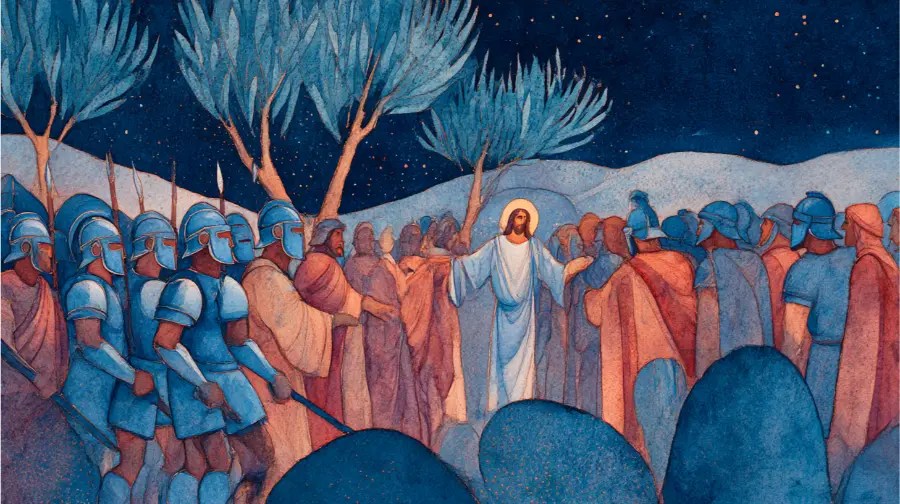
Proverbs 18:22
“He who finds a wife finds a good thing and obtains favor from the Lord.”
Reflection: The proverb puts two things in one line: the man finds a wife, and he obtains favor from the Lord. Proverbs 19:14 credits the Lord in the same way: “House and wealth are inherited from fathers, but a prudent wife is from the Lord.”
What husbands and wives owe each other

Ephesians 5:25
“Husbands, love your wives, as Christ loved the church and gave himself up for her.”
Reflection: The instruction to husbands comes after “submitting to one another out of reverence for Christ” (Ephesians 5:21) and the call for wives to submit to their husbands. The measure Paul gives husbands is Christ, who “gave himself up” for the church. The following verses continue the comparison: husbands are to love their wives “as their own bodies” and to nourish and cherish them, “just as Christ does the church” (5:28-29).
Ephesians 5:33
“However, let each one of you love his wife as himself, and let the wife see that she respects her husband.”
Reflection: Paul has just quoted Genesis 2:24 and said, “This mystery is profound, and I am saying that it refers to Christ and the church.” With “However” he turns back to ordinary households and sums up the section in two duties: the husband loves his wife as himself, and the wife respects her husband.
Colossians 3:19
“Husbands, love your wives, and do not be harsh with them.”
Reflection: Colossians gives the husband’s duty in one line and adds a prohibition that Ephesians 5 does not state: “do not be harsh with them.” The verse follows directly on the instruction to wives in 3:18, after a list of virtues addressed to the whole church in 3:12-17.
1 Peter 3:7
“Likewise, husbands, live with your wives in an understanding way, showing honor to the woman as the weaker vessel, since they are heirs with you of the grace of life, so that your prayers may not be hindered.”
Reflection: Peter spends six verses on wives, including those whose husbands “do not obey the word” (3:1). His one verse to husbands asks them to live with their wives “in an understanding way” and to honor them, and gives two reasons: the wife is a fellow heir “of the grace of life,” and a husband who fails here will find his prayers hindered. The next verses turn to “all of you” and forbid repaying “evil for evil or reviling for reviling” (3:8-9).
1 Corinthians 7:3-4
“The husband should give to his wife her conjugal rights, and likewise the wife to her husband. For the wife does not have authority over her own body, but the husband does. Likewise the husband does not have authority over his own body, but the wife does.”
Reflection: Paul is answering a letter from Corinth, and the ESV prints “It is good for a man not to have sexual relations with a woman” (7:1) as a line quoted from that letter. His answer gives husband and wife matching duties: each owes the other, and each has authority over the other’s body. Verse 5 allows a pause only “by agreement for a limited time” for prayer, and then the couple should “come together again.”
Delight and faithfulness
Proverbs 5:18-19
“Let your fountain be blessed, and rejoice in the wife of your youth, a lovely deer, a graceful doe. Let her breasts fill you at all times with delight; be intoxicated always in her love.”
Reflection: Addressed to “my son” (5:20), the chapter warns against the forbidden woman in the language of water: drink from “your own cistern” and do not let your springs run “in the streets” (5:15-16). The alternative it offers is delight in “the wife of your youth,” described in open physical terms.
Song of Solomon 8:6-7
“Set me as a seal upon your heart, as a seal upon your arm, for love is strong as death, jealousy is fierce as the grave. Its flashes are flashes of fire, the very flame of the Lord. Many waters cannot quench love, neither can floods drown it. If a man offered for love all the wealth of his house, he would be utterly despised.”
Reflection: The speaker asks to be set as a seal on the beloved’s heart and arm, and gives the reason: “love is strong as death.” Verse 7 adds that floods cannot drown love and that it cannot be bought; a man who offered all the wealth of his house for it “would be utterly despised.”
Proverbs 31:10-11
“An excellent wife who can find? She is far more precious than jewels. The heart of her husband trusts in her, and he will have no lack of gain.”
Reflection: Proverbs 31:10-31 describes an excellent wife. The first thing said of her after her worth is that her husband trusts her. The description ends with her husband’s praise and the line “Charm is deceitful, and beauty is vain, but a woman who fears the Lord is to be praised” (31:30).

Hebrews 13:4
“Let marriage be held in honor among all, and let the marriage bed be undefiled, for God will judge the sexually immoral and adulterous.”
Reflection: The verse sits in a run of short commands near the end of Hebrews: brotherly love, hospitality to strangers, care for prisoners. Marriage is to be held in honor “among all” and the marriage bed kept undefiled, with a warning that names two groups God will judge. The next verse turns to the love of money.
Malachi 2:16
“For the man who does not love his wife but divorces her, says the Lord, the God of Israel, covers his garment with violence, says the Lord of hosts. So guard yourselves in your spirit, and do not be faithless.”
Reflection: Malachi is answering people who weep at the altar because God no longer accepts their offerings (2:13). The reason given is that the Lord was witness between a man and “the wife of your youth, to whom you have been faithless, though she is your companion and your wife by covenant” (2:14). Translations render verse 16 in two ways: the King James Version has God saying “he hateth putting away,” while the ESV and NIV make the man who divorces his wife the subject.
Love among believers and companions
1 Corinthians 13:4-7
“Love is patient and kind; love does not envy or boast; it is not arrogant or rude. It does not insist on its own way; it is not irritable or resentful; it does not rejoice at wrongdoing, but rejoices with the truth. Love bears all things, believes all things, hopes all things, endures all things.”
Reflection: Paul writes this about love among believers. The chapter opens by setting love above tongues, prophecy, knowledge and even giving away everything, and ends with “the greatest of these is love.” Most of the list in verses 4-7 is what love does not do: envy, boast, insist on its own way, keep resentment.
Colossians 3:14
“And above all these put on love, which binds everything together in perfect harmony.”
Reflection: Love is the last item in a list of what believers are to “put on”: compassion, kindness, humility, meekness, patience, and the forgiveness of the verse before, “as the Lord has forgiven you, so you also must forgive” (3:13). Love “binds everything together.”
1 John 4:19
“We love because he first loved us.”
Reflection: John places the source of love in God: “In this is love, not that we have loved God but that he loved us and sent his Son” (4:10). Verse 11 draws the conclusion, “if God so loved us, we also ought to love one another,” and verse 19 states the order: God loved first.
Ecclesiastes 4:12
“And though a man might prevail against one who is alone, two will withstand him—a threefold cord is not quickly broken.”
Reflection: The Preacher describes “one person who has no other, either son or brother,” whose toil has no end (4:8). Against him he sets two people: they share the reward, one lifts the other when he falls, and “if two lie together, they keep warm” (4:9-11). Verse 12 adds a third strand to the cord without saying what it stands for.


Leave a Reply