
 English
  Chinese
  Dutch
Dutch  Arabic
  Spanish
  Portuguese
  Russian
  French
  Italian
  German
  Japanese
 The Bible tells people to lean on God, not on their own understanding, other powers or their own strength. Proverbs 3:5 uses the verb sha’an for what not to lean on; the same verb describes relying on the Lord in 2 Chronicles 16:8, Isaiah 10:20 and Isaiah 50:10.
Other passages give the same trust other pictures: rolling one’s way onto the Lord (Psalm 37:5), casting cares on him (Psalm 55:22), taking Jesus’ yoke (Matthew 11:28-30), and running into the name of the Lord as into a fortified tower (Proverbs 18:10).
Leaning on God instead of on something else
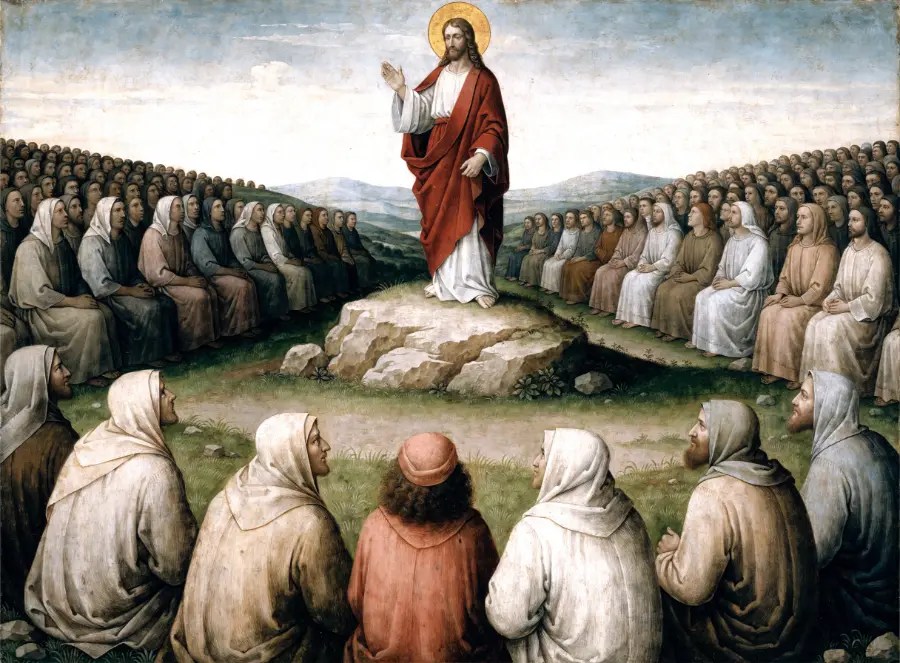
Proverbs 3:5-6
“Trust in the Lord with all your heart and lean not on your own understanding; in all your ways submit to him, and he will make your paths straight.”
Reflection: A father is teaching his son (Proverbs 3:1), and the contrast in these lines is between two things to put weight on: the Lord, trusted with the whole heart, and one’s own understanding. The Hebrew verb for lean, sha’an, means to support oneself or rely, and here it is used for the understanding a person should not lean on. Verse 7 repeats the warning in other words: “Do not be wise in your own eyes; fear the Lord and shun evil.”
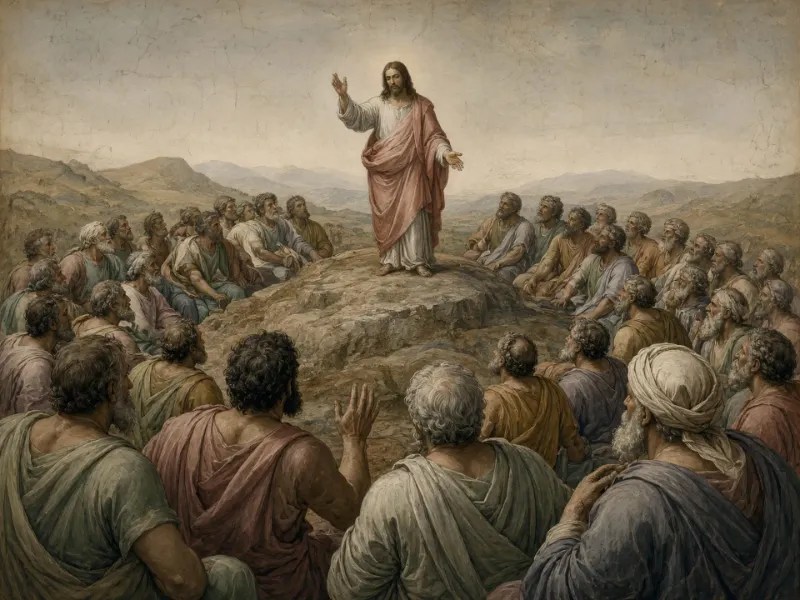
2 Chronicles 16:8
“Were not the Cushites and Libyans a mighty army with great numbers of chariots and horsemen? Yet when you relied on the Lord, he delivered them into your hand.”
Reflection: Hanani the seer is speaking to Asa king of Judah. Earlier Asa had prayed before a battle, “Help us, Lord our God, for we rely on you” (2 Chronicles 14:11), and the Lord struck down the Cushites (2 Chronicles 14:12). Later Asa sent silver and gold from the temple treasuries to Ben-Hadad king of Aram, asking him to break his treaty with Baasha king of Israel (2 Chronicles 16:2-3). Hanani sets the two occasions side by side, and verse 9 adds that “the eyes of the Lord range throughout the earth to strengthen those whose hearts are fully committed to him.”
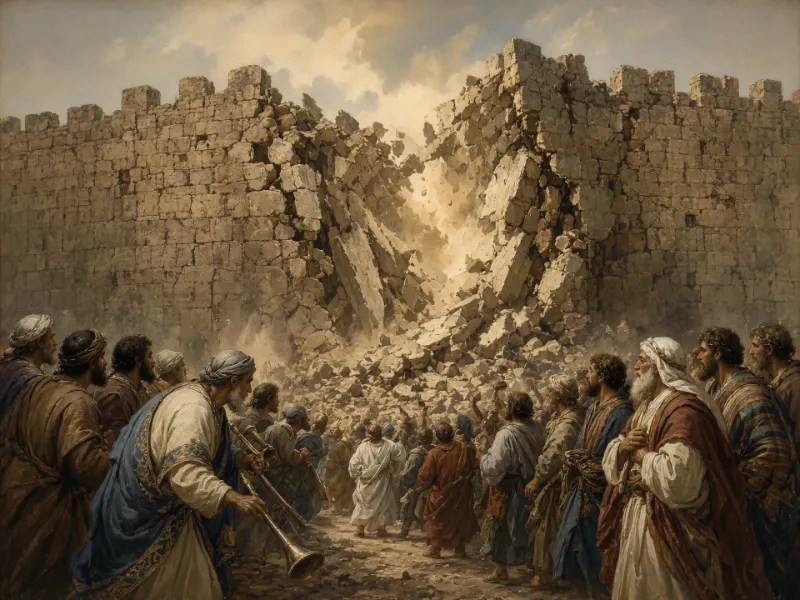
Isaiah 10:20
“In that day the remnant of Israel, the survivors of Jacob, will no longer rely on him who struck them down but will truly rely on the Lord, the Holy One of Israel.”
Reflection: “Him who struck them down” is Assyria, which the chapter calls “the rod of my anger” (Isaiah 10:5) and describes as beating Zion with a rod (Isaiah 10:24). The verb for rely is used twice, once for the wrong support and once for the right one. The next verse gives the remnant’s movement another name: “A remnant will return, a remnant of Jacob will return to the Mighty God.”
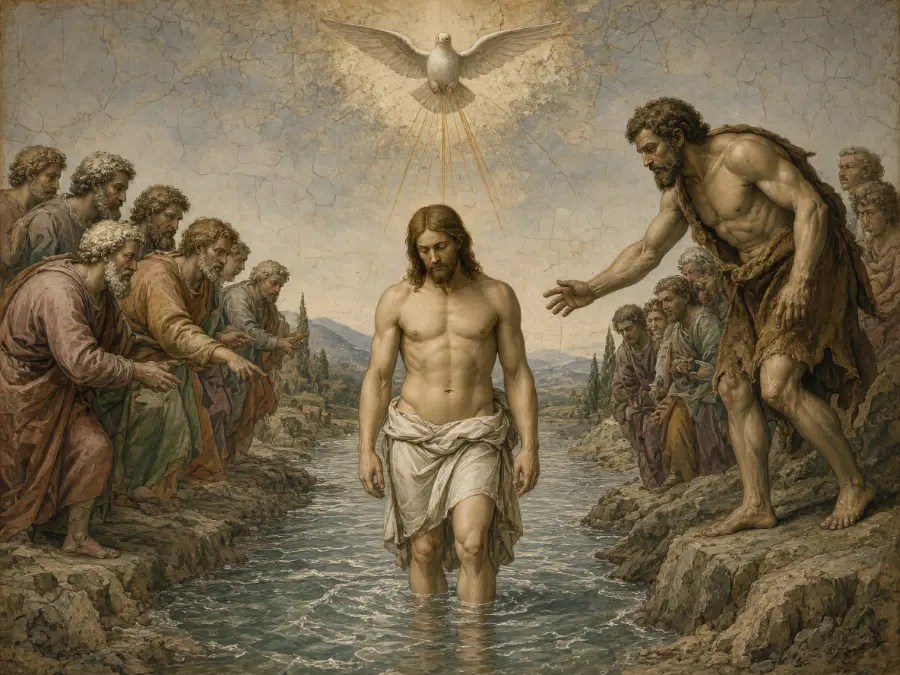
Jeremiah 17:7-8
“But blessed is the one who trusts in the Lord, whose confidence is in him. They will be like a tree planted by the water that sends out its roots by the stream. It does not fear when heat comes; its leaves are always green. It has no worries in a year of drought and never fails to bear fruit.”
Reflection: The blessing answers a curse two verses earlier: “Cursed is the one who trusts in man, who draws strength from mere flesh” (Jeremiah 17:5), who is like a bush in the desert. The tree planted by the water still meets heat and drought; what the verse promises is that it does not wither or stop bearing fruit when they come. Psalm 1:3 uses a similar tree for the person who delights in God’s law.
Proverbs 18:10
“The name of the Lord is a fortified tower; the righteous run to it and are safe.”
Reflection: The proverb that follows sets a second fortified place beside this one: “The wealth of the rich is their fortified city; they imagine it a wall too high to scale” (Proverbs 18:11).
2 Corinthians 1:9
“Indeed, we felt we had received the sentence of death. But this happened that we might not rely on ourselves but on God, who raises the dead.”
Reflection: Paul is describing troubles in the province of Asia, where he and his companions were “under great pressure, far beyond our ability to endure” (2 Corinthians 1:8). He gives the danger a purpose: it happened so that they would rely on God rather than on themselves. The God he names is the one “who raises the dead”, and verse 10 adds, “He has delivered us from such a deadly peril, and he will deliver us again.”

Isaiah 50:10
“Who among you fears the Lord and obeys the word of his servant? Let the one who walks in the dark, who has no light, trust in the name of the Lord and rely on their God.”
Reflection: The verse speaks to someone who fears the Lord and still “walks in the dark” with no light, and tells that person to rely on God, again with the verb sha’an. Verse 11 turns to those who light their own fires and walk by their own torches, and says they “will lie down in torment.”
When a person’s own strength is gone
2 Corinthians 12:9-10
“But he said to me, ‘My grace is sufficient for you, for my power is made perfect in weakness.’ Therefore I will boast all the more gladly about my weaknesses, so that Christ’s power may rest on me. That is why, for Christ’s sake, I delight in weaknesses, in insults, in hardships, in persecutions, in difficulties. For when I am weak, then I am strong.”
Reflection: Paul had pleaded three times for the Lord to take away “a thorn in my flesh, a messenger of Satan” (2 Corinthians 12:7-8), and this is the answer he received. Paul’s conclusion comes in verse 10: “For when I am weak, then I am strong.”
Isaiah 40:31
“But those who hope in the Lord will renew their strength. They will soar on wings like eagles; they will run and not grow weary, they will walk and not be faint.”
Reflection: The promise answers a complaint in verse 27, where Jacob says, “My way is hidden from the Lord; my cause is disregarded by my God.” Isaiah replies that the Lord “will not grow tired or weary” and “gives strength to the weary”, while “even youths grow tired and weary” (Isaiah 40:28-30). The strength is promised to “those who hope in the Lord”, which the verse sets against youthful strength.

Philippians 4:13
“I can do all this through him who gives me strength.”
Reflection: “All this” refers to the verses just before, where Paul says he has learned to be content “whether well fed or hungry, whether living in plenty or in want” (Philippians 4:12). He is thanking the Philippians for a gift sent with Epaphroditus (Philippians 4:18), while saying he is not writing because he is in need (Philippians 4:11). The strength he names is for going without as well as for having plenty.

Isaiah 41:10
“So do not fear, for I am with you; do not be dismayed, for I am your God. I will strengthen you and help you; I will uphold you with my righteous right hand.”
Reflection: God is speaking to Israel, “my servant, Jacob, whom I have chosen”, the descendants of “Abraham my friend” (Isaiah 41:8). Each of the promises in this verse has God as its subject: he is with them, he is their God, and he will strengthen, help and uphold them. The command not to fear rests on those promises.
Exodus 14:14
“The Lord will fight for you; you need only to be still.”
Reflection: Moses says this to Israel at the sea, with Pharaoh’s army approaching and the people asking whether he brought them out of Egypt to die in the desert (Exodus 14:10-11). In the next verse the Lord tells Moses, “Tell the Israelites to move on” (Exodus 14:15).
Handing the weight to God

Psalm 55:22
“Cast your cares on the Lord and he will sustain you; he will never let the righteous be shaken.”
Reflection: The psalm is written after betrayal by “my companion, my close friend, with whom I once enjoyed sweet fellowship at the house of God” (Psalm 55:13-14). The verse says to cast one’s cares on the Lord, and the psalm closes with the writer doing so: “But as for me, I trust in you” (Psalm 55:23). First Peter 5:7 gives a similar instruction: “Cast all your anxiety on him because he cares for you.”
Psalm 37:5
“Commit your way to the Lord; trust in him and he will do this.”
Reflection: The Hebrew verb translated commit is galal, to roll, the same verb used in Proverbs 16:3, “Commit to the Lord whatever you do.” Psalm 37 is a psalm of David that opens, “Do not fret because of those who are evil”, and the promise that follows this verse is vindication shining “like the noonday sun” (Psalm 37:6). Verse 7 adds another command: “Be still before the Lord and wait patiently for him.”
Psalm 62:8
“Trust in him at all times, you people; pour out your hearts to him, for God is our refuge.”
Reflection: Earlier in the psalm David says, “Truly my soul finds rest in God” (Psalm 62:1), and tells himself, “Yes, my soul, find rest in God” (Psalm 62:5). Here he turns to “you people” and tells them to do the same, and to pour out their hearts to him. The next verses name the alternatives: people, low and high born, who are “only a breath”, and riches, which the psalm says not to set the heart on (Psalm 62:9-10).
Matthew 11:28-30
“Come to me, all you who are weary and burdened, and I will give you rest. Take my yoke upon you and learn from me, for I am gentle and humble in heart, and you will find rest for your souls. For my yoke is easy and my burden is light.”
Reflection: Jesus has just said that “no one knows the Father except the Son and those to whom the Son chooses to reveal him” (Matthew 11:27), and the invitation follows. Rest is mentioned twice: first as something Jesus gives to those who come, then as something found by those who take his yoke and learn from him. The invitation does not remove the yoke; Jesus calls it easy and the burden light.
Philippians 4:6-7
“Do not be anxious about anything, but in every situation, by prayer and petition, with thanksgiving, present your requests to God. And the peace of God, which transcends all understanding, will guard your hearts and your minds in Christ Jesus.”
Reflection: The instruction follows the words “The Lord is near” (Philippians 4:5). Paul replaces anxiety with prayer and petition offered “with thanksgiving”. The result he names is peace that guards the heart and mind; he does not promise that every request will be granted.
Isaiah 26:3
“You will keep in perfect peace those whose minds are steadfast, because they trust in you.”
Reflection: This line belongs to a song that Isaiah says “will be sung in the land of Judah” in that day, beginning, “We have a strong city” (Isaiah 26:1). The peace is given to those whose minds are steadfast because they trust in God. Verse 4 gives the reason to go on trusting: “the Lord himself, is the Rock eternal.”
The Lord as a place of refuge

Psalm 18:2
“The Lord is my rock, my fortress and my deliverer; my God is my rock, in whom I take refuge, my shield and the horn of my salvation, my stronghold.”
Reflection: The heading says David sang this song “when the Lord delivered him from the hand of all his enemies and from the hand of Saul”, and the same song appears in 2 Samuel 22. The verse gives God a string of names, most of them places or objects that protect: rock, fortress, shield, stronghold. David calls God “my rock, in whom I take refuge” after the deliverance the heading describes.
Psalm 46:1-2
“God is our refuge and strength, an ever-present help in trouble. Therefore we will not fear, though the earth give way and the mountains fall into the heart of the sea.”
Reflection: A song of the Sons of Korah, it imagines the worst that could happen to the ground under a person’s feet: the earth giving way and the mountains falling into the sea. The psalm still says “we will not fear”, because God is an “ever-present help in trouble”. It ends with God saying, “Be still, and know that I am God”, and the refrain, “the God of Jacob is our fortress” (Psalm 46:10-11).
Nahum 1:7
“The Lord is good, a refuge in times of trouble. He cares for those who trust in him.”
Reflection: Nahum’s book is a prophecy against Nineveh, and this verse stands between descriptions of God’s wrath. The verse before asks, “Who can endure his fierce anger?”, and the one after says that “with an overwhelming flood he will make an end of Nineveh” (Nahum 1:6, 8).
When leaning on God is claimed falsely
The verb that Proverbs 3:5 uses for leaning on one’s own understanding is used in Micah 3:11 for the leaders of Jerusalem, who “judge for a bribe” and still “look for the Lord’s support and say, ‘Is not the Lord among us? No disaster will come upon us.’” Micah answers that because of them Zion “will be plowed like a field” (Micah 3:12).


Leave a Reply