
 English
 Chinese
 Dutch
 Arabic
 Spanish
 Portuguese
 Russian
 French
 Italian
 German
 Japanese
No one named Blake appears in the Bible. Blake began as an English surname, taken from one of two Old English words that looked almost alike: blæc, “black,” and blac, “pale.” So the name can mean either “dark” or “pale.” It has no Hebrew or biblical meaning.
What does Blake mean in the Bible?
Blake has no meaning in the Bible, because the name is not there. It does not occur in the Hebrew or Greek text, and no English translation uses it. Christian tradition has not given it a spiritual meaning of its own, either. What Blake means is what the Old English words meant.
The Old English word behind Blake does appear in the first English translation of all four Gospels, the West Saxon Gospels, made around 990. In Matthew 5:36, Jesus tells his hearers not to swear by their own heads, “for you cannot make one hair white or black.” The Old English version reads hwītne oððe blacne, “white or black,” and blacne there is a form of blæc, the word that later became the surname.
Does Blake mean black or pale?
It can mean either, and often no one can tell which. Blæc meant “black” or “dark,” the color of soot or coal. Blac meant “bright, shining” and also “pale.” Both words probably come from an old root meaning “to burn” or “to shine,” and in Middle English they were spelled so much alike that the Oxford English Dictionary says “it is often doubtful whether blac, blak, blake, means ‘black, dark,’ or ‘pale, colourless, wan, livid.’”
As a surname, Blake began as a nickname. It could describe someone with dark hair or skin, or someone with a pale complexion, and the name alone does not show which a family’s first Blake was.
What does Blake mean in Hebrew?
Blake is English, and it has no Hebrew form or Hebrew meaning. The Hebrew word for black is shachor. The law of Moses uses it for black hair (Leviticus 13:37), and the bride in the Song of Songs uses it of herself: “I am very dark, but lovely” (Song of Songs 1:5).
Is Blake a boy’s or a girl’s name?
Blake was mainly a boy’s name. In the United States it was among the 100 most common names for boys every year from 1989 to 2015 and reached its highest rank, 71st, in 2012. Its use for girls grew after 2007, when the actress Blake Lively began starring in the television series Gossip Girl. It has been among the top 1,000 names for girls every year since 2011 and reached 199th in 2021. In 2025 it ranked 295th for girls and 316th for boys.
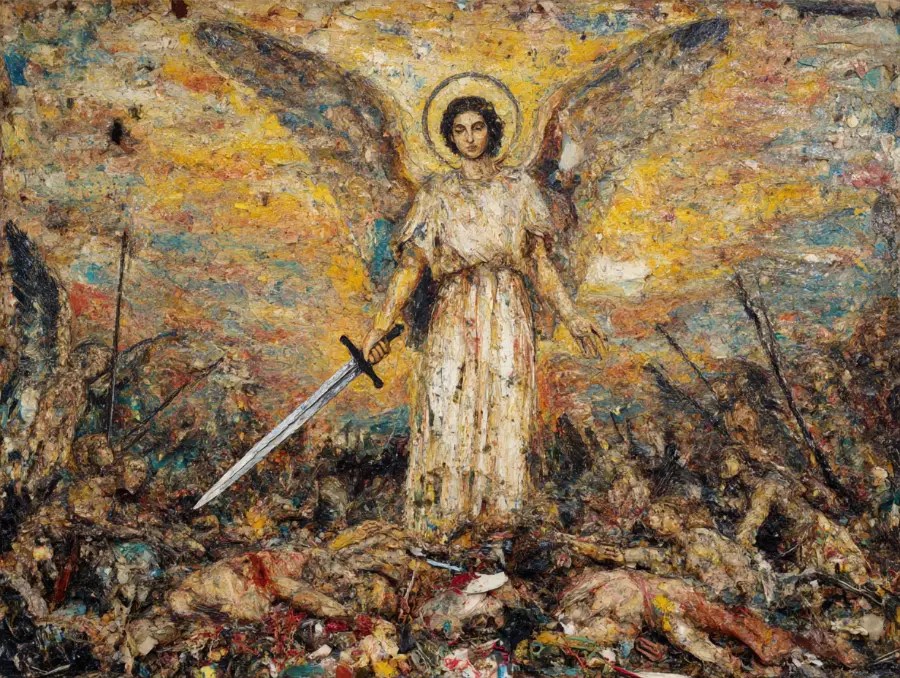
William Blake and the Bible
The best-known bearer of the surname is William Blake (1757–1827), the English poet and painter. He was baptized at St James’s Church, Piccadilly, in London, and the Bible shaped his work from his early years to the end of his life. In 1826 he published Illustrations of the Book of Job, twenty-one engraved plates on the story of Job. The preface to his long poem Milton, dated 1804, contains a short poem asking whether Jesus once walked in England. Hubert Parry set it to music in 1916, and it is sung as the hymn “Jerusalem.”
Related reading
- Where Is the Color Black Mentioned in the Bible?
- Is Your Name in the Bible? A Directory of 231 Names


Leave a Reply