
 English
  Chinese
  Dutch
Dutch  Arabic
  Spanish
  Portuguese
  Russian
  French
  Italian
  German
  Japanese
 Lutherans and Calvinists, who usually call themselves Reformed, agree on how a sinner is saved: by grace, through faith alone. They part at the Lord’s Supper, where Lutherans teach that Christ’s body and blood are present in the bread and wine, and again on predestination, the reach of Christ’s death, whether grace can be resisted, and images in church.
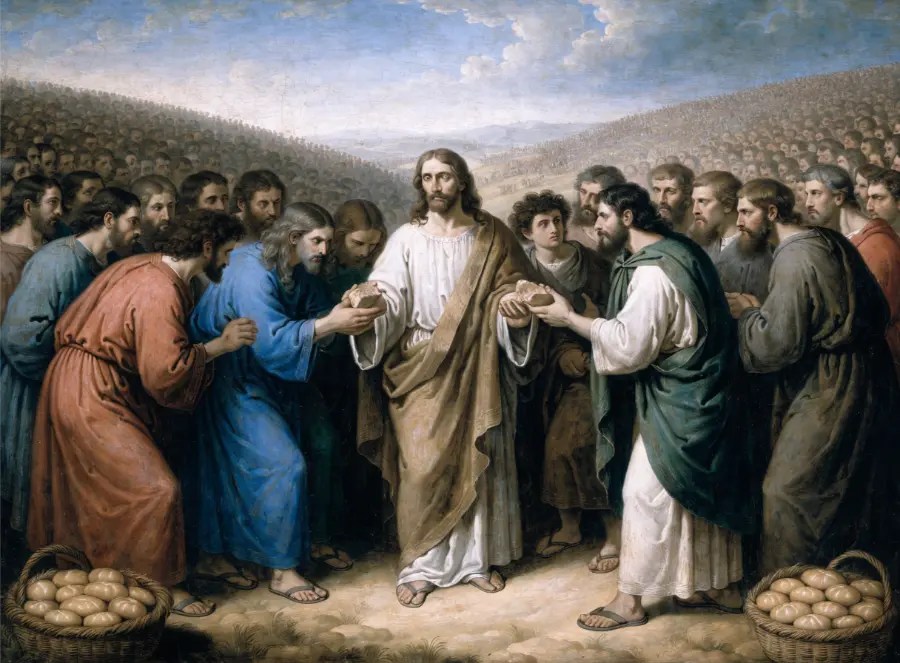
It matters that the first break came at the table. Jesus took bread and said, “Take, eat; this is my body” (Matthew 26:26), and both traditions believe that when they come to that bread they truly receive Christ. What they could not agree on was how he is there. So the quarrel, sharp as it became, was between people who wanted the same thing: Christ himself, given to sinners who cannot reach him on their own.
Calvinism vs Lutheranism at a glance
Each column follows the tradition’s own confessions of faith.
| Lutheran | Reformed (Calvinist) | |
|---|---|---|
| Main confessions | Augsburg Confession (1530); Formula of Concord (1577); Book of Concord (1580) | Heidelberg Catechism (1563); Canons of Dort (1618–19); Westminster Confession (1646) |
| Lord’s Supper | Christ’s true body and blood are present in, with and under the bread and wine and are received by mouth | Christ is received “really and indeed,” but spiritually, by faith; his body is not in, with or under the bread |
| An unbeliever at the Supper | Receives the body and blood of Christ, to his judgment | Receives the bread and wine but not Christ |
| Predestination | God elects to salvation; there is no decree of damnation | God elects some to life and passes by or foreordains others to death |
| Christ’s death | For all people, and the Gospel’s promise is universal | Sufficient for the whole world, effective for the elect only |
| The will before conversion | Bound: it cannot turn to God | Bound: it cannot turn to God |
| Can grace be resisted? | Yes, and those who resist are lost by their own fault | God’s call to the elect does not fail |
| Can a believer fall away? | Yes | No, the elect persevere |
| Images in church | Crucifixes and pictures allowed | Images of God forbidden; no images in church |
| Church government | National or regional churches; some led by bishops | Presbyterian: elders, presbyteries, synods and assemblies |
Are Lutherans Calvinists?
No. Lutheranism comes from Martin Luther (1483–1546), whose Ninety-five Theses of 1517 are commonly taken as the start of the Reformation. The Reformed tradition began in Switzerland with Huldrych Zwingli in Zurich and took its lasting shape from John Calvin (1509–1564), a Frenchman of the next generation, who published his Institutes of the Christian Religion in 1536 and led the church in Geneva.
The two movements parted early and in writing. The Lutheran Formula of Concord names “the Calvinists” as opponents on the person of Christ (Epitome, Article VIII) and rejects their teaching on the Supper and on predestination as false doctrine (Articles VII and XI). The Reformed confessions in turn reject the Lutheran formula for the Supper.
Some churches have since set those condemnations aside. In 1997 the Evangelical Lutheran Church in America entered full communion with three Reformed churches, the Presbyterian Church (U.S.A.), the Reformed Church in America and the United Church of Christ, through A Formula of Agreement, which judged the remaining differences “not church-dividing.” The Lutheran Church–Missouri Synod did not join, and its seminary faculty published a critique of the agreement in 1999.

Are Lutherans Arminian?
No. Arminians, whose teaching the Synod of Dort rejected in 1618–19, hold that a person can cooperate with grace in accepting salvation. The Formula of Concord rejects that view too. It condemns the teaching that once the Holy Spirit has offered grace, “the will of man from its own natural powers can add something, though little and feebly,” to its own conversion (Epitome II, 11). The term “prevenient grace,” often used in comparisons, is Wesleyan language, which United Methodists describe as “the grace of the porch.” It is not the language of the Lutheran confessions.
Lutherans stand between the two systems. With Calvinists, they hold that conversion is God’s work alone. With Arminians, they hold that God wants all people saved and that a person can resist grace and lose it.

How do Lutherans and Calvinists differ on the Lord’s Supper?
This was the first open break. In October 1529 Philip of Hesse brought Luther, Zwingli and Martin Bucer together at Marburg. They agreed on most points but not on Christ’s presence in the sacrament. Zwingli held that “is” in “this is my body” means “signifies,” and he treated the Supper as a memorial. Luther would not move from the words themselves: “Take, eat; this is my body” (Matthew 26:26).
The Augsburg Confession of 1530 teaches “that the Body and Blood of Christ are truly present, and are distributed to those who eat the Supper of the Lord” (Article X). The Formula of Concord explains that Lutherans say “in the bread, under the bread, with the bread” to reject transubstantiation while keeping both the bread and the body present, and it calls this a “sacramental union” (Solid Declaration VII, 35–38). It adds that not only believers but “the unworthy and unbelievers, receive the true body and blood of Christ,” to their judgment (Epitome VII, 16). Critics often call the Lutheran view “consubstantiation,” but Lutherans do not use that word, and Britannica describes it as “unofficially and inaccurately used” for their teaching.
Calvin did not hold Zwingli’s memorial view, and the Reformed confessions do not call the Supper a bare symbol. The Westminster Confession teaches that worthy receivers “really and indeed, yet not carnally and corporally, but spiritually, receive and feed upon Christ crucified.” It rejects the Lutheran formula directly: Christ’s body and blood are “not corporally or carnally in, with, or under the bread and wine” (29.7). An unbeliever, it says, receives “the outward elements” but “not the thing signified” (29.8).
The dispute reached the doctrine of Christ himself. Lutherans hold that because Christ’s two natures are united in one person, his human nature shares his divine majesty, so his body can be present wherever he has promised. The Reformed hold that Christ’s body, like any human body, is in one place, now in heaven. The Formula of Concord gives this dispute its own article (Article VIII).
Do Lutherans believe in predestination?
Yes, but only to salvation. The Formula of Concord separates God’s foreknowledge, which covers everything good and evil, from election, which “extends only over the godly, beloved children of God, being a cause of their salvation” (Epitome XI, 4–5). Scripture speaks of election in those terms: “he hath chosen us in him before the foundation of the world” (Ephesians 1:4).
The Lutheran confession refuses to say that God chose anyone for damnation. It rejects the teaching “that God is unwilling that every one should be saved, but that some, without regard to their sins, from the mere counsel, purpose, and will of God, are ordained to condemnation” (Epitome XI, 19). People are lost because they resist the Holy Spirit, so that he “cannot perform His work in them,” and for that “not God or His election, but their wickedness, is responsible” (Epitome XI, 12). It tells troubled Christians to look for their election in Christ and the Gospel, not in God’s hidden counsel.
Calvin taught a double decree. “By predestination we mean the eternal decree of God, by which he determined with himself whatever he wished to happen with regard to every man,” he wrote. “Some are preordained to eternal life, others to eternal damnation” (Institutes 3.21.5). The Reformed confessions carried that teaching forward. In the Westminster Confession “some men and angels are predestinated unto everlasting life, and others fore-ordained to everlasting death” (3.3), and the Canons of Dort speak of “the well-known decree of election and reprobation” (First Main Point, Article 6).

Did Christ die for everyone?
Lutherans say yes. The Formula of Concord insists that “the promise of the Gospel is universalis (universal), that is, it pertains to all men” (Solid Declaration XI, 28), and it cites 1 John 2:2, where Christ is “the propitiation for our sins: and not for ours only, but also for the sins of the whole world.”
The Reformed answer has two parts. The Canons of Dort call Christ’s death “more than sufficient to atone for the sins of the whole world” (Second Main Point, Article 3), but they teach that God willed its saving effect for “all those and only those who were chosen from eternity to salvation” (Article 8). The Westminster Confession says that none but the elect are “redeemed by Christ” (3.6). This is the “limited atonement” of the five points of Calvinism, often remembered as TULIP.

Do Lutherans believe in free will?
Not in matters of salvation. The Augsburg Confession grants that the will “has some liberty to choose civil righteousness,” but says it “has no power, without the Holy Ghost, to work the righteousness of God” (Article XVIII). Luther argued the point at length against Erasmus in On the Bondage of the Will (1525). The Westminster Confession says the same in its own words: fallen man “hath wholly lost all ability of will to any spiritual good accompanying salvation” (9.3).
The difference lies in what happens next. Reformed teaching holds that when God regenerates the elect, it does not remain “in human power whether or not to be reborn” (Canons of Dort, Third and Fourth Main Points, Article 12), and that the elect “can neither totally nor finally fall away from the state of grace” (Westminster Confession 17.1). Lutheran teaching holds that people can resist the Spirit and that believers can fall away. The Augsburg Confession condemns those “who deny that those once justified can lose the Holy Ghost” (Article XII).
Law, worship and images
Lutherans are known for the distinction between law and gospel, and it is sometimes said that only the Reformed use God’s law as a guide for Christian living. That is not so. The Formula of Concord affirms this “third use of the law” and says that the preaching of the law “is to be urged with diligence” on true believers as well as on unbelievers (Epitome VI).
Worship shows a sharper difference. The Reformed count “Thou shalt not make unto thee any graven image” (Exodus 20:4) as the second commandment. The Heidelberg Catechism says that God “can not and may not be visibly portrayed in any way,” and to the question whether images may be permitted in churches it answers, “No” (Questions 97–98). Luther kept the numbering of the medieval Western church, in which the first commandment is “Thou shalt have no other gods” and the second forbids taking God’s name in vain (Small Catechism), and he opposed image-breaking. In Against the Heavenly Prophets he wrote that images “for memorial and witness, such as crucifixes and images of saints, are to be tolerated.” In St. Mary’s Church in Wittenberg, which image-breakers had stripped in 1522, Lucas Cranach’s altarpiece of 1547 shows Luther preaching, with the crucified Christ between the pulpit and the people. Lutheran churches also kept much of the old liturgy: the Augsburg Confession says “the Mass is retained among us” (Article XXIV).
Neither side prays to saints. The Augsburg Confession allows that “the memory of saints may be set before us,” but says Scripture does not teach “the invocation of saints” (Article XXI).

How are their churches governed?
Lutheran churches are organized as independent national or regional churches. Some kept bishops: the Church of Sweden has 13 dioceses, each led by a bishop, and it kept the apostolic succession of its clergy at the Reformation. Others, such as the Lutheran Church–Missouri Synod in the United States, are organized as synods of congregations.
Reformed churches developed presbyterian government. A session of the minister and elected lay elders leads each congregation, and presbyteries of ministers and elders ordain and oversee ministers, with synods and a general assembly above them.
What do Lutherans and Calvinists agree on?
Both are Protestant, and both teach that people are “freely justified for Christ’s sake, through faith” (Augsburg Confession, Article IV), not by their own works. Both hold Scripture as the final authority, celebrate baptism and the Lord’s Supper as sacraments, baptize infants and reject the Catholic doctrine of transubstantiation. Both teach that fallen people cannot turn to God by their own strength. Today the Lutheran World Federation counts 153 member churches in 99 countries representing more than 78 million people, and the World Communion of Reformed Churches reports some 100 million Christians in more than 230 member churches.
How do they differ from Catholic and Anglican teaching?
The Catholic Council of Trent answered both traditions. In 1547 it condemned anyone who says “that by faith alone the impious is justified,” in the sense that nothing else is required to cooperate (Session VI, Canon 9). In 1551 it condemned both Protestant views of the Supper: the view that Christ is present “only… as in a sign, or in figure, or virtue,” and the view that “the substance of the bread and wine remains conjointly with the body and blood” (Session XIII, Canons 1 and 2).
The Church of England’s Thirty-Nine Articles, confirmed in 1571, stand closer to the Reformed on the Supper: “The Body of Christ is given, taken, and eaten, in the Supper, only after an heavenly and spiritual manner. And the mean whereby the Body of Christ is received and eaten in the Supper is Faith” (Article XXVIII). Article XVII defines “Predestination to Life” and does not speak of a decree of damnation.

Was predestination the main difference?
Textbooks often name predestination, and it is a real difference, but it was not the first cause of the split. The two movements divided in 1529 over the Lord’s Supper, and the Formula of Concord spends more words on the Supper and the person of Christ than on election. So the full answer has two parts: how Christ is present in the Supper, and whether God’s choice of the saved is matched by a choice of the lost.
Nobody settled that first question at Marburg. Luther, Zwingli and Bucer went home still divided, and their churches carried the argument for centuries. They carried the words too, and the words belong to all of them: “Take, eat; this is my body” (Matthew 26:26).

Related reading
- Lutheran vs Presbyterian beliefs
- Catholic and Lutheran beliefs compared
- Lutheran vs Anglican beliefs
- What denominations are Calvinist?


Leave a Reply