
 English
 Chinese
 Dutch
 Arabic
 Spanish
 Portuguese
 Russian
 French
 Italian
 German
 Japanese
Catholics keep Christmas as a season, with customs at every stage: the wreath and the novenas while they wait, Mass in the night, and feast days that carry the celebration into January. The waiting is Advent, from 29 November 2026; the season itself runs from the evening of 24 December to the Baptism of the Lord on 10 January 2027.
Luke says Mary “laid him in a manger; because there was no room for them in the inn” (Luke 2:7), and many of those customs are ways of making the room Bethlehem could not. For six weeks Catholic homes answer that line in their own ways: a wreath on the table, hay in the manger of the nativity scene, an empty place at the Polish Christmas Eve supper for a stranger or for Christ. The King James Version says “inn”; many scholars read Luke’s word as a guest room, or simply a place to stay, and it is the same word Luke uses for the room where Jesus ate the Last Supper (Luke 22:11). The room that had no space for him at his birth is the word for the room where he gave himself to his friends. We spend the season getting the house ready for a guest.
Do Catholics celebrate Christmas on 25 December?
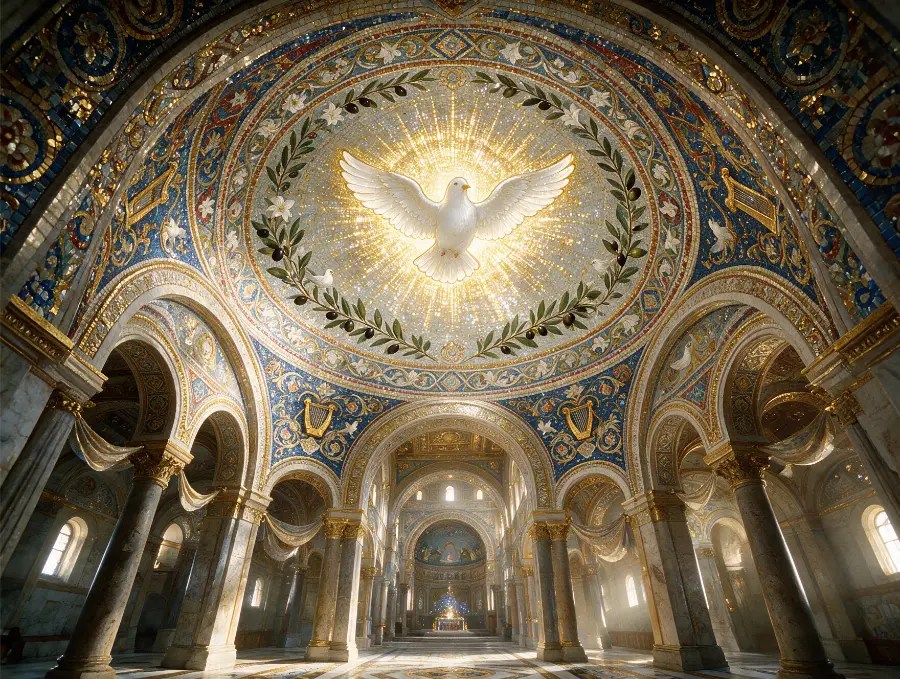
They do, and only the three days of Easter rank above it. Christmas, which the Church’s calendar calls the Nativity of the Lord, is a solemnity, the highest rank of feast, and a holy day of obligation, so Catholics are bound to go to Mass. The Church’s rules for its year, approved by Pope Paul VI in 1969, call it the oldest custom the Church keeps after Easter, so when we keep it we are keeping one of the Church’s oldest feasts.
What the feast celebrates is the Incarnation, God the Son born as a human child: “the Word was made flesh, and dwelt among us” (John 1:14). The Catechism of the Catholic Church gives the first of its reasons: “The Word became flesh for us in order to save us by reconciling us with God.” He came to dwell with us, and the season’s customs are a home’s answer, a dwelling made ready for him.
The Gospels do not give the date, and Rome was keeping 25 December by 354, when a Roman calendar listed Christ’s birth under that day; why Rome chose that day is a longer story, told on a page of its own. Churches that follow the old Julian calendar keep the same 25 December by that calendar, which falls on 7 January in ours, so some Eastern Christians are still waiting when the rest of us have begun.
When does the Catholic Christmas season start and end?
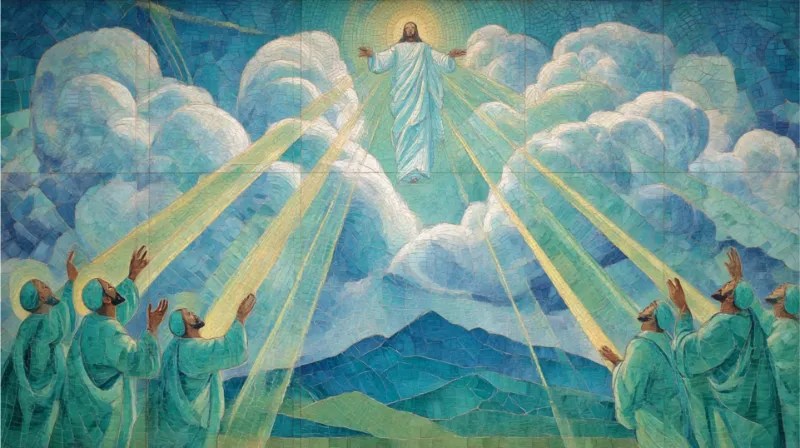
Christmas Time begins with Evening Prayer on Christmas Eve and runs “up to and including the Sunday after Epiphany or after 6 January,” the Feast of the Baptism of the Lord. Advent comes before it, beginning on the Sunday nearest 30 November. In the 2026–27 calendar of the United States bishops, the dates fall like this:
| Date | What the Church keeps | Note |
|---|---|---|
| Sun 29 Nov 2026 | First Sunday of Advent | First candle of the wreath |
| Mon 30 Nov | St Andrew, Apostle | St Andrew novena begins |
| Sun 6 Dec | Second Sunday of Advent | St Nicholas’s day |
| Tue 8 Dec | Immaculate Conception | Holy day of obligation |
| Sat 12 Dec | Our Lady of Guadalupe | Feast in the United States |
| Sun 13 Dec | Third Sunday of Advent | Rose vestments allowed; St Lucy’s day |
| 16–24 Dec | Last days of Advent | Simbang Gabi and Las Posadas |
| Sun 20 Dec | Fourth Sunday of Advent | Last candle of the wreath |
| Thu 24 Dec | Christmas Eve | Vigil Mass, then Mass during the Night |
| Fri 25 Dec | Nativity of the Lord | Holy day of obligation |
| Sat 26 Dec | St Stephen | The first martyr |
| Sun 27 Dec | Holy Family | Takes the place of St John this year |
| Mon 28 Dec | Holy Innocents | The children killed by Herod |
| Fri 1 Jan 2027 | Mary, Mother of God | Holy day of obligation |
| Sun 3 Jan | Epiphany (in the US) | Homes blessed with chalk |
| Sun 10 Jan | Baptism of the Lord | Last day of the season |
The eight days from 25 December to 1 January form the octave of Christmas, kept as one long feast, so for eight days it is still Christmas, and a family can keep it so. Until 1969 the season was reckoned to close later still, on 2 February, forty days after the birth, with the feast now called the Presentation of the Lord.
How do Catholics keep Advent?
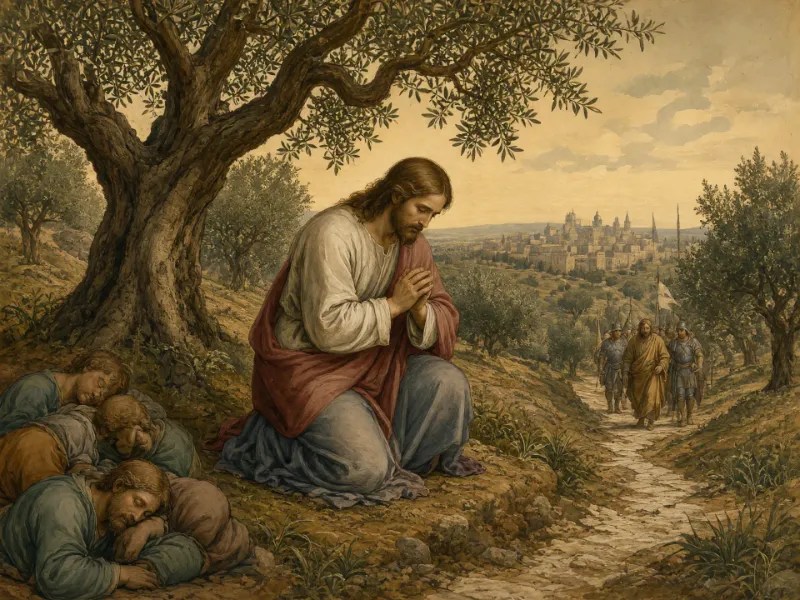
The Church holds its own joy back in Advent to leave room for the feast: priests wear violet, the Gloria is left out of the Sunday Masses, and altar flowers are kept modest, “without expressing prematurely the full joy of the Nativity of the Lord.” The season looks back to Christ’s birth and ahead to his return, and a week-by-week way to keep it is set out in our Advent devotional.
For the evenings between the Sundays we made a wall calendar, with a painting, a verse, two sentences of the story and a short prayer for each day from 1 December to Christmas. We print each one to order and can send it to the United States and Canada.
Advent in Paintings, our wall calendar
The best-loved home custom of these weeks is the Advent wreath, and it began outside the Catholic Church, in a house that had made room for poor children. The Protestant theologian Johann Hinrich Wichern, who is regarded as its inventor, set one up in 1839 in the prayer hall of the Rauhes Haus, his home for poor children in Hamburg, with a candle for every day until Christmas Eve. Every Catholic family that lights one is borrowing a candle from those children; the rest of the wreath’s story is told in what the Advent wreath symbolizes. Novenas fill the weeks too: the St Andrew prayer said fifteen times a day from 30 November, and the nine days of the Christmas novena from 16 December.
Which saints’ days fall in Advent?
St Nicholas, on 6 December, was a fourth-century bishop of Myra, in Lycia in Asia Minor, and the saint behind Santa Claus. The Catholic Encyclopedia says there is “scarcely anything historically certain about him except that he was Bishop of Myra in the fourth century,” and the stories told of him are legend. He is a patron of children, sailors and travelers, and children who wait for Santa Claus are waiting, without knowing it, on a bishop who served Christ’s people in one city some seventeen centuries ago.
St Lucy, on 13 December, was a young martyr of Syracuse in Sicily. By the traditional account she gave much of her wealth to the poor and was put to death in 303, during Diocletian’s persecution, so she made room in her life for the poor before she gave that life for Christ. In 2026 both saints’ days fall on Advent Sundays, so neither is kept at Sunday Mass that year, but nothing keeps a family from telling their stories at home that week.
Two Marian days come between them. On 8 December Catholics keep the Immaculate Conception, the dogma that Mary was “preserved immune from all stain of original sin” from the first moment of her conception, and Catholics see in her the first dwelling God made ready for his Son. On 12 December the United States keeps the Feast of Our Lady of Guadalupe.
Where does the nativity scene come from?
The nativity scene Catholics set up today goes back to St Francis of Assisi at Greccio, at Christmas 1223. St Bonaventure’s life of Francis, written about forty years later, tells how Francis first asked the Pope’s permission, then “prepared a manger, and brought hay, and an ox and an ass to the place appointed.” Mass was said at the manger, and Francis preached on “the nativity of the poor King.” That is the whole of it, a manger and hay set before the people and a sermon about a poor King, and Catholics have been copying it ever since.
Home nativity scenes spread from the thirteenth century under Francis’s influence, according to the Vatican’s Directory on Popular Piety and the Liturgy (2001), which gives children a large part in making them and suggests that families gather at the nativity scene on Christmas Eve to pray and read Luke’s account of the birth. A shelf cleared for a small manger, set out by a child, is one of the simplest ways a Catholic home makes room for him.
Do Catholics have Christmas trees?
Catholic homes set them up, and the Church gives the tree a meaning of its own. The Directory suggests a family prayer when it is set up on Christmas Eve, and it reads the evergreen through Scripture: it recalls the tree “planted in the centre of Eden” (Genesis 2:9) and the tree of the Cross. “Christ is the true tree of life,” the Directory says, and among the gifts under the tree “something should be included for the poor.” Under every tree, then, there is room for one gift that is not for the family.

Which national Christmas customs are Catholic?
Many of the best-loved customs grew in Catholic countries and traveled with emigrants. Four of them are set out here.
| Custom | Where | When | What happens |
|---|---|---|---|
| Simbang Gabi | Philippines | 16–24 Dec | Nine Masses at dawn |
| Las Posadas | Mexico and its diaspora | 16–24 Dec | Nine nights seeking an inn |
| Wigilia | Poland | 24 Dec | Meatless supper at the first star |
| Feast of the Seven Fishes | Italian-American homes | 24 Dec | A seafood supper |
Simbang Gabi is the Philippine novena of nine Masses at dawn, from 16 to 24 December. Nine mornings in a row, people rise early to go to Mass for the child who is coming.
Posada means inn, and Las Posadas takes Luke’s “no room” and walks it through the streets. For nine nights from 16 December, communities re-enact Mary and Joseph’s search for a place to stay in Bethlehem. The custom began in Mexico City in the sixteenth century under Spanish missionaries, the Chicago History Museum records. Each December the search for a room in Bethlehem is made again in ordinary streets, by ordinary families.
In Poland, the Christmas Eve supper, Wigilia, begins when the first star appears, a reminder of the star of Bethlehem. Before eating, the family shares a thin wafer, the opłatek, and exchanges wishes. Hay goes under the tablecloth for the manger, and an extra place is set for a stranger or for Christ. The meal has no meat, usually twelve dishes, which some explain as the twelve apostles; afterwards many families go to Pasterka, the midnight Mass. A Polish parish in Nova Scotia gives the saying behind the extra place: “When a guest is at the house, God is at the house.” Of all the season’s customs, that extra place answers Luke’s “no room” most simply.
The Feast of the Seven Fishes is an Italian-American family supper rather than a feast on the Church’s calendar: families took the old meatless vigil and made it a feast of their own, and nobody knows for certain where the number seven came from.
Which days of the season are obligations?
Any of the four Christmas Masses fulfills the obligation: the Vigil Mass on the evening of 24 December, the Mass during the Night that most people call Midnight Mass, the Mass at Dawn and the Mass during the Day. In the United States the Immaculate Conception, Christmas and 1 January are holy days besides the Sundays, and all three keep the obligation in 2026–27; in Hawaii only the first two are. So the Church clears our calendar for the child four times in the ten days from Friday 25 December to Sunday 3 January, and because Christmas and New Year’s Day are Fridays and solemnities, the feast lifts even the Friday abstinence from meat.
Which feasts follow Christmas Day?
The days after Christmas set joy and martyrdom side by side. On 26 December the Church keeps St Stephen, the first martyr, whose stoning is told in Acts 7. The feast of St John the Apostle normally falls on 27 December, but in 2026 that is a Sunday, so the Feast of the Holy Family takes its place, a day the Directory suggests for blessing children and for married couples to renew their vows. On 28 December come the Holy Innocents. Herod “slew all the children that were in Bethlehem, and in all the coasts thereof, from two years old and under” (Matthew 2:16), and the Church has honored them as martyrs on that day since the sixth century. The world that made no room for the child at his birth made none for these children either, and the Church will not let us keep Christmas without remembering them.
The octave ends on 1 January with the Solemnity of Mary, the Holy Mother of God, which also recalls the naming of Jesus. A week after his birth the Church gives the child his name, and the mother who first made room for him is honored beside him.

What do Catholics do at Epiphany?
Epiphany celebrates the wise men’s visit, when “they presented unto him gifts; gold, and frankincense and myrrh” (Matthew 2:11). Matthew does not call them kings and does not say how many came. In the United States the feast is kept on the Sunday between 2 and 8 January, 3 January in 2027. The Directory encourages the blessing of homes: in blessed chalk over the door, the family writes a cross, the year and the letters C+M+B. They are the initials of Gaspar, Melchior and Balthasar, the names the Latin West gave the wise men from the seventh century, and can also stand for Christus mansionem benedicat, may Christ bless this house. For 2027 the door would read 20 + C + M + B + 27. The season closes the next Sunday with the Baptism of the Lord, on 10 January 2027.
From the first candle to the chalk on the door, the season has asked one thing of a home. Bethlehem had no room for them. A family that writes C+M+B over its own door has made room, and it prays in the old Latin over everyone who comes through it: Christus mansionem benedicat, may Christ bless this house.
Related reading
- What Is the Christmas Novena? Nine Days of Prayer Before Christmas
- Christmas Eve: The Holy Night That Begins Christmas
- When Are the 12 Days of Christmas? December 25 to January 5
- What Is Epiphany, and Why Do Christians Celebrate It?
- Why Is Christmas on December 25? How the Early Church Chose It
- Why Was Jesus Born in a Manger, and What Is a Manger?


Leave a Reply