
 English
 Chinese
 Dutch
 Arabic
 Spanish
 Portuguese
 Russian
 French
 Italian
 German
 Japanese
The Bible links the birth of Jesus with peace through prophecies that a coming ruler would bring it and the angels’ proclamation at his birth that it had come. Isaiah names the child “Prince of Peace” (Isaiah 9:6), and Micah says the ruler from Bethlehem “shall be their peace” (Micah 5:5).
In Luke, Zechariah promises peace, angels proclaim it to shepherds, and Simeon, holding the child in the temple, says God is now letting him depart in peace. In the English Standard Version the word appears three times in Luke’s first two chapters: “the way of peace” (1:79), “on earth peace” (2:14) and “depart in peace” (2:29). Ephesians 2:14 says of Christ, “he himself is our peace.”
Prophecies of peace to come
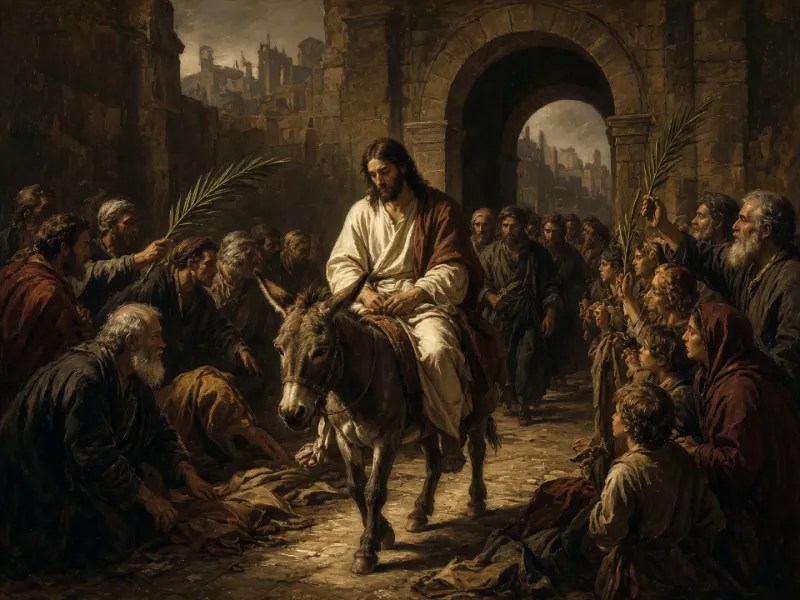
Isaiah 9:6
“For to us a child is born, to us a son is given; and the government shall be upon his shoulder, and his name shall be called Wonderful Counselor, Mighty God, Everlasting Father, Prince of Peace.”
Reflection: The chapter opens with a great light over “Galilee of the nations” (Isaiah 9:1-2), and the verse before this one has every warrior’s boot and every garment “rolled in blood” burned as fuel; this verse gives the reason with its opening “For.” Verse 7 continues: “Of the increase of his government and of peace there will be no end, on the throne of David and over his kingdom.” Matthew 4:14-16 quotes Isaiah 9:1-2 when Jesus moves to Capernaum, and in Luke 1:32-33 Gabriel tells Mary that God will give her son “the throne of his father David” and that “of his kingdom there will be no end.”
Micah 5:5
“And he shall be their peace.”
Reflection: The “he” is the ruler of Micah 5:2, who comes from “Bethlehem Ephrathah, who are too little to be among the clans of Judah,” and who will “shepherd his flock in the strength of the Lord” so that his people “dwell secure” (5:4). The rest of verse 5 turns at once to an invasion: “When the Assyrian comes into our land.” When Herod asks where the Christ was to be born, the chief priests and scribes answer “In Bethlehem of Judea” and quote Micah 5:2 (Matthew 2:4-6).
Isaiah 11:9
“They shall not hurt or destroy in all my holy mountain; for the earth shall be full of the knowledge of the Lord as the waters cover the sea.”
Reflection: Isaiah 11 opens with “a shoot from the stump of Jesse,” a king on whom “the Spirit of the Lord shall rest” and who will “judge the poor” with righteousness (11:1-4). Verses 6-8 then set predators beside their prey: “The wolf shall dwell with the lamb,” the lion eats straw like the ox, and “a little child shall lead them.” Jesse was the father of King David, and Matthew 1:5-6 names him in the genealogy of Jesus.
Isaiah 52:7
“How beautiful upon the mountains are the feet of him who brings good news, who publishes peace, who brings good news of happiness, who publishes salvation…”
Reflection: The messenger’s news for Zion is “Your God reigns,” and the watchmen who hear it “see the return of the Lord to Zion” (52:8). Verses 9-10 add that “the Lord has comforted his people; he has redeemed Jerusalem” and that “all the ends of the earth shall see the salvation of our God.” In the temple scene of Luke 2:25-38, Simeon is “waiting for the consolation of Israel,” Anna speaks to those “waiting for the redemption of Jerusalem,” and Simeon, holding the child, says “my eyes have seen your salvation.”
Peace in Luke’s account of the birth
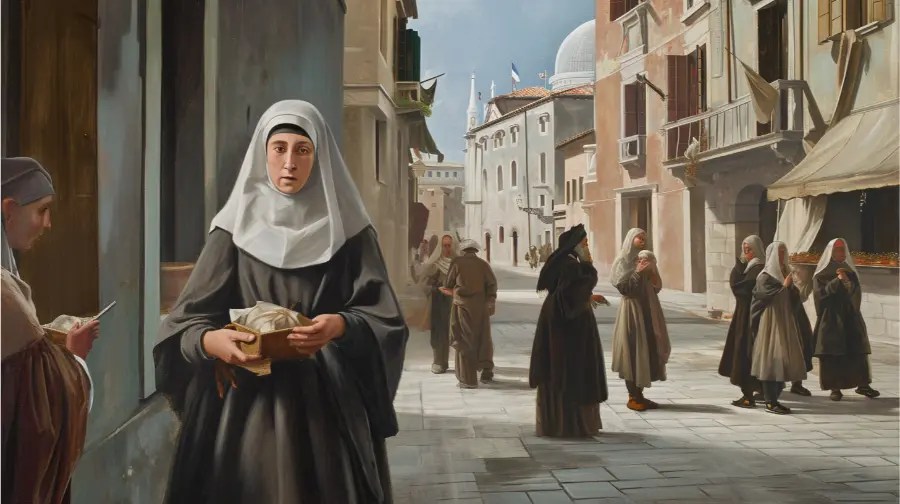
Luke 1:78-79
“…because of the tender mercy of our God, whereby the sunrise shall visit us from on high to give light to those who sit in darkness and in the shadow of death, to guide our feet into the way of peace.”
Reflection: Zechariah, a priest, had been unable to speak since doubting Gabriel’s message (Luke 1:20); at the naming of his son John his mouth is opened, and he is “filled with the Holy Spirit and prophesied.” His song blesses God for raising up “a horn of salvation for us in the house of his servant David” and then turns to the infant John, who “will go before the Lord to prepare his ways” (1:69, 1:76). The closing lines describe a sunrise “from on high” that gives light to those in “the shadow of death,” the phrase Matthew 4:16 uses in quoting Isaiah 9:2, and guides them “into the way of peace.”
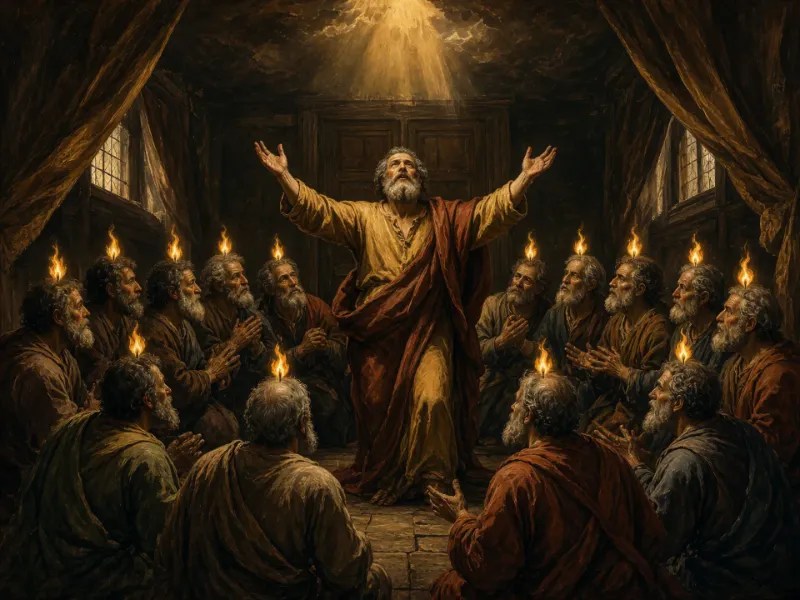
Luke 2:14
“Glory to God in the highest, and on earth peace among those with whom he is pleased!”
Reflection: The heavenly host appears to shepherds in the fields near Bethlehem straight after the angel’s announcement: “unto you is born this day in the city of David a Savior, who is Christ the Lord” (2:11). The King James Version reads “on earth peace, good will toward men,” and the ESV footnote traces the difference to the manuscripts: “Some manuscripts peace, good will among men.” Luke’s Gospel has a counterpart when Jesus comes down the Mount of Olives toward Jerusalem: his disciples cry “Peace in heaven and glory in the highest!” (Luke 19:38).
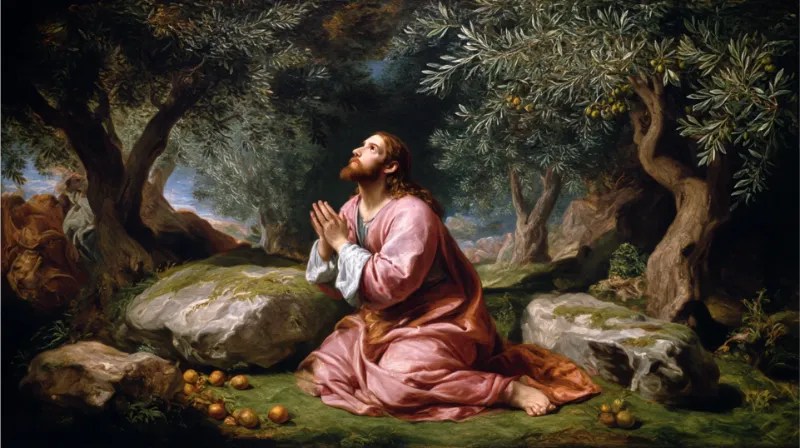
Luke 2:29-32
“Lord, now you are letting your servant depart in peace, according to your word; for my eyes have seen your salvation that you have prepared in the presence of all peoples, a light for revelation to the Gentiles, and for glory to your people Israel.”
Reflection: Simeon had been told by the Holy Spirit “that he would not see death before he had seen the Lord’s Christ” (2:26), and he speaks these words in the temple with the child in his arms, when Mary and Joseph bring Jesus to present him to the Lord. “A light for revelation to the Gentiles” extends the salvation he has seen beyond Israel. His next words, to Mary, call the child “a sign that is opposed” and warn that “a sword will pierce through your own soul also” (2:34-35).
Paul calls Christ our peace
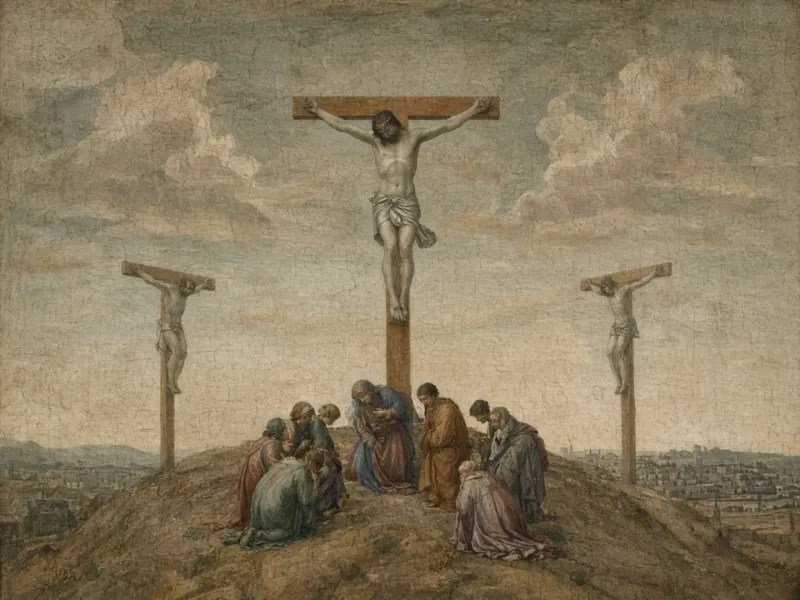
Ephesians 2:14
“For he himself is our peace, who has made us both one and has broken down in his flesh the dividing wall of hostility.”
Reflection: Micah 5:5 says of the ruler from Bethlehem, “he shall be their peace”; Paul says of Christ, “he himself is our peace.” Verses 11-13 name the two made one: “you Gentiles,” who “once were far off,” and “the circumcision”; verse 17 says peace was preached to both. The wall of hostility between them is broken down “in his flesh,” and verse 16 says he reconciles “us both to God in one body through the cross.”
Reading these verses at Christmas
Isaiah 9 and Isaiah 11 are read in the Festival of Nine Lessons and Carols, a service traditionally held on or near Christmas Eve in Anglican churches. In the order used at King’s College, Cambridge, the third lesson is Isaiah 9:2, 6-7 and the fourth is Isaiah 11:1-4a, 6-9.
Luke 2:29-32 is addressed to God and can be prayed as written.


Leave a Reply