
 English
  Chinese
  Dutch
Dutch  Arabic
  Spanish
  Portuguese
  Russian
  French
  Italian
  German
  Japanese
What are the main Bible verses that mention eagles?
One of the most well-known verses is found in Isaiah 40:31, which declares: “But those who hope in the Lord will renew their strength. They will soar on wings like eagles; they will run and not grow weary, they will walk and not be faint.” This beautiful passage speaks to the spiritual renewal and strength we receive when we place our trust in God. The image of soaring eagles reminds us of the freedom and perspective we gain when we rise above our earthly concerns and fix our gaze on the divine.
In Exodus 19:4, we encounter another powerful reference to eagles: “You yourselves have seen what I did to Egypt, and how I carried you on eagles’ wings and brought you to myself.” Here, God uses the metaphor of an eagle carrying its young to illustrate His tender care and protection of the Israelites during their exodus from Egypt. This verse invites us to reflect on God’s providential guidance in our own lives, especially during times of transition and uncertainty.
The book of Deuteronomy offers further insights into the symbolism of eagles. In Deuteronomy 32:11, we read: “Like an eagle that stirs up its nest and hovers over its young, that spreads its wings to catch them and carries them aloft.” This verse is part of the Song of Moses, which poetically describes God’s relationship with Israel. The imagery of an eagle caring for its young emphasizes God’s nurturing and protective nature.
In the Psalms, we find eagles mentioned in the context of renewal and longevity. Psalm 103:5 states: “who satisfies your desires with good things so that your youth is renewed like the eagle’s.” This verse suggests that eagles symbolize vitality and rejuvenation, reminding us of the spiritual renewal we experience through God’s grace.
The prophet Jeremiah uses the image of an eagle in a warning to the people of Edom. In Jeremiah 49:22, we read: “Look! An eagle will soar and swoop down, spreading its wings over Bozrah. In that day the hearts of Edom’s warriors will be like the heart of a woman in labor.” Here, the eagle represents swift judgment, illustrating how God’s justice can come unexpectedly.
In the New Testament, we find a reference to eagles in Matthew 24:28 and Luke 17:37, where Jesus says, “Wherever there is a carcass, there the vultures will gather.” While some translations use “eagles” instead of “vultures,” the meaning relates to the gathering of God’s people at the end times.
How is the eagle used as a symbol for God in the Bible?
The eagle symbolizes God’s protective nature. In Exodus 19:4, we hear the Lord’s own words: “You yourselves have seen what I did to Egypt, and how I carried you on eagles’ wings and brought you to myself.” This beautiful image of God carrying His people on eagles’ wings speaks to His tender care and strong protection. Just as an eagle uses its powerful wings to shield and transport its young, God shelters us and guides us through life’s challenges. This metaphor would have resonated deeply with the Israelites, who had just experienced God’s miraculous deliverance from Egypt.
The eagle also represents God’s nurturing character. In Deuteronomy 32:11, we read, “Like an eagle that stirs up its nest and hovers over its young, that spreads its wings to catch them and carries them aloft.” This verse paints a vivid picture of God as a parent, not only protecting but also actively encouraging growth and independence. The eagle’s behavior of “stirring up its nest” is a fascinating parallel to how God sometimes allows challenges in our lives to strengthen our faith and character.
The eagle symbolizes God’s strength and swiftness in action. The prophet Jeremiah uses this imagery in Jeremiah 48:40: “This is what the Lord says: ‘Look! An eagle is swooping down, spreading its wings over Moab.’” Here, the eagle represents God’s swift judgment, emphasizing His power and ability to act decisively in human affairs. This aspect of the symbolism reminds us of God’s sovereignty and His active involvement in history.
The keen vision of the eagle is another attribute that aligns with God’s omniscience. Job 39:27-29 describes how an eagle “soars high and makes its nest on high… and seeks out its prey; its eyes detect it from afar.” This characteristic parallels God’s all-seeing nature, His ability to perceive all things and His watchful care over His creation.
In Isaiah 40:31, we find a beautiful promise: “But those who hope in the Lord will renew their strength. They will soar on wings like eagles; they will run and not grow weary, they will walk and not be faint.” While this verse doesn’t directly symbolize God as an eagle, it associates the qualities of the eagle – its strength and ability to soar – with the spiritual renewal God provides. This connection suggests that God imparts eagle-like qualities to those who trust in Him.
I invite you to reflect on how these eagle-inspired attributes of God – protection, nurture, strength, vision, and renewal – resonate with your personal experiences of the Divine. How have you felt carried on “eagles’ wings” in your life? In what ways has God’s keen vision detected your needs from afar?
Historically, the eagle was a major symbol in many ancient Near Eastern cultures, often associated with deities and royalty. The biblical use of eagle imagery for God would have been both familiar and distinctive to its original audience, emphasizing the unique qualities of the one true God.
What spiritual qualities do eagles represent in Scripture?
Eagles in Scripture symbolize strength and power. In Exodus 19:4, God reminds the Israelites, “You yourselves have seen what I did to Egypt, and how I carried you on eagles’ wings and brought you to myself.” This powerful image speaks not only of God’s might but also of the strength He imparts to His people. As believers, we are called to draw upon this divine strength, especially in times of adversity. Just as the eagle’s powerful wings enable it to soar above storms, our faith can lift us above life’s challenges.
Closely related to strength is the quality of endurance. Eagles are known for their ability to fly at great heights and cover vast distances. This characteristic is beautifully captured in Isaiah 40:31: “But those who hope in the Lord will renew their strength. They will soar on wings like eagles; they will run and not grow weary, they will walk and not be faint.” This verse encourages us to persevere in our faith, assuring us that God provides the spiritual stamina we need for life’s long journey.
Another major quality represented by eagles is vision. Eagles are renowned for their exceptional eyesight, able to spot prey from great distances. This attribute is alluded to in Job 39:29, where it is said of the eagle, “From there it spies out the prey; its eyes detect it from afar.” Spiritually, this reminds us of the importance of maintaining a clear vision of our purpose in God’s plan. It encourages us to look beyond immediate circumstances and perceive the greater spiritual realities that surround us.
Eagles also symbolize renewal and rejuvenation in Scripture. Psalm 103:5 speaks of God “who satisfies your desires with good things so that your youth is renewed like the eagle’s.” This beautiful metaphor refers to the molting process of eagles, where they shed old feathers and grow new ones. It serves as a powerful reminder of God’s ability to renew our spirits, to transform us, and to restore our vigor when we feel depleted.
The nurturing aspect of eagles is another quality highlighted in Scripture. Deuteronomy 32:11 describes God’s care for Israel using the image of an eagle: “Like an eagle that stirs up its nest and hovers over its young, that spreads its wings to catch them and carries them aloft.” This portrayal of parental care reminds us of God’s nurturing love and also calls us to emulate this caring nature in our relationships with others.
Freedom is yet another spiritual quality associated with eagles. The ability of eagles to soar high above the earth evokes a sense of liberation from earthly constraints. This can inspire us to seek spiritual freedom, rising above petty concerns and worldly attachments to embrace a higher perspective aligned with God’s will.
Lastly, eagles in Scripture often represent swiftness and decisiveness. Jeremiah 4:13 uses the image of an eagle to describe God’s swift judgment: “Look! He advances like the clouds, his chariots come like a whirlwind, his horses are swifter than eagles.” This quality reminds us of the importance of being prompt in our obedience to God and decisive in our faith.
I encourage you to reflect on how these eagle-inspired spiritual qualities might apply to your own life. How can you cultivate greater strength and endurance in your faith journey? In what areas of your life do you need renewed vision or rejuvenation? How can you embody the nurturing and caring qualities of the eagle in your relationships?
Historically, these qualities associated with eagles have inspired believers across generations. From the early Church fathers to medieval mystics, and even in our modern era, Christians have drawn strength and inspiration from these biblical eagle metaphors.
How does the Bible compare believers to eagles?
One of the most striking comparisons between believers and eagles is found in Isaiah 40:31, which states, “But those who hope in the Lord will renew their strength. They will soar on wings like eagles; they will run and not grow weary, they will walk and not be faint.” This beautiful verse likens the spiritual renewal and strength that comes from trusting in God to the majestic flight of an eagle. Just as eagles use thermal currents to soar effortlessly at great heights, believers who place their hope in the Lord can rise above life’s challenges with a strength that surpasses mere human capability.(Davis, 1961, pp. 104–193)
This comparison invites us to consider how we, as believers, can cultivate a spiritual life that allows us to ‘soar’ above worldly concerns. It encourages us to develop a perspective that is not limited by earthly horizons but is expansive and aligned with God’s eternal purposes. I would suggest that this ‘eagle-like’ perspective can be tremendously beneficial for our mental and emotional well-being, helping us to maintain peace and purpose even in turbulent times.
Another aspect of this comparison is found in Exodus 19:4, where God reminds the Israelites, “You yourselves have seen what I did to Egypt, and how I carried you on eagles’ wings and brought you to myself.” Here, believers are portrayed as being carried by God, much like eaglets are carried on their parent’s wings. This powerful image speaks to the protective and nurturing aspect of our relationship with God. It reminds us that in our spiritual journey, we are not left to fend for ourselves but are supported and guided by divine care.(Davis, 1961, pp. 104–193)
Historically, this image would have resonated deeply with the Israelites, who had just experienced God’s miraculous deliverance from Egypt. For us today, it serves as a reminder of God’s constant presence and support in our lives, especially during times of transition or difficulty.
The Bible also draws parallels between the eagle’s keen eyesight and the spiritual discernment believers should cultivate. Just as eagles can spot their prey from great distances, we are called to develop spiritual acuity, discerning God’s will and recognizing spiritual truths. This comparison challenges us to look beyond surface appearances and seek a deeper understanding of God’s ways.
In Deuteronomy 32:11, we find another fascinating comparison: “Like an eagle that stirs up its nest and hovers over its young, that spreads its wings to catch them and carries them aloft.” This verse likens God’s nurturing and challenging of His people to an eagle’s parenting behavior. Eagles are known to ‘stir up’ their nests, gradually removing the soft lining to encourage their young to fly. Similarly, God sometimes allows challenges in our lives to stimulate our spiritual growth and independence.(Davis, 1961, pp. 104–193)
As believers compared to eagles, we are also reminded of the importance of renewal. Psalm 103:5 speaks of God “who satisfies your desires with good things so that your youth is renewed like the eagle’s.” This comparison points to the ongoing process of spiritual renewal and transformation that characterizes the Christian life. Just as eagles molt and renew their feathers, we too are called to continually shed our old nature and be renewed in Christ.
As we contemplate these biblical comparisons between believers and eagles, let us ask ourselves: How can we more fully embrace the strength, perspective, and freedom that our faith offers? How can we cultivate greater spiritual discernment and openness to God’s nurturing, even when it challenges us?
I encourage you to meditate on these eagle-inspired qualities. Consider how you might ‘soar’ above life’s difficulties, trusting in God’s support. Reflect on how you can sharpen your spiritual vision to discern God’s will more clearly. Embrace the process of renewal, allowing God to transform you continually.
Remember, these comparisons are not meant to inflate our ego but to inspire us to live up to our calling in Christ. They remind us of the high purpose for which we were created and the divine support available to us as we strive to fulfill that purpose.
May we, like eagles, rise on the winds of faith, our eyes fixed on the eternal horizons of God’s love and purpose for our lives.
What did Jesus say about eagles in the Gospels?
The primary reference to eagles in Jesus’ teachings is found in Matthew 24:28 and Luke 17:37. In these parallel passages, Jesus says, “Wherever the corpse is, there the vultures will gather.” some translations use “eagles” instead of “vultures,” as the Greek word “aetos” can refer to various large birds of prey, including both eagles and vultures.(Spitaler, 2006, p. 715)
This saying comes in the context of Jesus’ teachings about the end times and His second coming. To understand its significance, we must consider both its immediate context and its broader implications for our faith.
Let us reflect on the context. In both Matthew and Luke, Jesus is speaking about the sudden and visible nature of His return. He compares it to lightning that flashes across the sky, visible to all. The reference to eagles or vultures gathering where there is a carcass follows this description.(Jibromah, 2022)
Historically, this imagery would have been familiar to Jesus’ audience. In the arid climate of ancient Palestine, the sight of birds of prey circling and gathering was a clear sign that something had died. Jesus uses this natural phenomenon as a metaphor for the unmistakable signs that will accompany His return.
Psychologically we might consider how this vivid imagery serves to create a lasting impression on the listeners. By using a familiar sight from nature, Jesus makes His teaching more memorable and relatable to His audience.
Now, let us delve deeper into the possible meanings of this saying. Some interpreters see this as a reference to the judgment that will accompany Christ’s return. Just as eagles or vultures inevitably gather where there is death, so too will judgment come swiftly and inevitably at the end times.(Jibromah, 2022)
Others view this saying as a message of hope for believers. In this interpretation, the “eagles” represent the faithful who will be gathered to Christ at His return. This aligns with Paul’s teaching in 1 Thessalonians 4:17 about believers being “caught up” to meet the Lord in the air.
I must note that the image of the eagle had major meaning in the ancient world. In Roman culture, the eagle was a symbol of power and victory. For the Jewish people, Exodus 19:4 used the image of eagle’s wings to describe God’s deliverance. Jesus may have been drawing on these rich cultural associations to convey His message.
This is the only direct reference to eagles in Jesus’ recorded teachings in the Gospels. But the impact of this single reference has been powerful, sparking centuries of reflection and interpretation.
As we ponder these words of Jesus, let us not become overly fixated on the literal meaning of eagles or vultures. Instead, let us focus on the deeper spiritual truths that our Lord is conveying. He is calling us to be vigilant, to be ready for His return, which will be as clear and unmistakable as birds of prey gathering in the sky.
I encourage you to reflect on how this teaching of Jesus speaks to your own life. Are you living each day with an awareness of Christ’s imminent return? How does this awareness shape your actions and decisions?
Psychologically this teaching can serve as a powerful motivator for spiritual growth and ethical living. The knowledge that our Lord will return should inspire us to live lives worthy of our calling, always striving to align our will with God’s will.
Let us also remember that while Jesus speaks here of end times, He also assures us in Matthew 28:20, “And surely I am with you always, to the very end of the age.” This promise of His constant presence should give us comfort and strength as we navigate the challenges of this world, always looking forward to His glorious return.(O’Collins, 2024)
While Jesus’ words about eagles may seem enigmatic at first, they carry a powerful message about the certainty of His return and the need for our spiritual readiness. Let us take these words to heart, allowing them to shape our lives and deepen our faith as we await the day when we will soar with Him in eternal glory.
How is the eagle used in prophetic visions in the Bible?
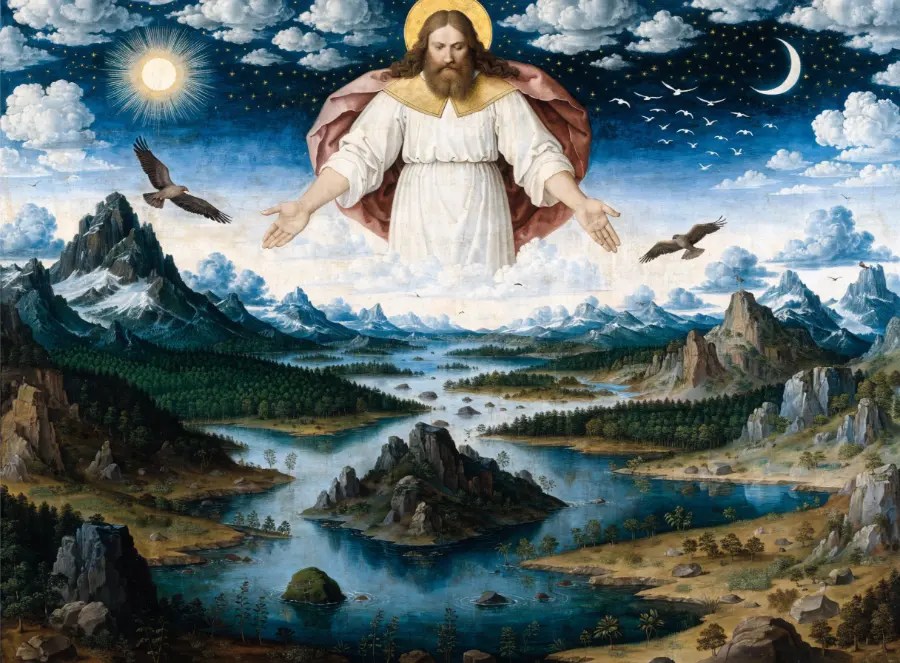
The eagle, with its majestic flight and keen vision, appears in several major prophetic visions throughout the Holy Scriptures. These visions often use the eagle as a powerful symbol to convey divine messages and spiritual truths.
In the book of Ezekiel, we encounter a striking vision of four living creatures, each with four faces – one of which is the face of an eagle (Ezekiel 1:10). This eagle-face, along with those of a human, a lion, and an ox, represents different aspects of God’s creation and His divine attributes. The eagle, in this context, symbolizes God’s transcendence and His ability to see all things from on high(Hayes & Tiemeyer, 2014).
The prophet Daniel, in his apocalyptic visions, describes a lion with eagle’s wings, which are later torn off (Daniel 7:4). This complex imagery is often interpreted as representing earthly kingdoms and their rise and fall under God’s sovereign control. The eagle’s wings here may symbolize speed and far-reaching power, attributes that are ultimately subject to God’s will(Pleins, 2000).
In the New Testament, the book of Revelation presents us with a vision of a woman clothed with the sun, who is given “the two wings of a great eagle” to escape from the dragon (Revelation 12:14). This powerful image draws on the Old Testament metaphor of God carrying His people on eagle’s wings (Exodus 19:4), symbolizing divine protection and deliverance in times of great tribulation(Filipek, 2023).
I am struck by how these prophetic visions use the familiar image of the eagle to convey powerful spiritual truths. The eagle’s characteristics – its strength, its keen vision, its ability to soar above earthly concerns – resonate deeply with our human longing for transcendence and divine protection.
Historically, we can see how these biblical eagle visions have influenced Christian thought and spirituality through the ages. They have inspired believers to “mount up with wings like eagles” (Isaiah 40:31), encouraging them to rise above worldly troubles and fix their gaze on heavenly realities.
In our modern context, these prophetic visions of eagles remind us that God’s perspective is far above our own. They challenge us to broaden our vision, to see beyond our immediate circumstances, and to trust in God’s sovereign care and protection.
What did the early Church Fathers teach about eagle symbolism?
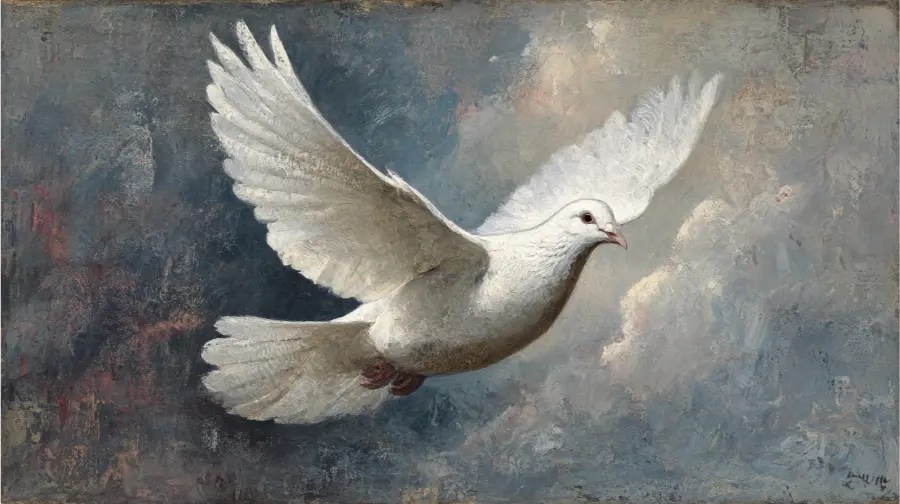
The early Church Fathers, those wise and holy men who helped shape the foundations of our faith, found rich spiritual meaning in the symbolism of the eagle. Their teachings on this noble bird offer us powerful insights into the nature of God, the life of faith, and the journey of the soul.
One of the most prominent interpretations of eagle symbolism among the Church Fathers was its association with the Gospel of John. In the tradition of associating each evangelist with one of the four living creatures from Ezekiel’s vision, John was represented by the eagle. St. Jerome, in particular, popularized this connection, seeing in the eagle a fitting symbol for the lofty, spiritual nature of John’s Gospel(Wierucka, 2015, pp. 11–27).
St. Augustine, that great theologian and pastor, drew on the eagle’s renowned eyesight to teach about spiritual perception. He wrote that just as the eagle can gaze directly at the sun without harm, so too should Christians strive to contemplate divine truths with unwavering faith. This imagery encouraged believers to seek a higher, more spiritual understanding of God’s word(Filipek, 2023).
The eagle’s ability to renew itself by shedding old feathers and growing new ones was seen by many Church Fathers as a powerful symbol of baptism and spiritual renewal. St. Ambrose of Milan, in his teachings on baptism, used this characteristic of the eagle to illustrate how Christians are renewed and transformed by the waters of baptism(Filipek, 2023).
I find it fascinating to see how these early Christian thinkers drew on both biblical imagery and natural observations to develop their spiritual teachings. They were continuing a tradition of symbolic interpretation that had roots in both Jewish and Hellenistic thought, adapting it to express the truths of the Christian faith.
Psychologically we can appreciate how these eagle symbols provided early Christians with vivid, memorable images to help them grasp complex spiritual concepts. The majestic eagle, a bird familiar to many in the ancient world, became a powerful tool for teaching about the divine and the spiritual life.
Although the Church Fathers often saw the eagle as a positive symbol, they were also aware of its potential negative connotations. Some, like Origen, warned against the pride and rapacity that the eagle could represent, reminding believers to emulate only its noble qualities(Filipek, 2023).
How does eagle symbolism in the Bible differ from pagan eagle symbolism?
In many pagan traditions, the eagle was often associated with supreme deities and royal power. For instance, in ancient Rome, the eagle was the symbol of Jupiter, the king of the gods, and was used as a standard for Roman legions. Similarly, in Greek mythology, the eagle was associated with Zeus(Filipek, 2023). These associations emphasized the eagle’s qualities of power, dominion, and even violence.
The biblical use of eagle symbolism, while also acknowledging the bird’s strength and majesty, often emphasizes different aspects. In Scripture, the eagle is frequently used to illustrate God’s protective care for His people. We see this beautifully expressed in Deuteronomy 32:11, where God’s care for Israel is compared to an eagle stirring up its nest and hovering over its young(Filipek, 2023).
Biblical eagle symbolism often points to spiritual renewal and closeness to God. The famous verse from Isaiah 40:31, “But those who hope in the Lord will renew their strength. They will soar on wings like eagles,” uses the eagle’s flight as a metaphor for spiritual vitality and intimacy with God. This emphasis on renewal and spiritual ascent is less prominent in pagan symbolism.
I find it intriguing how these different symbolic uses reflect and shape the spiritual outlook of their respective traditions. The pagan emphasis on the eagle as a symbol of power and dominion may reflect a worldview focused on earthly authority and conquest. In contrast, the biblical use of eagle imagery to represent God’s care and spiritual renewal speaks to a faith centered on a personal, nurturing relationship with the divine.
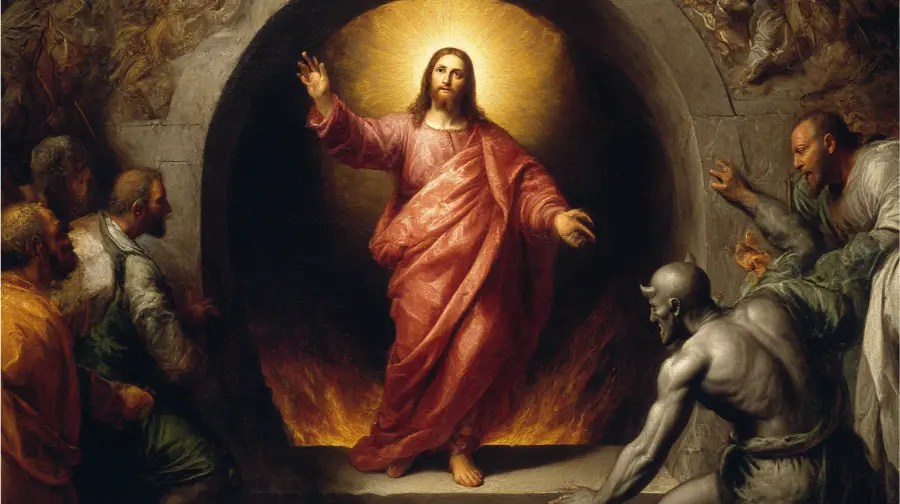
Historically, we can see how early Christians, living in a world steeped in pagan symbolism, reinterpreted and transformed these symbols. The eagle, once associated with pagan gods, became in Christian thought a symbol of Christ’s ascension and of baptismal renewal(Filipek, 2023). This transformation of symbols reflects the broader process by which Christianity engaged with and reshaped the cultural world it inhabited.
It’s important to note, however, that the line between biblical and pagan symbolism is not always clear-cut. Some scholars have pointed out potential influences of Near Eastern mythology on certain biblical eagle imagery, particularly in prophetic and apocalyptic literature(Pratchett & Gaiman, 2015, pp. 267–292). This reminds us of the complex cultural context in which the Scriptures were written.
May we, in our contemplation of these symbols, always seek to discern their deeper spiritual meanings. Let us be like the eagle – not in a pagan sense of power and domination, but in the biblical sense of soaring close to God, renewed by His grace, and sheltered under His protective wings.
What lessons can Christians learn from the characteristics of eagles?
The majestic eagle, so often mentioned in our Holy Scriptures, offers us powerful lessons that can enrich our spiritual lives and deepen our faith. As we contemplate the characteristics of this noble bird, we find parallels that can guide us in our Christian journey.
Let us consider the eagle’s keen eyesight. Eagles are renowned for their ability to spot prey from great distances, their vision far surpassing that of humans. This remarkable trait reminds us of the importance of spiritual discernment in our lives. Just as the eagle’s sharp eyes allow it to distinguish prey from afar, we too are called to develop spiritual acuity, to discern truth from falsehood, and to keep our eyes fixed on Christ amidst the distractions of the world(Filipek, 2023).
The eagle’s strength and courage in the face of storms offer another powerful lesson. Rather than avoiding turbulent weather, eagles often use the strong winds to soar even higher. What a beautiful metaphor this is for the Christian life! We are not promised a life free from storms, but like the eagle, we can learn to use life’s challenges as opportunities for spiritual growth and to draw closer to God(Filipek, 2023).
The process of renewal that eagles undergo is particularly major. Eagles go through a period where they shed old feathers and grow new ones, emerging renewed and revitalized. This natural process beautifully illustrates the Christian concepts of repentance, renewal, and transformation. As St. Paul reminds us, we are called to “put off the old self” and be “renewed in the spirit of your minds” (Ephesians 4:22-23)(Filipek, 2023).
I am struck by how these characteristics of the eagle align with principles of psychological and spiritual well-being. The eagle’s vigilance teaches us the importance of mindfulness and awareness. Its courage in storms reminds us of the resilience we can develop through faith. The process of renewal speaks to our capacity for growth and change, even in the face of life’s challenges.
Historically, Christians have long drawn inspiration from the eagle. The early Church Fathers, as we discussed earlier, saw in the eagle a symbol of baptismal renewal and spiritual ascent. This tradition of finding spiritual meaning in nature continues to enrich our faith today(Filipek, 2023).
Another important lesson we can learn from eagles is their nurturing behavior towards their young. Eagles are known for their attentive care of their offspring, gradually encouraging them to fly while providing a safety net. This mirrors God’s care for us, as described in Deuteronomy 32:11-12, where God’s nurturing of Israel is compared to an eagle caring for its young(Filipek, 2023).
The eagle’s solitary nature and preference for high places can remind us of the importance of solitude and contemplation in our spiritual lives. Although we are called to community, we also need times of quiet reflection and prayer, ascending spiritually to meet with God.
Let us remember, that our strength, like that of the eagle, comes not from ourselves but from our reliance on God. As Isaiah beautifully puts it, “Those who hope in the Lord will renew their strength. They will soar on wings like eagles; they will run and not grow weary, they will walk and not be faint” (Isaiah 40:31).
May we, like the eagle, learn to soar ever higher in our spiritual lives, always keeping our eyes fixed on Christ, our ultimate goal and source of strength.
How has eagle imagery been used in Christian art and literature?
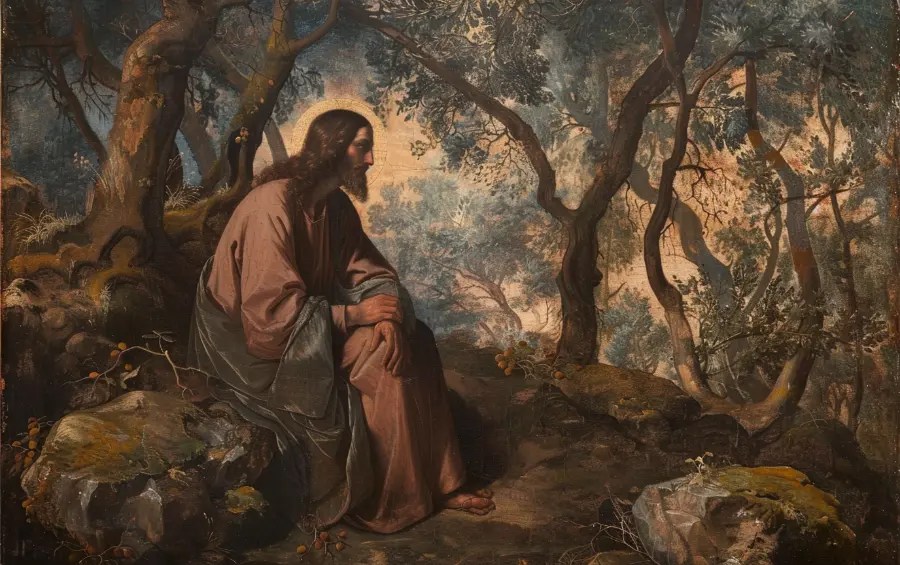
The noble eagle has long captured the imagination of Christian artists and writers, serving as a powerful symbol to convey spiritual truths and inspire the faithful. Throughout the centuries, eagle imagery has been woven into the tapestry of Christian art and literature, enriching our understanding of faith and drawing us closer to the divine mysteries.
In the realm of Christian art, the eagle has held a place of prominence since the early days of the Church. One of its most major uses has been as a symbol for St. John the Evangelist. This association, rooted in the vision of Ezekiel and popularized by St. Jerome, led to countless depictions of St. John accompanied by an eagle in medieval and Renaissance art(Wierucka, 2015, pp. 11–27). These images, found in illuminated manuscripts, stained glass windows, and paintings, served to remind the faithful of the lofty, spiritual nature of John’s Gospel.
The eagle also features prominently in representations of Christ’s ascension. In these artworks, the ascending Christ is often depicted with eagle’s wings or accompanied by eagles, symbolizing His triumphant return to the Father(Filipek, 2023). This imagery draws on the biblical metaphor of God bearing Israel on eagle’s wings (Exodus 19:4) and applies it to Christ’s redemptive work.
In Christian literature, eagle imagery has been employed by numerous writers to convey spiritual truths. The great poet Dante, in his Divine Comedy, uses the eagle as a symbol of divine justice and imperial power. In Paradise, he describes a celestial eagle formed by the souls of just rulers, a powerful image that combines biblical symbolism with medieval political thought(Filipek, 2023).
Many Christian mystics and spiritual writers have drawn on eagle imagery to describe the soul’s ascent to God. St. John of the Cross, for instance, uses the metaphor of an eagle’s flight to describe the soul’s journey in his spiritual classic, “The Dark Night of the Soul.” This use of eagle symbolism to represent spiritual ascent has its roots in the teachings of the early Church Fathers(Filipek, 2023).
I find it fascinating to trace how eagle symbolism in Christian art and literature has evolved over time, reflecting changing theological emphases and cultural contexts. In the early Church and medieval period, the focus was often on the eagle’s association with St. John and its symbolism of spiritual vision and ascent. In later periods, particularly during the Reformation and Counter-Reformation, we see a greater emphasis on the eagle as a symbol of renewal and resurrection, reflecting the theological debates of the time.
Psychologically the persistent use of eagle imagery in Christian art and literature speaks to its power as a symbol that resonates deeply with the human psyche. The eagle’s characteristics – its keen vision, its strength, its ability to soar above the earth – provide a rich vocabulary for expressing spiritual truths and aspirations.
In more recent times, Christian writers and artists have continued to find inspiration in eagle imagery. Contemporary Christian literature often uses the eagle as a metaphor for faith, courage, and spiritual freedom. In Christian visual art, we see modern interpretations of traditional eagle symbolism, as well as new uses that speak to current spiritual and social concerns.
Let us remember, that these artistic and literary expressions are not mere decoration, but invitations to deeper contemplation of our faith. May they inspire us to lift our eyes heavenward, to renew our spirits, and to soar ever closer to the God who bears us on eagles’ wings.


Leave a Reply