
 English
 Chinese
 Dutch
 Arabic
 Spanish
 Portuguese
 Russian
 French
 Italian
 German
 Japanese
Elijah first appears at the opening of 1 Kings 17, telling the king that neither dew nor rain will fall until he says so. The King James Bible names him 98 times: 68 as Elijah in the Old Testament, almost all in 1 and 2 Kings, and 30 as Elias, the Greek form of his name, in the New.
He arrives without a father’s name or a word of background, only “Elijah the Tishbite, who was of the inhabitants of Gilead,” and a sentence that shuts the sky. He leaves in a whirlwind. Between those two moments the Bible gives us fire from heaven, a widow’s last handful of flour, and a prophet lying under a juniper tree asking to die. The New Testament, which could have made him a giant, chooses to say something gentler. “Elias was a man subject to like passions as we are,” James writes, “and he prayed earnestly that it might not rain: and it rained not on the earth by the space of three years and six months” (James 5:17). That is the Elijah of Scripture: a man made of the same stuff as us, and a God who answered him.
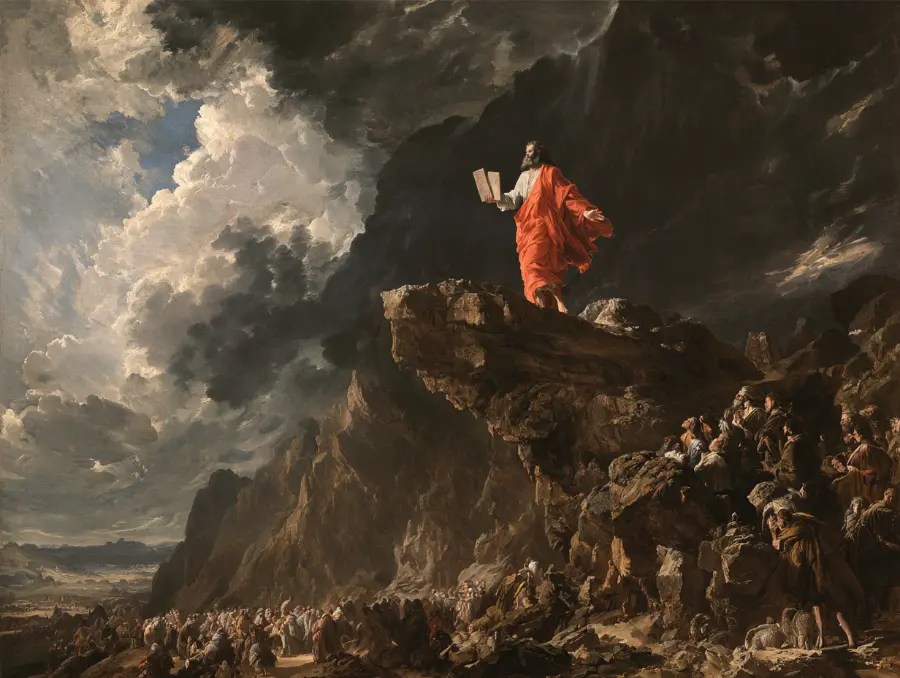
How many times is Elijah mentioned in the Bible?
His name stands in these places in the King James Version:
| Where | Name used | Times |
|---|---|---|
| 1 Kings | Elijah | 42 |
| 2 Kings | Elijah | 24 |
| 2 Chronicles 21:12 and Malachi 4:5 | Elijah | 2 |
| Matthew, Mark, Luke and John | Elias | 28 |
| Romans 11:2 and James 5:17 | Elias | 2 |
| The prophet in all | 98 |
The word “Elijah” itself comes 69 times in the King James Old Testament, but one of those is another man: a son of Harim in Ezra 10:21, listed among the men who had married foreign wives after the exile. We counted the whole words “Elijah” and “Elias” in every verse of the King James text. Modern translations use “Elijah” in the New Testament too, and wording varies from one to another, so their totals will come out a little different.
The name means “my God is Jehovah,” or “Yah is God,” and it is a sermon in a single word. Elijah came to a kingdom whose king “went and served Baal, and worshipped him” (1 Kings 16:31). Everything he did argued for the truth of his own name.
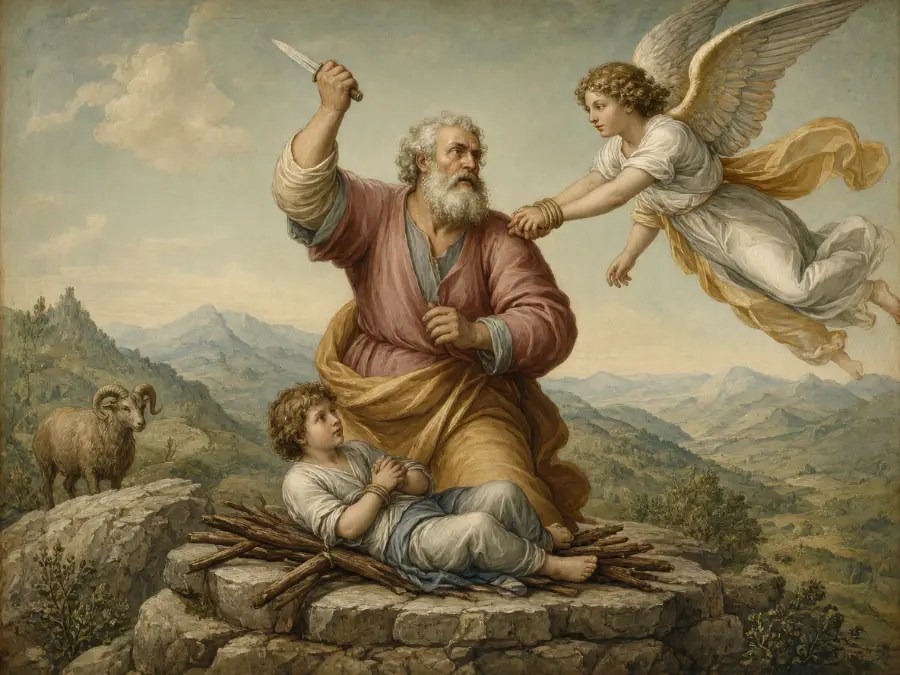
Where does the story of Elijah begin in the Bible?
It begins in 1 Kings 17, in the reign of Ahab, king of the northern kingdom of Israel. The chapter before tells us why the prophet was needed. Ahab married Jezebel, daughter of the king of the Zidonians, and built an altar “for Baal in the house of Baal, which he had built in Samaria” (1 Kings 16:32). Baal was the god his neighbours trusted for rain, which is why Elijah’s first word is about rain. “As the Lord God of Israel liveth, before whom I stand, there shall not be dew nor rain these years, but according to my word” (1 Kings 17:1). The story of Jezebel herself is told in who was Jezebel in the Bible.
Elijah’s story runs through 1 Kings 17 to 19 and 21, then 2 Kings 1 and 2. In 1 Kings 21 he meets Ahab in the vineyard Ahab took from Naboth. A letter “from Elijah the prophet” also reaches King Jehoram of Judah in 2 Chronicles 21:12.
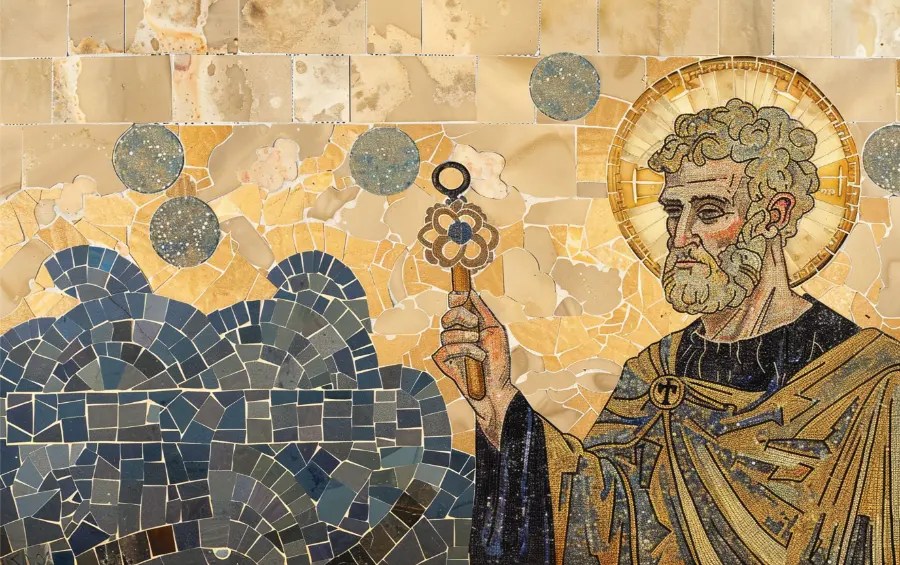
What happened in Elijah’s life?
The brook, the ravens and the widow of Zarephath
Once the drought begins, God hides his prophet. By the brook Cherith “the ravens brought him bread and flesh in the morning, and bread and flesh in the evening; and he drank of the brook” (1 Kings 17:6). When the brook dries up, God sends him to a widow in Zarephath, a town of Sidon outside Israel, who has “an handful of meal in a barrel, and a little oil in a cruse” and is gathering sticks to cook a last meal for herself and her son. Elijah asks her for the first cake. She trusts him, and “the barrel of meal wasted not, neither did the cruse of oil fail” (17:16).
Then her son falls ill and stops breathing. Elijah carries the boy upstairs, lays him on his own bed and prays, “O Lord my God, I pray thee, let this child’s soul come into him again” (17:21). The Lord hears him, and Elijah brings the child down to his mother and says, “See, thy son liveth.” It is the first time in the Bible that someone dead is raised.
The fire on Mount Carmel
In the third year of drought, Elijah calls all Israel to Mount Carmel with 450 prophets of Baal and asks the question the whole story turns on: “How long halt ye between two opinions? if the Lord be God, follow him: but if Baal, then follow him” (18:21). Two altars, two bulls, no fire: “the God that answereth by fire, let him be God.” Baal’s prophets call from morning to evening, “but there was no voice, nor any that answered.” Elijah soaks his own altar with water three times and prays a short prayer. “Then the fire of the Lord fell, and consumed the burnt sacrifice, and the wood, and the stones, and the dust, and licked up the water that was in the trench” (18:38).
Listen to what the people cry when they see it: “The Lord, he is the God; the Lord, he is the God” (18:39). They are saying Elijah’s name. Then he climbs to the top of Carmel, puts his face between his knees, and sends his servant to look toward the sea seven times, until “a little cloud out of the sea, like a man’s hand” rises and the sky turns black with rain. Who Baal was, the storm god Israel turned to, is told in who was Baal in the Bible.
Under the juniper tree, and the still small voice
One message from Jezebel, and the man who faced 450 prophets runs for his life. A day into the wilderness he sits down under a juniper tree and prays to die: “It is enough; now, O Lord, take away my life; for I am not better than my fathers” (19:4). God does not argue with him. An angel touches him and says, “Arise and eat.” He sleeps, and the angel comes again, “because the journey is too great for thee.”
Strengthened by that food, he walks forty days and nights to Horeb, the mountain of God. A wind breaks the rocks, an earthquake shakes them, a fire passes, “but the Lord was not in the fire: and after the fire a still small voice” (19:12). God’s question to him is the same before and after: “What doest thou here, Elijah?” He gives Elijah work to do and tells him he is not alone: “Yet I have left me seven thousand in Israel, all the knees which have not bowed unto Baal” (19:18). Elijah goes down, finds Elisha ploughing and throws his mantle over him. Many of us have sat under that juniper tree. The bread and the sleep came before the answer.
The last years and the whirlwind
Elijah confronts Ahab over Naboth’s vineyard (1 Kings 21) and Ahab’s son Ahaziah for sending to “Baalzebub the god of Ekron” to ask whether he would recover (2 Kings 1:2–4). The king’s messengers describe him plainly: “He was an hairy man, and girt with a girdle of leather about his loins.”
At the end he walks with Elisha from Gilgal to Bethel, Jericho and the Jordan, strikes the river with his mantle so that they cross on dry ground, and “there appeared a chariot of fire, and horses of fire, and parted them both asunder; and Elijah went up by a whirlwind into heaven” (2 Kings 2:11). Christians have long counted him with Enoch, of whom Hebrews says he “was translated that he should not see death” (Hebrews 11:5), as taken up without dying. What 2 Kings 2 means, and where Elijah went, is the subject of did Elijah go to heaven.
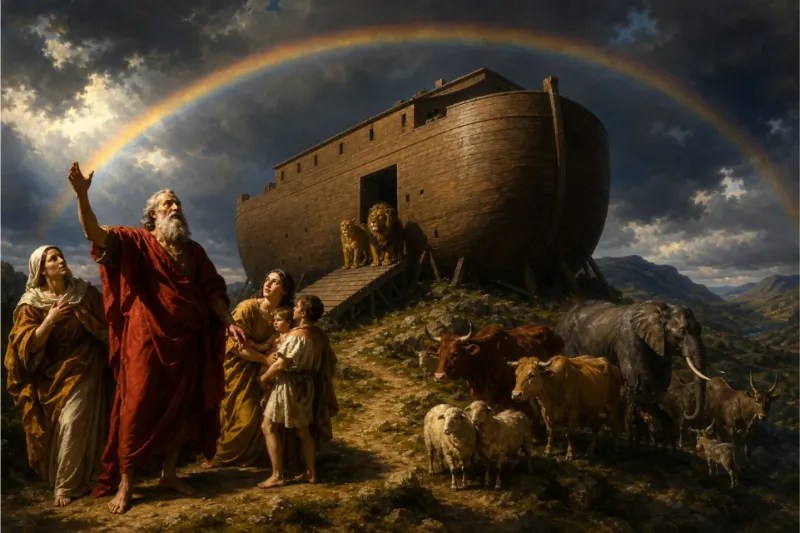
How many miracles did Elijah perform?
Eight times Scripture tells of God’s power coming through Elijah’s word or prayer:
- The rain stops at his word (1 Kings 17:1).
- The widow’s meal and oil do not run out (17:14–16).
- The widow’s son comes back to life (17:22).
- Fire falls on the sacrifice on Carmel (18:38).
- The rain returns after he prays (18:45).
- Fire falls on the first captain and his fifty men (2 Kings 1:10).
- Fire falls on the second captain and his fifty (1:12).
- The Jordan parts when he strikes it with his mantle (2:8).
Three more wonders were done for him rather than through him: the ravens that fed him, the angel’s bread under the juniper tree, and the chariot of fire. Lists elsewhere come out at other numbers because they count these differently, or count the two fires on the captains as one.
Where is Elijah in the New Testament?
Under the name Elias he comes up again and again. The angel tells Zacharias that his son John will go before the Lord “in the spirit and power of Elias” (Luke 1:17). When the priests and Levites sent from Jerusalem ask John the Baptist, “Art thou Elias?”, he answers, “I am not” (John 1:21), yet Jesus says of him, “if ye will receive it, this is Elias, which was for to come” (Matthew 11:14). John was not Elijah come back to earth. He came in Elijah’s spirit, with Elijah’s call to turn hearts back to God.
On the mountain of the Transfiguration, “there appeared unto them Moses and Elias talking with him” (Matthew 17:3). At the cross, some who hear Jesus cry “Eloi, Eloi” say, “Behold, he calleth Elias” (Mark 15:35). In the synagogue at Nazareth, Jesus reminds his hearers that in Elijah’s famine, “unto none of them was Elias sent, save unto Sarepta, a city of Sidon, unto a woman that was a widow” (Luke 4:26). And when James and John want to call down fire on a Samaritan village “even as Elias did,” Jesus “turned, and rebuked them” (Luke 9:54–55).
Paul remembers Elijah’s lonely prayer, “I am left alone,” and God’s answer about the seven thousand who had not bowed to Baal (Romans 11:3–4). James remembers his prayers for drought and rain.
Will Elijah come again?
The last of the prophets closes with the promise: “Behold, I will send you Elijah the prophet before the coming of the great and dreadful day of the Lord: And he shall turn the heart of the fathers to the children, and the heart of the children to their fathers” (Malachi 4:5–6). Jesus answered the disciples’ question about it in two sentences: “Elias truly shall first come, and restore all things. But I say unto you, That Elias is come already, and they knew him not” (Matthew 17:11–12). The disciples understood that he meant John the Baptist.
Many Christians have also looked for Elijah himself before the end. Augustine wrote in The City of God that “not without reason do we hope that before the coming of our Judge and Saviour Elias shall come, because we have good reason to believe that he is now alive.” Revelation 11 tells of two witnesses who “have power to shut heaven, that it rain not in the days of their prophecy,” and many readers have seen Elijah in them, though the chapter does not name them. Jewish tradition also waits for him. The Mishnah records the Sages’ teaching that Elijah will come “to make peace in the world.” Christians, for their part, have answered in more than one way how much of Malachi’s promise John fulfilled and how much still waits.
What no one disputes is the part James drew out for us. Elijah was a man like us, tired and afraid at times, and he prayed. “And he prayed again, and the heaven gave rain, and the earth brought forth her fruit” (James 5:18).



Leave a Reply