
 English
 Chinese
 Dutch
 Arabic
 Spanish
 Portuguese
 Russian
 French
 Italian
 German
 Japanese
Yes. Scripture asks us to speak “the truth in love” (Ephesians 4:15), and Jesus asked that our yes mean yes and our no mean no (Matthew 5:37). A refusal can be honest and kind at once. Research on unrequited love finds that people who are turned down often believe they were led on and never clearly told no.
Naomi shows us how. She sent her two daughters-in-law back to their mothers’ homes, and she blessed them as she did it: “The Lord grant that you may find rest, each of you in the house of her husband!” (Ruth 1:9). Her no was plain, and she gave it for their sake. That is the kind of no we are asked to give: clear enough to be believed, and wrapped in a prayer for the other person’s good.
Is it wrong for a Christian to say no?
No. Love of neighbor does not require agreeing to every request, and the Gospels show Jesus refusing several. When the crowds in Capernaum were looking for him, he did not go back to them but said, “Let us go on to the next towns, that I may preach there also, for that is why I came out” (Mark 1:38). When scribes and Pharisees asked him for a sign, he refused (Matthew 12:38–39). When great crowds gathered to hear him and to be healed, Luke records, “he would withdraw to desolate places and pray” (Luke 5:15–16).
Paul’s friends once urged him, weeping, not to go up to Jerusalem, where a prophet had warned he would be bound and handed over to the Gentiles. Paul answered, “What are you doing, weeping and breaking my heart? For I am ready not only to be imprisoned but even to die in Jerusalem for the name of the Lord Jesus.” Luke adds, “since he would not be persuaded, we ceased and said, ‘Let the will of the Lord be done’” (Acts 21:12–14). Some of those disciples then went up to Jerusalem with him (21:15–16).

How should a Christian turn someone down?
The Bible does not describe dating, so it has no instructions for declining a date or a proposal. It does describe how Christians are to speak. Paul told the Ephesians to put away falsehood and “speak the truth with his neighbor” (Ephesians 4:25), and to do it “in love” (4:15). He told the Colossians, “Let your speech always be gracious, seasoned with salt, so that you may know how you ought to answer each person” (Colossians 4:6), and the Corinthians, “Let all that you do be done in love” (1 Corinthians 16:14).
Jesus’ saying about yes and no comes from his teaching on oaths: “Let what you say be simply ‘Yes’ or ‘No’; anything more than this comes from evil” (Matthew 5:37). His point was that a disciple’s plain word should be enough without swearing to it. Applied to a refusal, it asks for an answer that means what it says.
Naomi’s refusal
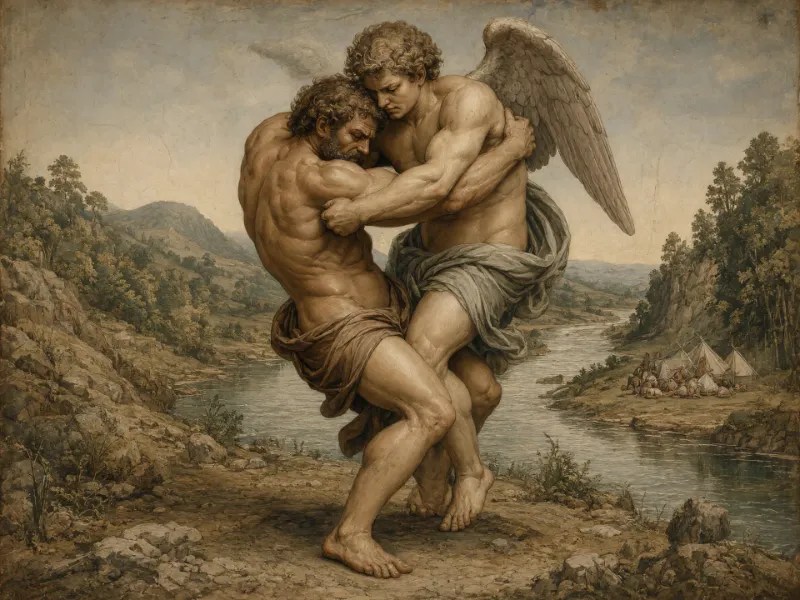
The Book of Ruth opens with a refusal given for the other person’s sake. Naomi, widowed and with both her sons dead, told her two daughters-in-law to go back to their mothers’ homes and blessed them: “The Lord grant that you may find rest, each of you in the house of her husband!” When they protested, she gave her reason plainly. She had no more sons for them to marry: “would you therefore wait till they were grown?” Orpah went home. Ruth stayed, and when Naomi saw that Ruth was determined, “she said no more” (Ruth 1:8–18).
Why is a clear no kinder than a vague one?
Proverbs observes that “Hope deferred makes the heart sick, but a desire fulfilled is a tree of life” (Proverbs 13:12). A study of unrequited love by the psychologists Roy Baumeister, Sara Wotman and Arlene Stillwell, published in the Journal of Personality and Social Psychology in 1993, compared the stories of people who had been turned down with the stories of people who had done the turning down. Those who had been rejected often believed the attraction had been mutual, that they had been led on, and that the rejection had never been stated definitely. The rejected person was described as having been led on in 54.8 percent of the rejected people’s accounts and in 24.2 percent of the rejectors’ accounts, and 60.9 percent of the rejectors’ accounts described reluctance to give the refusal at all. The authors suggested that rejectors, finding the refusal unpleasant to give, may soften it with praise, so that the other person hears a mixed message rather than a definite no.
How much explanation does a refusal need?
The Catholic Catechism describes truthfulness as keeping “to the just mean between what ought to be expressed and what ought to be kept secret: it entails honesty and discretion” (Catechism 2469). A refusal can therefore be true without listing everything one person finds unappealing in another; saying that one does not share the other’s feelings is an honest answer.
Discretion also covers what is said afterward. Under the commandment against false witness, the Catechism teaches that “respect for the reputation of persons forbids every attitude and word likely to cause them unjust injury” (Catechism 2477), which applies to telling others that someone asked and was refused.

Turning down someone at church
When both people belong to the same congregation, they will keep meeting. Paul’s instructions to the Romans apply to that situation as to any other: “Love one another with brotherly affection. Outdo one another in showing honor” (Romans 12:10), and “If possible, so far as it depends on you, live peaceably with all” (Romans 12:18). Scripture gives no rule on whether two people can stay friends after a refusal.

What does the Bible say about being rejected?
The Bible’s best-known words about rejection describe Christ himself. Isaiah foretold a servant who “was despised and rejected by men, a man of sorrows and acquainted with grief” (Isaiah 53:3), and Christians read the passage as a prophecy of Jesus. The people of his hometown, Nazareth, drove him out and tried to throw him off a cliff (Luke 4:28–30). When he sent out the Twelve, he expected that some towns would turn them away too, and he told them, “if anyone will not receive you or listen to your words, shake off the dust from your feet when you leave that house or town” (Matthew 10:14).
So whoever has been turned down, however gently, is in his company. Peter applies Psalm 118:22 to him, “The stone that the builders rejected has become the cornerstone” (1 Peter 2:7), and calls him “a living stone rejected by men but in the sight of God chosen and precious” (1 Peter 2:4).


Leave a Reply