
 English
 Chinese
 Dutch
 Arabic
 Spanish
 Portuguese
 Russian
 French
 Italian
 German
 Japanese
Protestants believe what the creeds of the early Church confess: one God, Father, Son and Holy Spirit, and Jesus Christ, truly God and truly man, who died for our sins and rose again. What makes them Protestants came out of the Reformation of the sixteenth century. They hold that Scripture is the final judge of everything a church teaches, that we are made right with God by his grace, through faith in Christ and not by anything we earn, that Christ is the one mediator between God and us, and that every baptized believer stands before God as a priest.
There is no one Protestant church, though, and no one Protestant creed. It is a family: the Lutherans, the Reformed and Presbyterians, the Anglicans and Episcopalians, and the churches that grew up after them, Baptists, Methodists, Pentecostals and the nondenominational churches. Each family wrote its faith down in its own words. The Lutherans have the Augsburg Confession of 1530, the Church of England has the Thirty-nine Articles, revised under Elizabeth in 1563 and 1571, the Presbyterians have the Westminster Confession, Southern Baptists have the Baptist Faith and Message of 2000, and evangelicals from more than 150 nations made the Lausanne Covenant together. Where those documents part, the fair thing is to let each of them speak for itself.
The name comes from a protest. Luther had posted his Ninety-five Theses on the church door at Wittenberg on 31 October 1517, against the sale of indulgences, and twelve years later, on 25 April 1529, the Lutheran princes and the representatives of fourteen imperial cities entered a formal protest at the Diet of Speier against the measures they held to be “contrary to the Word of God, to their conscience.” The church historian Philip Schaff tells us that “from this protest and appeal the Lutherans were called Protestants,” and that their motto was that of Elector John the Constant: “The Word of God abideth forever.” When Pew counted the world’s Christians for 2010, it found 801 million Protestants, 37 per cent of all Christians, and more of them lived in sub-Saharan Africa than in Europe, where the protest was made. People sometimes count the Latter-day Saints or Jehovah’s Witnesses as Protestants, but Pew did not; it put them, with the Christian Science Church, among the “Other Christian groups.”
God and the Bible
The Trinity and the creeds
The families that wrote these confessions all hold the faith of the early councils, one God in three Persons, and each says so in its own words. When the Lutherans laid their confession before the emperor at Augsburg in 1530, the first thing they spoke of was God: “Our Churches, with common consent, do teach that the decree of the Council of Nicaea concerning the Unity of the Divine Essence and concerning the Three Persons, is true and to be believed without any doubting.” The Church of England tells its people that the Nicene, Athanasian and Apostles’ Creeds “ought thoroughly to be received and believed.” Presbyterians confess in the Westminster Confession that the Son is “very and eternal God, of one substance and equal with the Father.”
From The Augsburg Confession, Article I
Scripture alone
Protestants trace this to Worms in April 1521, when Luther was told before the Diet to take back his books and answered, in Schaff’s translation, “Unless I am refuted and convicted by testimonies of the Scriptures or by clear arguments (since I believe neither the Pope nor the Councils alone; it being evident that they have often erred and contradicted themselves), I am conquered by the Holy Scriptures quoted by me, and my conscience is bound in the word of God.” The princes at Speier carried the same appeal eight years later, and Schaff calls their protest “a renewal and expansion of Luther’s protest at Worms.”
Each family then wrote that appeal into its confession. “Holy Scripture containeth all things necessary to salvation,” say the Thirty-nine Articles, so that whatever cannot be read in it or proved by it “is not to be required of any man, that it should be believed as an article of the Faith.” The Westminster Confession says the supreme judge of every dispute “can be no other but the Holy Spirit speaking in the Scripture.” That is sola scriptura, and Protestants rest it on Paul’s word to Timothy that “all scripture is given by inspiration of God” (2 Timothy 3:16). For Lutherans and Anglicans, who keep the old creeds, it has never meant reading the Bible without them; it means that the creeds, the councils and the preachers all answer to the Bible. Baptists say it in their own way. The Baptist Faith and Message quotes in its preamble a statement from 1925, that “the sole authority for faith and practice among Baptists is the Scriptures of the Old and New Testaments,” and confessions “are only guides in interpretation, having no authority over the conscience.”
From Protestant vs Catholic: How Their Beliefs and Worship Differ
Sixty-six books
Open a Protestant Bible and you will count sixty-six books, thirty-nine in the Old Testament and twenty-seven in the New. The books that Catholic and Orthodox Bibles have in the Old Testament, Protestants call the Apocrypha, and the families treat them a little differently. The Westminster Confession says they are “no part of the canon of the Scripture” and are to be used no otherwise “than other human writings.” The Church of England goes on reading them; its Articles say the Church reads them “for example of life and instruction of manners; but yet doth it not apply them to establish any doctrine.”
From The Thirty-nine Articles of Religion, Article VI
Is the Bible without error?
All these churches hold that God inspired the Bible. Where they part is in the words they use for how far its truth reaches. The evangelicals who met at Lausanne call it “the only written word of God, without error in all that it affirms, and the only infallible rule of faith and practice.” The Lutheran Church–Missouri Synod says, in a Brief Statement adopted in 1932, that the Scriptures “contain no errors or contradictions.” The Evangelical Lutheran Church in America receives them “as the inspired Word of God and the authoritative source and norm of its proclamation, faith, and life,” and its constitution never speaks of error at all. So two Lutheran churches that share the Augsburg Confession talk about the Bible in different terms.
From The Lausanne Covenant, section 2
Grace, faith and salvation
Faith alone
Paul wrote that “a man is justified by faith without the deeds of the law” (Romans 3:28), and that “by grace are ye saved through faith; and that not of yourselves: it is the gift of God: Not of works, lest any man should boast” (Ephesians 2:8–9). The Reformers took those lines as the heart of the gospel. The Augsburg Confession says that men “cannot be justified before God by their own strength, merits, or works, but are freely justified for Christ’s sake, through faith,” and the Church of England says that “we are justified by Faith only is a most wholesome Doctrine, and very full of comfort.” This is sola fide, faith alone, and its comfort is that it rests a sinner’s hope on Christ.
James wrote too, that “by works a man is justified, and not by faith only” (James 2:24), and Protestants answer him by saying what kind of faith they mean. The Westminster Confession calls faith “the alone instrument of justification,” and in the same breath adds, “yet is it not alone in the person justified,” because it “is no dead faith, but worketh by love.” The works are the fruit, and the fruit does not save the tree. The people in the pews are less settled than their confessions. When Pew asked American Protestants in 2017, 46 per cent said faith alone is needed for salvation, 46 per cent said the Bible is the sole source of religious authority, and only three in ten held to both.
From The Augsburg Confession, Article IV
Predestination and free will
How God’s choosing and ours fit together, the family has never settled. Presbyterians teach in the Westminster Shorter Catechism that “God having, out of his mere good pleasure, from all eternity, elected some to everlasting life, did enter into a covenant of grace.” The Baptist Faith and Message also speaks of election, “the gracious purpose of God, according to which He regenerates, justifies, sanctifies, and glorifies sinners,” and adds that “it is consistent with the free agency of man.” The Methodists, John Wesley’s heirs, answer the other way. “John Wesley (and we) teach that Christ’s death creates the possibility that all may be saved,” the United Methodists say, and “we do not believe that God predestines some to salvation and others to condemnation.” The long argument between those two readings of Scripture goes by the names of Calvinism and Arminianism.
From The Westminster Shorter Catechism, Question 20
Can salvation be lost?
Jesus said of his sheep, “neither shall any man pluck them out of my hand” (John 10:28), and the Letter to the Hebrews speaks of those who were “made partakers of the Holy Ghost” and then “fall away” (Hebrews 6:4–6). The Westminster Confession says that those whom God has called and sanctified “can neither totally nor finally fall away from the state of grace, but shall certainly persevere therein to the end, and be eternally saved,” and the Baptist Faith and Message says it in seven words: “All true believers endure to the end.” Lutherans, Anglicans and Methodists see it otherwise. The Augsburg Confession condemns those “who deny that those once justified can lose the Holy Ghost.” The Church of England says in Article XVI, “After we have received the Holy Ghost, we may depart from grace given, and fall into sin, and by the grace of God we may arise again, and amend our lives,” and the Methodist Articles of Religion keep almost exactly the same words.
From The Westminster Confession of Faith, chapter 17
Baptism and the Lord’s Supper
Baptism
Protestants keep two sacraments, the two that the Thirty-nine Articles say were “ordained of Christ our Lord in the Gospel,” “Baptism, and the Supper of the Lord.” Westminster says the same, and Baptists, who prefer another word, speak of “the two ordinances of Christ.”
They part over who should be baptized. Lutherans, Anglicans, Presbyterians and Methodists baptize babies. The Augsburg Confession says that “through Baptism is offered the grace of God, and that children are to be baptized.” The Anglican and Methodist articles both say that the baptism of young children is “to be retained in the Church,” and Westminster baptizes “not only those that do actually profess faith in and obedience unto Christ, but also the infants of one, or both, believing parents.” Baptists wait until a person is old enough to believe. “Christian baptism is the immersion of a believer in water in the name of the Father, the Son, and the Holy Spirit,” says the Baptist Faith and Message. Both sides open the same book of Acts. Peter told the crowd at Pentecost, “the promise is unto you, and to your children” (Acts 2:39), and when the Ethiopian asked Philip, “what doth hinder me to be baptized?” he was told, “If thou believest with all thine heart, thou mayest” (Acts 8:36–37). As for the water itself, Presbyterians hold that “dipping of the person into the water is not necessary; but baptism is rightly administered by pouring, or sprinkling water upon the person,” and Baptists take the believer all the way under.
From Protestant vs Baptist: Are Baptists Protestant? Yes, and How They Differ
The baptism in the Holy Spirit
Pentecostals look for one baptism more. Pew counts them as Protestants who “hold the teaching that all Christians should seek a post-conversion religious experience called the baptism of the Holy Spirit.” The Assemblies of God put it this way: “All believers are entitled to and should ardently expect and earnestly seek the promise of the Father, the baptism in the Holy Spirit and fire, according to the command of our Lord Jesus Christ.” It comes after a person is born again, “distinct from and subsequent to the experience of the new birth,” and its first sign, as on the day of Pentecost in Acts 2, is “speaking with other tongues as the Spirit of God gives them utterance.”
From The Assemblies of God Statement of Fundamental Truths, articles 7 and 8
The Lord’s Supper
On the night he was betrayed Jesus took bread and said, “Take, eat; this is my body” (Matthew 26:26), and those words divided the first Protestants before anything else did. At Marburg in 1529, Schaff writes, “Luther and Zwingli agreed in fourteen and a half out of fifteen articles of faith,” and the half they could not settle was the Supper. Lutherans still confess that “the Body and Blood of Christ are truly present, and are distributed to those who eat the Supper of the Lord.” The Church of England says the body of Christ is given and eaten “only after an heavenly and spiritual manner,” and that the means by which it is received “is Faith.” Westminster says believers receive Christ “really and indeed, yet not carnally and corporally but spiritually,” and Baptists call the Supper “a symbolic act of obedience” by which the church members “memorialize the death of the Redeemer and anticipate His second coming.”
None of these churches teaches that the bread stops being bread. Westminster rejects the change of substance “commonly called transubstantiation,” and Luther’s Smalcald Articles say that “there is, and remains, bread, as Paul himself calls it.” They differ over what happens at the table, and every one of them still comes to it because Jesus said, “Take, eat.”
From The Augsburg Confession, Article X
The church and its ministers
The priesthood of all believers
In 1520 Luther wrote to the German nobles that “all Christians are truly of the spiritual estate, and there is no difference among them, save of office alone,” because “baptism, Gospel, and faith, these alone make spiritual and Christian people.” He had it from Peter, who wrote to ordinary believers, “ye are a chosen generation, a royal priesthood, an holy nation” (1 Peter 2:9), and he made it plain: “A cobbler, a smith, a peasant, every man, has the office and function of his calling, and yet all alike are consecrated priests and bishops.”
That never did away with pastors, for the Augsburg Confession also says that “no one should publicly teach in the Church or administer the Sacraments unless he be regularly called.”
From Martin Luther, Address to the Christian Nobility of the German Nation (1520)
Bishops, elders and congregations
Every one of these churches has pastors. What differs is who chooses them and who watches over them. Anglicans keep the old order of bishops, priests and deacons, and the Thirty-nine Articles defend their rite for the “Consecration of Archbishops and Bishops, and Ordering of Priests and Deacons.” In the Evangelical Lutheran Church in America each synod elects its own bishop for six years. United Methodist pastors go where they are sent, for “clergy shall be appointed by the bishop.” Presbyterians are led by elders, because Westminster holds that Christ has appointed “a government, in the hand of church officers,” and in the Presbyterian Church (U.S.A.) “ruling elders and deacons are men and women elected by the congregation.” Baptists keep the choosing in the congregation itself, each church being, in their confession’s words, “an autonomous local congregation of baptized believers.”
Whether a woman may be a pastor depends on which family you ask. The United Methodists trace full clergy rights for women to a vote of the Methodist Church’s General Conference on 4 May 1956, twelve years before the union of 1968 that made the United Methodist Church. The Baptist Faith and Message says that “while both men and women are gifted for service in the church, the office of pastor/elder/overseer is limited to men as qualified by Scripture.” When over 4,000 Christian leaders from 198 countries met at Cape Town in October 2010, they wrote that “there are different views sincerely held by those who seek to be faithful and obedient to Scripture.”
From The Cape Town Commitment, part II-F
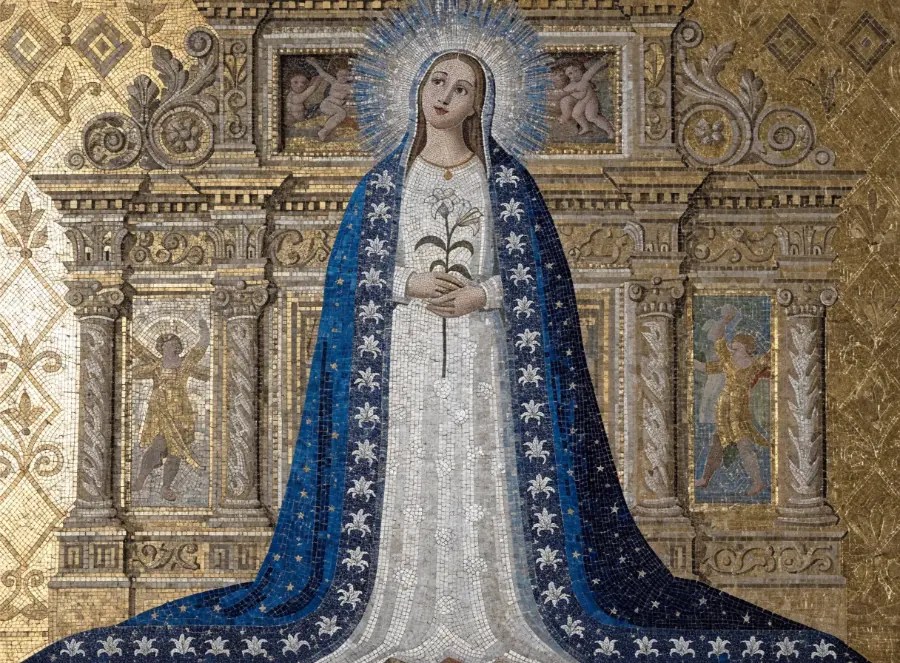
Mary, the saints and the life to come
Mary and the saints
The Reformed churches’ Second Helvetic Confession, written in 1566, speaks of Christ “born of the ever virgin Mary,” and the Augsburg Confession is glad for the saints to be remembered: “the memory of saints may be set before us, that we may follow their faith and good works.” What the Protestant confessions do not teach is prayer to the saints, and the same article gives the reason, that Scripture “sets before us the one Christ as the Mediator, Propitiation, High Priest, and Intercessor.” That is Paul’s “one mediator between God and men, the man Christ Jesus” (1 Timothy 2:5), and Westminster says that worship belongs “to God, the Father, Son, and Holy Ghost; and to him alone; not to angels, saints, or any other creature.”
From The Augsburg Confession, Article XXI
Heaven, hell and no purgatory
Paul said he would rather “be absent from the body, and to be present with the Lord” (2 Corinthians 5:8), and that is where Protestants believe a believer goes at death. The Westminster Shorter Catechism says it in one sentence: “The souls of believers are at their death made perfect in holiness, and do immediately pass into glory; and their bodies, being still united to Christ, do rest in their graves till the resurrection.” The confessions know no place of cleansing in between. The Thirty-nine Articles call the doctrine of purgatory “grounded upon no warranty of Scripture,” and the Westminster Confession, having spoken of heaven and hell, says, “Besides these two places, for souls separated from their bodies, the Scripture acknowledgeth none.” When Pew asked Americans in 2017, 68 per cent of evangelicals and 61 per cent of mainline Protestants said they do not believe in purgatory, while 28 and 35 per cent said they do, and Black Protestants were closely divided.
From Protestant vs Catholic: How Their Beliefs and Worship Differ
Marriage, where the families now part
One man and one woman, or two people
The old confessions say that marriage is to be “between one man and one woman,” in the words of the Westminster Confession, and many churches still say so. The Baptist Faith and Message calls marriage “the uniting of one man and one woman in covenant commitment for a lifetime,” and the Church of England’s canon law calls it “a union permanent and lifelong, for better for worse, till death them do part, of one man with one woman.”
Since 2015 two American churches have changed their words. In March 2015 a majority of the presbyteries of the Presbyterian Church (U.S.A.) approved an amendment that gave its ministers and church sessions wider discretion over weddings, and the church said that discretion “could include same gender marriages in states where that is permitted.” Its Book of Order now calls marriage “a unique commitment between two people, traditionally a man and a woman.” The Presbyterian Church in America keeps the old words, for its standards are still the Westminster Confession and Catechisms. The United Methodists changed in May 2024, when their General Conference described marriage as a covenant between an “adult man and adult woman of consenting age or two adult persons of consenting age.” By then a quarter of their American churches had left, and the Global Methodist Church, launched in 2022 and drawn mostly from United Methodist congregations, keeps “a loving and monogamous marriage between one man and one woman.” So the line on marriage now runs through the middle of the Presbyterian and Methodist families.
From The Westminster Confession of Faith, chapter 24
Five hundred years of Protestant history are full of arguments over what the Bible says, over a sentence about bread, a promise to children, a verse in James. Schaff, looking at the Protestant churches of the nineteenth century, still found that “the articles of faith in which they agree are more numerous than those in which they disagree,” and he summed it up in one line: “There is then unity in diversity as well as diversity in unity.” Every one of those arguments is carried back to the same book, as the princes at Speier carried theirs under the motto that the Word of God abides for ever. The words are Peter’s, and before him Isaiah’s: “The grass withereth, and the flower thereof falleth away: But the word of the Lord endureth for ever” (1 Peter 1:24–25).

How Protestants differ from their neighbours
- Protestant vs Catholic: How Their Beliefs and Worship Differ
- What Do Lutherans Believe? Grace, Baptism and the Lord’s Supper
- What Do Presbyterians Believe? Scripture, Grace and Elders
- What Do Baptists Believe? Baptism, the Bible and Local Churches
- What Do Methodists Believe? Grace for All, Assurance, Holiness
- Evangelical vs Protestant: Evangelicals Are One Kind of Protestant
- Protestant vs Pentecostal: Pentecostals Are Protestants Who Expect the Spirit’s Gifts Today
- Anglican vs Protestant: Is the Anglican Church Protestant? Yes, by History and Law
- Reformed vs Protestant: What Is the Difference?
- Are Jehovah’s Witnesses Protestant? No. Here Is How Their Beliefs Differ
See every answer for Protestants and compare with another church
More from this seriesDenominations ComparedSee all 150 articles

Leave a Reply