
 English
 Chinese
 Dutch
 Arabic
 Spanish
 Portuguese
 Russian
 French
 Italian
 German
 Japanese
Lutherans believe that God forgives sinners for the sake of Jesus Christ, freely, and that we receive that forgiveness by trusting him, with nothing of our own to pay for it. They say the ancient creeds and confess the Trinity with the rest of historic Christianity, they test every teacher against the Bible, and they believe Christ comes to us in the water of Baptism and gives us his true body and blood at the Lord’s Supper.
The Lutheran Church—Missouri Synod tells how it started in one line: “God sent a German friar to call the medieval church back to the central teaching of Scripture.” That friar was Martin Luther, and what his followers came to believe was gathered into the Book of Concord, published on 25 June 1580. Fifty years before, to the day, Chancellor Beyer had read the Augsburg Confession aloud at the Diet of Augsburg, and the copies were handed to the Emperor Charles V. Today the 153 member churches of the Lutheran World Federation represent “over 78 million Christians in the Lutheran tradition in 99 countries.”
In the United States three names come up again and again, the Evangelical Lutheran Church in America (ELCA), the Lutheran Church—Missouri Synod (LCMS) and the Wisconsin Evangelical Lutheran Synod (WELS). All three read the same confessions, and they part ways over whether the Bible can err, who may come to Communion, whether women may be pastors and what to say about marriage, so we will name them as we go. How they line up against one another has a page of its own, on which Lutheran synod is the most conservative.
If you want to hear a Lutheran at home, open Luther’s Small Catechism of 1529. It was meant for the family table, and its parts carry a heading that says so, “As the head of the family should teach them in a simple way to his household.” A question is asked and a plain answer is given, and after each article of the Creed the answer comes to rest on the same five words, “This is most certainly true.”
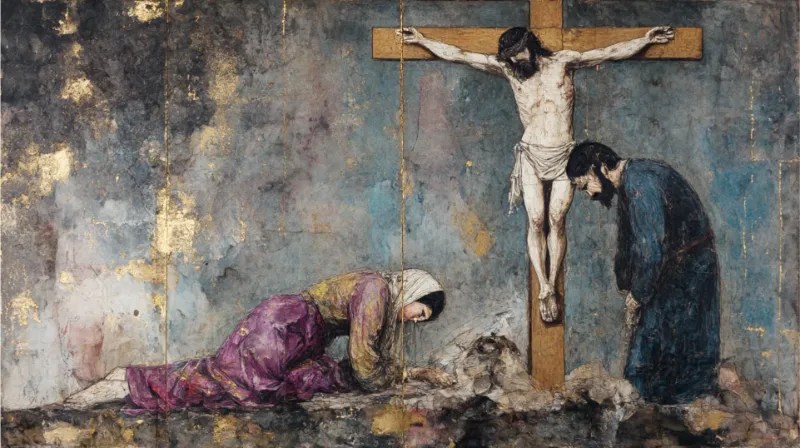
God and the Bible
The Trinity and the creeds
On who God is, Lutherans have stayed with the ancient church. The ELCA and the Missouri Synod both hold to the same three creeds, the Apostles’, the Nicene and the Athanasian, and Luther could say what they teach in one breath in the Smalcald Articles of 1537: “That Father, Son, and Holy Ghost, three distinct persons in one divine essence and nature, are one God, who has created heaven and earth.”
Ask the catechism whether Jesus is God, and the child at the table answers for us, “I believe that Jesus Christ, true God, begotten of the Father from eternity, and also true man, born of the Virgin Mary, is my Lord.” When Lutherans say the Nicene Creed they say with the Western churches that the Holy Ghost “proceedeth from the Father and the Son.”
From Smalcald Articles, Part I, Article I (The Nature of God)
The Bible
When a question of teaching has to be settled, Lutherans go to one place, and the Formula of Concord says so without leaving a gap: “the sole rule and standard according to which all dogmas together with [all] teachers should be estimated and judged are the prophetic and apostolic Scriptures of the Old and of the New Testament alone.” Everything else, “of ancient or modern teachers, whatever name they bear,” may come in only “as witnesses.” Luther’s name is on the church, and by that sentence his books come under the rule with everybody else’s.
What the American churches disagree about is how far the Bible’s truth reaches. The Missouri Synod’s Brief Statement of 1932 says the Scriptures “contain no errors or contradictions, but that they are in all their parts and words the infallible truth, also in those parts which treat of historical, geographical, and other secular matters,” and it teaches that God made the world “in six days.” The ELCA’s constitution accepts the Scriptures “as the inspired Word of God and the authoritative source and norm of its proclamation, faith, and life,” and you will not find the word inerrant in it.
From Formula of Concord, Epitome, Rule and Norm

Grace, faith and the struggle that remains
Justified by faith
If Lutherans had to give up everything else they would keep this, and Luther said as much. “Of this article nothing can be yielded or surrendered,” he wrote, “even though heaven and earth, and whatever will not abide, should sink to ruin.” The article is the one Paul put to the Romans, “Therefore we conclude that a man is justified by faith without the deeds of the law” (Romans 3:28), and the Augsburg Confession told the emperor what it means, that “men cannot be justified before God by their own strength, merits, or works, but are freely justified for Christ’s sake, through faith, when they believe that they are received into favor, and that their sins are forgiven for Christ’s sake, who, by His death, has made satisfaction for our sins.” The ELCA says the same thing in words from our own day, that we are saved “by God’s grace alone, through Christ — not by prayer, mindset, or good deeds.”
Why can we bring nothing? Because, the Confession says, “since the fall of Adam all men begotten in the natural way are born with sin, that is, without the fear of God, without trust in God, and with concupiscence.” Lutherans grant that our will still “has some liberty to choose civil righteousness,” which means the ordinary decency by which we keep a promise or pay a debt, but it has no power “without the Holy Ghost, to work the righteousness of God.” And so the child learning the catechism says something that sounds odd the first time you hear it: “I believe that I cannot by my own reason or strength believe in Jesus Christ, my Lord, or come to Him; but the Holy Ghost has called me by the Gospel.” A person can say the creed and, in the same breath, give away the credit for saying it.
From Augsburg Confession, Article IV (Of Justification)
Good works
None of this leaves a Lutheran free to live as he pleases. The same Confession that refuses to count works teaches that “this faith is bound to bring forth good fruits, and that it is necessary to do good works commanded by God, because of God’s will, but that we should not rely on those works to merit justification before God.”
It doesn’t pretend the change comes quickly, either. In this life, says the Formula of Concord, renewal “is not complete, but only begun,” and believers are “in a constant struggle against the flesh, that is, against the corrupt nature and disposition which cleaves to us unto death.” Most of us who have tried to follow Christ for any length of time know that sentence from the inside. It is the reason the Formula says that “the preaching of the Law is to be urged with diligence, not only upon the unbelieving and impenitent, but also upon true believers.”
From Formula of Concord, Epitome, Article VI (The Third Use of the Law)
Predestination, and whether faith can be lost
Ask a Lutheran whether God chooses who will be saved, and the answer comes in two halves that seem to pull against each other. God’s election “extends only over the godly, beloved children of God, being a cause of their salvation,” and our salvation is founded on it “so firmly that the gates of hell cannot overcome it.” Yet the same article refuses the thought “that God is unwilling that every one should be saved, but that some, without regard to their sins, from the mere counsel, purpose, and will of God, are ordained to condemnation so that they cannot be saved,” and it says that Christ “is in earnest [seriously wills] that all men should come to Him.” They keep both halves and do not try to make them meet, and this is one of the places where the Lutheran road and the Calvinist road divide.
Once saved, always saved is a phrase you will not hear from them. The Augsburg Confession took up the question in the sharp language of 1530: “They condemn the Anabaptists, who deny that those once justified can lose the Holy Ghost.” So a person can walk away from the grace that was given, and the door stays open behind them all the same, since “for those who have fallen after Baptism there is remission of sins whenever they are converted.” And if you have ever worried over whether you are among the chosen, the Formula tells you where to look. Election, it says, “is not to be investigated in the secret counsel of God, but to be sought in the Word of God.”
From Formula of Concord, Epitome, Article XI (Election)

Water, bread, wine and a word of pardon
Baptism
For Lutherans, Baptism is something God does to us. The catechism asks what it gives and answers, “It works forgiveness of sins, delivers from death and the devil, and gives eternal salvation to all who believe this, as the words and promises of God declare.” Anyone listening will want to know next how water can do all that, and Luther put the question in the book himself: “It is not the water indeed that does them, but the word of God which is in and with the water, and faith, which trusts such word of God in the water.” That is how the Augsburg Confession can say of Baptism “that it is necessary to salvation,” and that “children are to be baptized who, being offered to God through Baptism are received into God’s grace.”
They baptize babies because, in the Missouri Synod’s words, “There is no indication that God has limited this blessed means of grace to individuals on the basis of age or levels of maturity.” And whether the water is poured or sprinkled or the person goes under, it comes to the same thing, for “the manner of Baptism (that is, immersion, pouring, sprinkling, etc.) does not determine whether a Baptism is valid.”
That word necessary raises the hard question of a baby who dies before Baptism, and the Missouri Synod’s published answer is careful. It gives the words of Dr. Francis Pieper: “There is some basis for the hope that God has a method, not revealed to us, by which He works faith in the children of Christians dying without Baptism.” The hope he names is for the children of Christians. “For children of unbelievers we do not venture to hold out such hope,” he goes on. The answer explains how that hope can stand beside the word necessary, saying that “while Christ has commanded us to baptize all nations, God can save sinners without Baptism,” and it stops where Pieper stops: “We are here entering the field of the unsearchable judgments of God.”
The Lord’s Supper
When Jesus took the bread and said, “Take, eat; this is my body” (Matthew 26:26), Lutherans believe he meant what he said. His words, the Formula of Concord holds, “are not to be understood otherwise than as they read, according to the letter,” and so “in the Holy Supper the body and blood of Christ are truly and essentially present, and are truly distributed and received with the bread and wine.” The mouth is part of it too, for we receive him “not only spiritually by faith, but also orally,” though “in a supernatural, heavenly mode.” The catechism gives the child the short version, “the true body and blood of our Lord Jesus Christ, under the bread and wine, for us Christians to eat and to drink, instituted by Christ Himself.”
That sets them between two neighbours. With Catholics they believe the body and blood are present, but they do not teach transubstantiation, because for Luther “there is, and remains, bread, as Paul himself calls it.” From those who take the bread as a sign only they part on the other side, and the Formula says “the bread does not signify the absent body and the wine the absent blood of Christ.” People outside often put the word consubstantiation on the Lutheran view, and the Missouri Synod’s Christian Cyclopedia defines the word as a “View, falsely charged to Lutheranism.” Their own phrase is “sacramental union.”
From Formula of Concord, Epitome, Article VII (The Lord’s Supper)
Closed Communion
If you are visiting, which Lutheran church you walk into decides whether you go up to the altar. An ELCA congregation welcomes any baptized visitor. The Missouri Synod and WELS keep the table for people who share their confession, because coming to the altar together says that you believe the same thing. The Missouri Synod’s rule fits in a line, “Members in good standing of the LCMS and her sister church bodies may commune,” and the practice goes by three spellings, “close, closed or close(d) Communion.”
From Lutheran Church—Missouri Synod, Beliefs
Confession and absolution
Luther’s churches kept private confession, and the Augsburg Confession teaches “that Private Absolution ought to be retained in the churches, although in confession an enumeration of all sins is not necessary.” Nobody has to list every sin, and a good thing too, since nobody could. What counts is the word of pardon spoken over you. The Apology of the Augsburg Confession goes so far as to number it with Baptism and the Supper, “Baptism, the Lord’s Supper, and Absolution, which is the Sacrament of Repentance, are truly Sacraments,” because these rites “have God’s command and the promise of grace.” It tells us what to do when we hear those words, too: “when we are absolved, our hearts must be firmly assured that God truly forgives us for Christ’s sake.” Over how many sacraments to count it would not fight, and it said, “Neither do we believe it to be of any consequence, though, for the purpose of teaching, different people reckon differently, provided they still preserve aright the matters handed down in Scripture.”
The practice has come down to our own time. The ELCA’s 1997 statement on Word and Sacrament calls its congregations “to make faithful use of corporate and individual confession of sins and holy absolution,” which means both the confession said together in church and the kind a person makes alone.
From Augsburg Confession, Article XI (Of Confession)
The church and its ministers
Worship
The men who stood before the emperor in 1530 wanted it understood that they had kept the old worship. “Falsely are our churches accused of abolishing the Mass; for the Mass is retained among us, and celebrated with the highest reverence,” they told him, and “Nearly all the usual ceremonies are also preserved, save that the parts sung in Latin are interspersed here and there with German hymns, which have been added to teach the people.”
They also kept the list of what churches must have in common very short, saying that for the unity of the church it is enough “to agree concerning the doctrine of the Gospel and the administration of the Sacraments.” So today, the ELCA tells us, some of its congregations “have contemporary music and a praise band, others an organ and a choir,” and even Sunday, in the words of the Missouri Synod’s Brief Statement, “is an ordinance of the Church, made by virtue of Christian liberty.”
From Augsburg Confession, Article XXIV (Of the Mass)
Bishops and women pastors
The ELCA has bishops and the Missouri Synod has an elected president. In the ELCA “Each synod elects a bishop to oversee its ministry and administration,” 65 of them in all. Beneath every arrangement of that kind, WELS reminds us, “every Christian is a priest before God.”
On whether a woman may be the pastor they stand far apart. The Missouri Synod and WELS keep the office for men, from Paul’s words in 1 Timothy 2, and the ELCA ordains women. In the words of WELS, “women may not serve as pastors nor participate in assemblies of the church in ways that exercise authority over men.” The ELCA’s Metro D.C. Synod celebrates a woman ordained before the ELCA existed, the Rev. Elizabeth Platz, who “was ordained as the first woman pastor in the Lutheran Church in the Western Hemisphere on November 22, 1970.” The ELCA itself was formed from three churches in 1987.
From Wisconsin Evangelical Lutheran Synod, This We Believe: Church and Ministry
Marriage
The Missouri Synod and the ELCA read the same confessions and come out in different places on same-sex couples. The Missouri Synod teaches that marriage is “the lifelong union of one man and one woman” and holds homosexual behavior to be “intrinsically sinful.”
With the ELCA you have to give the date, because its teaching here is under review. Its social statement Human Sexuality: Gift and Trust, adopted in 2009 and adopted again in an edited text in 2025, set out “four different but valid convictions that Lutherans can faithfully hold about same-gender relationships.” As the 2009 text laid them out, some are convinced that same-gender sexual behavior is sinful and call people to repentance and a celibate life. Some believe such relationships reflect a broken world and should not be publicly recognized as marriage. Some would honour them and hold them to high standards without calling them marriage, and some would hold them to the same standards and status as marriage between a man and a woman. In February 2026, when the ELCA revised its questions and answers on the matter, it was reconsidering that part of the statement, and it planned to publish a draft for public comment in 2027.
Mary, the saints and the last day
Mary and the saints
Lutherans call Mary the mother of God, and the Formula of Concord gives the reason in a sentence about her Son: “Mary conceived and bore not a mere man and no more, but the true Son of God; therefore she also is rightly called and truly is the mother of God.” It adds that she “nevertheless remained a virgin.”
They do not pray to her or to the saints, though they remember them gladly, which is why so many Lutheran churches carry saints’ names. “The memory of saints may be set before us, that we may follow their faith and good works,” the Augsburg Confession says, “But the Scripture teaches not the invocation of saints or to ask help of saints, since it sets before us the one Christ as the Mediator, Propitiation, High Priest, and Intercessor.”
From Augsburg Confession, Article XXI (Of the Worship of Saints)
Death, purgatory and the rapture
On what happens when we die, the Missouri Synod is willing to say more than the ELCA, which leaves the answer with God. The Missouri Synod teaches that “at the moment of death the souls of believers enter the joy of heaven,” and that the souls of unbelievers are consigned to hell, until the last day when Christ raises all the dead. Purgatory has no place in the confessions, and Luther, writing in the middle of a fight, called it “nothing but a specter of the devil,” on the ground that “only Christ, and not the works of men, are to help” the souls of the dead.
Christ will come back once, Lutherans believe, and everyone will see it. Paul’s “caught up” is in their Bible too, but the Missouri Synod’s theologians find “no evidence that Scripture teaches a secret rapture,” and they read the thousand years of Revelation as “a figurative reference to Christ’s reign here and now in the hearts and lives of believers.”
The Small Catechism ends its words on the Holy Spirit with forgiveness, the resurrection and the life to come. In the Christian Church, the child says, he “forgives daily and richly all sins to me and all believers, and at the last day will raise up me and all the dead, and will give to me and to all believers in Christ everlasting life.” And the child at the table says what that child has been saying all along: “This is most certainly true.”
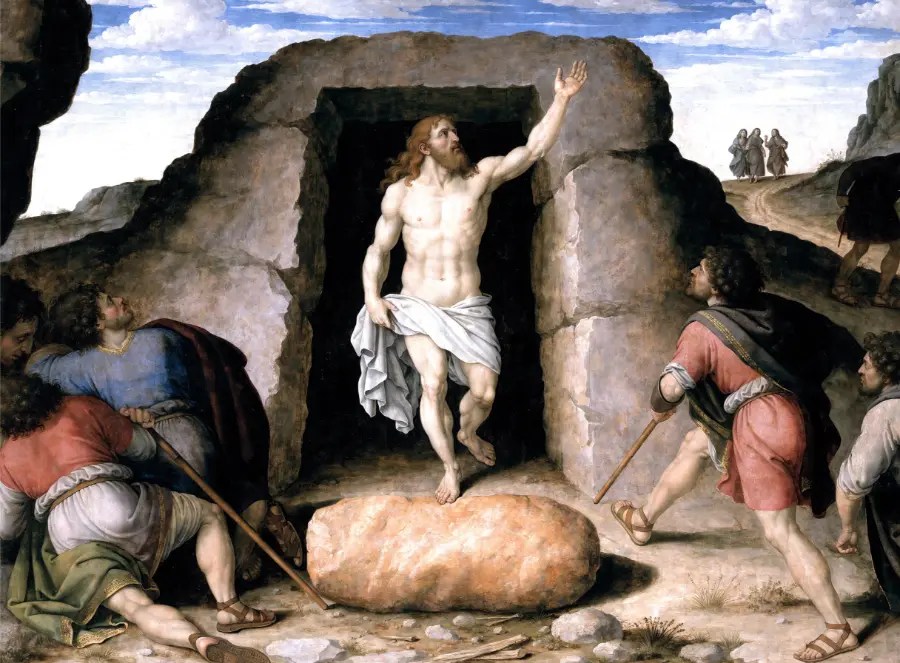
How Lutherans differ from their neighbours
- Lutheran vs Catholic: Faith Alone, the Pope and Communion Compared
- Lutheran vs Baptist: Two Views of Baptism, Communion and Faith
- Lutheran vs Protestant: Lutherans Were the First Protestants
- Lutheran vs Methodist: Free Will, Baptism and Communion
- Calvinism vs Lutheranism: The Lord’s Supper, Predestination and Other Differences
- Lutheran vs Presbyterian: What Is the Difference?
- Lutheran vs. Eastern Orthodox: Scripture, Salvation and Communion Compared
- Lutheran vs. Anglican Beliefs
- Lutheran vs. Non-Denominational: A Faith Comparison
See every answer for Lutherans and compare with another church
More from this seriesDenominations ComparedSee all 117 articles

Leave a Reply