 English
 Chinese
 Dutch
 Arabic
 Spanish
 Portuguese
 Russian
 French
 Italian
 German
 Japanese
Presbyterians are Protestant Christians who believe that God reigns over all things, that the Bible has the last word on what to believe and how to live, that people are saved by God’s free grace through faith in Jesus Christ, and that a church should be led by elders whom its people elect. That last conviction gave them their name, because a presbyter is an elder. If we want all of it in one breath, their Shorter Catechism has it in its very first exchange, which asks, “What is the chief end of man?” and answers, “Man’s chief end is to glorify God, and to enjoy him forever.”
Their faith came down through Scotland and England, and it was John Knox, whom the Presbyterian Church (U.S.A.) calls in its Book of Confessions a “student of Calvin and father of English-speaking Reformed Christianity,” who wrote most of the Scots Confession of 1560. In 1643, when “internal conflicts had nearly torn apart both England and the English church,” the House of Commons called for the government of the church to be settled, and an assembly gathered in Westminster Abbey to do it. It sat through 1,163 sessions before it finished in 1649, and out of those years came the Westminster Confession and the catechisms, which that same book calls “the primary standard for the Presbyterian branch of the Reformed family not only in our country but wherever Presbyterian Churches have sent missionaries.”
To say what Presbyterians believe today we have to say which Presbyterians, because they do not all read those documents alike. The Presbyterian Church (U.S.A.), or PC(USA), reported 1,019,003 members in 2025, and the Westminster Confession and its two catechisms are three of the twelve documents in its Book of Confessions, along with the Nicene Creed, the Confession of Belhar and others. The Presbyterian Church in America, or PCA, incorporated in 1973, makes the Confession and Catechisms part of its constitution, and the Orthodox Presbyterian Church publishes them as its standards. These churches part ways on several of the questions that follow, so each one will speak for itself here.
God and the Bible
The Trinity and Jesus
Presbyterians believe what the historic creeds say about God: one God in three persons, Father, Son and Holy Ghost, “of one substance, power, and eternity,” as the Westminster Confession puts it. So if a friend asks whether they believe Jesus is God, the answer is yes, for the Confession calls him “very and eternal God,” who took our nature on himself and bore it “yet without sin.” On one old quarrel they stand with the Western churches, because Westminster says the Spirit is “eternally proceeding from the Father and the Son,” and those last words are the Filioque, over which East and West have long been divided.
From Westminster Confession of Faith, chapters 2 and 8
The Bible, prophecy and tongues
When two Presbyterians disagree about a doctrine they go to the Bible to settle it, because the Westminster Confession says the last judge of every religious dispute is “the Holy Spirit speaking in the Scripture.” They hold that the Bible’s authority comes from God and waits on no church’s approval. Its first chapter names the sixty-six books one by one and leaves out the Apocrypha, and the two American churches then part over what kind of words these are. When the PCA ordains a minister or an elder it asks him whether he believes the Scriptures, “as originally given, to be the inerrant Word of God.” The PC(USA)’s Confession of 1967 says they were given under the Holy Spirit’s guidance and are “nevertheless the words of men, conditioned by the language, thought forms, and literary fashions of the places and times at which they were written.”
As for prophecy and tongues, Westminster says nothing is to be added to Scripture, “whether by new revelations of the Spirit, or traditions of men,” and it asks that prayer said aloud be “in a known tongue.” A report printed at the front of the PC(USA)’s Book of Confessions reads that as a ban, saying “Speaking or praying in ‘tongues’ is forbidden” there and in the Second Helvetic Confession, “but not in the other confessions of the book.” The PCA teaches that the gifts which brought new revelation ended with the apostles, and its Book of Church Order, which never uses the word tongues, says they “have no successors.”
How God saves us
Predestination and free will
Presbyterians teach that before the foundation of the world God chose whom he would save, and that the choice rested on nothing in those he chose, since the Westminster Confession says he made it “without any foresight of faith, or good works.” The same chapter goes on to the harder half, that the rest of mankind God was pleased “to pass by; and to ordain them to dishonor and wrath for their sin.” To see why they teach it we have to start with Adam. They believe his fall left every one of his children still making their own choices each day, with nobody forcing their hand, so free will in that everyday sense they do affirm. What they say the fall took away is the power to turn back to God, and a fallen person, in the Confession’s words, “is not able, by his own strength, to convert himself.” So grace has to come first or nobody would come at all, and they hear that order in Paul: “whom he did predestinate, them he also called: and whom he called, them he also justified: and whom he justified, them he also glorified” (Romans 8:30).
The PC(USA) still prints that chapter, and with it a Declaratory Statement added in 1903, which its book calls “the authoritative interpretation of Chapter III.” The statement holds God’s decree “in harmony with the doctrine of his love to all mankind” and says “no man is condemned except on the ground of his sin,” and the Book of Order today speaks of election “for service as well as for salvation.” So whether a Presbyterian is a strict Calvinist depends on which of these churches that Presbyterian belongs to.
Faith and good works
A Presbyterian will say that a person is put right with God by faith and by nothing else, and the Confession calls faith “the alone instrument of justification.” That faith never travels by itself, though. It “is ever accompanied with all other saving graces, and is no dead faith, but worketh by love,” the Confession goes on, so the good works come as surely as the faith does, and they come after the gift. Paul told the Ephesians where the gift comes from: “For by grace are ye saved through faith; and that not of yourselves: it is the gift of God: Not of works, lest any man should boast” (Ephesians 2:8–9).
From Presbyterian vs Catholic: Every Real Difference, Compared
Once saved, always saved?
Presbyterians answer yes to this, in the Confession’s own words: those whom God has called “can neither totally nor finally fall away from the state of grace, but shall certainly persevere therein to the end, and be eternally saved.” The Confession has no illusions about the people it is describing, and it says they may still “fall into grievous sins” and for a time continue in them. What it rests on is the promise Jesus made of his sheep: “And I give unto them eternal life; and they shall never perish, neither shall any man pluck them out of my hand” (John 10:28).
From Methodist vs Presbyterian: Free Will or Predestination, Bishops or Elders
Baptism and the Lord’s Supper
Baptizing babies
Presbyterians keep two sacraments, and the Confession is firm about the number: “There be only two sacraments ordained by Christ our Lord in the Gospel; that is to say, baptism, and the Supper of the Lord.” Baptism they call “a sign and seal of the covenant of grace,” and they give it to their children, because “infants of one, or both, believing parents, are to be baptized.” What they hear is Peter at Pentecost telling the crowd, “the promise is unto you, and to your children” (Acts 2:39). The water may be poured or sprinkled, since “dipping of the person into the water is not necessary.”
About that water the Confession says two things and means them both: it would be “a great sin to contemn or neglect this ordinance,” and yet “grace and salvation are not so inseparably annexed unto it, as that no person can be regenerated, or saved, without it.” So the water matters a great deal, and God remains free to save without it.
From Westminster Confession of Faith, chapters 27 and 28
The Lord’s Supper
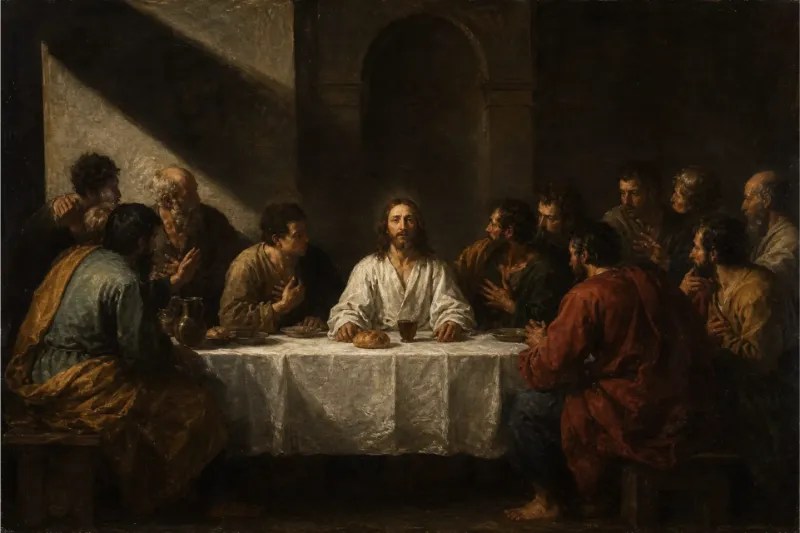
When Presbyterians come to the Lord’s table they do not believe the bread and wine have changed their substance, and the Westminster Confession rejects transubstantiation by name. They do believe they truly feed on Christ, spiritually and by faith, and the Shorter Catechism says those who receive worthily are “by faith, made partakers of his body and blood, with all his benefits, to their spiritual nourishment and growth in grace.”
The two American churches differ over who may come. A PC(USA) congregation invites everyone who has been baptized, and its Book of Order adds that “access to the table is not a right conferred upon the worthy, but a privilege given to the undeserving.” A PCA minister, at the discretion of the elders, either invites those who profess the faith and are members in good standing of any evangelical church, or invites only those the elders have already approved.
From Presbyterian vs Baptist: Infant Baptism, Elders and Congregations Compared
Elders and worship
Elders, and who may serve
Sit in on a session, the elders’ council of a PC(USA) congregation, and the pastor will be presiding over the ruling elders the congregation has elected, and every one of them has a vote. The pastor counts as an elder too, a teaching elder, and the PCA has the same two kinds. Ruling elders, says the PC(USA)’s Book of Order, “are so named not because they ‘lord it over’ the congregation” but because the people chose them to help the church stay faithful to the Word of God. Beyond the session come the wider councils, which in the PC(USA) are the presbytery, the synod and the general assembly, and the word presbytery is one Paul used when he reminded Timothy of “the laying on of the hands of the presbytery” (1 Timothy 4:14).
On who may hold those offices the PC(USA) and the PCA give opposite answers. In the PC(USA) “ruling elders and deacons are men and women elected by the congregation from among its members,” and its ministers are women and men as well, while the PCA says of its elders and deacons, “In accord with Scripture, these offices are open to men only.”
From Presbyterian vs Catholic: Every Real Difference, Compared
Worship, Mary and the saints
Go to a PCA church on a Sunday, the day their catechism calls the Christian sabbath, and the service is made of a few things: the Bible is read, psalms and hymns are sung, the people pray, the minister preaches, an offering is taken, the faith is confessed and the sacraments are kept. That is the PCA’s own list, and it comes from a Westminster conviction that God himself decides how he is to be worshipped, and that he “may not be worshiped according to the imaginations and devices of men.” The same conviction is why their catechism rules out worshipping God by images.
That same chapter of the Confession settles how Presbyterians pray. “Religious worship is to be given to God, the Father, Son, and Holy Ghost; and to him alone; not to angels, saints, or any other creature,” it says, so they do not pray to Mary or to the saints. They honour Mary as the virgin in whose womb the Son of God was “conceived by the power of the Holy Ghost,” and the Second Helvetic Confession in the PC(USA)’s book goes so far as to call her “the ever virgin Mary.”
Marriage and conscience
Marriage and divorce
The PCA teaches that marriage is between one man and one woman, as the Westminster Confession does, and its Book of Church Order binds its ministers to that: they “shall only solemnize marriages between one man and one woman.” The PC(USA) has come to a different place in two steps. In 2014 its General Assembly gave ministers permission to perform same-sex marriages where the law allows them, and it also sent the presbyteries an amendment to the church’s constitution, which had enough votes by March 17, 2015, and took effect on June 21 of that year. The Book of Order now says marriage “involves a unique commitment between two people, traditionally a man and a woman.” Nobody in the PC(USA) is made to take part, because each minister decides whether to perform a wedding and each session decides whether the church’s property may be used for one.
On divorce, the original Westminster text, which the PCA holds, allows only “adultery, or such willful desertion as can no way be remedied by the church, or civil magistrate,” and it permits the innocent party “to marry another, as if the offending party were dead.” The PC(USA) prints a rewritten chapter, which says the remarriage of divorced persons “may be sanctioned by the church” when penitence is evident and there is a firm purpose of Christian marriage.
Alcohol
When the PCA was asked in 1980 to call for total abstinence it said no, answering that such a position “would go beyond the requirements of scripture” and was contrary to the chapter of the Confession that says, “God alone is Lord of the conscience.” In the same decision it asked its churches to teach about “the sin involved in the intemperate or escapist use of any part of creation.” So in the PCA drinking is left to each person’s conscience before God, and its intemperate use is called a sin.
From Can Christians Drink Alcohol? What the Churches Teach
Death and the last day
Heaven, hell and purgatory
The Shorter Catechism says the souls of believers “are at their death made perfect in holiness, and do immediately pass into glory,” and that their bodies, “being still united to Christ, do rest in their graves till the resurrection.” Even in the grave, then, the body of a believer is still joined to Christ. The souls of the wicked, says the Confession, are “cast into hell,” and it knows no third place: “Besides these two places, for souls separated from their bodies, the Scripture acknowledgeth none.” So Presbyterians do not hold purgatory.
From Westminster Shorter Catechism, Question 37, and Westminster Confession of Faith, chapter 32
The rapture and the last day
The Westminster Confession and Larger Catechism never use the word “rapture,” and they do not speak of a tribulation or a thousand-year reign. They point to one last day, when, the Larger Catechism says, “they that are then found alive shall in a moment be changed,” and all the dead are raised. “Immediately after the resurrection shall follow the general and final judgment of angels and men,” it goes on, “the day and hour whereof no man knoweth, that all may watch and pray, and be ever ready for the coming of the Lord.”
From Westminster Larger Catechism, Questions 87 and 88
Back at the first answer of the Shorter Catechism, the PC(USA)’s printing has a note beside the words “to enjoy him forever.” It sends the reader to Psalm 73, where a man whose “steps had well nigh slipped” comes back to God and says, “Whom have I in heaven but thee? and there is none upon earth that I desire beside thee. My flesh and my heart faileth: but God is the strength of my heart, and my portion for ever” (Psalm 73:25–26).
How Presbyterians differ from their neighbours
- Presbyterian vs Catholic: Every Real Difference, Compared
- Presbyterian vs Baptist: Infant Baptism, Elders and Congregations Compared
- Methodist vs Presbyterian: Free Will or Predestination, Bishops or Elders
- Lutheran vs Presbyterian: What Is the Difference?
- Anglican vs. Presbyterian Beliefs
- Pentecostal vs. Presbyterian Beliefs
- Reformed vs Protestant: What Is the Difference?
See every answer for Presbyterians and compare with another church
More from this seriesDenominations ComparedSee all 117 articles

Leave a Reply