
 English
 Chinese
 Dutch
 Arabic
 Spanish
 Portuguese
 Russian
 French
 Italian
 German
 Japanese

The Twelve: How Ordinary Men Became the Foundation of the World
They were not scholars, priests, or kings. They were fishermen, tax collectors, and common workers—men of simple means and, in many cases, simpler faith.¹ Yet, this small band of twelve individuals was hand-picked by Jesus Christ for the most extraordinary mission in human history: to be His closest the primary witnesses to His resurrection, and the very foundation of a faith that would change the world.³ Their story is not one of flawless heroes in stained-glass windows, but of relatable, imperfect people who, through their friendship with Jesus, were utterly transformed.
The journey of the apostles is a powerful testament to a central truth of the Christian faith: God delights in choosing the ordinary to accomplish the extraordinary.⁵ They were a motley crew, full of doubts, fears, and personal ambitions. They stumbled, they argued, and at the most critical moment, they fled. Yet, these were the men Jesus entrusted with His legacy. Their story is a source of powerful hope, for it reveals that the power to change the world lies not in human strength or status, but in the life-changing grace of God. This report seeks to explore the lives of these twelve men, to understand their mission, to honor their sacrifice, and to draw from their journey timeless lessons of faith, courage, and transformation that speak directly to our hearts today.
Who Were the Twelve Apostles, Really?
To truly understand the apostles, it is essential to begin with their names and their unique calling. While Jesus had many followers, whom the Gospels call “disciples,” He set apart a special group of twelve for a specific role and purpose.⁶
Disciple or Apostle?
The terms “disciple” and “apostle” are often used interchangeably, but they carry distinct meanings. A disciple, in the broadest sense, is a learner or a follower. The Gospels speak of large crowds of disciples who followed Jesus to hear His teachings.⁶ Within this larger group, But Jesus called twelve men to a more intimate and authoritative role. These twelve were also disciples, but they were more. The word “apostle” comes from the Greek
apóstolos, which means “one who is sent out”.³ They were not just learners; they were commissioned ambassadors, sent out with the authority of Christ Himself to preach, heal, and proclaim the Kingdom of God.⁹ While all apostles were disciples, only these chosen few were designated as apostles during Jesus’s earthly ministry.
The Official Lists and the Name Puzzles
The names of the twelve apostles are recorded in three of the Gospels: Matthew 10:2-4, Mark 3:16-19, and Luke 6:13-16.¹¹ Although the lists are remarkably consistent, there are minor variations in the names, which can sometimes cause confusion. By comparing the lists, these puzzles can be pastorally resolved:
- The Core Group: The lists consistently begin with Simon Peter and include his brother Andrew, the brothers James and John, Philip, Bartholomew, Thomas, and Matthew.
- Thaddeus / Jude: The apostle Matthew and Mark call Thaddeus is called “Judas, son of James” by Luke.⁶ He is also sometimes referred to as Lebbaeus.⁶ These are likely different names for the same person, a common practice at the time.
- Bartholomew / Nathanael: The Gospels of Matthew, Mark, and Luke list Bartholomew, but he is never mentioned in the Gospel of John. Instead, John tells the story of a man named Nathanael, who was brought to Jesus by Philip.⁶ Since Philip and Bartholomew are always listed together in the other Gospels, it is widely believed that Bartholomew was Nathanael’s family name (meaning “son of Tolmai”) and Nathanael was his given name.
- Simon the Zealot / Simon the Canaanite: Matthew and Mark refer to him as “Simon the Canaanite,” while Luke calls him “Simon the Zealot”.⁶ The term “Canaanite” here is not a reference to the region of Canaan but is likely an Aramaic word for “zealous one,” making the titles identical in meaning.
- Matthew / Levi: The man Jesus called from the tax collector’s booth is named Matthew in the Gospel of Matthew, but Levi in Mark and Luke.⁶ This is another instance of an individual having two names.
The twelve apostles, therefore, are: Simon Peter, Andrew, James (son of Zebedee), John, Philip, Bartholomew (Nathanael), Thomas, Matthew (Levi), James (son of Alphaeus), Thaddeus (Jude), Simon the Zealot, and Judas Iscariot, who was later replaced by Matthias.¹
A Motley Crew: A Living Sermon
The most astonishing fact about this group is its diversity. Jesus did not select the religious elites from Jerusalem, the learned scribes, or the powerful Pharisees.² He chose ordinary men from the rural region of Galilee. At least four of them—Peter, Andrew, James, and John—were fishermen, hardworking laborers.²
Even more shocking was the inclusion of two men from opposite ends of the social and political spectrum: Matthew the tax collector and Simon the Zealot.¹ As a tax collector for the Roman Empire, Matthew would have been viewed by his fellow Jews as a traitor and a contemptible sinner, a collaborator with the oppressive occupying force.⁹ Simon, on the other hand, belonged to the Zealots, a fiercely nationalistic group that advocated for the violent overthrow of Roman rule.¹ In any other context, Simon would have considered Matthew a mortal enemy deserving of death.
The fact that these two men were called into the same small group, to eat, travel, and serve alongside one another, was a living sermon. It was a visible, radical demonstration that allegiance to the Kingdom of Jesus transcends and heals the deepest worldly divisions. Their ability to find unity in Christ was a miracle in itself, a powerful testimony that the reconciliation Jesus preached was not just a future hope, but a present reality.
Why Did Jesus Choose Twelve?
The decision to choose exactly twelve apostles was not random or arbitrary. It was a deeply symbolic and prophetic act, rich with meaning for its original Jewish audience and for the Church throughout history. The number twelve was a direct and intentional echo of the twelve tribes of Israel, founded by the twelve sons of Jacob.¹⁵
The New Israel
By selecting twelve men, Jesus was making a powerful statement. He was signaling that He was reconstituting the people of God around Himself.¹⁷ In the first century, the original twelve tribes were fractured. Following the Assyrian invasion centuries earlier, ten of the tribes had been scattered and were often referred to as the “lost tribes”.¹⁷ The hope for a future restoration of all twelve tribes was a central part of messianic expectation. Jesus’s action was a living prophecy, a declaration that this long-awaited restoration was beginning in Him. He was not starting a new movement separate from Israel’s history; He was fulfilling it.
This foundational role is not merely a historical footnote; it is an eternal reality. The Book of Revelation paints a stunning picture of the new creation, the heavenly New Jerusalem, and states, “The wall of the city had twelve courses of stones as its foundation, on which were inscribed the twelve names of the twelve apostles of the Lamb”.¹⁶ Their role as the foundation of the new people of God is permanent. Jesus Himself confirmed this special status, telling them, “Amen, I say to you that you…will yourselves sit on twelve thrones, judging the twelve tribes of Israel”.¹⁸
The choice of twelve was therefore a strategic and theological claim. In the context of first-century Judaism, it was an unmistakable act of messianic authority. It declared that Jesus was the one who would gather and restore God’s people, creating a new community of faith that would begin with Israel and extend to the ends of the earth.
What Were the Apostles Like as People?
To truly connect with the apostles, it helps to see them not just as names on a list, but as real people with distinct personalities, strengths, and weaknesses. The Gospels, through brief but vivid interactions, give us a glimpse into the hearts of these men.
The Leader: Simon Peter
No apostle is more prominent in the Gospels than Simon Peter. He was impulsive, passionate, outspoken, and often acted as the group’s spokesman.¹ It was Peter who first declared that Jesus was the Christ (Matthew 16:16). It was also Peter who, full of bravado, tried to walk on water, only to sink when his faith faltered (Matthew 14:28-31). His greatest failure was his vehement denial of Jesus three times on the night of His arrest.¹ Yet, Jesus saw beyond his bluster and his failures. He gave him the name “Peter” (or
Cephas in Aramaic), which means “Rock,” seeing not just the shifting sand of his personality, but the solid foundation he would become through grace and forgiveness.³
The Connector: Andrew
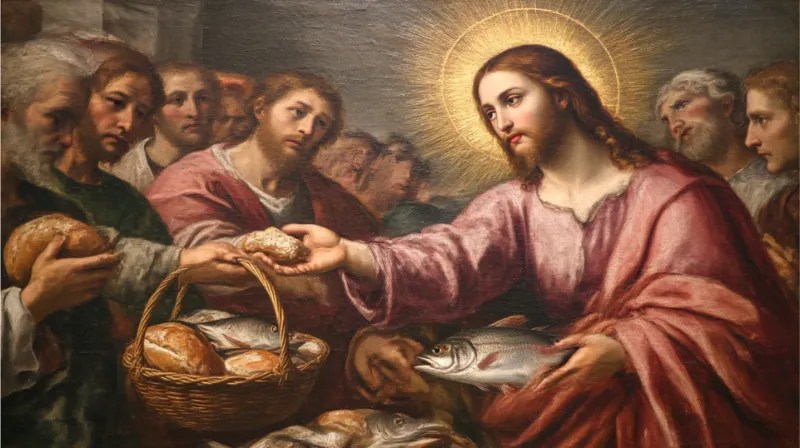
Andrew, Peter’s brother, was one of the very first disciples called by Jesus, having previously followed John the Baptist.⁹ Though often in the shadow of his more famous brother, Andrew had a quiet but vital ministry: he brought people to Jesus. The first person he brought was his own brother, Simon Peter.¹ Later, during the feeding of the five thousand, it was Andrew who pointed out the boy with the loaves and two fish, the simple offering that Jesus would multiply into a miracle.¹⁹ Andrew models a humble, selfless evangelism, reminding us that some of the most powerful work for the Kingdom is done quietly, by simply introducing others to Christ.
The Sons of Thunder: James and John
The brothers James and John were business partners with Peter and Andrew in a fishing enterprise, and they were known for their fiery zeal.² Jesus gave them the nickname
Boanerges, which means “Sons of Thunder,” likely because of their passionate and sometimes impetuous nature.² This was on full display when they asked Jesus if they should call down fire from heaven to consume a Samaritan village that would not welcome them (Luke 9:54). They also displayed a raw ambition when they asked to sit at Jesus’s right and left hand in His glory.¹⁹ Jesus did not rebuke their passion but redirected it, teaching them that true greatness in His kingdom comes through service and sacrifice.
The Beloved Disciple: John
While one of the “Sons of Thunder,” John is also known by the tender title, “the disciple whom Jesus loved”.¹ This likely points to a special intimacy he shared with the Lord. Of all the twelve, John was the only one who stood faithfully at the foot of the cross during the crucifixion. It was there that Jesus entrusted His own mother, Mary, into John’s care.¹⁸ John’s later writings—the Gospel of John, three epistles, and the Book of Revelation—are filled with the powerful themes of love, life, and light, reflecting a lifetime of meditating on his relationship with Christ.³
The Honest Skeptic: Thomas
Thomas is forever marked by the nickname “Doubting Thomas,” but his story is one of powerful and relatable faith. His doubt was not born of a cynical or hard heart, but of an honest one that longed for a personal encounter. He had missed Jesus’s first post-resurrection appearance to the apostles and declared he would not believe until he could see and touch the wounds for himself.¹ When Jesus appeared again, He did not scold Thomas but lovingly invited him to touch His wounds. Thomas’s response was one of the most powerful declarations of faith in all of Scripture: “My Lord and my God!” (John 20:28).¹ His journey gives immense hope to all who wrestle with questions and doubts on their path to faith.
The Transformed Outcast: Matthew
Matthew, also called Levi, was a tax collector—a profession despised by the Jews. Tax collectors worked for Rome and were infamous for their corruption and extortion.² They were considered religious and social outcasts. Yet, when Jesus passed his tax booth and said two simple words, “Follow me,” Matthew immediately left everything behind to follow Him.² His story is a dramatic illustration of the power of God’s grace to reach and transform anyone, no matter how far they seem to be from Him.
The Idealist and the Zealot: Philip and Simon
Philip appears to be a practical and inquisitive man, perhaps with a mind for logistics, as seen when Jesus tested him about how to feed the five thousand.¹ He also served as a bridge to those outside the immediate Jewish circle, bringing his friend Nathanael to Jesus and later helping some Greek-speakers gain an audience with the Lord.³ Simon the Zealot, as mentioned, came from a background of fierce political passion. His presence in the group shows that Jesus’s call can capture even the most intense human loyalties and redirect them for the glory of God’s Kingdom.¹
The remaining apostles—James the son of Alphaeus (often called “the Less” to distinguish him from James the son of Zebedee) and Thaddeus (Jude)—are mentioned by name but have no recorded words or specific actions in the Gospels.¹ Their quiet faithfulness is a lesson in itself, showing that one can be a foundational member of Christ’s Church without being in the spotlight.
Table 1: The Twelve Apostles at a Glance
| Apostle Name(s) | Key Scripture Reference | Defining Characteristic | Traditional Symbol |
|---|---|---|---|
| Simon Peter (Cephas) | Matthew 16:16-19 | The Impulsive Leader | Crossed Keys 21 |
| Andrew | John 1:40-42 | The Humble Connector | X-shaped Cross 21 |
| James (son of Zebedee) | Mark 3:17 | The Zealous Martyr | Three Shells |
| John (son of Zebedee) | John 19:26-27 | The Beloved Disciple | Chalice and Serpent 21 |
| Philip | John 1:43-46 | The Practical Evangelist | Cross and Loaves 21 |
| Bartholomew (Nathanael) | John 1:47-49 | The Honest Believer | Flaying Knives 21 |
| Thomas (Didymus) | John 20:24-28 | The Courageous Skeptic | Spear and Carpenter’s Square 21 |
| Matthew (Levi) | Matthew 9:9 | The Transformed Outcast | Purses of Money / Ax 21 |
| James (son of Alphaeus) | Luke 6:15 | The Quietly Faithful | Fuller’s Club 21 |
| Thaddeus (Jude) | John 14:22 | The Inquisitive Follower | Halberd or Club 21 |
| Simon the Zealot | Luke 6:15 | The Passionate Devotee | Saw or Fish on a Book 21 |
| Judas Iscariot | Matthew 26:14-16 | The Betrayer | A Rope or a Bag of Silver |
Who Was in Jesus’s “Inner Circle”?
While all twelve apostles shared a unique closeness with Jesus, the Gospels consistently show that three of them—Peter, James, and John—were invited into an even deeper level of intimacy and revelation.¹² Jesus often pulled these three aside to witness moments of powerful power and vulnerability that the other nine did not see.¹²
This special status was not about favoritism; it was a form of spiritual preparation. The unique experiences granted to the inner circle were designed to forge in them the strength and understanding they would need to lead the early Church through its most difficult trials.
Witnesses to His Glory: The Transfiguration
On a high mountain, Peter, James, and John were the sole apostolic witnesses to the Transfiguration.¹² There, Jesus’s appearance was gloriously changed, His face shining like the sun and His clothes becoming a dazzling white. They saw Him speaking with Moses and Elijah, the great figures of the Law and the Prophets, and they heard the voice of God the Father declare from a cloud, “This is my beloved Son, with whom I am well pleased; listen to him” (Matthew 17:5). This was an overwhelming glimpse of Jesus’s divine nature, a moment of powerful revelation meant to anchor their faith for the dark days ahead.
Witnesses to His Power: The Raising of Jairus’s Daughter
When a synagogue leader named Jairus begged Jesus to heal his dying daughter, only Peter, James, and John were permitted to enter the house with Him.² When they arrived, the girl had already died. But Jesus took her by the hand and said, “Little girl, I say to you, arise.” She immediately got up, alive and well. The inner circle witnessed firsthand Jesus’s absolute authority over life and death, a powerful lesson that would become the cornerstone of their future preaching.
Witnesses to His Agony: The Garden of Gethsemane
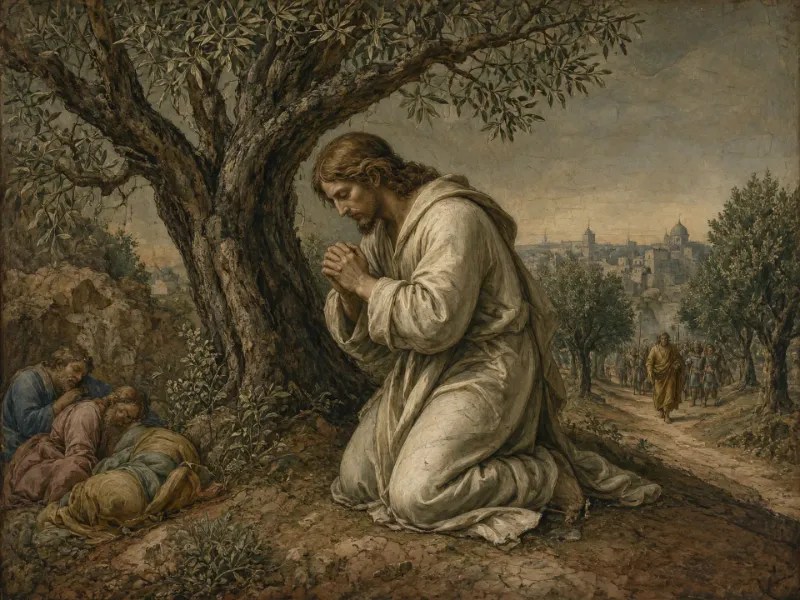
The privilege of witnessing Jesus’s glory and power was balanced by the call to be near Him in His moment of greatest human suffering. In the Garden of Gethsemane, on the night before His crucifixion, Jesus again took Peter, James, and John deeper into the garden with Him.² He asked them to stay awake and pray with Him as He wrestled in agony with the cup of suffering that lay before Him. Their inability to stay awake, falling asleep three times, provides a poignant and relatable picture of human weakness in the face of spiritual crisis.
The experiences of the inner circle reveal a powerful spiritual principle. The men who were invited to see the highest highs of Jesus’s glory at the Transfiguration were the same men called to be closest to the lowest lows of His agony in Gethsemane. Proximity to Christ meant sharing in both His revelation and His suffering. This intense preparation was necessary, for these men would face immense leadership responsibilities, and two of them—James and Peter—would be among the first to follow their Master in martyrdom. Their special access was not for status, but to equip them for the immense cost of their calling.
How Did the Apostles Die for Their Faith?
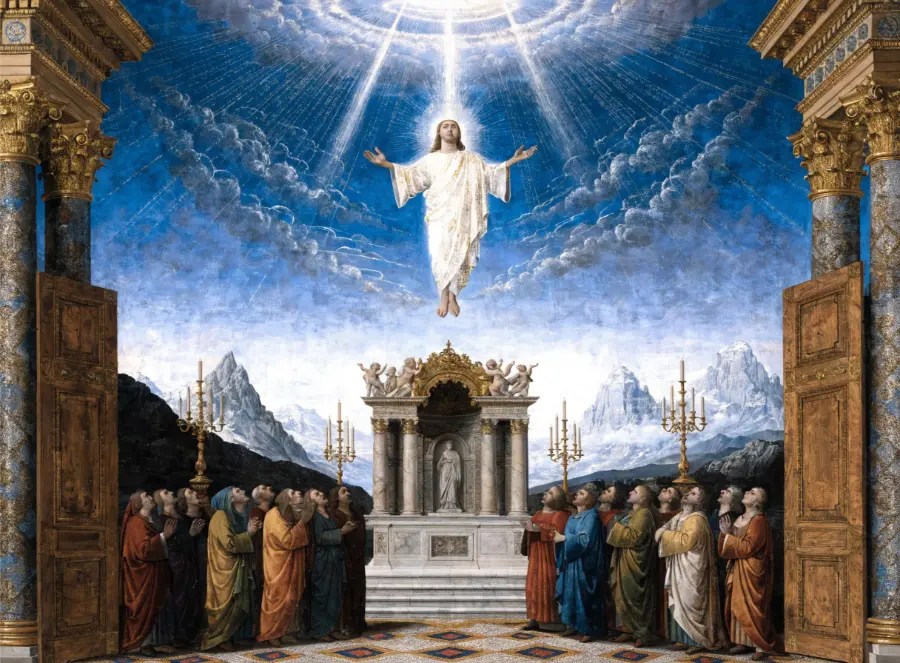
One of the most compelling and frequently asked questions about the apostles concerns their final days. Their unwavering commitment to proclaiming the resurrection of Jesus Christ, even in the face of brutal persecution, stands as a powerful testament to the truth of their message. Although the Bible only records the fates of two of the original twelve, strong and early church tradition provides a consistent picture of martyrdom for nearly all the rest.⁵
What the Bible Explicitly Says
The New Testament gives clear, historical accounts of the deaths of two apostles:
- Judas Iscariot: After betraying Jesus for thirty pieces of silver, Judas was overcome with remorse. He tried to return the money and, in his despair, went out and took his own life.⁵
- James, son of Zebedee: The Book of Acts records that James became the first apostolic martyr. Around the year 44 AD, King Herod Agrippa I, seeking to please Jewish leaders hostile to the growing Christian movement, “had James, the brother of John, put to death with the sword” (Acts 12:2).⁵
What Strong Church Tradition Tells Us
For the fates of the other apostles, we rely on the writings of early church fathers like Eusebius, Origen, and Tertullian, who compiled traditions that were widespread and well-established in the first few centuries of Christianity.⁵ While some details vary between accounts, the overarching narrative is one of courageous sacrifice for the faith.
- Peter: Tradition holds that Peter traveled to Rome, where he led the church for many years before being martyred under the persecution of Emperor Nero around 64-66 AD. He was crucified, and according to Origen, he requested to be crucified upside-down, feeling unworthy to die in the same manner as his Lord.²
- Andrew: Peter’s brother Andrew is said to have preached in Scythia (modern-day Ukraine and southern Russia) and Greece. He was martyred in the Greek city of Patras by being bound to an X-shaped cross, where he continued to preach to his tormentors for two days before he died.²⁷
- Thomas: Known for his missionary journey to India, Thomas is credited with establishing the church there. Tradition states that he was martyred near modern-day Chennai, where he was killed by a spear.¹
- Philip: After preaching in Phrygia (in modern Turkey), Philip was martyred in the city of Hierapolis. Accounts say he was crucified.²⁸
- Matthew: The former tax collector is believed to have taken the gospel to Ethiopia and Persia. He was martyred in Ethiopia, killed by a sword or an ax.²²
- Bartholomew (Nathanael): His missionary work took him to Armenia. There, he was martyred in the most gruesome way, being flayed alive with knives before being beheaded.¹⁹
- James, son of Alphaeus: Tradition says James the Less preached in Syria and Egypt. He was martyred in Egypt by being beaten to death, or in Jerusalem by being thrown from the pinnacle of the Temple and then clubbed to death.²²
- Thaddeus (Jude): He is believed to have preached in Mesopotamia (modern Iraq) and Persia alongside Simon the Zealot. He was martyred in Persia, clubbed or shot with arrows.²²
- Simon the Zealot: After missionary journeys that may have taken him to Persia, Egypt, or even Britain, tradition holds that Simon was martyred with Thaddeus in Persia, possibly by being sawn in half.²²
- Matthias: The man chosen by the apostles to replace Judas Iscariot preached in the region of Cappadocia and near the Caspian Sea. He was martyred by being stoned and then beheaded.²²
The Survivor: John
John, the beloved disciple, is the one apostle whom tradition holds was not martyred, though not for lack of trying on the part of his persecutors. He is said to have miraculously survived being thrown into a cauldron of boiling oil in Rome. He was later exiled to the desolate prison island of Patmos, where he received the visions that became the Book of Revelation. After his release, he ministered in Ephesus until he died a natural death at a very old age, the last of the apostolic eyewitnesses.¹⁹
Table 2: The Apostles’ Final Mission and Sacrifice
| Apostle Name | Traditional Mission Field | Traditional Manner of Death |
|---|---|---|
| Peter | Rome | Crucified upside-down 28 |
| Andrew | Greece, Scythia | Crucified on an X-shaped cross 28 |
| James (son of Zebedee) | Jerusalem | Beheaded by the sword 28 |
| John | Ephesus (Turkey) | Natural causes (after persecution) 28 |
| Philip | Phrygia (Turkey) | Crucified 28 |
| Bartholomew (Nathanael) | Armenia | Flayed alive and beheaded 28 |
| Thomas | India | Killed by a spear 28 |
| Matthew (Levi) | Ethiopia, Persia | Killed by an ax or sword 28 |
| James (son of Alphaeus) | Egypt, Syria | Beaten or clubbed to death 28 |
| Thaddeus (Jude) | Persia, Armenia | Crucified or killed with arrows 28 |
| Simon the Zealot | Persia, Armenia | Crucified or sawn in half 28 |
| Matthias | Cappadocia (Turkey) | Stoned and beheaded 28 |
Why Is Their Martyrdom Such Powerful Proof of the Resurrection?
The story of the apostles’ deaths is more than a collection of historical traditions; it is a powerful piece of evidence for the truth of the Christian faith. Their willingness to endure horrific suffering and death for their message provides a powerful, pastoral argument for the reality of the resurrection.³⁰
The logic is simple yet compelling. While many people throughout history have died for a cause they believed to be true, no one willingly suffers and dies for something they know to be a lie.³¹ The apostles were in a unique position. They were not dying for a belief they had received second-hand. They were dying for a claim they made as eyewitnesses: that they had personally seen, touched, spoken with, and eaten meals with Jesus Christ
after He had been brutally executed and buried.³¹
If the resurrection were a story they had invented, they would have known it was a hoax. Liars make poor martyrs. Yet, these men, who had scattered in fear when Jesus was arrested—with Peter, their leader, denying he even knew Him—were radically transformed into fearless proclaimers of the resurrection.¹ What could possibly account for such a dramatic change from cowardice to courage? What could motivate them to face down the very authorities who had killed their master, to endure beatings, imprisonment, and decades of persecution without ever changing their story?.¹⁹
The most logical and powerful explanation for this transformation is that they were telling the truth. They had genuinely encountered the risen Lord, and that encounter, empowered by the Holy Spirit at Pentecost, changed everything. It turned their fear into fearlessness and their despair into unshakeable hope. Their martyrdom, therefore, is not just a testament to their sincerity. It is the ultimate refutation of any theory that they conspired to invent the central event of Christianity. Their testimony was sealed not in ink, but in their own blood, providing a powerful confirmation that the hope they proclaimed was real.
What Is the Catholic Church’s Stance on the Apostles?
For the Catholic the twelve apostles are not merely revered historical figures; they are the very source of the Church’s teaching, authority, and structure, which are believed to continue in a living way to the present day.¹⁰ This understanding is rooted in several key doctrines.
The First Bishops and the Primacy of Peter
The Catholic Church teaches that Jesus hand-picked the apostles to be the first bishops, giving them His own authority to carry on His mission.¹⁸ This authority included the power to teach in His name, to govern the and to administer the sacred rites, such as forgiving sins.¹⁰
Within this group of twelve, a special role was given to Simon Peter. The Gospel of Matthew recounts a pivotal moment when, after Peter’s confession of faith, Jesus said to him:
“And I tell you, you are Peter, and on this rock I will build my and the gates of hell shall not prevail against it. I will give you the keys to the kingdom of heaven; whatever you bind on earth will be bound in heaven, and whatever you loose on earth will be loosed in heaven.” (Matthew 16:18-19)¹⁸
Based on this passage, the Church teaches the “primacy of Peter.” He was established as the chief apostle, the visible head of the Church on earth, and the first Pope.²⁰ The “keys” symbolize this unique authority to govern the Church and to be the ultimate guarantor of its faith.
Apostolic Succession
A cornerstone of Catholic teaching is the doctrine of Apostolic Succession. This holds that the mission and authority Jesus gave to the apostles has been passed down through the centuries in an unbroken line.¹⁸ The Pope, as the Bishop of Rome, is the direct successor to St. Peter. Likewise, all the bishops of the Catholic Church are understood to be the successors of the other apostles. This continuous line of succession, known as “Apostolicity,” is considered one of the four essential marks of the one true Church founded by Christ.¹⁸
This doctrine means that the ministry of the apostles did not end with their deaths. Their authority to teach, sanctify, and govern is believed to be a living reality, actively present in the Church today through the Pope and the bishops in communion with him. This connection to the apostles is seen as the guarantee that the Church remains faithful to the gospel entrusted to it by Jesus Christ Himself. The apostles are, in the words of St. Paul, the “foundation” of the household of God, with “Christ Jesus himself being the cornerstone”.⁹
What Can These Ordinary Men Teach Us Today?
The story of the twelve apostles, though ancient, is filled with urgent and deeply personal lessons for Christians today. Their journey from ordinary fishermen to world-changing evangelists is a blueprint of the Christian life, offering powerful encouragement, hope, and inspiration.
God Uses the Ordinary
Perhaps the most powerful lesson from the apostles is that God does not call the qualified; He qualifies the called. He chose normal, flawed, and often-failing individuals to be His closest companions and the foundation of His Church.² Peter was impulsive, Thomas doubted, James and John were ambitious, and nearly all of them abandoned Jesus in His hour of need. Their weaknesses were not disqualifications; they were the arenas where God’s grace and power could be most clearly displayed. Their story is our story. It assures us that God can use us, not in spite of our imperfections, but through them.
The Power of a Simple “Yes”
The apostles’ lives were forever changed by a simple but total response to Jesus’s call. When Jesus said, “Follow me,” to fishermen mending their nets and a tax collector at his booth, they left everything to follow Him.³ Their immediate “yes” is an invitation to every believer. God’s call in our own lives may not be as dramatic, but it is just as real. The apostles teach us that a heart willing to say “yes” to God, trusting Him with the outcome, is the first step toward an extraordinary adventure of faith.
Friendship with Jesus Changes Everything
What was the secret to the apostles’ transformation? How did fearful men become fearless martyrs? The Book of Acts gives the answer when the authorities in Jerusalem, amazed at the boldness of Peter and John, “recognized that they had been with Jesus” (Acts 4:13).⁶ Their courage, wisdom, and power came from the time they had spent with Him. Their friendship with Jesus changed them from the inside out. This is the same invitation extended to us today: to cultivate a personal, daily friendship with Christ through prayer, through Scripture, and through the sacraments. It is in being
with Jesus that we are transformed by Him.
A Mission for Everyone
The Great Commission—the command to go and make disciples of all nations—was first given to the apostles, but it has been passed down to every generation of believers. Their example of leaving their homes to take the gospel to faraway lands like India, Ethiopia, and Greece inspires us to be witnesses for Christ in our own time and place.²² We may not be called to cross oceans, but we are all called to share the hope we have with the people in our lives.
The ultimate fact about the twelve apostles is not the number of miles they traveled or the precise manner of their deaths. It is the astonishing ratio of their world-changing impact to their initial human qualifications. A dozen ordinary men, empowered by the Holy Spirit, truly “turned the world upside down”.⁶ Their legacy is the ultimate proof that the power was never in them, but in the One who called them. And that is a truth that gives immeasurable hope, purpose, and courage to every person who seeks to follow Jesus today.


Leave a Reply