
 English
  Chinese
  Dutch
Dutch  Arabic
  Spanish
  Portuguese
  Russian
  French
  Italian
  German
  Japanese
 Judas Iscariot was the apostle who handed Jesus over to the chief priests. One of the Twelve and “the son of Simon” (John 6:71), he kept the apostles’ common purse, asked the priests for payment, and led the men who arrested Jesus. He died soon afterwards, and the apostles chose Matthias to take his place (Acts 1:26).
The hardest part of his story is how close he was. Jesus chose him after a night of prayer. He walked the roads with the others, was sent out with power over unclean spirits, and ate at the Last Supper. And when he came into the garden with a crowd and a kiss, Jesus still spoke to him by a gentle name: “Friend, wherefore art thou come?” (Matthew 26:50). Judas was not a stranger who slipped in. He was a friend who turned away.
What does the name Judas Iscariot mean?
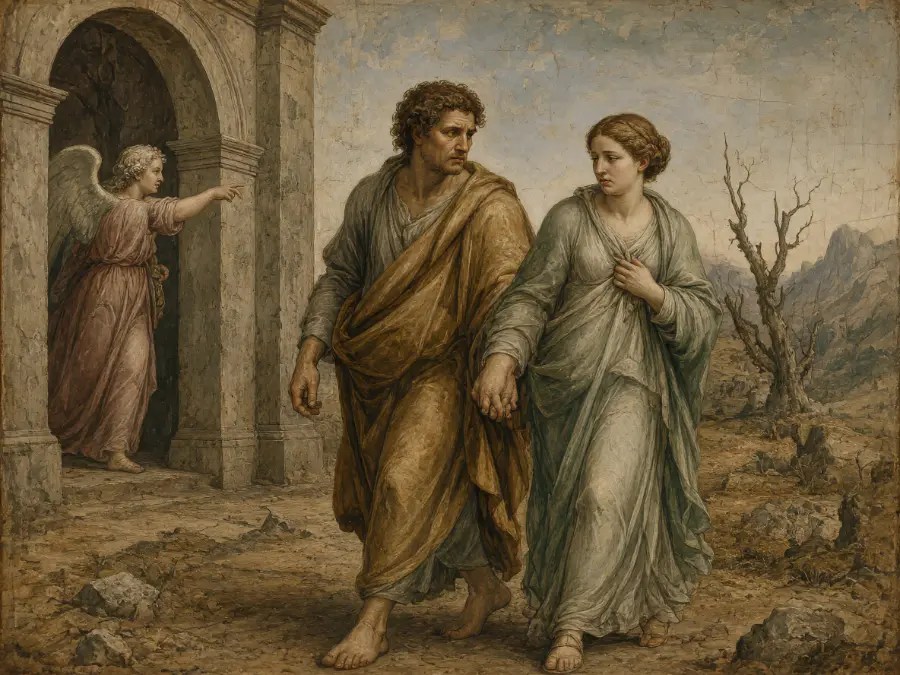
Judas is the Greek form of Judah, the name Leah gave her fourth son by Jacob. At his birth “she said, Now will I praise the LORD: therefore she called his name Judah” (Genesis 29:35). Its Hebrew sense is “praised”, as the old Catholic Encyclopedia gives it. It was a common Jewish name, and two of the Twelve carried it.
Iscariot is a second name that sets him apart from the other Judas, and its meaning is less certain. The most widely held reading takes it from the Hebrew for “man of Kerioth”. Kerioth, a town in the south of Judea, appears in Joshua’s list of “the uttermost cities of the tribe of the children of Judah toward the coast of Edom southward” (Joshua 15:21, 25). The encyclopedia’s 1910 volume was firm: “There can be no doubt that this is the right interpretation of the name”, though it granted that “the true origin is obscured in the Greek spelling” and that other derivations had been suggested. Pope Benedict XVI, speaking about Judas in 2006, called it “the more common explanation” and set two others beside it. One links the name with sica, the Latin word for a dagger, as if Judas had been a “hired assassin”. The other reads it as a Hebrew-Aramaic root meaning “the one who is to hand him over”. None of the three can be proved; the place name is the most widely held.
One small detail favours the place. In the Greek of John 6:71, as printed in Bible Hub’s interlinear, Iscariot is in the same grammatical case as Simon, so it names the father. The New American Bible, the translation of the Catholic bishops of the United States, renders it “Judas, son of Simon the Iscariot.” The King James Version reads “Judas Iscariot the son of Simon”, and elsewhere the Gospels give the name to Judas himself: Luke writes “Judas surnamed Iscariot” (Luke 22:3). A name carried by father and son fits a family from Kerioth better than a nickname earned by one man. (In the King James Version a surname is a second name added to the first, not a family name passed down as it is today.) If Kerioth is right, Judas was a Judean, while the other apostles, the encyclopedia notes, “were all Galileans”.
What was Judas’s place among the Twelve?
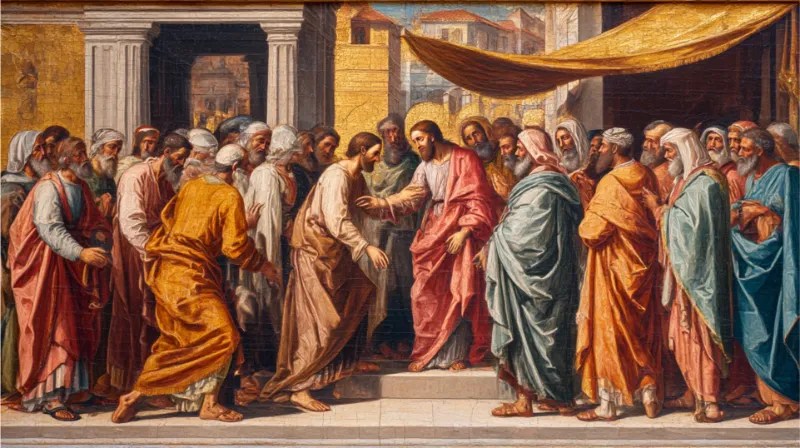
Jesus chose him with the others. After a night of prayer “he called unto him his disciples: and of them he chose twelve, whom also he named apostles”, and Luke’s list ends with “Judas Iscariot, which also was the traitor” (Luke 6:13–16). Every list of the Twelve names him last, and every list marks him by what he would do; Matthew’s reads “Judas Iscariot, who also betrayed him” (Matthew 10:4).
He shared the apostles’ work. Jesus “called unto him the twelve, and began to send them forth by two and two; and gave them power over unclean spirits” (Mark 6:7), and after Judas’s death Peter said of him, “he was numbered with us, and had obtained part of this ministry” (Acts 1:17). He also kept their money, and here the trouble shows. When Mary of Bethany anointed Jesus’ feet with costly ointment, Judas asked, “Why was not this ointment sold for three hundred pence, and given to the poor?” John adds: “This he said, not that he cared for the poor; but because he was a thief, and had the bag, and bare what was put therein” (John 12:5–6). Even at the Last Supper, when Judas left the table, the others suspected nothing; they thought that “because Judas had the bag”, Jesus had sent him to buy for the feast “or, that he should give something to the poor” (John 13:29).
Jesus was not deceived. Long before that night, John records, he had said, “Have not I chosen you twelve, and one of you is a devil? He spake of Judas Iscariot the son of Simon: for he it was that should betray him, being one of the twelve” (John 6:70–71). He knew, and he kept him close anyway.
Which Judas is which in the New Testament?
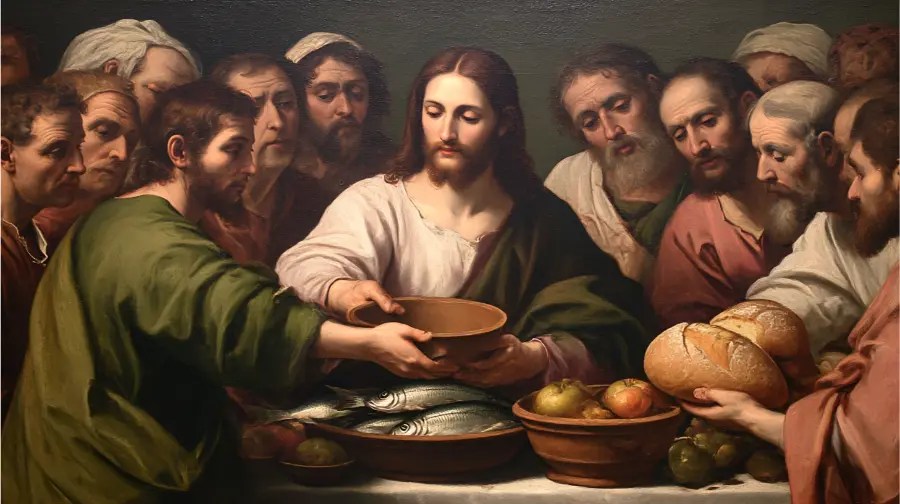
Several men in the New Testament are called Judas, and two of them were apostles. John takes care to tell them apart: at the Last Supper “Judas saith unto him, not Iscariot, Lord, how is it that thou wilt manifest thyself unto us, and not unto the world?” (John 14:22).
| Name in the KJV | Who he was | Where |
|---|---|---|
| Judas Iscariot | The apostle who betrayed Jesus; son of Simon | John 6:71; Matthew 10:4 |
| Judas “the brother of James”; “not Iscariot” | The other apostle named Judas; Matthew and Mark list Thaddaeus in his place | Luke 6:16; John 14:22; Matthew 10:3 |
| Judas, one of Jesus’ “brethren” | Named with James, Joses and Simon | Matthew 13:55 |
| Jude, “brother of James” | Writer of the Letter of Jude, identified with one of the two above | Jude 1 |
| Judas surnamed Barsabas | A leader of the Jerusalem church, sent to Antioch | Acts 15:22 |
| Judas of Galilee | A rebel “in the days of the taxing” | Acts 5:37 |
| Judas of Damascus | Host of Saul after his conversion, on the street called Straight | Acts 9:11 |
English Bibles often use the form Jude for the writer of the short letter near the end of the New Testament, which begins “Jude, the servant of Jesus Christ, and brother of James” (Jude 1). In Greek it is the same name as Judas. The other apostle Judas, whom Luke calls “Judas the brother of James” (Luke 6:16), stands where Matthew has “Lebbaeus, whose surname was Thaddaeus” (Matthew 10:3). Catholic commentators take them to be one man and identify him with the writer of the letter, and an old tradition recorded by Eusebius calls that Jude “the brother of the Lord according to the flesh”. Either way, he is a different man from Judas Iscariot. The names Jude, Judas and Judah are compared in Jude, Judas and Judah in the Bible.
What part did Judas play in Jesus’ arrest?
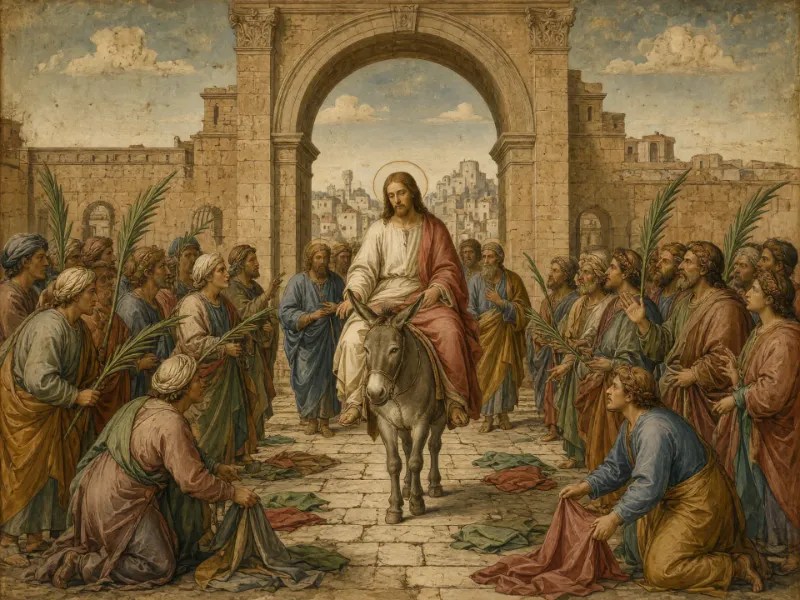
Shortly before the Passover, Judas went to the chief priests and asked, “What will ye give me, and I will deliver him unto you?” (Matthew 26:15). They agreed on thirty pieces of silver, a sum only Matthew names; what the coins were and what they were worth is the subject of what Judas was paid. At the Last Supper he took the dipped bread from Jesus’ hand, went out, “and it was night” (John 13:30). John needs no more words than that.
Later that night Judas brought “a great multitude with swords and staves” to the garden across the brook Cedron and singled Jesus out with a kiss: “Hail, master; and kissed him.” Jesus answered, “Friend, wherefore art thou come?” (Matthew 26:49–50). The sign of love became the signal for arrest. The reasons the Gospels give, money, the work of Satan and the fulfilling of Scripture, and their four accounts of that night are set out in why Judas betrayed Jesus.
How did Judas die?
Matthew tells it in a few lines. When Judas “saw that he was condemned, repented himself, and brought again the thirty pieces of silver to the chief priests and elders, Saying, I have sinned in that I have betrayed the innocent blood. And they said, What is that to us? see thou to that. And he cast down the pieces of silver in the temple, and departed, and went and hanged himself” (Matthew 27:3–5). The priests bought a field with the money. “What is that to us?” is among the coldest answers in the Bible. He went to the wrong people with his guilt, and they sent him away alone.
The Acts of the Apostles gives a second, shorter account, in which Judas died after a fall (Acts 1:18–19). Many Christians have read the two as one story; the notes of the New American Bible treat them as two traditions. Benedict, speaking of Judas’s death, gave us a caution: “it is not up to us to judge his gesture, substituting ourselves for the infinitely merciful and just God.” Whether Judas was saved or lost, and what each church teaches about it, is the question of whether Judas went to heaven or hell.
Who replaced Judas among the apostles?
Matthias. In the days between the Ascension and Pentecost, Peter told about a hundred and twenty believers that one of the men “which have companied with us all the time that the Lord Jesus went in and out among us, Beginning from the baptism of John”, must take Judas’s place as “a witness with us of his resurrection” (Acts 1:21–22). They put forward “Joseph called Barsabas, who was surnamed Justus, and Matthias”, prayed, and cast lots, “and the lot fell upon Matthias; and he was numbered with the eleven apostles” (Acts 1:23–26). The empty place was filled. The work went on.
How have Christians remembered Judas?
Mostly as a warning, and sometimes as a mirror. Painters and poets made the best-known pictures of him. In Leonardo da Vinci’s Last Supper in Milan, painted between 1495 and 1498, Judas “seems to shrink away from Jesus” and holds “the bag containing the 30 pieces of silver”, in the words of the museum that keeps the painting. Dante’s Inferno sets him at the bottom of hell, with Brutus and Cassius; in Longfellow’s translation Dante’s guide says, “That soul up there which has the greatest pain, … is Judas Iscariot.”
One early sect even made Judas the hero of the story. Irenaeus, bishop of Lyons in the second century, wrote of people who claimed that Judas alone, “knowing the truth as no others did, accomplished the mystery of the betrayal”, and added: “They produce a fictitious history of this kind, which they style the Gospel of Judas.” A Coptic copy of a Gospel of Judas, found in Egypt in 1978, was pieced together and translated in a project of the National Geographic Society, which announced it in April 2006. In it Jesus tells Judas, “you will sacrifice the man that clothes me.” No church reads it as Scripture.
Benedict pointed back to the garden, where Jesus called him friend: “Jesus treated him as a friend”. He added that Jesus “does not force his will or protect it from the temptations of Satan, respecting human freedom.” That freedom is what makes Judas a mirror. The Orthodox Church sings of him on Holy Thursday, setting the disciples “enlightened at the washing of their feet before the supper” beside Judas, “darkened, ailing with avarice”, and urging the worshipper: “Flee from the greedy soul which dared such things against the Master.” Then, before Communion, each believer prays to choose the other way, the way of the thief on the cross: “neither like Judas will I give Thee a kiss; but like the thief will I confess Thee: Remember me, O Lord in Thy Kingdom.”


Leave a Reply