
 English
 Chinese
 Dutch
 Arabic
 Spanish
 Portuguese
 Russian
 French
 Italian
 German
 Japanese
Yes. The Bible says “God is love” (1 John 4:8, 16), and in the very next verse John shows us what that love looks like: “God sent his only Son into the world, so that we might live through him” (1 John 4:9). So Christians who hold that Jesus is God speak of him as God’s love in human form.
“No one has ever seen God,” John writes (John 1:18), and still we are not left to guess what God’s love is like. We can watch it in the Gospels. Jesus looks with love at a rich man who walks away from him. He weeps at a friend’s tomb. On the night before he dies, he washes his disciples’ feet.
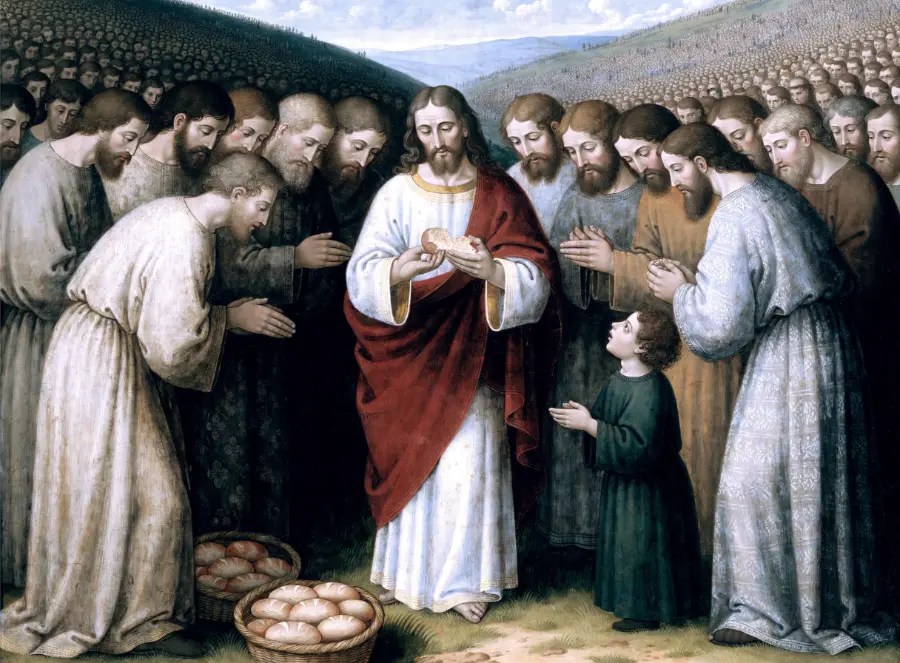
Does the Bible say Jesus is love?
Not in those words. The sentence “God is love” appears twice, in 1 John 4:8 and 4:16; in Greek it is ho theos agapē estin. In the next verses John connects it with Jesus: “In this the love of God was made manifest among us, that God sent his only Son into the world, so that we might live through him. In this is love, not that we have loved God but that he loved us and sent his Son to be the propitiation for our sins” (1 John 4:9–10).
Christians move from “God is love” to “Jesus is love” because the New Testament calls Jesus God and says he shows what God is like. John’s Gospel begins, “the Word was God” (John 1:1), and ends its account of the resurrection with Thomas saying to Jesus, “My Lord and my God!” (John 20:28). “No one has ever seen God,” John writes; “God the only Son, who is at the Father’s side, he has made him known” (John 1:18). Jesus told Philip, “Whoever has seen me has seen the Father” (John 14:9). Colossians calls him “the image of the invisible God” (Colossians 1:15), and Hebrews “the exact imprint of his nature” (Hebrews 1:3).
The Catechism of the Catholic Church reads “God is love” in the light of the Trinity: by sending his Son and the Spirit, it says, God “has revealed his innermost secret: God himself is an eternal exchange of love, Father, Son and Holy Spirit” (paragraph 221). Jehovah’s Witnesses, who do not believe that Jesus is God, describe him instead as “a perfect reflection of his Father,” and cite the same words to Philip.

What does “embodiment of love” mean?
To embody something is to give it a body. The New Testament describes the coming of Jesus in those terms: “the Word became flesh and dwelt among us” (John 1:14). The church calls this the Incarnation, from the Late Latin incarnatio, “being made flesh.”
John defines love by what Jesus did in that flesh: “By this we know love, that he laid down his life for us, and we ought to lay down our lives for the brothers” (1 John 3:16). Benedict XVI took the title of his first encyclical, Deus Caritas Est (2005), from the Latin of 1 John 4:16, “God is love,” and headed one section “Jesus Christ – the incarnate love of God.” He wrote there that the novelty of the New Testament “lies not so much in new ideas as in the figure of Christ himself, who gives flesh and blood to those concepts,” and he called Christ’s self-giving on the cross “love in its most radical form.”

What does agape mean?
Agapē is the Greek noun John uses in “God is love,” and Paul uses it in 1 Corinthians 13, where “love is patient and kind.” The verb is agapaō. The word itself does not always mean self-giving love. John uses the verb when he says that “people loved the darkness rather than the light” (John 3:19), and the second letter to Timothy uses it of a companion who left Paul: “Demas, in love with this present world, has deserted me” (2 Timothy 4:10). The self-giving sense that Christians give to agape rests on the example John points to in 1 John 3:16 and on Paul’s description of what love does.
After the resurrection Jesus asks Peter three times whether he loves him (John 21:15–17). The first two times he uses agapaō, and the third time phileō, another common verb for love; Peter answers with phileō each time. The passage also varies its words for “feed” and for “lambs” and “sheep,” which is one reason many interpreters read the change of verb as a matter of style; others hold that it is deliberate.

How did Jesus show love in the Gospels?
The Gospels use the word “love” of particular people. Mark says that when a rich man asked Jesus about eternal life, “Jesus, looking at him, loved him,” though the man went away sorrowful (Mark 10:21–22). John writes that “Jesus loved Martha and her sister and Lazarus,” and that at Lazarus’s tomb “Jesus wept,” so that the onlookers said, “See how he loved him!” (John 11:5, 35–36). On the night before he died, Jesus washed his disciples’ feet, a servant’s task (John 13:1–5).
Other scenes show the same love without the word. Seeing the crowds, “he had compassion for them, because they were harassed and helpless, like sheep without a shepherd” (Matthew 9:36). When his disciples found him at a well talking with a Samaritan woman, they “marveled that he was talking with a woman” (John 4:27). When religious teachers grumbled that “this man receives sinners and eats with them,” he answered with the parables of the lost sheep, the lost coin and the prodigal son (Luke 15:1–32). Benedict XVI called those parables “an explanation of his very being and activity.”

What does “love one another as I have loved you” mean?
The law of Moses already commanded, “you shall love your neighbor as yourself” (Leviticus 19:18). At the Last Supper Jesus gave what he called a new commandment, and it adds a measure: “A new commandment I give to you, that you love one another: just as I have loved you, you also are to love one another. By this all people will know that you are my disciples” (John 13:34–35). He repeated it with the measure spelled out: “This is my commandment, that you love one another as I have loved you. Greater love has no one than this, that someone lay down his life for his friends” (John 15:12–13).
The letters apply the same pattern. Paul told the Ephesians to “walk in love, as Christ loved us and gave himself up for us” (Ephesians 5:2), and asked the Philippians to have the mind of Christ, who “emptied himself, by taking the form of a servant” and was obedient “to the point of death, even death on a cross” (Philippians 2:5–8). John drew the practical conclusion: “Beloved, if God so loved us, we also ought to love one another” (1 John 4:11), and “whoever loves God must also love his brother” (1 John 4:21). Paul’s own description of that love is in 1 Corinthians 13: “Love bears all things, believes all things, hopes all things, endures all things” (1 Corinthians 13:7).
Every one of these commands looks back to a face. At the grave of Lazarus the onlookers watched Jesus weep, and they said what the whole New Testament says of him: “See how he loved him!” (John 11:36).



Leave a Reply