
 English
 Chinese
 Dutch
 Arabic
 Spanish
 Portuguese
 Russian
 French
 Italian
 German
 Japanese
Yes, Jehovah’s Witnesses believe in Jesus. They honour him as the Son of God, the promised Messiah and the Saviour whose death is a ransom for sin, and they believe he now rules as King in heaven. They do not believe he is Almighty God. They teach that he was God’s first creation, and they do not worship him.
Jesus once asked his disciples, “But whom say ye that I am?” Peter answered for them, “Thou art the Christ, the Son of the living God” (Matthew 16:15–16). A Witness at your door would say Peter’s words with you, and so would a Catholic, an Orthodox believer or a Baptist. The Witnesses and the historic churches part at the next step, over what the word “Son” means. For the Witnesses, a son is someone who had a beginning. For the historic churches, this Son is “begotten, not made”, as the Nicene Creed says, and is God as the Father is God.
Do Jehovah’s Witnesses believe Jesus is God?
No. Their official website, jw.org, puts it plainly. “We believe in Jesus,” it says, and then: “we take Jesus at his word when he said: ‘The Father is greater than I am.’ … So we do not worship Jesus, as we do not believe that he is Almighty God.” The verse they lean on most is John 14:28, which the King James Version gives as “my Father is greater than I.” They also point to Philippians 2:9, where God “hath highly exalted him.” If Jesus were Almighty God, they ask, how could God raise him higher?
For the same reason the Witnesses reject the Trinity. Their summary of beliefs says “there is no Scriptural basis for the Trinity doctrine,” and they speak of God by the name Jehovah, quoting Psalm 83:18: “thou, whose name alone is JEHOVAH, art the most high over all the earth.” In their teaching Jehovah alone is God Almighty, Jesus is his Son and the holy spirit is not a person but God’s “active force.”
The Nicene Creed, which the Catholic Catechism calls “common to all the great Churches of both East and West,” calls Jesus “true God of true God; begotten, not made; of one essence with the Father.” The Catechism of the Catholic Church says the Church “confesses that Jesus is inseparably true God and true man.” These churches read John 14:28 as Jesus speaking of himself as a man sent by the Father, and they hear his other words beside it: “I and my Father are one” (John 10:30). They point most of all to doubting Thomas. When Thomas saw the risen Lord he said, “My Lord and my God” (John 20:28), and Jesus did not correct him. The Witnesses’ own Bible, the New World Translation, gives Thomas the same words: “My Lord and my God!”
The belief is old. Ignatius, bishop of Antioch, who died a martyr in Rome between 98 and 117, wrote to the Christians of Ephesus on his way there: “For our God, Jesus Christ, was, according to the appointment of God, conceived in the womb by Mary.”
What do Jehovah’s Witnesses believe Jesus was before he came to earth?
They believe he lived in heaven for ages before his birth, and that he was God’s first creation. “God created Jesus before he created anything else,” jw.org says, citing Colossians 1:15, “the firstborn of all creation,” and Revelation 3:14, where the New World Translation calls him “the beginning of the creation by God.” In their teaching he then worked beside his Father “as a master worker,” and God made everything else through him. He was also “the Word” of John 1, God’s spokesman to angels and to men.
That is why their Bible ends John 1:1 differently. Most English Bibles say “the Word was God.” The New World Translation says “the Word was a god.” jw.org explains that the phrase “describes the divine or godlike nature that Jesus possessed before he came to earth,” and in Colossians 1:16 their translation says that by him “all other things were created.” The other churches answer that John says “All things were made by him; and without him was not any thing made that was made” (John 1:3), so the Word cannot be one of the things made. The two translations, verse by verse, are compared in the King James Bible and the Jehovah’s Witness Bible.
Do Jehovah’s Witnesses believe Jesus is Michael the archangel?
Yes. They teach that Michael “is evidently a name given to Jesus before and after his life on earth.” Their reason is 1 Thessalonians 4:16, where the Lord descends “with the voice of the archangel.” The Bible never speaks of more than one archangel, they argue, and Jesus commands God’s angels, so Michael and Jesus must be the same person.
The other churches honour Michael as an angel, “the prince of the other angels,” as the old Catholic Encyclopedia describes him, and Jesus as the Lord whom the angels serve. They read the first chapter of Hebrews, which sets the Son above the angels: “And let all the angels of God worship him” (Hebrews 1:6). The New World Translation renders that line “And let all of God’s angels do obeisance to him,” and the Witnesses read it as honour paid to God’s exalted Son. If worship seems to be given to the Son, their Bible dictionary says, “it is in reality being directed through him to Jehovah God.”
Do Jehovah’s Witnesses believe Jesus died for our sins?
Yes. Jesus came, in his own words, “to give his life a ransom for many” (Matthew 20:28). The Witnesses teach that Adam lost a perfect human life for all of us, and Jesus gave a perfect human life to buy it back. jw.org calls his sacrifice “the means by which God delivers, or saves, humankind from sin and death,” and quotes Paul’s phrase that it is “a corresponding ransom for all.” To benefit from it, their summary says, people “must not only exercise faith in Jesus but also change their course of life and get baptized,” though salvation “cannot be earned.” Their teaching on how a person is saved is set out in what salvation means for Jehovah’s Witnesses.
Once a year, after sundown on the date they reckon as Nisan 14, Witnesses gather for the Memorial of Christ’s death, and they call it the Lord’s Evening Meal. Only “a small fraction” of Witnesses eat the bread and drink the wine: the ones who believe God has called them to rule with Christ in heaven, a calling the Witnesses teach that just 144,000 receive. The rest, who hope to be part of “a great crowd” living forever on earth, come to give thanks for his sacrifice.
Here every Christian tradition can honour what is said. The ransom is in the Gospel, and Paul wrote it to Timothy: “For there is one God, and one mediator between God and men, the man Christ Jesus; Who gave himself a ransom for all” (1 Timothy 2:5–6). The churches differ from the Witnesses on who the one giving himself is. They believe the ransom has its worth because God himself paid it, as Paul told the elders of Ephesus to feed “the church of God, which he hath purchased with his own blood” (Acts 20:28). The New World Translation ends that verse differently, “with the blood of his own Son,” so the Witnesses read it as the Father giving his Son, not as God shedding his own blood.
Do Jehovah’s Witnesses believe Jesus died on a cross?
No. They believe he died on a single upright stake. The Greek word in the Gospels, stauros, has the basic meaning “upright stake,” jw.org argues, and so the New World Translation says that Simon of Cyrene was made “to carry his torture stake” (Matthew 27:32), where the King James Version says “him they compelled to bear his cross.” Witnesses do not use the cross in worship, because they believe “God rejects worship that uses images or symbols, including the cross.”
Most Christians read the same Gospels and see a cross, and they have kept it as the sign of Christ for centuries. Even here the Witnesses add a caution worth hearing: the Bible “does not describe the instrument of Jesus’ death, so no one can know its shape with absolute certainty.” On either reading, he died for us.
Do Jehovah’s Witnesses believe in the resurrection of Jesus?
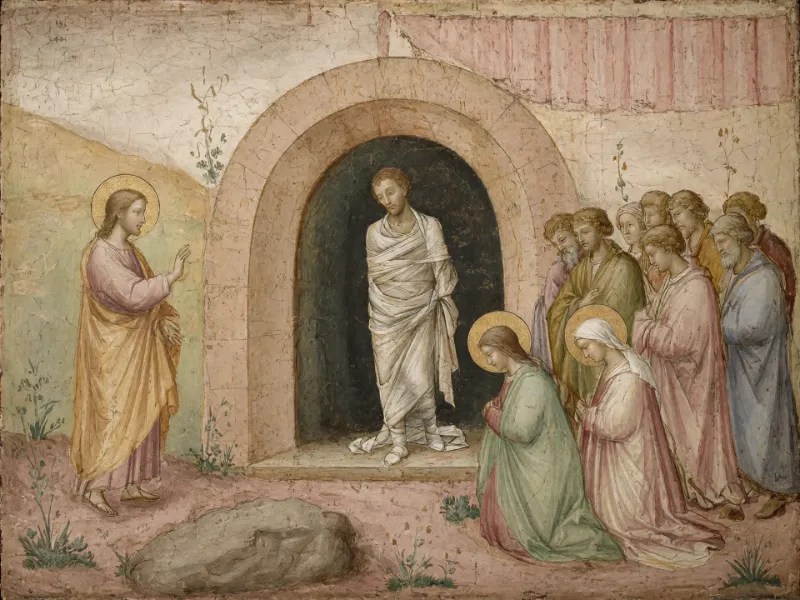
Yes. They believe God raised Jesus on the third day, but as a spirit, not in the body that was buried. They quote 1 Peter 3:18 from their translation, “He was put to death in the flesh but made alive in the spirit.” If Jesus had taken back his flesh, they reason, he would have taken back the ransom he paid. When he appeared to the disciples, jw.org says, he “assumed human form temporarily, just as angels had previously done,” and for Thomas he took on a body with the marks of the nails.
The historic churches confess that the same body that was laid in the tomb rose from it. They hear Jesus himself on the evening of Easter: “Behold my hands and my feet, that it is I myself: handle me, and see; for a spirit hath not flesh and bones, as ye see me have” (Luke 24:39). And they remember what he had said about the temple: “Destroy this temple, and in three days I will raise it up… But he spake of the temple of his body” (John 2:19–21).
Do Jehovah’s Witnesses pray to Jesus?
No. They pray to Jehovah, in Jesus’ name. “We must pray to God in Jesus’ name because this is the only way God has approved for us to approach Him,” jw.org says, quoting “No one comes to the Father except through me” (John 14:6). Prayer, in their teaching, is an act of worship, and God “demands that acts of allegiance or worship—including prayer—be directed exclusively to him.”
Other Christians pray to the Father through the Son, as the Witnesses do, and they also pray to Christ. They have the first martyr as their example. As the stones fell, Stephen was “calling upon God, and saying, Lord Jesus, receive my spirit” (Acts 7:59).
What do Jehovah’s Witnesses believe Jesus is doing now?
They believe he is ruling. “Jesus is the King of God’s Kingdom in heaven. He began ruling in 1914,” their summary says. They reach that year from the “seven times” of King Nebuchadnezzar’s dream in Daniel 4, and they believe we are living in the last days. Soon, they teach, Christ will judge the nations and end this world’s governments at Armageddon, and then the earth will become a paradise. His coming is real, but they believe it is unseen: he comes “as a spirit creature, not in the flesh,” and people “perceive his coming even though they cannot literally see him.”
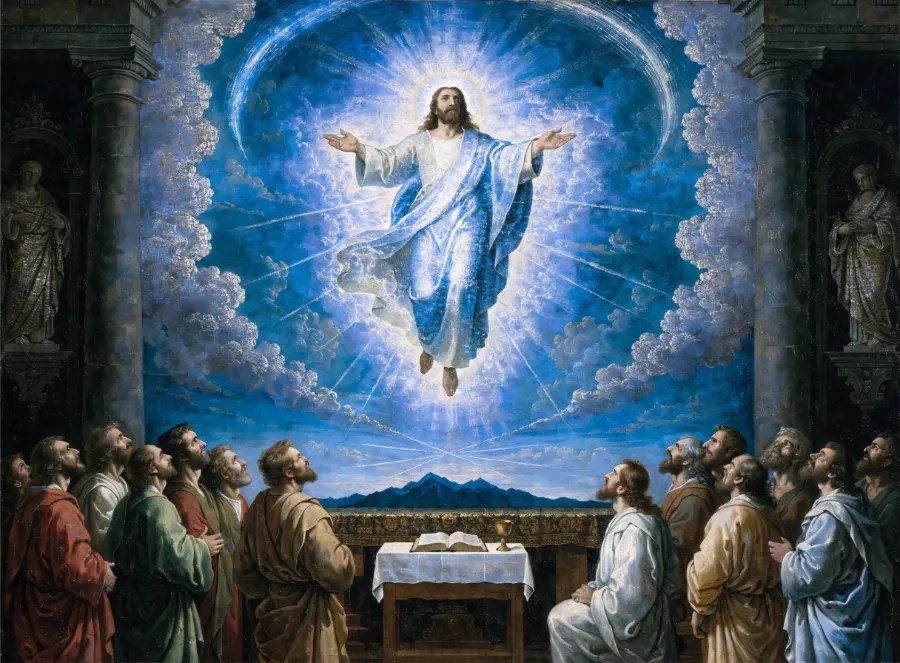
The other churches wait for a return that every eye will see. At the Ascension the angels told the apostles that “this same Jesus, which is taken up from you into heaven, shall so come in like manner as ye have seen him go into heaven” (Acts 1:11), and John wrote, “Behold, he cometh with clouds; and every eye shall see him” (Revelation 1:7). Over both hopes stands Jesus’ own word, which jw.org quotes too: “Concerning that day and hour nobody knows.”
Are Jehovah’s Witnesses Christians, then?
They say they are, because they follow Christ, and they point to Acts 11:26: “the disciples were called Christians first in Antioch.” Many other churches answer no, because the Witnesses deny that Jesus is God. The marriage tribunal of the Catholic Archdiocese of Cincinnati, for example, lists Jehovah’s Witnesses among the groups whose baptisms are “NOT Considered Valid.” Both answers, with each side’s reasons, are set out in Are Jehovah’s Witnesses Christian?
For our part, we can begin where Peter began. The Witness and the churchgoer both open the same Gospel of John, and its writer tells us why he wrote it: “But these are written, that ye might believe that Jesus is the Christ, the Son of God; and that believing ye might have life through his name” (John 20:31).
Related reading
- Are Jehovah’s Witnesses Christian? They say yes; other churches say no
- What do Jehovah’s Witnesses believe about God?
- The Jehovah’s Witness Bible and the King James Version compared
- What is salvation for Jehovah’s Witnesses?
- Jehovah’s Witnesses and Catholics: how they differ
- Who is the Holy Spirit?
- What Do Jehovah’s Witnesses Believe?


Leave a Reply