
 English
 Chinese
 Dutch
 Arabic
 Spanish
 Portuguese
 Russian
 French
 Italian
 German
 Japanese
Jehovah’s Witnesses believe that God has a personal name, Jehovah, and that we ought to use it. They believe that Jesus is God’s Son and our Savior but is not God himself, that God’s Kingdom is a government in heaven with Jesus as its King since 1914, and that while 144,000 people will rule with him there, most of the saved will live forever right here on a paradise earth. The dead, they teach, know nothing at all until God raises them.
The easiest way to keep all this in mind is a prayer most of us know by heart: “Hallowed be thy name. Thy kingdom come. Thy will be done in earth, as it is in heaven” (Matthew 6:9–10). The name, the Kingdom and the earth are the three things the Witnesses keep coming back to, and the longer we listen to them the more we hear that prayer underneath.
The movement goes back to the end of the nineteenth century and a small group of Bible students near Pittsburgh, Pennsylvania, who set about comparing what the churches taught with what they read in Scripture. Charles Taze Russell took the lead among them and was the first editor of The Watchtower, though the Witnesses are firm that “he was not the founder of a new religion,” and the founder they name is Jesus. Their report for 2025 counts 9,205,326 Witnesses in 119,652 congregations and 241 lands, and every Witness in that count is a preacher, for “we count as Jehovah’s Witnesses only those who are actively preaching the good news of God’s Kingdom each month.” They call themselves Christians and say they “strive to adhere to the form of Christianity that Jesus taught and that his apostles practiced.” Other churches say they are not, and we have set out both sides of that question on a page of its own.
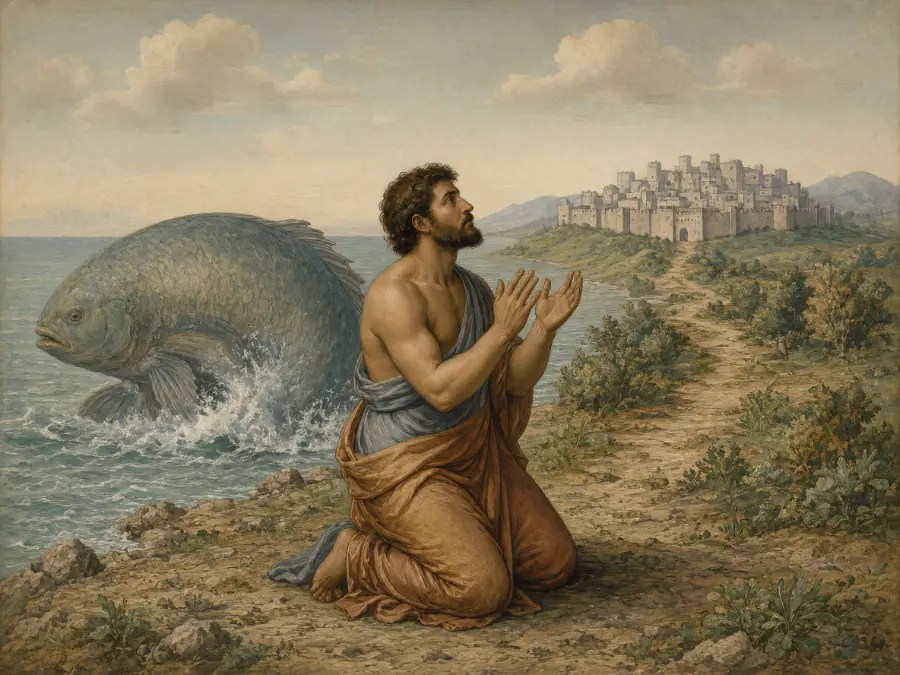
Jehovah and his Son
The name of God and their Bible
Their own summary of what they believe begins with the name: “We worship the one true and Almighty God, the Creator, whose name is Jehovah.” A name, as they see it, is there to be used. In their Bible God says at Isaiah 42:8, “I am Jehovah. That is my name,” and they reason about it the way any of us would about someone we hoped to know better, that “having and using personal names is a vital part of human friendships.” We find the name in the King James Bible as well, where God says “by my name Jehovah was I not known to them” (Exodus 6:3) and the psalm prays “that men may know that thou, whose name alone is Jehovah, art the most high over all the earth” (Psalm 83:18). The Witnesses know that four Hebrew letters lie behind it and that not everyone writes them the same way, and they say so freely: “While many scholars prefer the spelling ‘Yahweh,’ Jehovah is the form of the name that is most widely recognized.”
The name they go by comes from the same place, from Isaiah’s “Ye are my witnesses, saith the LORD” (Isaiah 43:10). A witness, they explain, “is a person who proclaims views or truths of which he is convinced,” so to be one of them is to belong to “a group of Christians who proclaim the truth about Jehovah.”
So for a Witness the Bible is where a belief has to come from, all 66 books of it, Old Testament and New, and they call it “God’s inspired message to humans.” That does not mean reading every line flat, and a Witness will tell us that “we are not fundamentalists,” because some parts are figurative or symbolic. They have used many translations, and in 1950 they began to bring out their own, the New World Translation, so a Witness reading it meets the name of Jehovah in the thousands of places where, they say, it stood in the original text. The committee that produced it has stayed anonymous.
From What Do Jehovah’s Witnesses Believe?
Jesus and the Trinity
Much of what the Witnesses say about Jesus any of us could say along with them. He “came to earth from heaven and gave his perfect human life as a ransom sacrifice,” and he is “now ruling as King of God’s heavenly Kingdom.” Then comes the sentence that divides them from the churches that worship him: “However, we take Jesus at his word when he said: ‘The Father is greater than I am.’ (John 14:28) So we do not worship Jesus, as we do not believe that he is Almighty God.” To the Witnesses the Son had a beginning, for “God created Jesus before he created anything else,” and the archangel Michael, they believe, “is evidently a name given to Jesus before and after his life on earth.” As for the holy spirit, it “is God’s power in action, his active force,” and “the holy spirit is not a person.”
Here they and the historic creeds go separate ways, and the Witnesses have known it for a very long time. The Council of Nicaea in 325 confessed the Son as “very God of very God,” begotten and “not made,” “of one substance” with the Father. As long ago as July 1882 their magazine, then called Zion’s Watch Tower, was telling its readers, “we reject as totally unscriptural, the teaching that these are three Gods in one person or, as some put it, one God in three persons.” Each side will open the Gospel of John at the same verse. The King James says “the Word was God” (John 1:1), the Witnesses’ New World Translation says “the Word was a god,” and a great deal hangs on that one small word.
From Do Jehovah’s Witnesses Believe in Jesus?

The Kingdom and the two hopes
God’s Kingdom and 1914
When the Witnesses come to “Thy kingdom come,” they mean a government, and they are careful to say so. “This is a real government in heaven, not a condition in the hearts of Christians,” they write, and “it will replace human governments and accomplish God’s purpose for the earth.” They expect that before long, “for Bible prophecy indicates that we are living in ‘the last days,’” and they believe the King is already reigning where we cannot see him: “Jesus is the King of God’s Kingdom in heaven. He began ruling in 1914.”
That date is their own reckoning, worked out from the fourth chapter of Daniel, where a tree is cut down for “seven times.” Revelation 12 makes three and a half times equal to 1,260 days, so seven times are 2,520 days, and by the rule “a day for a year” the Witnesses count 2,520 years, beginning in October 607 B.C.E., when “according to Bible chronology, Jerusalem was destroyed by the Babylonians,” so that “the ‘seven times,’ or 2,520 years, would end in October 1914.” Historians usually date the fall of Jerusalem to 586 or 587 B.C.E., and The Watchtower of October 1, 2011 acknowledges that its own date “differs from widely accepted chronology by 20 years.” Its reason is the 70 years of exile in the Bible, which it says ended in 537 B.C.E., and “counting back 70 years, the start date of the period would be 607 B.C.E.”
What they wait for now is Armageddon, “the final war between human governments and God,” and on its date they quote Jesus, “Concerning that day and hour nobody knows” (Matthew 24:36). They speak of it as a rescue. “Rather than destroying humanity, Armageddon actually saves it,” they say, and “it will not be the end of our planet, since the earth is mankind’s eternal home.”
From What Does Bible Chronology Indicate About the Year 1914?
The 144,000 and the earth
Most of us speak of one hope for all the saved, and the Witnesses speak of two, one in heaven for a few and one on earth for everyone else. “A relatively small number of people—144,000—will be resurrected to life in heaven to rule with Jesus in the Kingdom,” they say, and they take the number in John’s vision as a literal count, “I heard the number of them which were sealed: and there were sealed an hundred and forty and four thousand” (Revelation 7:4). After that John saw “a great multitude, which no man could number” (Revelation 7:9), and the Witnesses believe that multitude’s home is here, because “God created the earth to be mankind’s eternal home” and “God will bless obedient people with perfect health and everlasting life in an earthly paradise.”
Which of the two hopes a Witness holds has nothing to do with wanting one or the other, since “God selects a limited number of faithful Christians” and “personal desire or ambition has no bearing on a person’s being chosen.” We might suppose that those left for the earth are the ones who missed out, and the Witnesses take care to say they are not, pointing out that God calls them “my people,” “my chosen ones,” and “those blessed by Jehovah.”
From Who Go to Heaven?
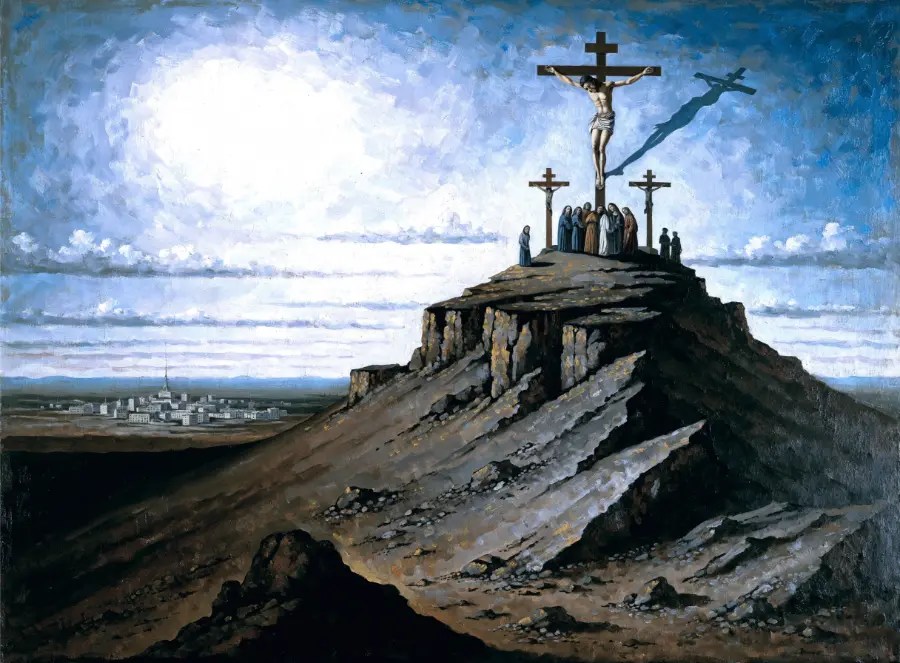
The ransom, baptism and the one day they keep
Salvation
The Witnesses explain the death of Jesus by setting it beside Adam: “Jesus’ sacrifice corresponds exactly to what Adam lost—one perfect human life.” They hold that “the Bible indicates that Jesus did not die on a cross but rather on a simple stake,” and so, they say, “we do not use the cross in our worship.”
Having a share in it asks something of us, and they spell it out: “To benefit from that sacrifice, people must not only exercise faith in Jesus but also change their course of life and get baptized.” They add that “a person’s works prove that his faith is alive.” Anyone who has watched them go up and down a street might suppose they are trying to earn their salvation, and they answer that directly, that “salvation cannot be earned—it comes through ‘the undeserved kindness of God.’” They tell of a generous man who promises an expensive gift to everyone who comes to a certain place on a certain day. We would go, we would tell our family and friends, and we still would not have earned it, for “the gift is still a gift.” They also believe that what has been given can be lost, that “a person who has gained salvation by faith in Jesus Christ can lose that faith and the salvation that comes with it.”
Does that mean they think only Witnesses will be saved? Their answer starts with the word itself: “No. Many millions who lived in centuries past and who weren’t Jehovah’s Witnesses will have an opportunity for salvation,” and it goes on to say that “it’s not our job to judge who will or won’t be saved.”
From What Do Jehovah’s Witnesses Believe?
Baptism
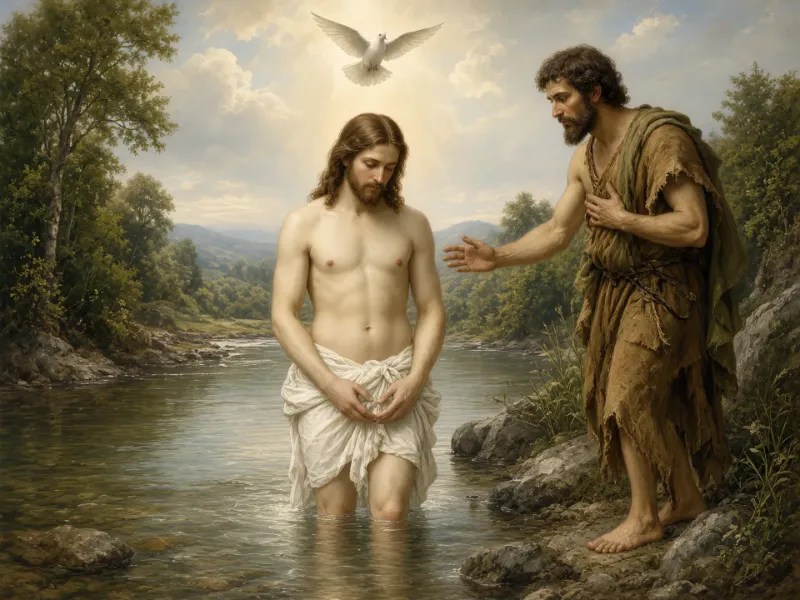
For a Witness, baptism is the day the whole body goes under the water to show that the old life is finished, or as they put it, “By going under the water, the person is showing that he has died to his former way of life.” By then the person has already repented and given their life to God in prayer, which is why a baby cannot be baptized among them and why they say “infant baptism is not compatible with the Scriptures.” Jesus told his followers to baptize in the name of the Father, the Son and the holy spirit, and a Witness takes that to mean that the one baptized recognizes the authority of the Father and the Son and the role of the spirit.
From What Is Baptism?
The Memorial, Christmas and birthdays
Once a year, after sundown on the date they reckon as Nisan 14, the Witnesses come together for the Lord’s Evening Meal, which they also call the Memorial, and it stands alone in their year, because “the only commemoration that Christians are required to keep involves, not a birth, but a death—that of Jesus.” They gather, they say, “to remember Jesus, showing our gratitude for his sacrifice in our behalf,” and they do not want it mistaken for anything more, for “the observance is not a sacrament, or a religious practice that imparts merit such as grace or the forgiveness of sins.” The bread and wine are “emblems, or symbols, of Christ’s flesh and blood.”
If we went along one year we would see the two hopes sitting side by side in one room, because “only a small fraction of us partake of the bread and wine.” The few who eat and drink are those who believe God has called them to heaven, and since “the vast majority of us hope to be part of ‘a great crowd’ who will gain everlasting life on earth,” most of the people there do not touch either one, though they “do join in expressing thanks for the sacrifice that Jesus made in our behalf.” In 2025 the Memorial drew 20,635,015 people, a little more than twice the number of Witnesses counted that year.
That one day is also why a Witness family does not keep Christmas, since, as they say, “Jesus commanded that we commemorate his death, not his birth,” and they believe the feast grew out of pagan customs. They do not keep birthdays either, believing that such celebrations displease God, though they grant that the Bible does not forbid them outright. A Witness child still has gifts and happy gatherings through the year, only not on those days, and a Witness living next door will leave ours alone: “We do not interfere in the Christmas celebrations of others.”
From Why Do Jehovah’s Witnesses Observe the Lord’s Supper Differently From the Way Other Religions Do?
The congregation and the world
Who leads and who preaches
A Witness goes to what they call a Kingdom Hall, and will not find a paid pastor there or be asked for money, because the elders who look after each congregation “do not form a clergy class, and they are unsalaried,” and “no collections are ever taken at our meetings.” The Witnesses everywhere look to a Governing Body of longtime Witnesses at their world headquarters in Warwick, New York, a small group who “provide direction for Jehovah’s Witnesses worldwide.” They are careful to add that its members “are not the leaders of our organization,” because “Jehovah God has appointed Jesus Christ as the Head of the congregation.” The Watchtower of July 15, 2013 identifies that body with the “faithful and discreet slave” Jesus spoke of, “a small group of anointed brothers who are directly involved in preparing and dispensing spiritual food during Christ’s presence.” Their teaching has moved over the years, and they say that too: “we have adjusted our beliefs as our understanding of the Scriptures has been clarified.”
The preaching falls to every one of them, since “all of Jehovah’s Witnesses are preachers, or ministers—including several million women.” Women “don’t assume a leadership role within the congregation,” and yet “they have a full share in the public ministry.” So when a Witness comes to our door, it is because the first Christians spread their message “publicly and from house to house” (Acts 5:42; 20:20), and because, as they say, “the door-to-door ministry is a good way to reach people.”
From Jehovah’s Witnesses vs Catholics: How the Two Faiths Differ
Blood
Their stand on blood begins with God’s command to Noah at Genesis 9:4 and the word of the apostles, “that ye abstain from meats offered to idols, and from blood” (Acts 15:29), because they hold that “Jehovah connects the sacredness of life with blood.” As it stands today they put it this way: “Jehovah’s Witnesses do not accept transfusions of whole blood, nor do we donate blood that would be used as a whole blood transfusion to another person. We also do not eat blood or unbled meat. However, whether to accept components or fractions derived from another person’s blood is a decision for each Christian to make.” None of this is a refusal of medicine, and on another of their pages they tell us, “We seek the best possible medical care for ourselves and our families.”
The word “components” in that last sentence is new, so anything written about them before September 2026 is likely to say otherwise. They used to apply the rule as well to “the four main components of blood—red cells, white cells, plasma, and platelets.” A Governing Body update on March 20, 2026 left the use of a patient’s own blood to each Christian, and another on September 18, 2026 did the same for those four components when they come from another person. Witnesses who refused those components for themselves or their families before that date were keeping the rule as it then stood. “The congregation will not get involved in that decision, and individual Christians should not judge others,” they write, adding that “the Governing Body continues to regard this as a very serious matter.” We have a separate page on why the Witnesses refuse transfusions.
From How Do Jehovah’s Witnesses Show Respect for Life?
War, politics and the flag
A Witness will not go to war, and the first reason they give is obedience to God, with Isaiah’s promise that “they shall beat their swords into plowshares” (Isaiah 2:4). In everyday life that means a Witness does not vote for parties or candidates, run for office, lobby, or join any effort to change a government, and does not salute the flag either, because “saluting the flag amounts to an act of worship, or idolatry.” A Witness respects the government of the country and obeys its laws, so long as those laws do not call for disobeying God. That neutrality has cost them before, and they quote a 2001 report of the National Academy of Sciences of Ukraine, which says it “was a basic reason for their being accused by the totalitarian Nazi and Communist regimes of the past.”
From Why Do Jehovah’s Witnesses Maintain Political Neutrality?
Being removed from the congregation
Someone who “commits a serious sin and refuses to change” is removed from the congregation, after the elders have first tried to help them. The Witnesses used to call this being disfellowshipped, and they write that “now we simply use the Bible’s wording.” Someone who has only slowed down or stopped is a different case, and the Witnesses say they reach out to such a person to “reassure him of our love, and try to rekindle his spiritual interest.”
When someone is removed, the elders “simply announce to the congregation that the person is no longer one of Jehovah’s Witnesses.” After that the Witnesses hold to the verse that tells Christians to “stop keeping company” with such a person, “not even eating with such a man” (1 Corinthians 5:11), and so “we do not socialize with someone who has been removed.” They add, “We treat him with respect.” The person may still come to their meetings and be greeted there, unless, in what their page calls extreme cases, they “actively try to undermine” the congregation or promote wrong conduct, and then the Witnesses will not “say a greeting” (2 John 9–11). Anyone who turns back and shows a sincere wish to live by the Bible’s moral code is welcome in the congregation again.
Someone who lives at home with a spouse and young children who are still Witnesses goes on living as one of the family, since, as they put it, the religious ties change “but blood ties remain,” and in that house “normal family affections and dealings continue.” This page of theirs speaks only of that shared house, and it does not say how a Witness is to treat a grown child or another relative living elsewhere.
Among those the page quotes who were removed and later came back is Sandi, in the United States, who says, “What may seem harsh to outsiders is both necessary and really a loving thing to do.” Anyone who has lost a parent, a child or a friend this way knows more about it than any page can say, and we have a separate page on what happens when someone leaves.
From How Do Jehovah’s Witnesses Treat Those Who Used to Belong to Their Religion?
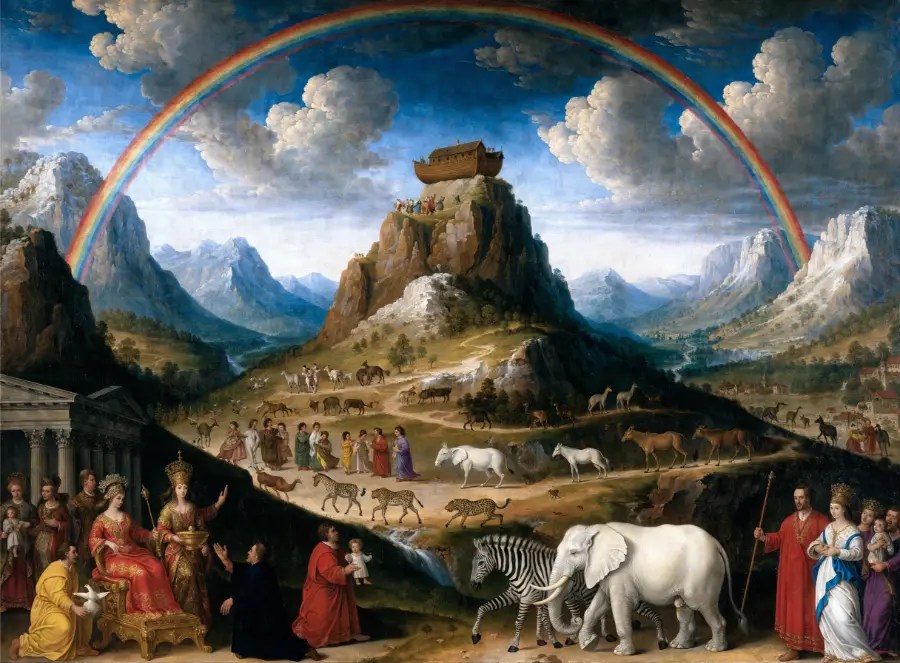
Death and the hope of resurrection
Death and hell
For a Witness, a person who dies is gone, and nothing of them goes on anywhere to know or feel. They take Ecclesiastes as it stands, that “the dead know not any thing” (Ecclesiastes 9:5), and the soul to them is the whole creature, with nothing inside it that outlives the body. So a Witness does not think of the dead as looking on from anywhere, and does not believe that anyone is burning, because the words our Bibles translate as hell mean to them simply the grave. They count this among the things that set them apart from other churches: “We do not believe that the soul is immortal, that there is any basis in Scripture for saying that God tortures people in an everlasting hell.”
From What Do Jehovah’s Witnesses Believe Happens When You Die?
The resurrection
If the dead are simply gone, then everything hangs on whether God remembers them, and the Witnesses believe that he does, that “he keeps in his limitless memory a detailed record of each person he will resurrect.” “God will bring billions back from death by means of a resurrection,” they say, and they hold to Paul’s words about “a resurrection of the dead, both of the just and unjust” (Acts 24:15). Whoever is raised is “restored to life as the person he was before,” and the raising on earth “will occur during the Thousand Year Reign of Jesus Christ, when the earth will be transformed into a paradise.” Only “those who refuse to learn God’s ways after being raised to life will be destroyed forever with no hope of a resurrection.” When they describe that day they go to Job, who says to God, “You will long for the work of your hands” (Job 14:15).
That is the hope a Witness carries up our path, the dead raised and standing on this same ground, and it goes back to the words we began with: “Thy will be done in earth, as it is in heaven” (Matthew 6:10).
From What Is the Resurrection?
How Jehovah’s Witnesses differ from their neighbours
- Jehovah’s Witnesses vs Catholics: How the Two Faiths Differ
- Are Jehovah’s Witnesses Protestant? No. Here Is How Their Beliefs Differ
- Jehovah’s Witnesses vs Seventh-day Adventists: Not the Same
- Are Jehovah’s Witnesses and Mormons the Same? How the Two Religions Differ
See every answer for Jehovah’s Witnesses and compare with another church
More from this seriesDenominations ComparedSee all 117 articles

Leave a Reply