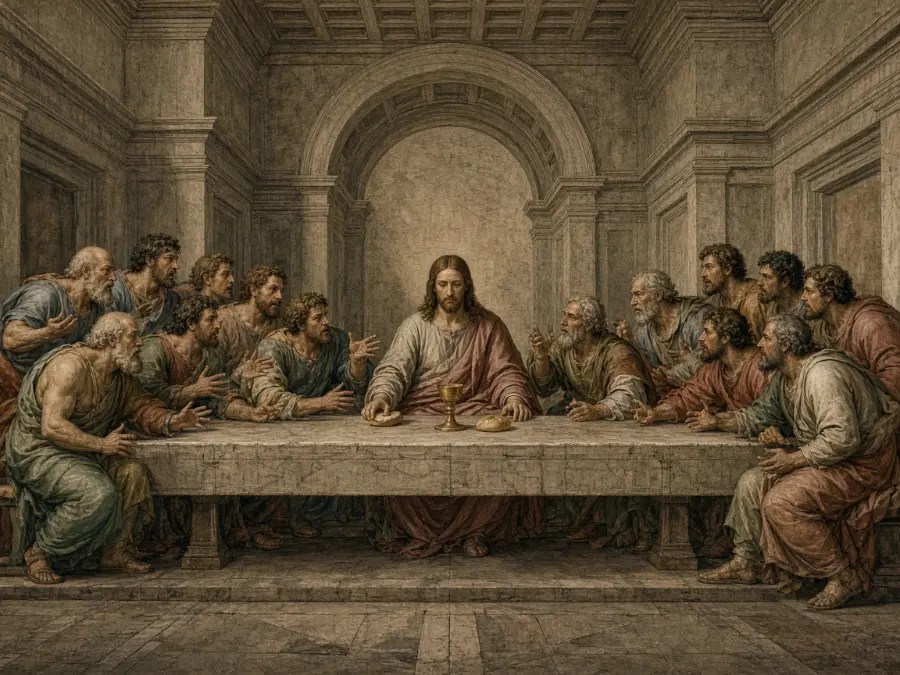
Wat geloven Jehovah’s Getuigen over Jezus?


  • Jehovah’s Witnesses believe Jesus is God’s Son, distinct from Almighty God (Jehovah), and view him as a created being with important roles like Savior and Teacher.
  • They reject the doctrine of the Trinity, believing that Jesus is not co-equal with God and affirm strict monotheism.
  • Jehovah’s Witnesses teach that Jesus died on an upright stake rather than a cross, and that he was resurrected as a spirit, not in his physical body.
  • They identify Jesus with Michael the Archangel, asserting that he has a unique status as God’s first creation and serves as a mediator between God and humankind.
Dit artikel is deel 22 van 38 in de serie Jehovah's getuigen begrijpen

Understanding What Jehovah’s Witnesses Believe About Jesus Christ

So, Do Jehovah’s Witnesses Actually Believe in Jesus?

Absolutely, yes! A core conviction for Jehovah’s Witnesses is their belief in Jesus Christ. They identify themselves as Christians, and faith in Jesus is fundamental to their worship and understanding of God’s purpose.² They see Jesus as indispensable for a relationship with God.

Jehovah’s Witnesses acknowledge several key roles that Jesus fulfills:

  • His Origin: Zij geloven dat Jezus in de hemel bestond voordat hij naar de aarde kwam.¹
  • His Sacrifice: They firmly believe he gave his perfect human life as a ransom sacrifice. This act is seen as essential for saving humankind from the sin and death inherited from the first man, Adam.¹ This ransom wasn’t just a symbolic act; it was a necessary payment to satisfy divine justice.⁸
  • Path to Everlasting Life: Zijn dood en daaropvolgende opstanding door God maken het voor individuen die geloof in hem oefenen mogelijk om eeuwig leven te verkrijgen.²
  • Reigning King: They teach that Jesus is currently ruling as the King of God’s heavenly Kingdom, a real government that they believe will soon intervene in world affairs to bring peace and restore paradise conditions to the earth.¹
  • Example and Teacher: Zij zien Jezus als het volmaakte voorbeeld om in het leven te volgen, waarbij ze ernaar streven zich aan zijn leringen te houden en zijn voorbeeld van liefde en gehoorzaamheid aan God na te volgen.²

It is noteworthy that while Jehovah’s Witnesses strongly affirm their belief In het Jezus en beschouwen zichzelf als christenen, zij volgen deze bevestiging vaak onmiddellijk op door hun eigen, afwijkende begrip van wie Jezus in relatie tot de Almachtige God te verduidelijken.² Dit patroon van het bevestigen van gemeenschappelijke grond voordat specifieke leerstellige verschillen worden benadrukt, is gebruikelijk in hun uitleg. Dit begrijpen helpt om in te zien hoe zij hun geloof presenteren, beginnend met de essentiële rol van Jezus voordat ze ingaan op de details van hun christologie. Zij benadrukken dat hoewel Jezus een belangrijke positie inneemt als de bemiddelaar tussen God en de mensheid, hun gebeden uitsluitend gericht zijn tot Jehovah, de Vader. Dit onderscheid speelt een cruciale rol in de visie van Jehovah's Getuigen op gebed, omdat het hun geloof in het op de juiste wijze kanaliseren van aanbidding en communicatie met God onderstreept. Door deze focus te behouden, streven zij ernaar om wat zij zien als de meest ware vorm van aanbidding in overeenstemming met bijbelse leringen hoog te houden. Deze benadering weerspiegelt hun standpunt over andere onderwerpen, zoals gezondheid en medische behandelingen, waar zij vaak gedeelde waarden verwoorden voordat ze hun unieke perspectieven adresseren. Bijvoorbeeld, bij het bespreken van Jehovah's Getuigen en opvattingen over vaccinatie, benadrukken zij doorgaans het belang van het persoonlijk geweten en het geloof in Gods leiding. Deze zorgvuldige navigatie van de leer stelt hen in staat hun identiteit te behouden terwijl ze deelnemen aan bredere gesprekken over hedendaagse kwesties.

Who Do They Believe Jesus is? Is Hij God?

This question touches the heart of the distinction between Jehovah’s Witness beliefs and those of mainstream Christianity. Jehovah’s Witnesses teach clearly that Jesus Christ is the Son of God crucially, they believe he is niet Almachtige God, die zij uitsluitend identificeren met de naam Jehovah.² In hun visie is Jezus een afzonderlijk, apart wezen dat door God is geschapen en aan Hem ondergeschikt is.¹³

Rejection of the Trinity:

A foundational aspect of their belief system is the firm rejection of the doctrine of the Trinity.² They consider the teaching of one God existing as three co-equal persons (Father, Son, Holy Spirit) to be unscriptural, believing it originated not from the Bible but from pagan philosophies that influenced Christianity after the time of the apostles.¹³ They argue that the word “Trinity” itself does not appear in the Bible.¹⁶ they contend that the concept is illogical and confusing, citing 1 Corinthians 14:33 (“God is not a God of confusion”) to suggest that such an incomprehensible doctrine cannot be from God.¹⁶ Their literature sometimes employs caricatures, like questioning a “three-headed god,” to argue against the doctrine’s plausibility.¹⁵ They believe the Bible teaches strict monotheism – that God is one single person, Jehovah.²

Jesus as God’s First Creation:

Central to their understanding of Jesus is the belief that he was God’s very first creation – the beginning of God’s creative works.¹ They point to titles like “the firstborn of all creation” (Colossians 1:15) as evidence.⁶ For Jehovah’s Witnesses, “firstborn” (prototokos in Greek) primarily signifies the first being brought into existence by God, the starting point of all creation.¹⁹ This interpretation contrasts with views that emphasize “firstborn” as a title of preeminence or rank, like David being called “firstborn” in Psalm 89:27 despite being the youngest son.²² Their understanding that Jesus was created is foundational; therefore, scriptures like Colossians 1:15 must, in their view, refer to him being the first creature. They address the argument that if Jesus created “all things” (Colossians 1:16), he couldn’t be created himself by interpreting “all things” to mean “all other things,” a reading reflected in their New World Translation (NWT).¹⁹

Unieke status als Zoon en Woord:

Jesus is also called God’s “only-begotten Son” (John 3:16), which they interpret to mean he is the only being directly created by Jehovah God alone. All other things, including angels and the physical universe, were subsequently created by God through Jesus, who acted as God’s agent or “master worker”.¹ He is also identified as “the Word” (Greek: Logos) from John 1:1. This title is understood to describe his crucial role as God’s chief Spokesman, communicating God’s will and messages to others, both before coming to earth and during his ministry.¹

Interpreting John 1:1 – “The Word was a god”:

Perhaps the most well-known distinction is their translation and interpretation of the final clause of John 1:1. The New World Translation (NWT), the Bible version primarily used by Jehovah’s Witnesses, renders this verse: “In the beginning was the Word, and the Word was with God, and the Word was a god”.²⁶ The use of the lowercase “a god” is deliberate and based on specific reasoning 24:

  • Zij beweren dat in het oorspronkelijke Grieks het woord voor God (theos) in the final clause lacks the definite article (“the”), whereas it past have the definite article earlier in the verse when referring to Almighty God (“the Word was met God“). They believe this grammatical distinction signifies that Jesus (the Word) possesses divine qualities – hij is goddelijk of een machtige – maar niet de ene Almachtige God is.²⁶
  • They support this by pointing out that the Bible uses the term “god” (or its Hebrew equivalents ‘el en ‘elohim) for beings other than Almighty God, such as angels or even powerful humans (Psalm 82:6; John 10:34).²⁶ They also note that the Messianic prophecy in Isaiah 9:6 calls the coming ruler “Mighty God” (Hebrew: ‘El Gibbohr) but not “Almighty God” (Hebrew: ‘El Shaddai).¹⁵
  • They also cite early Sahidic Coptic translations of the Bible (dating from the 3rd century CE, before the doctrine of the Trinity was formally defined) which used an indefinite article before “god” in John 1:1, suggesting an early understanding consistent with their view.³¹

This interpretation of John 1:1, along with the insertion of “andere” in Colossians 1:16-17 in the NWT 19, is central to their Christology. It aligns perfectly with their foundational rejection of the Trinity and their belief that Jesus is a created being subordinate to Jehovah. Critics often view these translation choices as being driven by pre-existing theological commitments rather than solely by linguistic necessity.¹³ But Jehovah’s Witnesses maintain that their renderings are grammatically sound and contextually accurate based on their understanding of the Scriptures.¹⁹

De volgende tabel biedt een vereenvoudigde vergelijking van de belangrijkste punten:

Kenmerk Jehovah’s Witness Belief Traditional Christian Belief
Aard van God One Person: Jehovah (Unitarian) Eén Wezen in drie Personen: Vader, Zoon, Geest (Drie-eenheid)
Jesus’ Identity God’s Son; First Creation; “a god”; Michael the Archangel God the Son; Eternally Existent; Fully God
relationship Jezus is ondergeschikt aan Jehovah God Jezus is gelijkwaardig aan God de Vader
Pre-existence Existed as God’s first spirit creation Bestond eeuwig als God de Zoon
Death Instrument Upright Stake Kruis
Opstanding Als een onsterfelijk geestelijk schepsel Lichamelijke, fysieke opstanding
Aanbidding Aanbidding alleen gericht tot Jehovah; Jezus ontvangt eer Aanbidding gericht tot Vader, Zoon en Heilige Geest
Gebed Pray tot Jehovah door Jezus Pray to Father, Son, or Spirit; often through or in Jesus’ name

Did Jehovah’s Witnesses Believe Jesus Lived Before Coming to Earth?

Yes, unequivocally. The belief in Jesus’ pre-human existence is a cornerstone of Jehovah’s Witness theology.¹ They teach that his life did not begin in Bethlehem; rather, he existed for an immense period before his human birth.²â°

His Nature Before Earth:

Before coming to earth, Jesus existed in heaven as a powerful spirit creature.¹ He was known as “the Word” (Logos), signifying his role as God’s primary communicator.²⁶ Crucially, they identify him as God’s very first creation, the absolute beginning of Jehovah’s creative activity.¹ They cite scriptures like Micah 5:2 (“whose origin is from early times, from the days of time indefinite”) and Jesus’ own statements about having “come down from heaven” (John 6:38) as proof of this ancient origin.⁶

Zijn rol bij de schepping:

As God’s first creation and “master worker” (applying Proverbs 8:22, 30 to Jesus), he collaborated closely with Jehovah in the creation of everything else.¹ All other things – the vast angelic host, the physical universe, the earth, and all life upon it – were brought into existence by Jehovah through the agency of his Son.¹⁸ While Jesus was the agent or instrumentality, the creative power itself originated from Jehovah God, acting through His holy spirit (active force).¹⁷

Zijn relatie met de Vader:

During these eons before the creation of the earth, Jesus enjoyed an unparalleled, intimate relationship with his Father, Jehovah. They shared deep love and association for billions of years.⁶ Jesus learned his Father’s qualities and personality so perfectly that he is called “the image of the invisible God” (Colossians 1:15).⁶ This pre-human existence as the first creation is fundamental to the JW understanding of Jesus’ subordination. He exists because of the Father; his life originates from Jehovah.¹⁷ His role as the agent through whom God created further solidifies his distinction from the ultimate, uncreated Source of all.

His Arrival on Earth:

How did this powerful spirit creature become a human? Jehovah’s Witnesses believe God performed a miracle: He transferred the life-force of his firstborn Son from heaven into the womb of a young Jewish virgin named Mary, through the power of His holy spirit.¹ Consequently, Jesus was born as a perfect human, without an earthly father and free from the sin inherited from Adam.¹

What is Jesus’ Role as Savior and Messiah in Their View?

Jesus holds multiple vital roles in the beliefs of Jehovah’s Witnesses, central among them being the Messiah and Savior.

De Messias/Christus:

They fully accept Jesus as the promised Messiah (the Hebrew term) or Christ (the Greek equivalent) – the one specially chosen and anointed by God to fulfill His purposes.⁶ They teach that Jesus officially became the Messiah at the moment of his baptism by John, when God anointed him with holy spirit and declared, “This is my Son”.⁶

The Ransom Sacrifice (Savior Role):

This concept is paramount in their understanding of salvation.¹ They believe Jesus’ primary mission in coming to earth was to offer his perfect human life as a “ransom”.³

Waarom het losgeld noodzakelijk was:

Toen de eerste mens, Adam, ongehoorzaam was aan God, zondigde hij. Als gevolg daarvan verloor hij zijn volmaaktheid en het vooruitzicht op eeuwig leven, en gaf hij deze overgeërfde zonde en de consequentie daarvan, de dood, door aan al zijn nakomelingen – de gehele mensheid.¹ Zo was de mensheid in slavernij aan zonde en dood en had zij redding nodig.¹

Hoe het losgeld werkt:

Volgens hun begrip vereiste goddelijke gerechtigheid een compenserende prijs – een volmaakt menselijk leven dat exact overeenkwam met het volmaakte menselijke leven dat Adam had verbeurd. Geen enkele onvolmaakte nakomeling van Adam kon deze prijs betalen.¹ Jezus werd volmaakt geboren omdat zijn leven uit de hemel kwam en hij geen zonde van een menselijke vader erfde.¹ Daarom was hij als enige gekwalificeerd om zijn volmaakte, zondeloze leven aan te bieden. Door vrijwillig te sterven, bood hij het noodzakelijke offer om de straf voor de zonden van anderen te betalen, specifiek voor de gehele gehoorzame mensheid die geloof oefent.¹ Dit concept van een corresponding prijs—een volmaakt mens voor een volmaakt mens—is de sleutel tot hun visie en onderstreept waarom zij geloven dat Jezus tijdens zijn offer volledig mens (en niet de Almachtige God) moest zijn. Als Jezus God zou zijn, zou de gelijkwaardigheid die nodig is voor het losgeld, zoals zij die begrijpen, niet bestaan.¹⁶

The Motivation: This sacrificial act is seen as the ultimate expression of Jehovah’s immense love for humanity and also demonstrated Jesus’ own powerful love and perfect obedience to his Father’s will.¹

Het resultaat:

Het loskoopoffer maakt bevrijding van zonde en dood mogelijk.² Het opent de deur voor degenen die geloof oefenen in Jezus, berouw hebben van hun zonden en zich laten dopen om vergeving en de hoop op eeuwig leven te ontvangen, voornamelijk in een hersteld paradijs op aarde.¹

Teacher and Example:

Beyond the ransom, Jesus also came to reveal the truth about his Father, Jehovah, and to set the perfect example for humans to follow in living according to God’s will.¹ His teachings, particularly those found in the Sermon on the Mount, emphasize love for God and neighbor as the key to living a fulfilling life.¹¹

King of God’s Kingdom:

Following his death and resurrection, Jesus ascended to heaven and was eventually enthroned by Jehovah as the King of God’s heavenly Kingdom.¹ Jehovah’s Witnesses have a specific belief that this enthronement occurred invisibly in the year 1914.² They believe that Jesus, as reigning King, will soon exercise his authority to eliminate wickedness and suffering from the earth and usher in a global paradise where obedient humans will live forever.¹

Other Important Roles:

The Bible assigns other major roles to Jesus, which Jehovah’s Witnesses acknowledge:

  • High Priest: He acts as a compassionate High Priest who can “sympathize with our weaknesses” and applies the benefits of his ransom sacrifice to forgive the sins of believers.⁸
  • Head of the Congregation: He actively leads and directs the Christian congregation today through God’s holy spirit and appointed elders.⁸
  • Mediator: He serves as the “one mediator between God and men” (1 Timothy 2:5), specifically the Mediator of the New Covenant.⁹
  • Leader and Commander: Jehovah appointed him as a “leader and commander to the nations” (Isaiah 55:4).⁸
  • “Amen”: He is the guarantee that all of God’s promises will be fulfilled.¹⁸

How Do Jehovah’s Witnesses Understand Jesus’ Death – Stake or Cross?

Jehovah’s Witnesses hold a distinct view regarding the instrument of Jesus’ execution. They firmly believe that he died, not on a traditional cross with a crossbeam on a simple upright stake or pole.³⁸

Argumenten op basis van Griekse terminologie:

Hun geloof is in belangrijke mate gebaseerd op de betekenis van de Griekse woorden die in het Nieuwe Testament worden gebruikt:

Staurosʹ:

This is the primary Greek word used in the Gospels to refer to the implement on which Jesus died (Matthew 27:40; John 19:17). While commonly translated as “cross,” Jehovah’s Witnesses emphasize that in classical Greek and the Koine Greek of the New Testament era, the fundamental meaning of staurosʹ was simpelweg een rechtopstaande paal, staak of balk.³â ¹ Zij citeren diverse lexicons en bijbelwoordenboeken die stellen dat staurosʹ betekende niet noodzakelijkerwijs of oorspronkelijk twee stukken hout die met elkaar verbonden waren.³â ¹ Bijvoorbeeld, Een kritisch lexicon en concordantie op het Engelse en Griekse Nieuwe Testament wordt geciteerd met de woorden staurosʹ “never means two pieces of wood joining each other at any angle”.⁴⁰

Xyʹlon:

De Bijbelschrijvers gebruikten ook het Griekse woord xyʹlon interchangeably with staurosʹ in reference to Jesus’ execution device (Acts 5:30; 10:39; 13:29; Galatians 3:13; 1 Peter 2:24).³â¹ The basic meaning of xyʹlon is “wood,” “timber,” “tree,” or “stake”.⁴⁰ They point out that when the Apostle Paul quoted Deuteronomy 21:22, 23 (“something accursed of God is the one hung up” on a “stake” or “tree”), he used the word xyʹlon (Galaten 3:13).³â ¹ Dit gebruik, zo stellen zij, ondersteunt verder het idee van een enkele houten balk in plaats van een kruis met twee balken. The Companion Bible is cited concluding, “There is nothing in the Greek of the New testament even to imply two pieces of timber”.⁴⁰

They also point to historical evidence suggesting that impalement on a simple stake, known in Latin as a crux simplex, was a method of execution employed by the Romans.⁴⁰ Some historical sources, like Hermann Fulda’s The Cross and Crucifixion, are referenced as supporting the idea that Jesus died on a simple stake, citing customary usage in the Orient at the time.³â¹

Rejection of the Cross Symbol:

Based on their understanding of Jesus dying on a stake, Jehovah’s Witnesses do not use the cross symbol in their worship.⁵ Their reasons include:

  • Historical Inaccuracy: They believe the cross symbol does not accurately represent the instrument of Jesus’ death.
  • Heidense oorsprong: They teach that the cross symbol was used in pagan worship long before Christianity and was only adopted by what they consider apostate Christianity centuries after Christ’s death, when the church deviated from original teachings.⁴⁰
  • Afgodendienst vermijden: Zij geloven dat de Bijbel krachtig waarschuwt tegen het gebruik van afbeeldingen of symbolen bij de aanbidding (1 Korinthiërs 10:14; 1 Johannes 5:21). Het vereren van het executiewerktuig, of het nu een kruis of een paal is, zou afgoderij vormen.³⁸ Zij benadrukken dat de focus moet liggen op de betekenis of Jesus’ sacrifice, not the physical object.³â¹
  • True Identifying Mark: Jezus verklaarde zelf dat zelfopofferende liefde, en niet een fysiek symbool, het kenmerk zou zijn van zijn ware volgelingen (Johannes 13:34, 35).³⁸

This insistence on the stake over the cross serves not just as an interpretive point but also functions as a clear visual and theological boundary. It distinguishes Jehovah’s Witnesses from mainstream Christian denominations and underscores their claim to practice a form of Christianity free from traditions they view as unscriptural or pagan-influenced.² The stake, in their view, represents adherence to biblical accuracy over later tradition.

What Do They Teach About Jesus’ Resurrection?

The resurrection of Jesus is a vital belief for Jehovah’s Witnesses, confirming his Messiahship and providing the basis for hope.⁴² But their understanding of the Aard van zijn opstanding verschilt aanzienlijk van traditionele opvattingen.

Kernovertuiging: Opstanding als geest:

Jehovah’s Witnesses teach that when God resurrected Jesus, He did not bring him back to life in the physical, human body that had died on the stake. Instead, Jesus “was put to death in the flesh but made alive resurrected in the spirit” (1 Peter 3:18).¹ They believe he was raised as a glorious, immortal spirit creature, regaining a heavenly existence.²

Waarom geen fysieke opstanding?

Hun redenering is nauw verbonden met hun begrip van het loskoopoffer:

  • Jesus stated he would give his “flesh in behalf of the life of the world” (John 6:51).⁴⁴
  • His sacrifice of his perfect human body and blood was made “once for all time” (Hebrews 9:11, 12).⁴⁴
  • Zij beargumenteren dat als Jezus bij zijn opstanding zijn fysieke lichaam had teruggenomen, hij het loskoopoffer in feite teniet zou hebben gedaan of ongeldig zou hebben gemaakt. De betaalde prijs (zijn volmaakte menselijke leven) zou zijn teruggenomen, waardoor de mensheid onder de straf van zonde en dood zou blijven.â ´â ´ Daarom werd het fysieke lichaam permanent opgegeven.

Explaining Post-Resurrection Appearances:

Hoe verklaren zij dan de evangelieverslagen waarin de opgestane Jezus in fysieke vorm aan zijn discipelen verscheen, aangeraakt kon worden en zelfs met hen at? Zij verklaren deze verschijningen als tijdelijke materialisaties.â ´â ´

Angelic Precedent:

Zij wijzen op verslagen in het Oude Testament waarin engelen (die geestelijke wezens zijn) menselijke vorm aannamen om met mensen om te gaan, waarbij ze soms met hen aten en dronken, voordat ze weer dematerialiseerden (Genesis 18:1-8; 19:1-3; Rechters 13:15-21).â ´â ´ Zij geloven dat Jezus, als een opgestane geest, hetzelfde deed.

Temporary and Varied Forms:

Deze gematerialiseerde lichamen waren tijdelijke hulpmiddelen om met zijn discipelen om te gaan. Ze waren niet noodzakelijkerwijs elke keer identiek, wat verklaart waarom zijn volgelingen hem soms niet onmiddellijk herkenden en hem pas identificeerden door zijn woorden of daden (Lucas 24:13-16, 30-31, 35; Johannes 20:14-16; 21:4, 6-7).â ´â ´

  • Supernatural Abilities: Zijn vermogen om plotseling in afgesloten kamers te verschijnen (Johannes 20:19, 26) of onmiddellijk te verdwijnen (Lucas 24:31) wordt gezien als bewijs van zijn niet-fysieke, geestelijke natuur.â ´â ´
  • Appearance to Thomas: When Jesus appeared to Thomas and invited him to touch his wounds (John 20:24-29), they believe he materialized a body with those specific features precisely to overcome Thomas’s doubt and strengthen his faith.⁴⁴

Significance of the Resurrection:

For Jehovah’s Witnesses, Jesus’ resurrection was a unique and paramount miracle, far surpassing earlier resurrections (like Lazarus) where individuals were restored to physical life only to die again later.⁴² Jesus was raised with an incorruptible, immortal spirit body.⁴² This event confirmed his status as the Son of God and Messiah, validated his sacrifice, and guarantees the hope of a future resurrection for faithful humans.⁴² It also marked the beginning of his exaltation to God’s right hand, eventually leading to his kingship.¹

Deze visie op een geestelijke opstanding past coherent binnen hun bredere theologische kader. Het handhaaft hun begrip van het losgeld (het fysieke lichaam blijft geofferd) en sluit aan bij hun geloof dat Jezus niet de Almachtige God is, maar een wezen dat overging van een geestelijk bestaan naar een menselijk bestaan en terug naar een verheerlijkt geestelijk bestaan.â ´â ´

Is het waar dat zij geloven dat Jezus de aartsengel Michaël is?

Yes, this is a specific and well-known teaching of Jehovah’s Witnesses. They believe that Michael the Archangel is, in fact, another name for Jesus Christ.⁴⁷ This identity applies specifically to Jesus’ existence voordat hij kwam naar de aarde als mens en na his resurrection and return to heaven.⁴⁷ They do not believe Jesus was merely an angel rather the Archangel, the chief of all angels, God’s first spirit creation.¹³

Scriptural Arguments Used:

Hun conclusie is gebaseerd op het verbinden van verschillende lijnen van schriftuurlijk bewijs:

The Title “Archangel”:

The term “archangel” appears only twice in the Bible (Jude 9 referring to Michael; 1 Thessalonians 4:16 referring to the Lord’s descent). It is always used in the singular, never plural, implying there is only one chief angel.⁴⁷ Since 1 Thessalonians 4:16 states that the resurrected Lord Jesus will descend “with a commanding call, with an archangel’s voice,” they reason that Jesus possesses this voice because he is de aartsengel Michaël.â ´⁷

Commander of Angelic Armies:

Revelation 12:7 explicitly states, “Michael and Zijn angels battled with the dragon.” This clearly shows Michael commanding a loyal angelic army.⁴⁸ The Bible also describes Jesus as the leader of powerful angelic forces (Revelation 19:11-16; Matthew 16:27; 2 Thessalonians 1:7) and states that after his ascension, “angels and authorities and powers were made subject to him” (1 Peter 3:22).⁴⁸ Jehovah’s Witnesses find it inconsistent for God to appoint two separate supreme commanders over His heavenly forces. Therefore, they conclude that Michael and Jesus must be the same individual fulfilling this role.⁴⁸

Action in the “Time of Distress”:

Daniel 12:1 prophesies that during an unprecedented “time of distress,” “Michael will stand up, the great prince who is standing in behalf of Daniel’s people”.⁴⁷ In Daniel, the phrase “stand up” often signifies a king taking decisive action (e.g., Daniel 11:2-4, 21).⁴⁸ They link this prophetic action of Michael to the role of Jesus Christ, the “King of kings,” who takes action against God’s enemies and protects God’s people during the prophesied “great tribulation” (Matthew 24:21; Revelation 19:11-16).⁴⁷

Meaning of the Name “Michael”:

The name Michael means “Who Is Like God?”.⁴⁷ Jehovah’s Witnesses see this name as fitting for God’s firstborn Son, who acts as the great Champion of Jehovah’s sovereignty, defending God’s name and fighting His enemies, thereby demonstrating that no one can successfully challenge Jehovah.⁴⁷

Bijbels precedent voor meerdere namen:

They also note that it’s common in the Bible for individuals to be known by more than one name (e.g., Jacob also called Israel; Simon also called Peter or Cephas).⁴⁹ Thus, it is plausible for God’s Son to have the personal heavenly name Michael in addition to the name Jesus given for his earthly existence.

Theologische implicaties:

This identification of Jesus with Michael the Archangel firmly places Jesus within their theological structure as the highest of all God’s creations, the chief angelic being distinctly separate from and subordinate to the uncreated Jehovah God.¹⁴ It provides a specific identity for the pre-human Word and the resurrected Christ that aligns with their non-Trinitarian view, positioning him as the pinnacle of creation directly under the Almighty.

Wat zeiden vroege christelijke schrijvers (kerkvaders) over het feit dat Jezus God is?

Sometimes understanding why groups believe differently today involves looking back at the stream of history. The beliefs of Jehovah’s Witnesses about Jesus differ significantly from the doctrines formalized later in church history, particularly the doctrine of the Trinity. Exploring what some of the earliest Christian writers after the apostles, often called the Church Fathers, said about Jesus can provide valuable context for understanding both the development of traditional Christian thought and the perspective from which Jehovah’s Witnesses diverge.

Early Expressions and Formulas:

From very early on, Christian writings and practices linked the Father, Son, and Holy Spirit. Baptism was performed “in the name of the Father, and of the Son, and of the Holy Spirit,” as recorded in the Didache (an early church manual, c. 70-120 AD) and mandated by Jesus in Matthew 28:19.⁵⁸ Blessings and greetings also sometimes used triadic formulas, like Paul’s in 2 Corinthians 13:14.⁵⁸ These early formulas show a consciousness of the threeness of God in the life and worship of the early church.⁵⁹

Affirmations of Jesus’ Divinity:

Veel invloedrijke schrijvers in de tweede en derde eeuw noemden Jezus expliciet God of bevestigden krachtig zijn goddelijke natuur en eeuwig bestaan:

  • Ignatius van Antiochië (overleden ca. 110 n.Chr.): Referred to Jesus as “our God” on multiple occasions in his letters.⁶⁰
  • Justinus de Martelaar (ca. 100–165 n.Chr.): Called Jesus the “Son of the true God himself” and stated that the Logos (Word) is God, though he also spoke of the Son holding a “second place”.²³
  • Irenaeus van Lyon (ca. 130–202 n.Chr.): Wrote of faith in “one Christ Jesus, the Son of God, who became flesh” and asserted that Jesus is “in his own right God and Lord”.⁵⁹
  • Tatianus de Syriër (schreef ca. 170 n.Chr.): Boldly declared, “God was born in the form of a man”.²³
  • Melito van Sardes (overleden ca. 180 n.Chr.): Spoke of Jesus’ miracles revealing the “deity hidden in his flesh” and described him as “Being God and likewise perfect man”.⁶³
  • Theophilus van Antiochië (schreef ca. 181 n.Chr.): Is de vroegst bekende schrijver die het specifieke Griekse woord gebruikt trias (“Trinity”) to refer to God, his Word (Logos), and his Wisdom (Sophia).⁵⁸
  • Clemens van Alexandrië (ca. 150–215 n.Chr.): Called the Word (Christ) “truly God” and stated, “He alone is both God and man”.²³
  • Tertullianus (ca. 155–240 n.Chr.): Muntte de Latijnse term Trinitas (Triniteit) en pleitte voor de eenheid van substantie tussen drie afzonderlijke personen (Vader, Zoon, Heilige Geest), waarbij hij dit standpunt verdedigde tegen leringen die de onderscheiden vervaagden.⁵â ¹
  • Hippolytus (ca. 170–235 n.Chr.): Called Christ “the God over all” and refuted the teaching of Noetus, who claimed the Father suffered on the cross (Patripassianism).⁵⁹
  • Origenes (ca. 185–254 n.Chr.): Taught that although Jesus took flesh, “he remained what he was: God.” He wrote about the “eternal generation” of the Son from the Father and the “unity of nature and substance” between them.⁵⁹

Development, Debate, and “Subordinationism”:

Although these affirmations are strong, the precise language used to describe the relationship between the Father and the Son was still developing. Some early writers used expressions that could be interpreted as implying a certain subordination of the Son to the Father, either in origin or rank.²³ This is sometimes referred to by scholars as “subordinationism.”

  • For example, the Apologists (like Justin Martyr) sometimes spoke of the Logos being “generated” or “put forth” by the Father before creation, which some later interpreted as implying the Son was not co-eternal.²³ Justin also referred to the Son’s “second place”.²³
  • Origenes sprak over de Vader als de bron waaruit de Zoon zijn wezen ontleent, terwijl hij tegelijkertijd hun eenheid van substantie bevestigde.⁵â ¹

These early writers were grappling with how to articulate the powerful mystery of Christ’s relationship to God using available philosophical and biblical language, often in response to specific challenges like Gnosticism (which denied Jesus’ humanity or saw the Creator God as evil) or Modalism (which denied the distinctness of the Persons).⁶⁶

Formalization and Divergence:

The differing interpretations and emerging challenges, particularly the teachings of Arius in the early fourth century (who taught that the Son was a created being and “there was a time when he was not”), led to the First Council of Nicaea in 325 AD.⁵⁹ This council formally condemned Arianism and affirmed the Son’s full divinity, declaring him to be “true God from true God, begotten, not made, consubstantial (homoousios – of one substance) with the Father”.⁵⁸ The full divinity and personhood of the Holy Spirit were formally clarified later at the First Council of Constantinople in 381 AD.⁵⁸

The historical journey of articulating these doctrines is viewed differently. Mainstream Christianity generally sees the councils as faithfully clarifying and defending the truth about God revealed in Scripture and present implicitly from the beginning.⁵⁹ Jehovah’s Witnesses, rejecting the Trinity as unscriptural and influenced by paganism 12, may point to the historical debates, the developing language, and the earlier “subordinationist” tendencies as evidence that the Nicene doctrine was a later deviation from the supposedly simpler, original apostolic teaching.²³ This historical background helps frame the context in which Jehovah’s Witnesses understand their own beliefs as a restoration of that earlier, non-Trinitarian understanding of Jesus Christ.

Conclusion: Embracing Understanding

We’ve taken a thoughtful journey together, exploring the specific ways our Jehovah’s Witnesses, view Jesus Christ. It’s clear they hold him in very high regard – as God’s uniquely beloved Son, the promised Messiah, the Savior of mankind through his ransom sacrifice, and the reigning King of God’s heavenly Kingdom.² They strive to follow his teachings and example closely.² Additionally, there are various Christelijke perspectieven op Jehovah's Getuigen, waarbij vaak de specifieke overtuigingen worden benadrukt die hen onderscheiden van het reguliere christendom. Veel christelijke denominaties benadrukken de traditionele leerstellingen van de Drie-eenheid en de goddelijke natuur van Jezus, die verschillen van de opvattingen van Jehovah's Getuigen. Dit verschil in overtuigingen voedt voortdurende discussies over geloof, de interpretatie van de Schrift en de essentie van christelijke gemeenschap.

At the same time, we’ve seen that their understanding of Jesus’ fundamental nature and his relationship to Almighty God, Jehovah, differs significantly from the traditional doctrines held by many other Christian denominations.¹³ Key takeaways from their perspective include the beliefs that: de overtuigingen van Jehovah’s Getuigen uitgelegd benadrukken het belang van Gods naam, in de overtuiging dat ware aanbidding alleen aan Jehovah gericht moet zijn. Zij geloven ook dat Jezus geen deel uitmaakt van een Drie-eenheid, maar de Zoon van God is, die een specifieke rol vervult in Gods doel en heilsplan. Bovendien stellen zij dat het menselijk leven heilig is en gerespecteerd moet worden, wat tot uiting komt in hun standpunt tegen bloedtransfusies. Daarnaast leggen Jehovah's Getuigen een sterke nadruk op het belang van evangelisatie, waarbij zij actief hun geloof delen met anderen als onderdeel van hun plicht om Gods opdracht te vervullen. Deze toewijding aan het verspreiden van hun boodschap is een cruciaal aspect van hun geloof, zoals benadrukt in een overzicht van de overtuigingen van Jehovah’s getuigen. Bovendien geloven zij in het leiden van een moreel leven dat wordt geleid door hun interpretatie van de Bijbel, wat hun sociale praktijken en gemeenschapswaarden vormgeeft. In tegenstelling tot de overtuigingen van Jehovah's Getuigen, Katholieke visies op Jehovah's getuigen benadrukken het belang van de sacramenten en de traditie van de Kerk, waarvan zij geloven dat deze een cruciale rol speelt in het leven van de gelovigen. Terwijl Jehovah's Getuigen zich richten op een directe interpretatie van de Schrift, houden katholieken vast aan het gezag van de Kerk om het begrip van geloof en moraal te sturen. Dit fundamentele verschil benadrukt de bredere theologische kloof tussen deze groepen, met name wat betreft de aard van Christus en de verlossing. de overtuigingen van Jehovah’s getuigen over God benadrukken verder het idee dat God, of Jehovah, een afzonderlijke entiteit is, los van Jezus Christus, wat leidt tot andere opvattingen over goddelijk gezag en aanbiddingspraktijken. Dit perspectief versterkt hun visie dat Jezus, hoewel vereerd als de Zoon van God, niet als God zelf aanbeden moet worden. Als gevolg hiervan bevorderen hun leerstellingen een unieke relatie met het goddelijke, gekenmerkt door een strikte naleving van wat zij interpreteren als bijbelse waarheden.

  • Jesus is God’s Son not Almighty God; he is God’s first and only direct creation.¹
  • De leer van de Drie-eenheid wordt als onbijbels beschouwd.²
  • Jezus stierf aan een rechtopstaande paal, niet aan een kruis.³⁸
  • Hij werd opgewekt als een onsterfelijk geestelijk wezen, niet in zijn fysieke lichaam.â ´²
  • Jezus had een voor-menselijk bestaan als Michaël de aartsengel.â ´⁷
  • Gebed moet gericht zijn tot Jehovah God door Jezus Christus.⁵¹
  • Aanbidding, in de zin van heilige dienst, behoort uitsluitend toe aan Jehovah, terwijl Jezus krachtige eer en onderdanigheid ontvangt.⁵⁵

Learning about the beliefs of others, especially on matters so central to faith, can stretch our hearts and minds. It calls for humility and respect. Although we naturally hold fast to the truths we cherish based on our own understanding of God’s Word, may we always approach those with different perspectives with kindness, a willingness to listen accurately, and a genuine desire to understand their devotion. Seeking to understand, even where we disagree, builds bridges rather than walls. Blessings to you on your continued journey of faith and understanding!


Ontdek meer van Christian Pure

Abonneer je nu om meer te lezen en toegang te krijgen tot het volledige archief.

Lees verder

Delen via...