
 English
 Chinese
 Dutch
 Arabic
 Spanish
 Portuguese
 Russian
 French
 Italian
 German
 Japanese

A Faithful Guide to Israel’s Role in the End Times: Understanding God’s Unfolding Plan
Many of us look at the world, see the headlines about the Middle East, and find our hearts stirring with sincere questions. “What does this all mean? Is this what the Bible was talking about?” These are good and faithful questions. They show a deep desire to understand God’s Word and to trust in His sovereign plan for all of history. This article is a journey we will take together, not into a place of fear or confusing speculation, but into a deeper and more powerful trust in the God who makes promises and always, always keeps them.
We will explore how God’s ancient and unbreakable covenant with the people of Israel is the key to understanding the events of the end times. In the pages of Scripture, Israel is not just another nation on a map; it is God’s prophetic clock, and its story is lovingly and intricately interwoven with the glorious return of our Lord and Savior, Jesus Christ.¹ Together, we will look at what the Bible says, understand why good and faithful people sometimes see these things differently, and discover how we can live with unshakable hope and holy purpose in these momentous times.

Why Do Christians Have Different Views on Israel’s Future?
When we open our Bibles to study the end times, it can sometimes feel like we are stepping into a conversation that has many different voices. Good, godly people who love the Lord and trust His Word can arrive at very different conclusions about what the future holds for Israel. It is important to know that these differences almost never come from a lack of faith, but from using different “lenses” or frameworks to read the grand story of Scripture. These are not matters of salvation, but different ways of putting together the beautiful and complex pieces of God’s plan.²
The two most common frameworks are known as Dispensational Theology and Covenant Theology.³
Dispensationalism sees God’s work in history as unfolding through several distinct eras, or “dispensations,” such as the Age of Law under Moses or the current Age of Grace.⁵ The most important belief in this system is that God has a distinct plan for the nation of Israel and a separate, distinct plan for the Church.⁷ Because of this sharp distinction, dispensationalists believe that the specific, physical promises God made to national Israel in the Old Testament—promises of a land, a throne, and a kingdom—must be fulfilled literally for the nation of Israel at a future time.⁷
Covenant Theology, on the other hand, sees God’s plan as unified under one overarching “Covenant of Grace” that extends from the fall of Adam to the end of time.² This view emphasizes the
continuity between God’s people in the Old Testament (Israel) and His people in the New Testament (the Church). It teaches that the Church, which is made up of both Jews and Gentiles who have placed their faith in Jesus, is the “one people of God”.³ Therefore, the Church is seen as the spiritual fulfillment of the promises God made to Israel.² There are also “progressive” versions of both views that seek to find a faithful middle ground between these two positions.³
This single point of difference—whether Israel and the Church are two distinct peoples or one continuous people of God—is the crucial fork in the road that leads to all the other disagreements about the end times. It is not the debate over the Rapture or the Millennium that is the root issue; those debates are the fruit of this much more foundational question.
If, as dispensationalists believe, Israel and the Church are separate, then the Old Testament promises of a physical land, a king, and a temple for Israel cannot be fulfilled by the spiritual Church. Those promises are still outstanding and must be fulfilled literally. This view, therefore, requires a future period on earth—a literal 1,000-year Millennium—where the Messiah, Jesus, will reign from a throne in Jerusalem to fulfill these promises to a restored nation of Israel.⁷ This framework also leads to the belief in a “pre-tribulation rapture,” because the Church (which is seen as a heavenly people with a heavenly destiny) must be removed from the earth so that God can turn His primary attention back to His earthly people, Israel, during the great and terrible period of judgment known as the Tribulation.⁷
Conversely, if, as covenant theologians believe, the Church is the spiritual continuation of Israel, then those Old Testament promises find their beautiful and complete fulfillment in Jesus Christ and His body, the Church. In this view, the promised “land” is the new heavens and the new earth, the promised “king” is Christ reigning now from heaven and in the hearts of His people, and the promised “temple” is the community of believers where the Holy Spirit dwells.¹⁰ Because the promises are already fulfilled in a spiritual sense, there is no need for a future, literal 1,000-year kingdom on earth to fulfill them. All the promises of God find their ultimate “Yes” in Christ.¹⁶
Understanding this fundamental difference is the key that unlocks why faithful Christians can read the same Bible and arrive at such different conclusions. It is not about ignoring certain verses, but about the very lens through which the entire story of the Bible is read.
| Feature | Dispensational Theology | Covenant Theology |
|---|---|---|
| Israel & the Church | God has two distinct peoples: earthly Israel and the heavenly Church. 17 | God has one people, the Church, which is the continuation of Israel. 9 |
| OT Promises to Israel | Must be fulfilled literally for national Israel in the future. 7 | Are fulfilled spiritually in Jesus Christ and His Church. 10 |
| Primary Hermeneutic | A consistent literal interpretation; the Old Testament stands on its own. 5 | A Christ-centered interpretation; the New Testament interprets the Old. 5 |
| View of the Millennium | A literal 1,000-year reign of Christ on earth after His return (Premillennialism). 5 | A symbolic period between Christ’s comings; He reigns from heaven now (Amillennialism/Postmillennialism). 2 |

What Does the Bible Actually Say About Israel in the Last Days?
While Christians may have different frameworks for interpreting prophecy, the Word of God itself is our firm and unshakable foundation. The Bible is filled with specific, powerful promises concerning the nation of Israel in the last days, and these prophecies form the basis for all Christian understanding of the end times.
It all begins with the unbreakable covenant God made with Abraham. In Genesis, God calls a man named Abram out of paganism and makes a stunning, unconditional promise to him: “I will make you a great nation; I will bless you and make your name great; and you shall be a blessing… And in you all the families of the earth shall be blessed” (Genesis 12:1-3).¹⁸ This promise, which includes the gift of a specific land, is the bedrock of God’s redemptive plan for the world. The Bible repeatedly calls this covenant “everlasting,” meaning it can never be broken.¹⁹
The prophets of the Old Testament, speaking the very words of God, foretold a dramatic story for this chosen nation. They prophesied that because of disobedience to God’s law, Israel would be scattered among the nations of the world in a painful exile.¹⁶ Yet, in the same breath, they prophesied a miraculous return. The prophet Ezekiel declared God’s promise: “For I will take you from among the nations, gather you out of all countries, and bring you into your own land. Then I will sprinkle clean water on you, and you shall be clean… I will give you a new heart and put a new spirit within you” (Ezekiel 36:24-26).¹⁸ The prophet Jeremiah confirmed this, saying God would “bring them back to the land that I gave to their fathers”.²² This shows a God who is both just in His judgment and faithful in His love.
Scripture places a special and intense focus on the city of Jerusalem. In the last days, it will become a “cup of trembling” for all the surrounding nations, a flashpoint of global conflict.¹⁸ Yet it is this very city that will one day be the center of the Messiah’s glorious reign on earth.²⁰
Beyond a physical return to the land, God promised a powerful spiritual renewal for His people. Through Jeremiah, He promised a “new covenant with the house of Israel and with the house of Judah,” a covenant unlike the one written on stone tablets. This time, God said, “I will put My law in their minds, and write it on their hearts; and I will be their God, and they shall be My people” (Jeremiah 31:31-33).¹⁹ This is a promise of total inner transformation and intimate relationship.
Our Lord Jesus Himself confirmed Israel’s central role in the final chapter of history. In the Olivet Discourse, He used the metaphor of a fig tree, widely understood to represent Israel. He said that when its branch has “already become tender and puts forth leaves, you know that summer is near” (Matthew 24:32), suggesting that the reawakening of Israel as a nation is a key sign of His impending return.²³ Even more pointedly, Jesus declared that He would not return until the people of Jerusalem themselves welcome Him with the messianic greeting, “Blessed is He who comes in the name of the Lord!” (Matthew 23:39).²⁰
When we look at this powerful stream of prophecy, a beautiful and powerful truth emerges. The entire prophetic story is driven by a divine tension: God’s unconditional promises to Israel are ultimately fulfilled through a process that deals lovingly but seriously with Israel’s conditional faithfulness. The nation’s history is a heartbreaking cycle of sin, judgment, and repentance.¹⁶ But God’s plan is not thwarted by human failure. Instead, Israel’s failure makes God’s final act of restoration even more glorious. The end times for Israel are not about a nation receiving a reward it has earned; they are about a loving Father miraculously purifying and restoring His chosen child. The physical regathering to the land is the necessary stage for the spiritual regathering to the heart of God. This reveals the stunning character of our God: He is perfectly just, never ignoring sin, and yet He is perfectly faithful, never abandoning His promise. Israel’s end-time story is the ultimate display of God’s sovereign grace, a redemption that comes not because of Israel’s goodness, but because of God’s holy name and His unbreakable Word.²¹
Is the Modern State of Israel a Fulfillment of Bible Prophecy?
There is perhaps no more emotionally charged or relevant question in the study of prophecy today. When Jewish people, after nearly 2,000 years of exile and unspeakable suffering, returned to their ancestral homeland and established the modern state of Israel in 1948, many Christians around the world saw it as a direct and stunning miracle of God. For them, it was a “super sign” that God’s prophetic clock had begun ticking loudly for all to hear.²⁵
This perspective sees the rebirth of Israel as a direct fulfillment of the prophecies of regathering found in books like Ezekiel.²² For centuries, many theologians had interpreted these promises figuratively or spiritually, believing a literal return was impossible.²⁷ But as the author Max Lucado described, the event of 1948 changed everything. Suddenly, it seemed that these ancient prophecies could and should be taken seriously and literally.²⁷ This view is not limited to Christians; many Jewish people also see the founding of their state as a miraculous answer to a 2,000-year-old prayer, the “beginning of the promised Redemption”.²⁸ The sheer unlikelihood of a scattered people surviving centuries of persecution, retaining their identity, and returning to their ancient land feels, to many, like an undeniable act of God.²¹
But there is another perspective held by many other sincere believers. This view, often associated with Covenant Theology, gently urges caution. It argues that the true “Israel of God” mentioned in the New Testament is the Church, which is a spiritual body made up of all who have faith in Jesus, both Jew and Gentile.¹³ Therefore, the great promises of inheriting the “land” find their ultimate fulfillment not in a small strip of territory in the Middle East, but in the glorious new heavens and new earth that all believers will inherit.¹³
From this viewpoint, while the modern state of Israel is a major political reality, it is not the redeemed nation of prophecy. They point out that it was founded as a secular democracy, not as a nation that has collectively turned to God in repentance and faith, which they see as a necessary component of true prophetic fulfillment.³¹ Proponents of this view also note that the intense focus on modern Israel as a fulfillment of prophecy is a relatively recent development in church history, popularized by Dispensationalism in the 1800s. They express concern that this approach can sometimes lead to using current events to interpret Scripture, rather than using Scripture to interpret current events.¹³
So how can we hold these powerful and seemingly contradictory views in our hearts? The key may be to recognize that the debate is less about what the Bible says and more about how we define the words “Israel” and “fulfillment.” One perspective sees “Israel” as an ethnic, national people and “fulfillment” as a tangible, geopolitical event. The other sees “Israel” as the spiritual body of Christ and “fulfillment” as the reality of salvation in Him.
The emotional power of the “miracle” view is undeniable; it feels like watching the Bible come to life on the nightly news, providing a tangible confirmation of God’s faithfulness. The “cautious” view is also powerful, rooted in a deep desire to keep Jesus Christ as the center and fulfillment of all God’s promises.
Perhaps these are not mutually exclusive in God’s sovereign plan. It is entirely possible to marvel at God’s providential hand in preserving the Jewish people and bringing them back to their land—a clear “stage-setting” for the final act of the prophetic drama—without equating the modern, secular state with the future, redeemed kingdom of the Messiah.¹¹ God has a long history of using imperfect, even pagan, instruments to accomplish His holy purposes, such as when He used King Cyrus of Persia to restore Israel from their Babylonian exile.³¹
Therefore, we can stand in awe of what God has done in our lifetime, recognizing His faithfulness to preserve His ancient people. At the same time, we can hold fast to the belief that the ultimate, glorious fulfillment of all His promises awaits the day when the nation of Israel turns its eyes upon the one they have pierced, and welcomes their true King and Messiah, Jesus Christ. This allows us to feel the wonder of current events without building our theology on the shifting sands of politics.
Will a Third Temple Be Built in Jerusalem?
For centuries, the Jewish people have held a sacred hope in their hearts: the rebuilding of the Holy Temple in Jerusalem. After the First Temple (Solomon’s) and the Second Temple (Herod’s) were destroyed, the desire for a Third Temple became a central part of Jewish prayer and their longing for the coming of the Messiah.³² While most Orthodox Jews believe they must wait for the Messiah to initiate this construction, some modern organizations are actively making preparations, creating temple vessels and priestly garments, in anticipation of that day.³²
For many Christians, particularly those who hold a dispensational view, the rebuilding of a physical temple in Jerusalem is not just a possibility; it is a prophetic necessity. This belief is grounded in key scriptural passages that seem to require its existence in the last days. The prophet Daniel speaks of a future ruler who will make a covenant and then cause the “sacrifice and offering to cease” in the middle of a seven-year period (Daniel 9:27).³² Even more explicitly, the Apostle Paul in 2 Thessalonians 2:4 describes the coming “man of sin,” the Antichrist, who “opposes and exalts himself above all that is called God or that is worshiped, so that he sits as God in the temple of God, showing himself that he is God”.¹ For these prophecies to be fulfilled literally, a physical temple must be standing in Jerusalem.
This rebuilt temple, therefore, becomes the central stage for the most dramatic and terrible event of the end times. It is not a place of true worship but the site of the Antichrist’s ultimate act of rebellion against God. By entering the Holy of Holies and demanding worship, he commits the “abomination of desolation” that Jesus warned about, an act of such powerful blasphemy that it triggers the final, intense period of suffering known as the Great Tribulation.³⁴
Of course, other Christians believe that a physical temple is no longer part of God’s plan. They point to the New Testament’s teaching that Jesus Himself is the true temple, the place where God and humanity meet perfectly.³⁵ They also hold to the beautiful truth that the community of believers, the Church, is now the “temple of the Holy Spirit”.³² From this perspective, the prophecies in Daniel and Thessalonians may have already been fulfilled in history by figures like the Greek ruler Antiochus Epiphanes, who desecrated the Second Temple, or they may be fulfilled in a figurative way in the future.
This theological discussion has real-world emotional and ethical weight. In online forums, believers wrestle with these ideas. Some see the news of movements to rebuild the temple as a clear and exciting sign of Christ’s return. Others express deep concern, questioning the morality of building a temple “on a mountain of Palestinian skulls,” recognizing the intense conflict such an act would provoke.³⁶
What becomes clear is that the Third Temple is the physical linchpin of the end-times drama. Its ultimate prophetic significance lies not in its own sanctity, but in its prophesied desecration. It represents the collision of Israel’s highest national and religious hope with the Antichrist’s most powerful rebellion. Jewish hope is for a place of pure worship to the one true God; Christian prophecy foresees that very hope being hijacked and hideously corrupted by a false messiah.³⁷ The Antichrist’s strategy is not merely political; he strikes at the very heart of Israel’s relationship with God by defiling their most holy site. This is why the Temple Mount in Jerusalem remains the most contested piece of real estate on earth. It is not just about land; it is about worship. For many Christians, the news that construction on a Third Temple has begun would be the final, unmistakable sign that the seven-year Tribulation is about to dawn.
What Is the “Time of Jacob’s Trouble”?
In the book of Jeremiah, the prophet delivers a chilling yet hopeful message about the future. He speaks of a day of unparalleled distress, writing, “Alas! For that day is great, so that none is like it; and it is the time of Jacob’s trouble, but he shall be saved out of it” (Jeremiah 30:7).³⁸ This powerful phrase, “the time of Jacob’s trouble,” is understood by most Bible scholars who believe in a future tribulation to be a specific name for that seven-year period of judgment that will come upon the earth before the second coming of Christ.³⁸
Jesus Himself described this period in Matthew 24:21, calling it a time of “great distress, unequaled from the beginning of the world until now—and never to be equaled again”.³⁸ The book of Revelation details the terrifying judgments of this era. But the name Jeremiah gives it is deeply major. He calls it the time of “
Jacob’s trouble.”
The name “Jacob” is used throughout the Bible as a name for the nation of Israel, the descendants of the patriarch Jacob.³⁸ This tells us that while the entire world will suffer under God’s wrath and the tyranny of the Antichrist, this period has a unique and specific purpose for the Jewish people. This is not random, meaningless suffering. It is a time of intense and painful divine discipline, designed to purify the nation of Israel and bring them to a place of repentance.²⁰ It is the agonizing “birth pains” that must precede the glorious birth of the Messianic kingdom.³⁸
This reframes our entire understanding of the Tribulation. It is not merely a period of God’s wrath on a sinful world, though it is that. At its heart, it is a focused, painful, but ultimately redemptive act of covenant love for His chosen people, Israel. It can be difficult to reconcile the idea of a loving God with such a terrible time. But the key is to remember God’s covenant promises. He promised Israel a kingdom and a Messiah, but their hearts must be prepared to receive Him. Throughout their history, God has used what the prophet Isaiah called a “furnace of affliction” to purify His people.³⁸ Just as He used the hardship of Egypt and the exile of Babylon to discipline them in the past, He will use the intense pressure of the Tribulation to break their national pride and self-reliance. This will lead them to finally cry out for the Messiah they once rejected, a moment of national mourning and repentance prophesied in Zechariah 12:10, when they will “look on Me whom they pierced”.³⁸
Most importantly, Jeremiah’s prophecy does not end in despair. It culminates in a glorious promise: “…but he shall be saved out of it.” God’s ultimate purpose is not destruction, but deliverance. This time of trouble is the final, agonizing chapter in Israel’s long journey of exile, but it ends in their glorious salvation and restoration. It is a sobering reminder of the seriousness of sin, but an even greater testament to the powerful depth of God’s love and His unyielding determination to fulfill every promise He made to the children of Abraham, Isaac, and Jacob.
What Is the Antichrist’s Role in Relation to Israel?
In the final drama of the end times, a terrifying and enigmatic figure takes center stage: the Antichrist. His relationship with the nation of Israel is not one of simple opposition, but of powerful and satanic deception. He will not rise to power as an obvious monster, but as a savior to a world desperate for peace.⁴⁰
The prophet Daniel foretells that this future ruler will begin his rise to global dominance by accomplishing what no world leader has ever been able to do: he will confirm a “covenant,” a peace treaty, with the nation of Israel for a period of seven years (Daniel 9:27).¹ This act will likely be hailed as a brilliant diplomatic masterpiece, ushering in a time of false security for Israel and the world. It is this seven-year period that is known as the Tribulation.
For the first three and a half years, this peace will likely hold. But in the middle of that period, the Antichrist will reveal his true nature. He will break his covenant with Israel and commit the ultimate act of blasphemy. He will march into the rebuilt Jewish temple in Jerusalem, put a stop to the daily sacrifices, and, as the Apostle Paul warns, he will take his seat in the temple and proclaim that he himself is God (2 Thessalonians 2:4).¹ This is the “abomination of desolation” that Jesus spoke of, the point of no return that triggers the second half of the Tribulation, a 3.5-year period of unparalleled horror known as the Great Tribulation.²⁰
During this time, Satan, having been cast down to earth, will pour out his fury through the Antichrist, unleashing a wave of persecution specifically targeting the Jewish people, who are represented in the book of Revelation as a woman pursued by a great dragon (Revelation 12:13-17).²⁰
The relationship between the Antichrist and Israel is a chilling and perfect counterfeit of the relationship between the true Christ and Israel. It is a masterclass in satanic imitation.
- Christ offers the New Covenant, sealed in His own blood for the forgiveness of sins. The Antichrist offers a political covenant of lies, sealed with empty promises of peace.
- Christ offered Himself as the one, true, final sacrifice for sin. The Antichrist puts a stop to the memorial sacrifices in the temple, seeking to erase the reminder of substitutionary atonement.
- Christ humbled Himself to the point of death on a cross and was exalted by God to the highest place. The Antichrist exalts himself to the highest place and demands the worship that belongs to God alone.
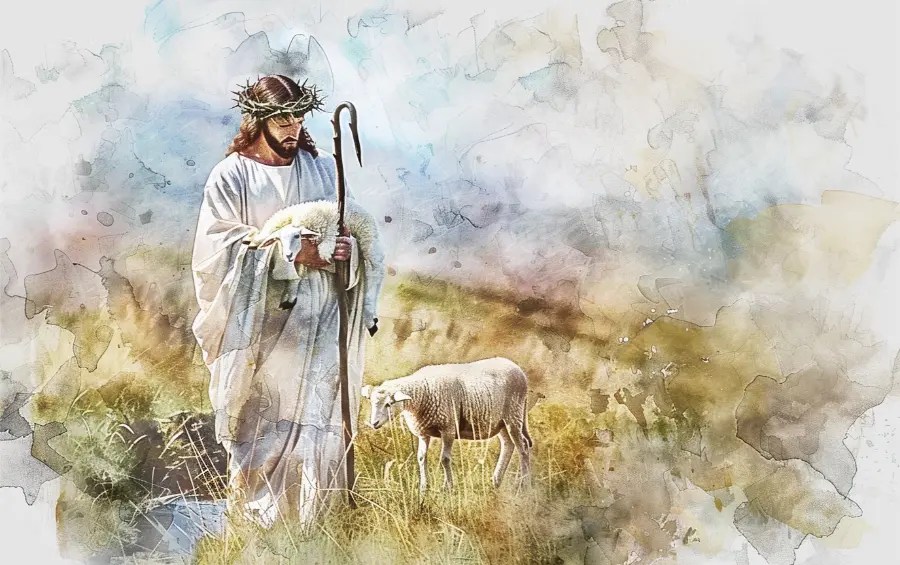
- Christ is Israel’s true Shepherd who lays down His life for the sheep. The Antichrist is the ravenous wolf in shepherd’s clothing who comes only to steal, kill, and destroy.
This explains why the Antichrist is so profoundly dangerous and why he will be able to deceive so many. He does not come with horns and a pitchfork; he comes offering precisely what a broken world and a secular-minded Israel crave most: security, prosperity, and a political solution to the intractable conflicts of the Middle East.⁴⁰ His career is Satan’s final, desperate attempt to usurp God’s plan for His chosen people. By first making a covenant with them and then attempting to annihilate them, he seeks to prove to the world that God is unfaithful, that He cannot protect His people, and that His promises can be broken.
This prophetic picture serves as a powerful warning about the nature of spiritual warfare and deception. The greatest dangers to our faith often come disguised as something good, reasonable, and appealing. It reinforces the urgent need for spiritual discernment and for placing our hope not in charismatic political leaders or fragile peace treaties, but only in the true Messiah, Jesus Christ, whose covenant is everlasting and whose kingdom of true peace will have no end.

Will the Jewish People Turn to Jesus in the End Times?
After exploring the darkness of the Tribulation and the deception of the Antichrist, the Bible shines a brilliant light of hope on the future of Israel. The story does not end in tragedy. It culminates in one of the most glorious and long-awaited events in all of salvation history: the national turning of the Jewish people to their Messiah, Jesus.
The Apostle Paul addresses this question with deep passion and clarity in the book of Romans. He begins by asking a heart-wrenching question, “I ask, then, has God rejected his people?” His answer is immediate and emphatic: “By no means!” (Romans 11:1-2).⁴¹ Paul, himself a Jew from the tribe of Benjamin, makes it clear that God’s covenant faithfulness to Israel has not failed.
He then unveils what he calls a “mystery.” He explains that Israel has experienced a “hardening in part,” a temporary spiritual blindness that has served a breathtaking divine purpose: it has allowed the good news of salvation to spread to the rest of the world, the Gentiles (Romans 11:25).²³ But this hardening is not permanent. It will last only “until the full number of the Gentiles has come in.”
And then comes the climactic promise, the verse that has given hope to the Church for 2,000 years: “And in this way all Israel will be saved” (Romans 11:26).⁴² The overwhelming consensus among Bible scholars is that Paul is speaking here of a future, large-scale, national conversion of ethnic Israel. A day is coming when the Jewish people as a whole will have the veil lifted from their eyes and will recognize that Jesus of Nazareth is, and always has been, their long-awaited Messiah, King, and Savior.⁷
This New Testament promise is a beautiful fulfillment of Old Testament prophecy. The prophet Zechariah painted a vivid picture of this moment of national repentance: “And I will pour on the house of David and on the inhabitants of Jerusalem the Spirit of grace and supplication; then they will look on Me whom they pierced. Yes, they will mourn for Him as one mourns for his only son” (Zechariah 12:10).¹⁸ This is not the mourning of despair, but the cleansing sorrow of repentance that leads to life.
Paul illustrates this beautiful truth with the analogy of an olive tree.³¹ The natural branches, representing Israel, were broken off because of unbelief. The wild branches, representing Gentile believers, were grafted into that same tree, drawing life from the rich root of God’s covenants with Israel. This is a picture of inclusion, not replacement.¹³ And Paul gives a hopeful promise that in the future, the natural branches will be grafted back into their own olive tree.
This is far more than just an interesting loose end in God’s plan. Paul presents Israel’s future salvation as the very trigger for the consummation of all things. He asks a rhetorical question: “For if their rejection means the reconciliation of the world, what will their acceptance mean but life from the dead?” (Romans 11:15).⁴³ If Israel’s temporary rejection of the Messiah led to the incredible blessing of salvation for the entire world, their future acceptance of Him will usher in the even greater blessing of the final resurrection and the full, glorious establishment of God’s kingdom.
This truth should fill our hearts with a powerful sense of awe at the wisdom of God. It shows that God wastes nothing; even Israel’s tragic history of unbelief was sovereignly woven into His plan for the redemption of the world. It should give us, as Gentile believers, a deep sense of humility, recognizing that we are “grafted-in” branches who are supported by the root of God’s promises to Israel. It should cultivate in us a deep love and compassion for the Jewish people. And it should fill us with an eager and joyful expectation for that future day when God’s whole family, Jew and Gentile, is finally brought together in praise of their one Messiah, leading to the eternal worship of His glorious grace.⁴⁴

What Is the Catholic Church’s Stance on Israel and the End Times?
The Catholic Church holds a unique and nuanced position regarding Israel and the end times, one that differs significantly from the frameworks common in many Protestant and Evangelical circles. To understand the modern Catholic view, one must begin with the landmark declaration from the Second Vatican Council in 1965, Nostra Aetate (“In Our Time”).
This document represented a historic “sea-change” in Catholic teaching.⁴⁵ For centuries, a “teaching of contempt” had been common, which held that the Church had completely replaced Israel in God’s plan and that the Jewish people were perpetually accursed for the death of Jesus.
Nostra Aetate officially and definitively rejected this “replacement theology” or supersessionism.⁴¹ The Church now formally teaches what the Apostle Paul declared in Romans: that “God’s gifts and his call are irrevocable” and that His covenant with the Jewish people has never been broken.⁴¹
Although the Church affirms the enduring covenant with Israel, its understanding of how God’s promises are fulfilled is distinct. The Catechism of the Catholic Church teaches that the Church is the “new people of God,” but this is seen as an expansion and fulfillment of the original Israel, not its abolition.³⁵ Jesus came to establish the New Covenant with the “house of Israel,” and Gentiles, through faith in Christ, are “grafted into” this one, unified people of God.¹⁴
Regarding the end times, or eschatology, the Catholic Church’s view is decidedly amillennial. It rejects the detailed prophetic timelines and charts common in dispensationalism and officially condemns “millenarianism”—the belief in a future, literal, thousand-year reign of Christ on earth before the final judgment.⁴⁷ For Catholics, the “last days” began with Christ’s first coming and the outpouring of the Holy Spirit at Pentecost; we are living in the final age of history right now.⁴⁷
The Catechism outlines a general, non-specific order of final events. It teaches that history is moving toward a climax that will include two key developments: the “full number of the Gentiles” coming into the Church, followed by the “full inclusion of the Jews in the Messiah’s salvation”.⁴³ This full inclusion of the Jewish people will then be followed by a final, intense trial of the Church, often associated with the Antichrist, which will culminate in Christ’s glorious return, His victory over evil, and the Last Judgment.⁴³
The Church’s stance on the modern state of Israel must be understood in this light. The Holy See maintains formal diplomatic relations with the state of Israel, but this is a political recognition of a sovereign nation, not a theological endorsement based on prophecy.³⁵ The Church does not teach that the founding of the modern state in 1948 is a direct fulfillment of biblical prophecy in the way many evangelicals do. The Church’s ultimate hope for Israel is spiritual—their salvation through recognition of Jesus as the Messiah—not the political success or expansion of a specific secular state.³⁵
The Catholic position carves out a unique “third way.” It strongly affirms the permanence of God’s covenant with the Jewish people, a point it shares with dispensationalism. But it maintains a Christ-centered, non-literal fulfillment of God’s kingdom promises in the Church, which is more similar to covenant theology. It is a deeply covenantal view that refuses to replace Israel, seeing the Church as the mystery of Jew and Gentile brought together in Christ. This position detaches eschatological hope from the turbulent world of geopolitics and re-centers it on the spiritual reconciliation of God’s entire family, awaiting the day when “all Israel will be saved,” which will signal the final consummation of God’s glorious plan.
How Should We View Today’s News from the Middle East?
In a world of 24-hour news cycles, social media alerts, and constant turmoil, it is natural for believers to look at the conflicts in the Middle East and ask, “Is this it? Are we seeing prophecy unfold before our very eyes?” Many Christians, especially those who hold to a more literal interpretation of prophecy, see the current events in Israel—the wars and rumors of wars, the increasing global isolation, and the rise of hostile nations like Iran (the biblical Persia)—as a clear “foreshadowing” of the end-time battles described by the prophet Ezekiel.²⁵ For many, the ongoing conflicts and the sense that the world is “super fragile” create a powerful feeling that the “end of time has neared”.²⁷
This instinct to connect current events to God’s Word is not wrong; it shows a heart that takes the Bible seriously. But we must approach the daily headlines with wisdom and pastoral balance. Jesus Himself gave us the perfect perspective. He told His disciples, “You will hear of wars and rumors of wars, but see to it that you are not alarmed. Such things must happen, but the end is still to come” (Matthew 24:6).⁵² For 2,000 years, in every generation, sincere Christians have looked at the chaos of their day and believed the end was imminent.³⁶ This should give us a humble caution against sensationalism or date-setting, which Jesus explicitly warned against, stating that “about that day or hour no one knows” (Matthew 24:36).⁵⁴
The purpose of prophecy is not to make us anxious headline-watchers, but to prepare our hearts. It is not meant to scare us, but to secure us in the hope of God’s sovereign control over all of history.²⁵ A helpful way to think about this is to see prophetic signs as road signs on a long journey. The signs—wars, turmoil, the regathering of Israel—confirm that we are on the right road and that our destination, the glorious return of Christ, is getting closer. But the signs are not the destination itself. Our focus should be on traveling well, not on pulling over to anxiously stare at every sign along the way.
To become obsessed with matching every news report to a specific verse is to risk taking our eyes off Jesus. This can lead to unhealthy fear, wild speculation, and a spirit of division.⁵⁵ The healthy and faithful approach is to notice the signs and be encouraged by them. We can look at the world and say with confidence, “Yes, this is what the Bible said would happen. My God is in control. My Lord is coming soon!”
This recognition should then motivate us to “travel well.” And what does that mean? It means living lives of “holy conduct and godliness” (2 Peter 3:11).⁵³ It means doing good to all people, praying for the peace of Jerusalem, and sharing the hope of the gospel with a loving urgency.²⁵ We should be informed by the news, but not infatuated with it. We should be watchful, but not worried. Current events can and should strengthen our faith that God’s Word is true and His plan is perfectly on course. But our primary response must always be to draw closer to Him, to love our neighbors, and to be ambassadors of the only true and lasting hope for the chaos we see in the world: the gospel of Jesus Christ.

How Should This Prophetic Knowledge Shape My Faith Today?
After journeying through the covenants, prophecies, and different theological views, we arrive at the most important question of all: “So what? How should knowing about Israel’s role in the end times change the way I live my life for Jesus today?” The Bible’s answer is clear and powerful. Prophetic knowledge is not meant to be a source of intellectual pride or fearful speculation; it is God’s divine tool to shape us into the people He calls us to be right now.
Understanding the end times should replace our fear with an unshakable hope. Jesus did not tell His disciples about His return to terrify them, but to comfort them on the night before His crucifixion, promising, “I will come again and receive you to Myself” (John 14:3).²⁷ In a world that feels fragile and chaotic, this “blessed hope” is the anchor for our souls. It gives us a deep and abiding peace that does not depend on peaceful headlines, but on the certainty of Christ’s victory.⁵⁵
This knowledge calls us to a life of holiness. The Apostle Peter, after describing the fiery end of the current world, asks the critical question: “Therefore, since all these things will be dissolved, what manner of persons ought you to be in holy conduct and godliness?” (2 Peter 3:11).⁵³ Having an eternal perspective changes our daily priorities. It loosens our grip on the temporary treasures of this world and causes us to invest in things that will last for eternity: our relationship with God and our love for others. It motivates us to live each day in a way that is pleasing to the Lord we are so eagerly expecting.⁵⁵
A clear view of the end times should fill our hearts with a compassionate urgency for evangelism. Knowing that a time of judgment is coming should break our hearts for those who do not know the saving love of Christ. It should compel us, as many pastors exhort, to be ready and to help others get ready for His return by sharing the good news of salvation.⁵⁶
It should give us a special heart for the nation of Israel and the Jewish people. We are called to “pray for the peace of Jerusalem” (Psalm 122:6) and to pray for the salvation of the people God calls “beloved for the sake of their forefathers” (Romans 11:28).²⁵ We should see them not as a political issue, but as a people central to God’s redemptive story, the root that supports us as grafted-in branches.²²
Finally, this study should leave us with a powerful sense of humility and grace. Sincere, Bible-believing Christians can disagree on the details and timing of these future events. We can hold our own convictions firmly but gently, always discussing these matters with a spirit of love and unity, centered on the non-negotiable truth that Jesus Christ is coming again.¹²
All Bible prophecy points to one glorious person: the Lord Jesus Christ.¹² Our study of Israel’s role in the end times should not leave us with a complex chart, but with a simpler, more passionate love for our King. It should leave us in awe of His wisdom, humbled by His mercy, and more eager than ever for the day when we will see Him face to face. Until that day, our response is to trust Him, obey Him, share Him, and wait for Him with joyful and certain hope.
Maranatha! Come, Lord Jesus!


Leave a Reply