 English
 Chinese
 Dutch
 Arabic
 Spanish
 Portuguese
 Russian
 French
 Italian
 German
 Japanese
Christian Pure wrote this page. If a link to picturesofislam.com brought you here: that address once belonged to a picture site about Islam. We hold the lapsed address now, we have no connection with that site, and nothing here is taken from it.

This is Hagia Sophia, looking up at the east end, and if we only had time for one picture of Istanbul it would be this one. Mary sits with the Child in the curve of the apse, small against the gold, and on either side of her hang the two great names, Muhammad on our left and Allah on our right. For 1,123 years, from 330 to 1453, the city was Constantinople, the seat of a Christian empire, and ever since it has been the city of the Ottomans and then of the Turks, so most of the places in these pictures have belonged to both.
Hagia Sophia

Two churches stood on this spot before this one, and fires during riots took them both. After the second fire, in 532, the Emperor Justinian gave the job to Anthemios of Tralles and Isidore of Miletus, and they had the new church ready for its inauguration on 27 December 537. “Yet it seems not to rest upon solid masonry, but to cover the space with its golden dome … suspended from Heaven,” Procopius wrote of the dome in Justinian’s own lifetime. It did rest on masonry, as it turned out, and after the earthquakes of 557 it came down. The one above us now, 31.87 metres across, went up in its place, and the church was consecrated all over again in 562.
Mary and the Child were dedicated in 867, at the end of the long quarrel over whether Christians may make images at all. The patriarch Photios preached on the mosaic that March, and the people who had won the quarrel wrote their opinion of the losers around the arch, that the images “the imposters had cast down, here pious emperors have again set up.” Most of that inscription has gone now, and Mary is still up there. This photograph is from 2008, though, and in July 2020, with the building about to open for prayer, Turkey’s presidential spokesman said curtains would cover her at prayer times, so if you go you may find one drawn across her.
The discs came almost a thousand years later. Mustafa İzzet Efendi, a calligrapher, wrote them in gold on dark green for the restoration Sultan Abdülmecid began in 1847, and he signed his work in 1849. Each one is 7.5 metres across, which turned out to matter. A decree of Atatürk’s cabinet on 24 November 1934 made the building a museum, the discs were taken down in 1935, and only when they were on the floor did anyone think to ask how they would leave the building. They would not go through even the great Imperial Door, so there they stayed for years, on the floor and leaning against the walls.
In January 1949 the writer İbrahim Alâeddin Gövsa asked in the newspaper Hürriyet why, if it was natural to keep the pictures and crosses that showed this had once been a Christian sanctuary, its memories as a Turkish and Islamic one should not be kept just the same. It is a fair question, whichever side of it we are standing on. He also wrote that putting the discs back had been decided and that nobody had yet found the means. The man who got it done was İbnülemin Mahmut Kemal İnal, who had tried and failed to get them rehung, and who was told at last by the museum’s director that there was no budget but that they could go up if money were found. Ekrem Hakkı Ayverdi and Nazif Çelebi found the money, and on 28 January 1949 the discs went back up.

In a picture like this Mary and John are asking Christ for mercy on the rest of us, and what we have left of their prayer is three faces above a great patch of plaster. It comes from the century in which this church was robbed by other Christians. In April 1204 the knights of the Fourth Crusade sacked Constantinople and pillaged Hagia Sophia, a Latin named Thomas Morosini was made patriarch, and the Greeks did not hold the city again until 1261. Many count that sack as the final sealing of the split between East and West, and we have gone through what still divides Catholics and Orthodox on another page.

Gaspard Fossati and his brother led the repairs of 1847 to 1849, and this print is one of the views that came out of them. Some of these men are talking and some are sitting against the columns, and if we look past them to the far side there are others with their foreheads on the carpet. By 1852 people had been praying like that in this room for almost four hundred years.
Is Hagia Sophia a church or a mosque today?
It is a mosque today, for the second time. Mehmed II made it one when he took the city in 1453, after it had been a church for 916 years, and it stayed one until the decree of 1934 made it a museum. The case that undid that decree was brought by an association, which argued before Turkey’s Council of State that the building had been the private property of Mehmed II. Ten days before the ruling the Ecumenical Patriarch, Bartholomew, said at the liturgy for the feast of the Twelve Apostles in Istanbul that turning it into a mosque “will disappoint millions of Christians around the world” and would fracture East and West. The day before the ruling Ibrahim Kalın, the president’s spokesman, said that opening it for prayer would not take away its identity, since the great mosques are “open to both visitors and worshippers”. On 10 July 2020 the court cancelled the decision of 1934, ruling that “the settlement deed allocated it as a mosque” and that using it as anything else was not legally possible, and President Erdoğan signed an order the same day handing it to the religious authorities and opening it for worship.
UNESCO said that it “deeply regrets the decision”, which had been made without prior discussion. Two days after the ruling Pope Francis, at the end of the Sunday Angelus, was greeting people who work at sea for the International Day of the Sea when, he said, the sea carried him a little farther in his thoughts, to Istanbul: “I think of Hagia Sophia, and I am very saddened.” Since January 2024 visitors have gone up to the galleries, where the Deesis is, and the floor below has been kept for Muslim prayer.
Hagia Irene

Next door, in the same enclosure as Hagia Sophia, is the church of Divine Peace, which is what Hagia Irene means, and it served as the city’s cathedral until the first Hagia Sophia opened in 360. The council of 381, whose name is tied to the Nicene Creed as we still say it, may have met here, though nobody can be sure. That cross probably belongs to the rebuilding after an earthquake in 740 under Constantine V, who rejected figures in religious art, so we are looking at the other side of the quarrel that Mary’s mosaic answered.
After 1453 Christians at Mehmed II’s court used the church for a short while, and then a wall went up between it and Hagia Sophia, the palace grew around it, and it became an arsenal. It has since been an armoury, a museum of antiquities, a military museum and for many years a concert hall, and in 2014 it opened as a museum. The records have it as nearly everything except a mosque, so that cross has stayed up there over the weapons and the concerts.
The Chora

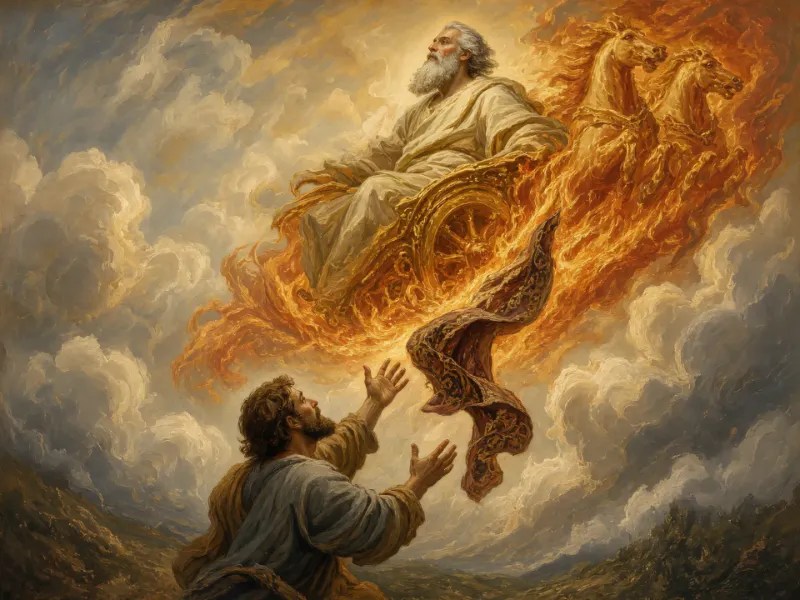
“For he hath broken the gates of brass, and cut the bars of iron in sunder,” says the psalm (Psalm 107:16), and here they are in pieces under his feet while he pulls Adam and Eve up out of their tombs. Notice that he has them by the wrists, the way we take hold of someone who cannot hold on.
Theodore Metochites, minister of the treasury and one of the greatest scholars of his day, began rebuilding this monastery around 1315 and paid for these walls. He fell from power in 1328, was sent away for two years, came back to his own monastery as a monk, and was buried there in 1332.
The grand vizier Atik Ali Pasha made the church a mosque some time before 1511, and around the seventeenth or eighteenth century the mosaics and frescoes were partly plastered over. Even so, by the late nineteenth century it was popular with Western tourists, and it had come to be known as the Mosaic Mosque. It became a museum in 1945, and from 1947 the Byzantine Institute of America cleaned these walls. An order of 2020 made it a mosque again, and it reopened on 6 May 2024, which that year was Easter Monday for the Orthodox. This fresco is in the side chapel, and the pictures there and in the entrance halls stay in plain view, while three images of Christ and the Virgin in the nave are curtained at prayer times.
The Land Walls

The ruin on the skyline looks to us like the Tekfur Palace, and if it is, these towers are probably the stretch the Emperor Manuel Komnenos built near the north end of the line, because the great inner wall of Theodosius stops a little to the south of that palace. The Theodosian walls run on south from there. The first of them went up in 413, and Attila did not dare attack them. Then in 447, the same year he had beaten the emperor’s armies three times over, earthquakes threw down most of the wall and 57 of its towers. The prefect Constantine got sixteen thousand labourers from the Blues and the Greens, the city’s two factions, and he had it standing again in less than three months, with a second wall and a moat in front of it, until the line ran to 192 towers. A Greek inscription on the wall says, “In sixty days, by the order of the sceptre-loving Emperor, Constantine the Eparch added wall to wall,” and a Latin one boasts, “Scarcely could Pallas have built so quickly so strong a citadel.”
These walls took the sultan’s last assault at daybreak on 29 May 1453. The emperor died near the Gate of St Romanus, and about midday Mehmed II came in through it.
The Basilica Cistern

The city went short of water every summer, Procopius tells us, so Justinian had this dug out beneath it, with 336 columns in twelve rows of 28, each about nine metres tall, holding up the roof over some 80,000 cubic metres of water. A thousand years later people in the houses above were drawing water from wells sunk into it without any idea what was down there, or so says Pierre Gilles, who came looking for antiquities in the sixteenth century. He got in by luck. “I went by Chance into a House, where there was a Descent into it, and went aboard a little Skiff,” he wrote, and the owner of the house lit torches and rowed him about among the columns with his mind on other things: “He was very intent upon catching his Fish, with which the Cistern abounds, and spear’d some of them by the Light of the Torches.”
The Pammakaristos

Michael Tarchaneiotes Glabas, who held the high office of protostrator, died about 1305, and his widow Maria became a nun, took the name Martha and around 1310 built this little chapel on to the church of the Mother of God the All-Blessed to hold his tomb. Her words still frame the apse, where she says she has offered the chapel on his behalf to help ensure his salvation.
Around 1455 the patriarch Gennadios Scholarios brought the Patriarchate to this church, and the patriarchs stayed until 1587. Then, under Murad III, it became a mosque, named Fethiye, the Conquest Mosque, for the conquest of Georgia, and the builders took out large parts of its walls to open up one wider room. The mosaics in the chapel began to be uncovered in 1950, and the chapel is now a museum, which is how we come to be looking up into this dome.
The Patriarchal Church of St George

The Patriarchate’s own history calls this the fifth church to house it since the fifteenth century. It had been a convent for Orthodox nuns until Patriarch Matthew II, who held the office from 1598 to 1601, took it over, and it was rebuilt after a fire in 1720. You will remember April 1204. The relics of St Gregory the Theologian and St John Chrysostom were taken from this city to Rome after that crusade, and eight hundred years on, in November 2004, Pope John Paul II gave them back, and they lie in the left aisle of this church. On 29 November 2025 Pope Leo XIV and Patriarch Bartholomew prayed together here and signed a joint declaration condemning the use of religion to justify violence.
The Sultan Ahmed Mosque

Sultan Ahmed I began this mosque in 1609, on the foundations of the old imperial Great Palace, and it was finished in 1617, the last year of his reign. His architect was Sedefkar Mehmed Agha, who had worked for the great Sinan. The story goes that its six minarets caused an outcry, because only the Great Mosque of Mecca had as many, and that a seventh was added at Mecca to settle it. Most of the places in these pictures have been more than one thing over the years, and this one has only ever been a mosque. It is open to worshippers and visitors together, and on 29 November 2025 Pope Leo XIV began the third day of his journey in Turkey here, with what Vatican News called a “brief visit and guided tour.”
The Golden Horn and the Galata Bridge

This stretch of water was the city’s harbour, and in the spring of 1453 “a strong iron chain” barred its mouth to keep the sultan’s fleet out. Mehmed II went round it. On 22 April he had seventy of his ships slid over greased planks behind Galata and put into the Golden Horn, and Gibbon, who says eighty, adds that the planks were “anointed with the fat of sheep and oxen.”

Istanbul had 15,754,053 people in the count for 2025, 18.3 percent of everyone in Turkey, and here are a few of them on a cold January day, up on the bridge and doing what the man in the cistern was doing with his spear. Ask any of them what city they are in and they will say it in one word, which the old Catholic Encyclopedia spells Stamboul or Istamboul and traces to a Greek phrase, eis ten polin, into the City.



Leave a Reply