
 English
 Chinese
 Dutch
 Arabic
 Spanish
 Portuguese
 Russian
 French
 Italian
 German
 Japanese
To speak in tongues is to speak, by the gift of the Holy Spirit, in a language you never learned, as the disciples did at Pentecost when they “began to speak with other tongues, as the Spirit gave them utterance” (Acts 2:4). Pentecostal churches such as the Assemblies of God and the Church of God in Christ practice it most widely, and they teach that it is the first sign of being baptized in the Spirit. Charismatic believers among Catholics, Episcopalians and Methodists pray in tongues without making it the sign of anything. The Eastern Orthodox and Coptic churches do not encourage it in their prayer today, and Jehovah’s Witnesses, many Reformed Christians, some Baptists and teachers among the Churches of Christ hold that the gift has ended.
We Christians have been arguing about this for a long time, and most of the argument happens inside three chapters of one letter. In 1 Corinthians 12 Paul counts “divers kinds of tongues” among the gifts, and in chapter 14 he gives the rules for using them in church. Between those two he stops and writes, “Though I speak with the tongues of men and of angels, and have not charity, I am become as sounding brass, or a tinkling cymbal” (1 Corinthians 13:1). Churches that read chapters 12 and 14 very differently keep coming back to the chapter in the middle.
Find your own church here. The list starts with those that expect the gift and moves toward those that hold it has ended or say nothing about it.
| Church | What it teaches about tongues today |
|---|---|
| Assemblies of God, Church of God (Cleveland), Church of God in Christ | Practiced and expected: the first sign of baptism in the Spirit, which comes after the new birth |
| United Pentecostal Church International (Oneness) | Practiced and expected: the sign of the Spirit, as part of the new birth itself |
| Latter-day Saints | Believed in, as a gift of languages |
| Catholic Church | A gift of the Spirit, welcomed in the Charismatic Renewal and tested by the bishops; extraordinary gifts are not to be sought after |
| Episcopal Church and other Anglicans | No Anglican-wide statement we could read; nothing on it in the Episcopal Prayer Book; a charismatic movement since 1960 |
| United Methodist Church | Open to it; pastors are told to understand it and keep order |
| The Salvation Army | A true gift, not the evidence of the Spirit, and not stressed in public worship |
| Evangelical Friends (Quakers) | Some use it in private; one yearly meeting refrains from it in public services |
| Church of the Nazarene | Not the evidence of being filled with the Spirit |
| Lutheran Church–Missouri Synod | Not promised to every Christian |
| Presbyterians | Not an essential sign; many conservative Presbyterians hold that it has ended |
| Baptists | Southern Baptists’ confession does not mention it; many doubt it, and some hold that it has ended |
| Nondenominational and evangelical churches | Differs from one congregation to the next |
| Eastern Orthodox | Honored at Pentecost; not encouraged in the Church’s prayer today |
| Coptic Orthodox | Given abundantly to the apostles; “not necessary in every age” |
| Seventh-day Adventists | A gift of foreign languages; ecstatic speech is not what Paul meant |
| Churches of Christ | A teaching journal among them says it ended when the New Testament was complete (a journal, not a church body) |
| Jehovah’s Witnesses | Ended about the end of the first century |
| United Church of Christ, Disciples of Christ, Mennonites | No teaching on tongues in the documents we read |
Our free tool, Compare Christian Denominations, sets any two of 22 churches side by side on this question and 54 others.
What does speaking in tongues mean?
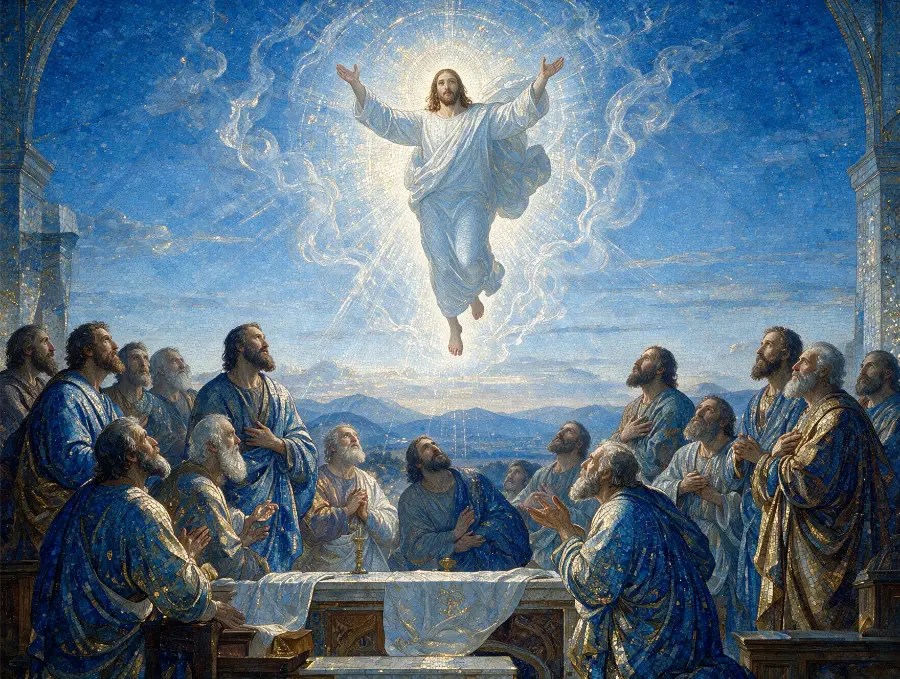
When Luke tells us about Pentecost, the wonder is in the hearing as much as in the speaking. The people talking were Galileans, the crowd had come “out of every nation under heaven,” and they “were confounded, because that every man heard them speak in his own language” (Acts 2:5–6). You will also hear the gift called glossolalia, which the Assemblies of God explains comes “from the Greek words glōssa (tongue, language) and lalia (speech),” and it is careful to add, “The word does not occur in Scripture.” We have gathered the passages in one place, in our Bible verses about speaking in tongues.
So at Pentecost the tongues were languages people knew. The trouble starts when Paul writes to Corinth, “For he that speaketh in an unknown tongue speaketh not unto men, but unto God: for no man understandeth him; howbeit in the spirit he speaketh mysteries” (1 Corinthians 14:2). A Pentecostal hears a tongue meant for prayer, and the Assemblies of God teaches that “Paul’s writings imply that Spirit-inspired languages may not always be human, but may be spiritual, heavenly, or angelic,” and calls this private use “a prayer language.” Others read the same verse and picture a foreign language spoken in a room where nobody knows it, so that only God understands. The Biblical Research Institute of the Seventh-day Adventist General Conference says, “Clearly the gift of tongues may best be understood as the gift of speaking foreign languages without having studied them.” Adventists do not hold that the gifts have stopped, and their Fundamental Belief 18 teaches that another gift, prophecy, is “an identifying mark of the remnant church,” and that it was manifested in the ministry of Ellen G. White.
Jehovah’s Witnesses agree that the tongues were languages, and their website calls the gift “a miraculous ability some early Christians had that enabled them to speak a language without first having learned it.” Latter-day Saints stretch the definition to take in the hearer, and their Guide to the Scriptures calls tongues “A gift of the Holy Ghost that allows inspired individuals to speak in, understand, or interpret unfamiliar languages,” while the seventh of the Latter-day Saints’ Articles of Faith says, “We believe in the gift of tongues, prophecy, revelation, visions, healing, interpretation of tongues, and so forth.”
Why do Pentecostals expect every believer to speak in tongues?
Pentecostals look back to Charles Parham’s Bethel Bible School in Topeka, Kansas, where students, as the Assemblies of God records it, “began speaking in tongues at a prayer meeting on January 1, 1901.” Five years later a revival broke out at a small mission at 312 Azusa Street in Los Angeles under William J. Seymour, an African American Holiness preacher, and people around the world heard about it. Those first Pentecostals called tongues the “Bible evidence” that a person had received the Spirit, and the name changed later to the initial evidence. For most Pentecostals today, tongues are still how a person knows the Spirit baptism has come.
They get that from the Book of Acts, which they read as a pattern in which everyone filled with the Spirit at Pentecost spoke in tongues. When the Spirit fell on the household of Cornelius, Peter’s companions knew it “for they heard them speak with tongues, and magnify God” (Acts 10:46), and at Ephesus, when Paul laid his hands on about twelve men, “they spake with tongues, and prophesied” (Acts 19:6). The Assemblies of God, the Church of God based in Cleveland, Tennessee, and the Church of God in Christ all write almost the same line, and the Assemblies of God has it this way in its Statement of Fundamental Truths, “The baptism of believers in the Holy Spirit is witnessed by the initial physical sign of speaking with other tongues as the Spirit of God gives them utterance.” Where they differ is in what comes first, for the Church of God puts the baptism with the Holy Ghost “subsequent to a clean heart,” and the Church of God in Christ “subsequent to conversion and sanctification,” while for the Assemblies of God it follows the new birth. We have a separate page on what it means to be baptized in the Holy Spirit.
Other Christians answer all this with one line of Paul’s, “Have all the gifts of healing? do all speak with tongues? do all interpret?” (1 Corinthians 12:30), and they hear the answer no. The Assemblies of God has thought about that line, and it replies that “both the broad context and the immediate context relate the question to the exercise of the gift in corporate worship.” So Pentecostals speak of two uses of one gift. Only some believers will bring a message in tongues to the whole congregation, while the sign that comes with the baptism in the Spirit, the Statement of Fundamental Truths says, is “the same in essence as the gift of tongues” and “different in purpose and use.”
Do you have to speak in tongues to be saved?
The large Trinitarian Pentecostal churches say no, because the Spirit baptism they teach comes after salvation. The Assemblies of God calls it “distinct from and subsequent to the experience of the new birth,” and the Church of God in Christ says outright, “We believe that we are not baptized with the Holy Ghost in order to be saved,” though the same paragraph of its statement goes on to call a Holy Ghost experience “mandatory for all men today.” Oneness Pentecostals, often called Apostolics, say yes, because they count the baptism of the Spirit, with tongues as its sign, as part of the new birth itself. The United Pentecostal Church International teaches in its statement of beliefs that we obey the gospel “by repentance (death to sin), water baptism in the name of Jesus Christ (burial), and the baptism of the Holy Spirit with the initial sign of speaking in tongues as the Spirit gives the utterance (resurrection),” and that “The supernatural gifts of the Spirit, including healing, are for the church today.” Its own account of Oneness Pentecostalism speaks more gently to the rest of us: “We do not reject those who have not received the complete New Testament experience, but we encourage them to receive everything God has for them.”
Maybe you have gone forward to pray for this and got up with nothing to report. You are hardly alone, even among Pentecostals, for when the Pew Forum surveyed ten countries in 2006 it found that “in six of the 10 countries surveyed, more than four-in-ten pentecostals say they never speak or pray in tongues.” The Assemblies of God’s own position paper says that “seekers should not be discouraged or get under self-condemnation if the infilling of the Spirit does not take place when they expect.” It also tells those who have received the gift that “spiritual fruit, and not only spiritual gifts, should issue from the Pentecostal experience,” and there we are, back in Paul’s middle chapter.
Do Catholics and Anglicans speak in tongues?
Some of them do, and among Episcopalians we can name the day it came into the open. On Passion Sunday, April 3, 1960, Dennis Bennett told his congregation at St. Mark’s Episcopal Church in Van Nuys, California, that he and 70 other members had been speaking in tongues. It cost him that parish, and Bishop Francis Bloy of Los Angeles quickly forbade group meetings “under any semblance of parish auspices to be held where speaking in tongues is encouraged or actually engaged in.” Bennett went to a struggling parish in Seattle, and it flourished. The United Methodist Church’s guidelines on the charismatic movement look back on all this and describe a movement “that began about 1960 in mainline Christian bodies, both Protestant and Roman Catholic,” one that stresses the baptism of the Spirit “but without the elevation of” tongues as the initial evidence. For some who came later, sometimes called the Third Wave, the same guidelines say, “Speaking in tongues is considered optional or unnecessary.” If you are trying to keep the groups straight, we have sorted them out in Pentecostal, charismatic and evangelical Christians.
We found no statement on tongues that speaks for Anglicans as a whole. There is a report of 1981 for the General Synod of the Church of England, The Charismatic Movement in the Church of England, which we have not been able to read, so we can only tell you what the documents in front of us say. The Episcopal Church’s Book of Common Prayer has no teaching on speaking in tongues, and when its catechism asks how we recognize the Spirit’s presence in our lives, the answer is, “We recognize the presence of the Holy Spirit when we confess Jesus Christ as Lord and are brought into love and harmony with God, with ourselves, with our neighbors, and with all creation.” The gift the English bishops have written about is healing, and the House of Bishops of the Church of England says in its guidelines, “The healing ministry is Jesus’ ministry entrusted to us.”
Among Catholics the renewal began at a retreat for students and faculty of Duquesne University in February 1967. Fifty years on, Pope Francis called it “the flood of grace of the Catholic Charismatic Renewal,” and he once told its members how he used to celebrate Mass with them in the cathedral in Buenos Aires, “after the consecration and a few moments of adoration in tongues.” The Catechism of the Catholic Church counts tongues among the charisms, saying, “Whatever their character – sometimes it is extraordinary, such as the gift of miracles or of tongues – charisms are oriented toward sanctifying grace and are intended for the common good of the Church” (2003). Such gifts, it goes on to teach, “are to be accepted with gratitude” (800), and “No charism is exempt from being referred and submitted to the Church’s shepherds” (801). The bishops at the Second Vatican Council added in Lumen Gentium, “Extraordinary gifts are not to be sought after.” And over every gift the Catechism sets Paul’s word from 1 Corinthians 13, asking for its use “in keeping with charity, the true measure of all charisms” (800).
What do Methodists, Nazarenes, the Salvation Army and Quakers say?
Methodists have a family reason to care about all this, for the guidelines their church keeps on the subject say that “many of the first Pentecostal leaders were originally Methodists,” and they call Pentecostalism “an offspring.” So a Methodist pastor is told to go and listen: “When speaking in tongues occurs, seek to understand what it means to the speaker in his/her private devotional life,” the guidelines say, and those who speak are reminded that “there must be interpretation to ensure proper order.” The United Methodist Church says in its guidelines on the charismatic movement, adopted in 2008 and readopted in 2024, “We believe the church needs to pray for a sensitivity to be aware of and to respond to manifestations of the Holy Spirit in our world today.” The Methodist Articles of Religion are silent on the gift itself, for their one article about tongues, “Of Speaking in the Congregation in Such a Tongue as the People Understand,” is about the language of worship. The guidelines turn instead to John Wesley, who said that the absence of the gifts in his day did not reflect “the reluctance of God to give, rather the reticence of the church to receive.”
The Salvation Army’s doctrine comes down from Wesley too, and its Handbook of Doctrine says, “Speaking in tongues is the clearest example of a gift that is overvalued in some Christian fellowships and undervalued in others.” A gift can be overvalued, the Handbook goes on, “when it is regarded as the definitive evidence of the baptism in the Spirit,” and undervalued “when it fails to be acknowledged as a true gift of God’s Holy Spirit.” As for its own services, the Handbook says, “The Salvation Army recognises all spiritual gifts. However, in the light of the susceptibility of some to abuse in public worship, the Army emphasises those gifts that encourage the clear proclamation of the gospel and draw into the circle of worship everyone who is present.”
The same Wesleyan revival lies behind the Church of the Nazarene, which says in its Manual of 2023, “We do not believe that speaking in unknown tongues is the evidence of being filled with the Holy Spirit,” and which counts any “prayer language” offered as evidence “contrary to the biblical and historic position of the Church.” What they look for instead is a heart made clean, “manifested by the fruit of the Spirit in a holy life.” Nazarenes still pray for the sick, and their Articles of Faith say, “We believe in the biblical doctrine of divine healing,” and go on to say that God also heals through medical science.
Quakers have had to settle the same question among themselves, and the Evangelical Friends of the Mid-America Yearly Meeting say in their Faith and Practice of 2022 that “Speaking in other tongues does not constitute the essential sign of the baptism with the Holy Spirit,” and that the evidence “is the fruit of the Spirit, and especially divine love, emanating from a truly transformed life.” They know that some among them pray this way, and they write, “We acknowledge that some use the gift of tongues in private devotion, however, it is our decision that we voluntarily refrain from the use of tongues in public services.” Anyone who feels led to do otherwise is sent straight to Paul: “If individuals, or churches are led by the Holy Spirit to use tongues in public services, we point to the explicit guidelines set forth in 1 Corinthians 14:26-28.” The Evangelical Friends do expect God to answer prayer, and their Faith and Practice says that God heals “in response to believing prayer,” and goes on, “There are also times when God does not heal.”

What do Lutherans, Presbyterians and Baptists say?
The Lutheran Church–Missouri Synod answered the charismatic movement in a report of 1977 by saying, “While Lutherans rejoice in the gracious promise that the gift of the Holy Spirit will be given to all generations of believers (Acts 2:39), neither the Scriptures nor the Lutheran Confessions support the view that this gift of the Spirit necessarily includes such extraordinary spiritual gifts as tongues, miracles, miraculous healings, and prophecy,” and that report speaks for one synod alone. The Missouri Synod’s report also says that God “does not necessarily give His church in all ages the same special gifts,” and any of us can hear in that Paul’s word about the one Spirit “dividing to every man severally as he will” (1 Corinthians 12:11).
The General Assembly of the Presbyterian Church in America wrote in a pastoral letter of 1975 that “Any view of tongues which sees this phenomenon as an essential sign of the baptism of the Spirit is contradictory to Scripture,” and many conservative Presbyterians go further and hold that such sign gifts ended when the Bible was completed. The United Presbyterians took a gentler line in a report of 1970. We have it as Christianity Today reported it at the time, and that account quotes the report as saying that “the practice of glossolalia should be neither despised nor forbidden” but “should not be emphasized nor made normative for the Christian experience.”
The Southern Baptists’ Baptist Faith and Message says that the Spirit “bestows the spiritual gifts by which they serve God through His church,” with no word about tongues. Baptists often answer the Pentecostal teaching with Paul’s question about whether all speak with tongues, and some, especially Reformed Baptists, hold that the miraculous gifts ended with the apostles. The Southern Baptists have felt the question in their own mission field, for in 2005 their International Mission Board barred missionaries from using a “private prayer language,” and in May 2015 it dropped the ban, while keeping the right to end the service of any missionary who places “persistent emphasis on any specific gift of the Spirit as normative for all.” As for nondenominational churches, some are charismatic or Pentecostal in their practice and others are not, and you will have to ask the one down your road.
Did tongues stop with the apostles?
Many Reformed Christians conclude that prophecy and tongues ended with the apostles, and they are called cessationists. They go to Paul’s middle chapter for it, to “whether there be tongues, they shall cease” (1 Corinthians 13:8), and to the promise that “when that which is perfect is come, then that which is in part shall be done away” (13:10). Christian Courier, a teaching journal begun among the Churches of Christ in 1965, takes the same verse and says, “The Scriptures teach that the gift of tongues was to cease with the completion of the New Testament canon (1 Cor. 13:8ff),” and on miracles more widely it says that they “have not been extended throughout the Christian dispensation.” That is a journal teaching its readers, and it does not speak for any church body.
A second road to the same place runs through the apostles’ hands: the gifts passed through them, the teaching goes, and stopped with those who received them. Jehovah’s Witnesses say on their website, “The gifts of the holy spirit, including that of speaking in tongues, were a temporary provision,” and “The miraculous gift of speaking in tongues evidently ended about the end of the first century C.E. No one today can rightly claim to speak in tongues by God’s power.”
The old writers do not settle it for us. Irenaeus, a bishop of Lyons in the second century, wrote of “many brethren in the Church” who “through the Spirit speak all kinds of languages.” Two centuries later John Chrysostom opened his sermon on 1 Corinthians 12 by admitting that the chapter was hard because of “our ignorance of the facts referred to and by their cessation.” Augustine, bishop of Hippo, told his people, “These were signs adapted to the time,” and asked them whether anyone looked for tongues from the newly baptized, and then he told them where to look: “If he love his brother the Spirit of God dwells in him.”
Churches that expect the gift today read those verses about the perfect thing of a day that has not come yet. They point to Peter’s promise, “For the promise is unto you, and to your children, and to all that are afar off” (Acts 2:39), to the signs Jesus said would follow believers, “they shall speak with new tongues” (Mark 16:17), and to Paul’s own plain instruction, “forbid not to speak with tongues” (1 Corinthians 14:39).
How do the Orthodox churches answer?
The Greek Orthodox Archdiocese of America says in a short paper for its people, from its Department of Religious Education, “In the Orthodox tradition, we recognize this miracle, but speaking in tongues – especially as practiced in many charismatic or Pentecostal churches today – is not a regular or encouraged part of our liturgical life.” The paper allows that “Some Orthodox Christians may have had personal spiritual experiences they describe as” tongues, and then it says, “Still, the Church does not encourage or incorporate this into its prayer life.” The Orthodox do not think the Spirit has gone quiet, for the Greek Orthodox Archdiocese says in another paper, on the gifts, that the Holy Spirit “is alive and active, working in each of us through the mysteries (Holy Sacraments), prayer, and a life rooted in Christ.” What the Archdiocese looks for as signs of life in the Spirit are “humility, love, and repentance.”
Pope Shenouda III of the Coptic Orthodox Church wrote of God in his Comparative Theology, “He gave the gift of Speaking in tongues abundantly at the time of the Apostles, the beginning of preaching for the sake of edifying, because it was essential at the time. Speaking in tongues is not necessary in every age.” He put that teaching under a heading which says the fruit of the Spirit “is more important for your salvation than the gifts of the Spirit.” When a reader wrote to the Coptic Orthodox Diocese of the Southern United States about a charismatic prayer group, where a friend prayed in tongues and the reader had begun to scream verses of the Bible, the diocese answered, “This is not a good practice at all,” and it taught that the Holy Spirit “bestows gifts according to the needs of the Church.”
Which churches have no teaching on tongues?
Three churches have nothing on this exact question in the documents we read, and we will not stretch those documents to make them say something. The United Church of Christ’s heritage Evangelical Catechism of 1929 calls the Spirit “a Lord and distributor of all gifts” and says that he works “through the Word of God and the Holy Sacraments,” and it does not speak of tongues. Pentecost does come up among the Disciples of Christ, who find in it, in a study of the church from 1997, “a double movement that characterizes our life in the church,” and their ministry policies say that the gifts “are different and diverse,” but neither speaks of tongues. The Mennonites leave the gift unnamed too, and their Confession of Faith of 1995 says that by the gifts of the Holy Spirit “all Christians are called to carry out their particular ministries,” without naming tongues as one of them.
How did Paul want the gift used?
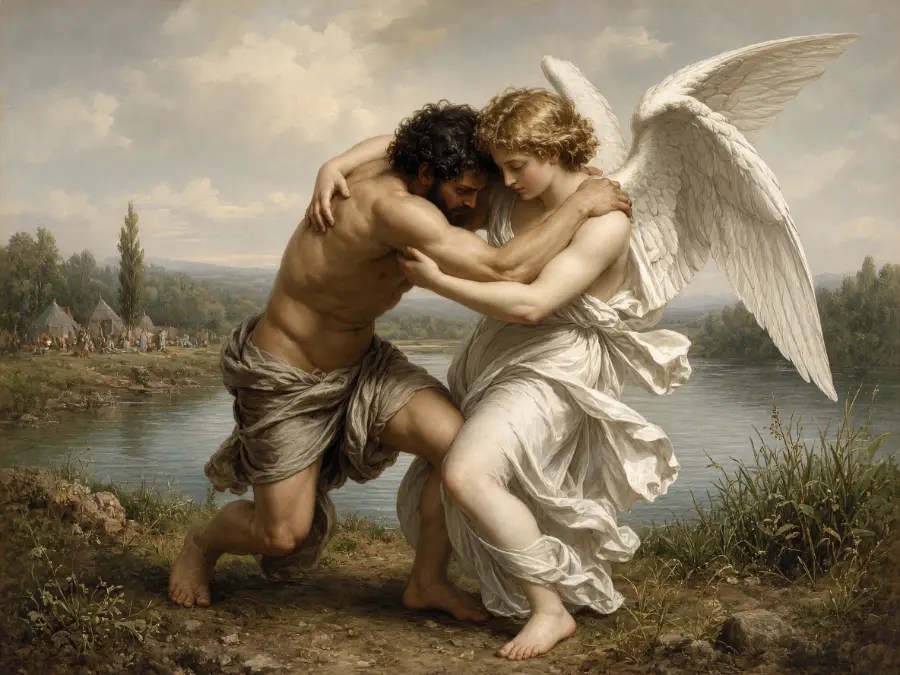
Paul spoke in tongues himself, and he tells us so in the same breath as he tells us what he would rather do. “I thank my God, I speak with tongues more than ye all,” he writes, and then, “Yet in the church I had rather speak five words with my understanding, that by my voice I might teach others also, than ten thousand words in an unknown tongue” (1 Corinthians 14:18–19). A Pentecostal can quote the first sentence and an Orthodox priest the second, and they are quoting one man. His rules for the assembly are short: “let it be by two, or at the most by three, and that by course; and let one interpret,” and if nobody can, “let him keep silence in the church; and let him speak to himself, and to God” (14:27–28). He finishes with, “forbid not to speak with tongues. Let all things be done decently and in order” (14:39–40).
When we lay these churches’ documents side by side, the word we keep finding has nothing to do with languages. The Nazarene Manual and the Assemblies of God speak of the fruit of the Spirit, the Friends of “especially divine love,” the Greek Orthodox of “humility, love, and repentance,” Jehovah’s Witnesses of the “self-sacrificing love” that Jesus said would identify his disciples, and the Catholic Catechism of charity as the measure of every gift. Augustine was telling his people the same from the pulpit sixteen centuries ago. Some of us believe that tongues have ceased and some of us pray in them still, and we will go on reading the rest of Paul’s sentence in different ways, but its first three words we can all keep today: “Charity never faileth” (1 Corinthians 13:8).
Related reading
- Compare Christian Denominations: what 22 churches teach on 55 questions
- Pentecostal vs Baptist: how they differ on the Holy Spirit and tongues
- Pentecostal vs Catholic: authority, sacraments and tongues
- Pentecostal vs Presbyterian beliefs
- Protestant vs Pentecostal: the Spirit’s gifts today
- What is a non-denominational church?
- A list of the spiritual gifts and what they mean


Leave a Reply