
 English
 Chinese
 Dutch
 Arabic
 Spanish
 Portuguese
 Russian
 French
 Italian
 German
 Japanese
The Bible gives no meaning to waking up at 3:33 in the night. It never mentions that time, or the number 333, anywhere. Readings of 3:33 as a sign from angels, the Trinity or Jesus’ age come from modern numerology. Scripture does speak of rising in the night, and of the God who hears us then.
What the Bible does tell us is that the dark of 3 a.m. is not dark to God. “If I say, Surely the darkness shall cover me; even the night shall be light about me,” the psalmist prays. “Yea, the darkness hideth not from thee; but the night shineth as the day: the darkness and the light are both alike to thee” (Psalm 139:11–12). Whatever the clock says when we open our eyes, we wake in his sight.
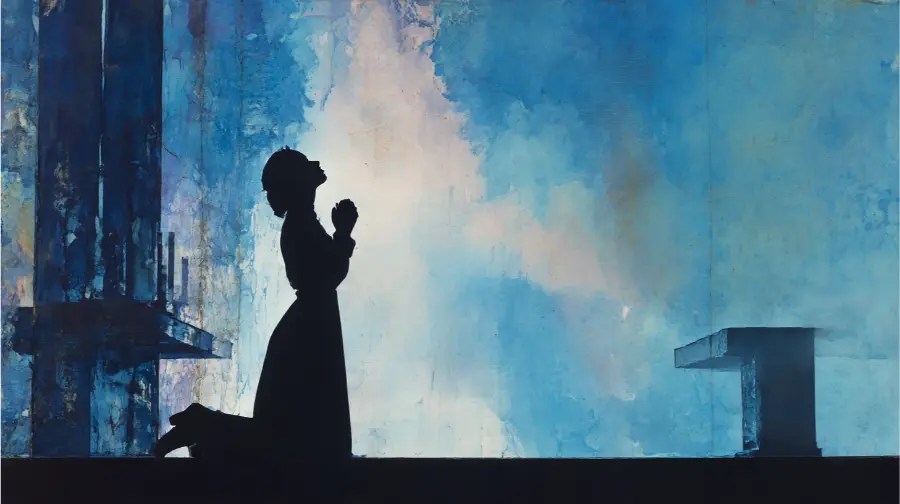
Does the Bible mention 3:33 or the number 333?
No. The number 333 never appears in the King James Bible, and no verse names a minute of the night. Scripture counts the dark in watches, the shifts of the men who kept guard. How those watches ran, and which of them fell at three in the morning, is explained in waking up at 3 a.m. in the Bible.
Thirty-three does appear: written “thirty and three” or “three and thirty,” it comes six times in the King James Version, leaving aside Kohath’s “an hundred thirty and three” years (Exodus 6:18). The passages are plain records: the thirty-three souls counted in Leah’s family (Genesis 46:15), the thirty-three days of a mother’s purifying after a son’s birth (Leviticus 12:4), and, four times, the thirty-three years David reigned in Jerusalem. None of them is a message, and none of them is about the night.
The chapter and verse numbers we use came long after the books were written. Stephen Langton, archbishop of Canterbury, made the chapter divisions early in the thirteenth century, and the printer Robert Estienne (Stephanus) first numbered the New Testament’s verses in 1551 and the whole Bible’s in 1555. A reference like 33:3 is a modern address for a passage, as useful as a page number. It is not part of what God said.
That matters, because many websites pair 3:33 with Jeremiah 33:3. The match is chance. But the verse itself is worth knowing, and it needs no clock. God gave it to Jeremiah while the prophet was “shut up in the court of the prison”: “Call unto me, and I will answer thee, and show thee great and mighty things, which thou knowest not” (Jeremiah 33:1, 3). The invitation holds at any hour of the day or night. We call, and he answers.
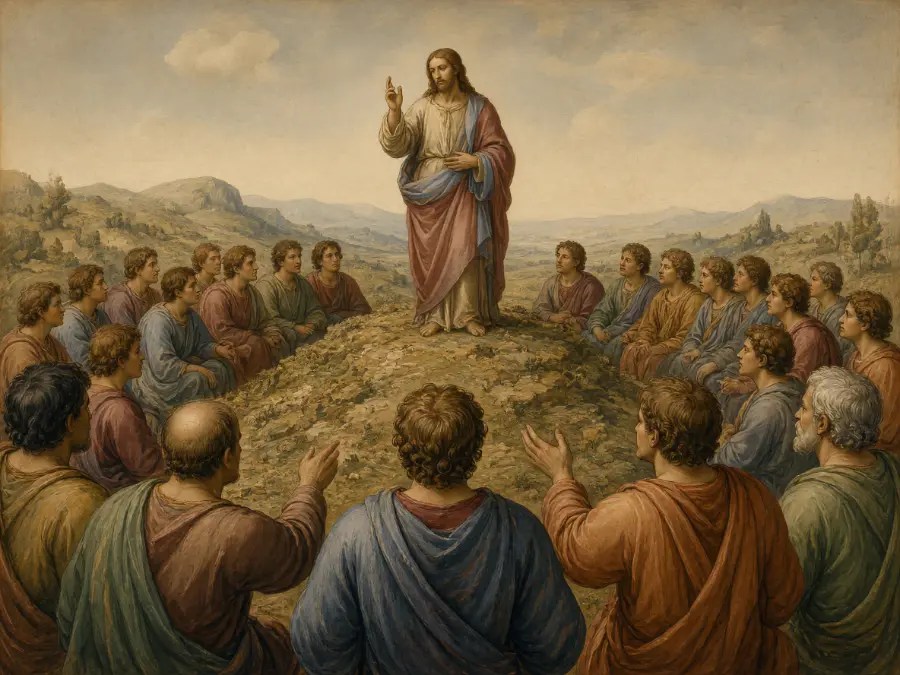
Is waking at 3:33 a sign from God or from angels?
Scripture does not teach that God or his angels speak through the numbers on a clock. When angels bring a message in the Bible, they say it in words: to Zacharias in the temple, to Mary at Nazareth, to the shepherds in the field. The idea that repeated digits such as 333 are messages from angels has no root in the Bible, and there is more on it in 444 in the Bible.
The law of Moses goes further. Among the practices Israel was to have nothing to do with, the King James Bible lists “an observer of times” (Deuteronomy 18:10), and Leviticus says, “neither shall ye use enchantment, nor observe times” (Leviticus 19:26). The Hebrew word behind “observer of times”, ‘anan, means soothsaying, and its root is uncertain. So the verse is not about clocks. Its point is broader. God’s people are not to look for hidden messages in the world around them and steer their lives by them.
The Catechism of the Catholic Church puts the same caution warmly. “God can reveal the future to his prophets or to other saints,” it says, but “a sound Christian attitude consists in putting oneself confidently into the hands of Providence for whatever concerns the future, and giving up all unhealthy curiosity about it” (paragraph 2115). It names the “interpretation of omens and lots” among the practices Christians reject (2116).
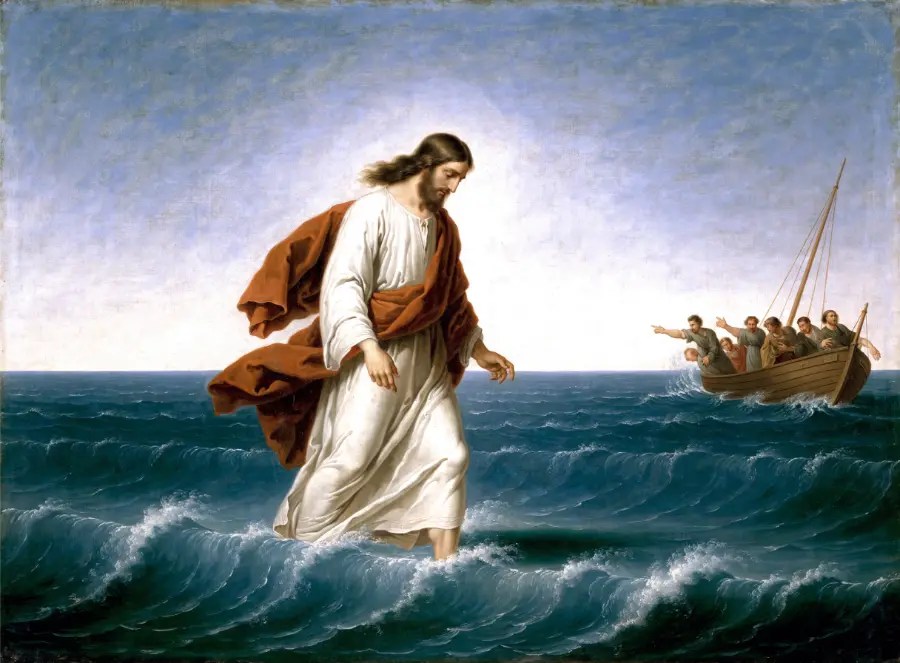
Does 3:33 stand for Jesus’ age or the Trinity?
That is the reading many websites give: three for the Trinity, thirty-three for the years of Jesus’ life. Scripture does not join them, and it does not give Jesus’ age at his death. Luke tells us only that when Jesus began his ministry he “began to be about thirty years of age” (Luke 3:23). Thirty-three at the cross is a tradition, and scholars reckon differently. The historian Paul Maier noted that if Jesus was born in 5 or 4 BC and his ministry began in AD 29, he “would have been almost 33” when it started, a difficulty scholars have long tried to resolve. What the Gospels allow is set out in how old Jesus was when his ministry began.
The Trinity is the heart of Christian faith, and three is a number Scripture loves: the third day, the thrice-holy song of the seraphim. Neither truth needs a clock to carry it. We do not find the Father, the Son and the Spirit in a repeated digit. We meet them in prayer, and prayer is open at every hour.
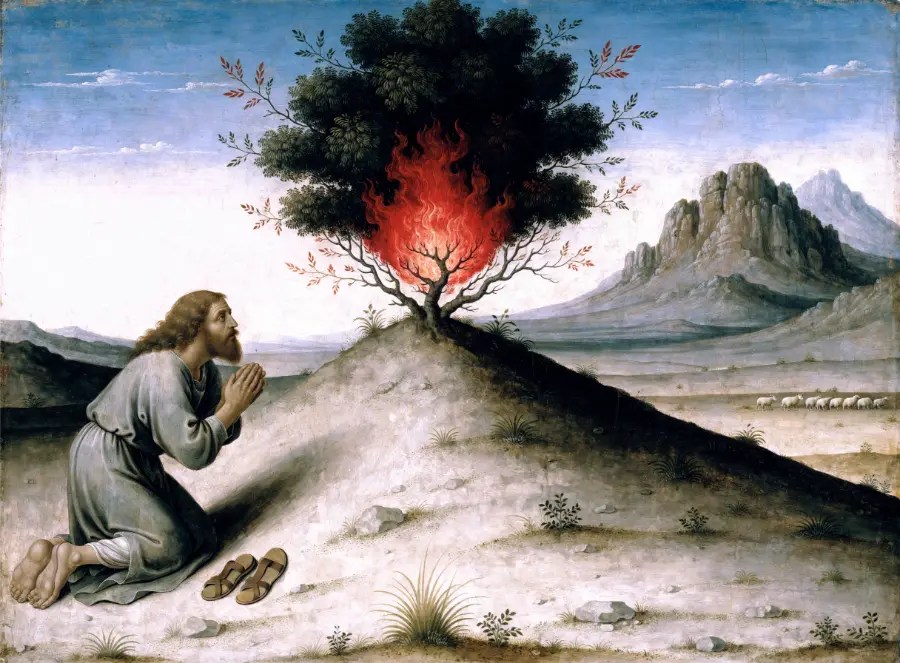
Why have Christians prayed in the middle of the night?
Because the psalms taught them to. “At midnight I will rise to give thanks unto thee because of thy righteous judgments,” says Psalm 119:62, and a little later, “Seven times a day do I praise thee” (Psalm 119:164). Lamentations calls to a grieving city, “Arise, cry out in the night: in the beginning of the watches pour out thine heart like water before the face of the Lord” (Lamentations 2:19).
Benedict of Nursia built his monks’ day on those two verses of Psalm 119. In his Rule, the seven daytime offices fulfil “Seven times in the day,” and “as to the Night Office the same Prophet says, ‘In the middle of the night I arose to glorify You.’” In winter, he writes, the brothers “shall rise at what is calculated to be the eighth hour of the night,” counted from nightfall, so that they sleep “somewhat longer than half the night” and rise rested (Rule, chapters 8 and 16). In the long winter nights that meant rising in the small hours to pray while the rest of the world slept.
The Orthodox Church keeps the same watchfulness in Holy Week. Its services on the first three evenings are called the “Bridegroom Services,” because their hymns “refer to Christ, the Bridegroom, Who comes at midnight.” The image is from Jesus’ own parable of the ten virgins: “And at midnight there was a cry made, Behold, the bridegroom cometh; go ye out to meet him” (Matthew 25:6). In the Church’s long memory, the middle of the night is a time to be awake for Christ.

What can we do when we wake at 3:33?
We can pray, briefly and honestly. A psalmist who could not sleep left us his words: “Thou holdest mine eyes waking: I am so troubled that I cannot speak.” Then he did what helped: “I call to remembrance my song in the night: I commune with mine own heart: and my spirit made diligent search” (Psalm 77:4, 6). Another psalm gives counsel for the same bed: “commune with your own heart upon your bed, and be still” (Psalm 4:4). A verse, the Lord’s Prayer, a name we carry to God: that is enough.
If you wake at the same time night after night, the reasons a doctor will look for are ordinary ones. The NHS counts waking several times in the night among the signs of insomnia, and names stress, anxiety or depression, noise, alcohol, caffeine and long-term pain among its causes. It advises seeing a doctor if the trouble has lasted for months or makes daily life hard to cope with. If the hours awake are filled with fear, tell someone you trust in the morning, a pastor, a friend or a doctor. You need not carry it alone.
And then we can lie down again, because someone else is keeping the watch. “Behold, he that keepeth Israel shall neither slumber nor sleep” (Psalm 121:4).
Related reading
- Is There a Biblical Meaning to Waking Up at 3 a.m.? Scripture Never Mentions the Hour
- 444 Is Not in the Bible — Angels There Speak in Sentences
- What Does the Number 3 Mean in the Bible? The Third Day, the Thrice-Holy and the Trinity
- 12 Prayers For Insomnia
- 13 Bible Verses About Sleeping in Peace


Leave a Reply