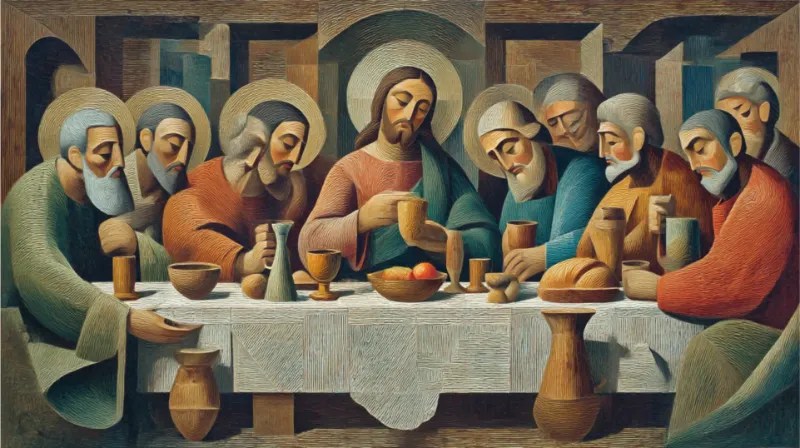
What does the Bible say about the duration of Jesus’ post-resurrection appearances?
According to Scripture, Jesus remained on Earth for 40 days after His resurrection before ascending to heaven. We find this timeframe explicitly stated in Acts 1:3, which tells us: “After his suffering, he presented himself to them and gave many convincing proofs that he was alive. He appeared to them over a period of forty days and spoke about the kingdom of God” (Habermas, 2006, pp. 288–297).
This 40-day period holds deep symbolic meaning, echoing other major 40-day periods in salvation history – Noah’s flood, Moses on Mount Sinai, Elijah’s journey to Horeb. It represents a time of preparation and transition. For the disciples, it was a time to absorb the reality of the resurrection and prepare for their mission to come.
But we must note that the Gospels themselves do not provide a precise chronology of Jesus’ appearances. They focus more on the encounters themselves rather than their exact timing or duration. Matthew and Mark conclude rather abruptly with resurrection appearances, while Luke and John offer more extended accounts (Smith, 2020, pp. 109–126, 2023).
Psychologically this period allowed the disciples to process their grief, overcome their doubts, and embrace a new understanding of Jesus’ mission. It provided time for their faith to deepen and mature.
het tijdsbestek van 40 dagen gaf de vroege christelijke gemeenschap ook een afgebakende periode om hun ervaringen met de Verrezen Christus te verankeren, wat hielp bij het vormen van hun collectieve geheugen en getuigenis.
Hoewel de Schrift ons het kader van 40 dagen geeft, nodigt het ons uit om ons niet te concentreren op een precieze chronologie, maar op de transformerende ontmoetingen tussen de Verrezen Heer en Zijn volgelingen – ontmoetingen die ons geloof vandaag de dag nog steeds vormen.

Hoe vaak verscheen Jezus aan Zijn discipelen nadat Hij uit de dood was opgestaan?
Op basis van de bijbelse verhalen kunnen we ten minste 10 afzonderlijke verschijningen van de Verrezen Christus identificeren, hoewel sommige geleerden suggereren dat er meer kunnen zijn geweest (Habermas, 2006, pp. 288–297). Laten we stilstaan bij deze ontmoetingen:
- Aan Maria Magdalena bij het graf (Johannes 20:11-18)
- Aan de andere vrouwen (Matteüs 28:8-10)
- Aan Petrus in Jeruzalem (Lucas 24:34; 1 Korintiërs 15:5)
- Aan de twee discipelen op de weg naar Emmaüs (Lucas 24:13-35)
- Aan de tien discipelen in de bovenzaal (Lucas 24:36-43; Johannes 20:19-25)
- Aan de elf discipelen, inclusief Thomas (Johannes 20:26-29)
- Aan zeven discipelen bij de Zee van Galilea (Johannes 21:1-23)
- Aan de elf op een berg in Galilea (Matteüs 28:16-20)
- Aan meer dan 500 gelovigen tegelijk (1 Korintiërs 15:6)
- To James, the Lord’s brother (1 Corinthians 15:7)
We hebben de verschijning aan Saulus (later Paulus) op de weg naar Damascus, hoewel dit plaatsvond na de Hemelvaart (Handelingen 9:1-6; 1 Korintiërs 15:8).
Psychologisch gezien dienden deze vele verschijningen om de realiteit van de opstanding te versterken, waardoor de discipelen hun aanvankelijke ongeloof en trauma konden overwinnen. Elke ontmoeting bood een gelegenheid voor genezing, herstel en het versterken van het geloof.
Historically, these appearances formed the foundation of the early Church’s witness. The variety of settings and witnesses helped establish the credibility of the resurrection claim in the diverse cultural contexts of the ancient world.
The Gospels may not provide an exhaustive list of every appearance. John 20:30 reminds us, “Jesus performed many other signs in the presence of his disciples, which are not recorded in this book.” Thus, Although we can confidently speak of at least 10 appearances, we must remain open to the possibility that there were others, known to the early Christian community but not recorded in Scripture.
Het aantal verschijningen is, hoewel aanzienlijk, ondergeschikt aan hun krachtige impact op de discipelen en het ontstaan van de Kerk. Elke ontmoeting was een geschenk van genade, dat het geloof voedde dat zich spoedig over de hele wereld zou verspreiden.

Wat was het doel van Jezus' verblijf op aarde na Zijn opstanding?
Jesus stayed to confirm the reality of His resurrection. As the Apostle Paul writes, He “presented himself alive to them by many proofs, appearing to them during forty days” (Acts 1:3) (Habermas, 2006, pp. 288–297). This was crucial for overcoming the disciples’ initial doubts and fears. Psychologically this gradual process allowed the disciples to integrate the shocking reality of the resurrection, moving from disbelief to unshakeable faith.
This period served as a time of instruction and preparation. Jesus used these appearances to deepen the disciples’ understanding of His mission and their role in continuing it. He “opened their minds to understand the Scriptures” (Luke 24:45), helping them see how His life, death, and resurrection fulfilled God’s plan of salvation (Whitaker, 2019). This theological education was essential for their future ministry.
Jezus gaf Zijn discipelen de opdracht voor hun wereldwijde missie. De Grote Opdracht (Matteüs 28:18-20) werd in deze tijd gegeven, waarbij de discipelen werden opgedragen om discipelen van alle volken te maken. Deze periode stelde Jezus in staat om hen het vertrouwen en de autoriteit bij te brengen die nodig waren voor deze ontmoedigende taak.
Jezus beloofde de komst van de Heilige Geest (Handelingen 1:8). Deze verzekering van goddelijke bekrachtiging was cruciaal voor de discipelen terwijl zij de uitdagingen die voor hen lagen onder ogen zagen. Psychologisch gezien gaf het hen een gevoel van voortdurende verbondenheid met Jezus, zelfs na Zijn hemelvaart.
Historically this 40-day period also served to create a clear distinction between Jesus’ earthly ministry and the era of the Church. It provided a transition that helped the early Christian community understand its identity and mission in light of the resurrection.
These appearances created a shared experience that bonded the early Christian community. The disciples’ collective encounters with the Risen Christ formed the basis of their communal faith and witness.
Jesus’ post-resurrection presence was a time of transformation. It turned fearful followers into bold witnesses, confused disciples into clear-minded apostles. It was a period of healing, restoration, and empowerment that laid the foundation for the birth of the Church and the spread of the Gospel.
Jesus stayed to ensure that His disciples were fully prepared – spiritually, emotionally, and intellectually – to continue His mission of bringing God’s love and salvation to all the world.

Had Jezus in deze tijd contact met anderen dan Zijn discipelen?
The most major evidence for broader interactions comes from the Apostle Paul’s letter to the Corinthians. He writes that the Risen Christ appeared to “more than five hundred brothers at one time, most of whom are still alive, though some have fallen asleep” (1 Corinthians 15:6) (Habermas, 2006, pp. 288–297). This suggests a large gathering that likely included believers beyond the immediate circle of disciples.
Paul mentions an appearance to James, the Lord’s brother (1 Corinthians 15:7). While James was not one of the Twelve, he later became a prominent leader in the Jerusalem church. This encounter may have played a crucial role in James’ transformation from skeptic to believer.
De evangelieverslagen wijzen ook op bredere interacties. Toen Jezus bijvoorbeeld verscheen op de weg naar Emmaüs, liep en sprak Hij met twee discipelen die geen deel uitmaakten van de Twaalf (Lucas 24:13-35) (Smith, 2020, pp. 109–126). Dit suggereert dat Jezus mogelijk is verschenen aan andere volgelingen die niet expliciet bij naam worden genoemd in de bijbelse verslagen.
Psychologically these broader appearances would have served several purposes. They would have strengthened the faith of the wider community of believers, providing a shared experience that bonded them together. For those who may have felt on the periphery of Jesus’ movement, such encounters would have been profoundly affirming and inclusive.
Historisch gezien zouden deze bredere verschijningen een grotere basis van getuigen van de opstanding hebben gecreëerd, wat cruciaal was voor de verspreiding en geloofwaardigheid van de vroege christelijke boodschap. In de diverse culturele contexten van de antieke wereld zou het hebben van een verscheidenheid aan getuigen met verschillende achtergronden van groot belang zijn geweest.
Maar we moeten ook opmerken dat de bijbelse verslagen geen bewijs leveren dat Jezus in deze tijd interactie had met mensen die volledig buiten de gemeenschap van gelovigen stonden. Zijn verschijningen lijken gericht op het bevestigen en versterken van het geloof van degenen die zich er al aan hadden toegewijd Hem te volgen.
This selectivity in His post-resurrection appearances aligns with Jesus’ words in John 14:19: “Yet a little while and the world will see me no more, but you will see me.” It suggests that these appearances were not meant as proof for skeptics, but as confirmation and commissioning for believers.
While Jesus’ primary interactions were with His closest disciples, there are indications that His post-resurrection appearances touched a wider circle of followers. These encounters served to strengthen faith, build community, and prepare a broader group of witnesses for the mission that lay ahead.

Welke belangrijke leringen of instructies gaf Jezus tijdens Zijn verschijningen na de opstanding?
The post-resurrection teachings of our Lord Jesus Christ were of powerful significance, laying the foundation for the Church’s mission and theology. During these appearances, Jesus provided crucial instructions and insights that would guide His followers in the days to come.
Jesus emphasized the fulfillment of Scripture in His life, death, and resurrection. As Luke records, “He opened their minds to understand the Scriptures” (Luke 24:45) (Smith, 2020, pp. 109–126). This hermeneutical key was essential for the disciples to comprehend God’s salvific plan and to interpret the Old Testament in light of Christ’s work. Historically this teaching shaped the early Church’s understanding of its relationship to Judaism and its interpretation of sacred texts.
Jesus commissioned His disciples for global mission. The Great Commission, as recorded in Matthew 28:18-20, charged them to “make disciples of all nations, baptizing them in the name of the Father and of the Son and of the Holy Spirit, and teaching them to obey everything I have commanded you” (Habermas, 2006, pp. 288–297). This universal scope of the Gospel message was a radical expansion of their previous understanding and would shape the Church’s missionary endeavors for centuries to come.
Jesus promised the coming of the Holy Spirit. In Acts 1:8, He tells His disciples, “You will receive power when the Holy Spirit comes on you; and you will be my witnesses in Jerusalem, and in all Judea and Samaria, and to the ends of the earth” (Habermas, 2006, pp. 288–297). This assurance of divine empowerment was crucial for the disciples’ future ministry and forms the basis for the Church’s understanding of spiritual gifting and empowerment.
Jesus taught about the nature of His kingdom. He corrected misunderstandings about an immediate political restoration of Israel (Acts 1:6-7) and emphasized the spiritual nature of His reign. This teaching was vital for shaping the early Church’s eschatological expectations and its understanding of its role in the world.
Psychologically these teachings served to reframe the disciples’ understanding of their identity and purpose. They moved from being followers of a local Jewish teacher to ambassadors of a universal message of salvation. This cognitive shift was essential for their transformation into bold witnesses of the Gospel.
Jesus’ post-resurrection teachings emphasized forgiveness and reconciliation. His words to Peter in John 21, restoring him after his denial, modeled the grace and restoration that would characterize the Christian community.
Jesus’ post-resurrection teachings provided a comprehensive framework for understanding His mission, the disciples’ calling, and the nature of the Church. These instructions were not merely theoretical but were designed to transform lives and communities, empowering the disciples to continue Christ’s work of reconciling the world to God.

How did Jesus’ resurrection appearances impact the faith of His followers?
De verschijningen van onze Heer Jezus Christus na Zijn opstanding hadden een krachtige en transformerende invloed op het geloof van Zijn discipelen. We moeten niet vergeten dat deze mannen en vrouwen na de kruisiging in de greep waren van angst, twijfel en wanhoop. Degene in wie zij al hun hoop hadden gesteld, leek door de dood te zijn overwonnen.
Maar toen verscheen de opgestane Christus aan hen! Deze ontmoeting met de levende Jezus veranderde alles radicaal. Zoals we in de evangeliën lezen, werden de discipelen vervuld van vreugde en verbazing toen ze hun Heer zagen (Hurtado, 2013, pp. 35–52). Hun angst veranderde in moed, hun twijfel in overtuiging, hun wanhoop in hoop. De verschijningen na de opstanding bevestigden voor hen dat Jezus werkelijk de Messias en de Zoon van God was.
These encounters also deepened the disciples’ understanding of Jesus’ mission and teachings. As He explained the Scriptures to them and showed how His death and resurrection fulfilled God’s plan, their eyes were opened to grasp the full meaning of His ministry (Hurtado, 2013, pp. 35–52). This new insight empowered them to become bold witnesses of the Gospel.
The appearances strengthened the disciples’ personal relationship with Christ. By eating with them, inviting them to touch His wounds, and speaking words of peace, Jesus reaffirmed His love and forgiveness, healing any lingering guilt over their abandonment of Him during His passion (Hurtado, 2013, pp. 35–52).
Psychologisch gezien brachten deze ervaringen de discipelen van een staat van cognitieve dissonantie naar een staat van vastberaden geloof. De verschijningen na de opstanding losten het conflict op tussen hun overtuigingen over Jezus en de schijnbare definitieve aard van Zijn dood. Deze oplossing zorgde voor een opmerkelijke transformatie in hun gedrag en levenshouding.
Historically, we see the impact of these appearances in the explosive growth of the early Church. The disciples’ unwavering testimony, even in the face of persecution, speaks to the powerful effect of encountering the Risen Christ. Their faith became the foundation upon which the Christian community was built and spread throughout the world (Hurtado, 2013, pp. 35–52).
The resurrection appearances rekindled the disciples’ faith, deepened their understanding, strengthened their relationship with Christ, and empowered them for mission. This impact continues to resonate through the ages, as we too are called to encounter the living Christ and bear witness to His resurrection.

What did the Church Fathers teach about Jesus’ time on Earth after the resurrection?
The teachings of the Church Fathers regarding Jesus’ time on Earth after His resurrection provide us with powerful insights into this crucial period. These early Christian leaders, drawing from Scripture and Tradition, offer a vast web of reflection on the significance of Christ’s post-resurrection presence.
Many Church Fathers emphasized that Jesus’ appearances were not mere visions or hallucinations, but real, physical encounters with the Risen Lord. They taught that Christ’s resurrected body, while transformed, was still tangible and recognizable. St. Augustine, for instance, wrote about how Jesus ate and drank with His disciples not out of necessity, but to demonstrate the reality of His bodily resurrection.
The Fathers also highlighted the pedagogical nature of this period. They saw it as a time when Jesus continued to instruct His disciples, deepening their understanding of His mission and preparing them for their future ministry. St. Cyril of Alexandria spoke of how Christ “opened their minds to understand the Scriptures” during this time, laying the foundation for the Church’s teaching.
The Church Fathers viewed the forty days between the resurrection and ascension as a symbolic period of preparation and transition. St. Jerome drew parallels between these forty days and other major “forties” in Scripture, such as the forty years of Israel’s wandering in the desert. This period was seen as a time of purification and preparation for the coming of the Holy Spirit at Pentecost.
The Fathers also reflected on the gradual nature of the disciples’ coming to faith. St. Gregory the Great, in his homilies, explored how Jesus’ appearances helped the disciples move from doubt to belief, emphasizing the patience and gentleness of Christ in this process.
Importantly, the Church Fathers taught that Jesus’ post-resurrection time on Earth was not just about proving His resurrection, but about inaugurating a new mode of presence. St. Leo the Great spoke of how Christ’s ascension did not mean His departure, but rather the beginning of His presence in the sacraments and in the Church.
Psychologically we can see how the Fathers understood this period as crucial for the disciples’ transformation from followers to apostles. It was a time of healing, reassurance, and empowerment.
Historically, the Fathers’ teachings on this period helped shape the Church’s understanding of Christ’s ongoing presence and the nature of Christian hope. They saw in Jesus’ resurrection appearances the promise of our own future resurrection and the assurance of His continued presence with us.
The Church Fathers taught that Jesus’ time on Earth after the resurrection was a period of confirmation, instruction, and preparation – a bridge between His earthly ministry and His eternal reign, and a model for our own journey of faith.

Are there any differences in how the Gospels describe Jesus’ post-resurrection period?
We moeten opmerken dat alle vier de evangeliën het eens zijn over het essentiële feit: Jezus is opgestaan uit de dood en verscheen aan Zijn discipelen. Deze kernwaarheid staat onwankelbaar vast. Toch benadrukt elke evangelist, geïnspireerd door de Heilige Geest, verschillende aspecten van deze verschijningen, waarbij zij hun verslagen afstemmen op hun specifieke publiek en theologische doelen (Hurtado, 2013, pp. 35–52; Smith, 2020, pp. 109–126).
Mark’s Gospel, in its original ending (16:1-8), uniquely focuses on the empty tomb without describing any appearances. This abrupt ending leaves readers with a sense of awe and anticipation, inviting them to complete the story with their own encounter with the Risen Christ (Hurtado, 2013, pp. 35–52).
Matthew’s account emphasizes Jesus’ authority and the universal mission of the Church. He uniquely records the appearance to the women near the tomb and the Great Commission given on a mountain in Galilee (Hurtado, 2013, pp. 35–52).
Luke’s Gospel and the Acts of the Apostles present the most extended post-resurrection narrative. Luke emphasizes the physicality of Jesus’ resurrection body and His instruction of the disciples. Uniquely, he recounts the Emmaus road encounter and places all the appearances in and around Jerusalem (Hurtado, 2013, pp. 35–52; Smith, 2020, pp. 109–126).
John’s Gospel provides the most detailed individual encounters, including Mary Magdalene at the tomb, Thomas’ doubt, and the seaside appearance in Galilee. John’s account particularly emphasizes the role of these appearances in bringing the disciples to faith (Hurtado, 2013, pp. 35–52; Smith, 2020, pp. 109–126).
Psychologisch gezien weerspiegelen deze variaties verschillende manieren om de transformerende ervaring van de ontmoeting met de opgestane Christus te verwerken en uit te drukken. Elk verslag spreekt verschillende aspecten van de menselijke natuur en geloofsreizen aan.
Historisch gezien hebben deze verschillen door de eeuwen heen geleid tot rijke theologische reflecties. In plaats van ze als tegenstrijdigheden te zien, heeft de Kerk ze altijd beschouwd als complementaire perspectieven die ons samen een vollediger beeld geven van het mysterie van de opstanding.
It’s important to remember that the Gospels are not meant to be exhaustive historical chronicles, but rather testimonies of faith. Their goal is not to provide a minute-by-minute account, but to convey the life-changing reality of Christ’s resurrection (Smith, 2020, pp. 109–126).
In onze benadering van deze verschillen worden we opgeroepen om een 'en-en'-mentaliteit aan te nemen in plaats van een 'of-of'-mentaliteit. Elk evangelie draagt bij aan ons begrip, en samen vormen ze een symfonisch getuigenis van de opgestane Christus.

What was the significance of Jesus’ final appearance and ascension?
The final appearance of our Lord Jesus Christ and His glorious ascension into heaven mark a pivotal moment in salvation history. This event, recorded in the Gospels and the Acts of the Apostles, carries powerful significance for our faith and our understanding of Christ’s ongoing presence in the Church.
The ascension represents the culmination of Jesus’ earthly ministry and His exaltation to the right hand of the Father. It is the fulfillment of His mission, the final act in the drama of our redemption. As He ascends, Jesus completes the circle of His incarnation – having come down from heaven, He now returns, bringing our glorified humanity with Him (Hurtado, 2013, pp. 35–52).
De hemelvaart markeert ook een overgang in de manier waarop Christus aanwezig is bij Zijn Kerk. Terwijl Zijn fysieke, zichtbare aanwezigheid ten einde komt, begint een nieuwe wijze van aanwezigheid. Jezus belooft altijd bij ons te zijn, nu door de Heilige Geest en in de sacramenten, in het bijzonder de Eucharistie. Deze overgang bereidt de weg voor Pinksteren en de geboorte van de Kerk (Hurtado, 2013, pp. 35–52).
The final appearance and ascension serve as a commissioning of the disciples. Jesus entrusts them with the mission to be His witnesses “to the ends of the earth” (Acts 1:8). This moment transforms the disciples from followers into apostles, sent out to continue Christ’s work in the world (Hurtado, 2013, pp. 35–52).
Psychologically, the ascension helps the disciples (and us) to “let go” of Jesus’ physical presence and mature in faith. It challenges them to move beyond a localized understanding of Jesus to recognize His universal lordship and presence.
The ascension also has powerful eschatological significance. It points forward to Christ’s return in glory and our own future resurrection. As the angels declare, “This Jesus, who has been taken up from you into heaven, will come in the same way as you saw him go into heaven” (Acts 1:11). Thus, the ascension fills us with hope and orients our lives towards our heavenly goal (Hurtado, 2013, pp. 35–52).
Historically, the ascension has been understood as Christ’s enthronement as cosmic King. It declares His victory over sin and death and His authority over all creation. This understanding has shaped Christian worship, art, and theology throughout the centuries.
Finally, the ascension reveals the ultimate destiny of humanity. In Christ’s glorified humanity ascending to heaven, we see our own future. It assures us that where Christ has gone, we hope to follow.
The final appearance and ascension of Jesus signify the completion of His earthly mission, the transition to a new mode of presence, the commissioning of the the promise of His return, and the revelation of humanity’s glorious destiny. It calls us to live with our hearts set on heavenly things, even as we engage fully in our earthly mission.

How does understanding Jesus’ post-resurrection time on Earth affect Christians today?
Our understanding of Jesus’ post-resurrection time on Earth has powerful implications for our Christian life today. This period, bridging Christ’s victory over death and His glorious ascension, continues to shape our faith, hope, and love in powerful ways.
It reinforces the reality of Christ’s resurrection. The multiple appearances to various disciples, recorded in Scripture, assure us that our faith is not based on mere wishful thinking or subjective experiences, but on concrete encounters with the Risen Lord. This historical foundation strengthens our conviction and empowers our witness in an often skeptical world (Hurtado, 2013, pp. 35–52; Smith, 2020, pp. 109–126).
Jesus’ post-resurrection appearances remind us of His ongoing presence in our lives. Just as He walked and talked with His disciples after rising from the dead, Christ continues to be present with us today – in the Scriptures, in the sacraments, in our communities, and in the faces of those in need. This awareness can transform our daily lives, helping us to recognize and respond to Christ in all circumstances (Hurtado, 2013, pp. 35–52).
The gradual nature of the disciples’ coming to faith during this period offers us comfort and encouragement in our own faith journeys. We see how Jesus patiently guided His followers from doubt to belief, from confusion to understanding. This reminds us that faith is often a process, and that Christ meets us wherever we are on that journey, gently leading us to deeper trust and comprehension (Smith, 2020, pp. 109–126).
Psychologically, understanding this period can help us navigate our own experiences of loss, doubt, and transformation. The disciples’ journey from despair to joy, from fear to courage, mirrors our own spiritual and emotional processes as we encounter the Risen Christ in our lives.
The commissioning of the disciples during this time reminds us of our own call to mission. We too are sent out as witnesses of Christ’s resurrection, called to share the Good News through our words and actions. This understanding infuses our daily lives with purpose and meaning (Hurtado, 2013, pp. 35–52).
Jesus’ teaching during this period, explaining how the Scriptures were fulfilled in Him, encourages us to read the entire Bible through the lens of Christ’s death and resurrection. This christocentric approach to Scripture can deepen our understanding and enrich our spiritual lives.
De belofte van de Heilige Geest, gegeven in deze tijd, herinnert ons aan de kracht die voor ons beschikbaar is om het christelijk leven te leiden. We worden niet als wezen achtergelaten, maar worden gesterkt door dezelfde Geest die Jezus uit de dood heeft opgewekt.
Finally, Christ’s ascension, concluding this period, orients our lives towards our heavenly goal. It reminds us that Although we live and work in this world, our ultimate citizenship is in heaven. This perspective can help us maintain proper priorities and live with hope, even in the face of earthly challenges (Hurtado, 2013, pp. 35–52).
Understanding Jesus’ post-resurrection time on Earth affects Christians today by strengthening our faith, deepening our awareness of Christ’s presence, encouraging us in our spiritual journeys, empowering our witness, enriching our reading of Scripture, reminding us of the Holy Spirit’s power, and orienting our lives towards our heavenly destiny. It calls us to live as Easter people, transformed by the reality of the resurrection and empowered for joyful service in the world. By reflecting on de gebeurtenissen van de eerste Pasen, kunnen christenen vernieuwde hoop en aanmoediging vinden in hun dagelijkse strijd, wetende dat de dood is overwonnen en het leven heeft getriomfeerd. Deze zekerheid zet gelovigen aan om de boodschap van de opstanding met anderen te delen, wat een gevoel van gemeenschap en missie binnen de kerk bevordert. Uiteindelijk moedigt het een levensstijl van liefde, mededogen en eenheid aan die de transformerende kracht van Christus' opstanding in het leven van elke gelovige weerspiegelt.
—