
 Chinese
 English
 Dutch
 Arabic
 Spanish
 Portuguese
 Russian
 French
 Italian
 German
 Japanese
If you dreamed of a moth, the Bible gives you no reason to take it as a warning of loss. No one in Scripture describes seeing a moth in their sleep or tells us what such a dream would mean. The closest we come is Job’s friend Eliphaz, who heard a voice say that we “are crushed before the moth” (Job 4:19).
Eliphaz could still remember what it felt like to hear that voice. “In thoughts from the visions of the night, when deep sleep falleth on men, Fear came upon me, and trembling, which made all my bones to shake,” he told Job. “Then a spirit passed before my face; the hair of my flesh stood up” (Job 4:13–15). The voice spoke of people like us who live in “houses of clay, whose foundation is in the dust” (Job 4:19).
Job was sitting “among the ashes” (Job 2:8). Eliphaz and his two friends had come “to mourn with him and to comfort him” (Job 2:11). When Job began to complain, Eliphaz tried to correct him by telling him the vision. He could remember how his bones had shaken that night, yet nothing he heard told him why his friend was suffering.
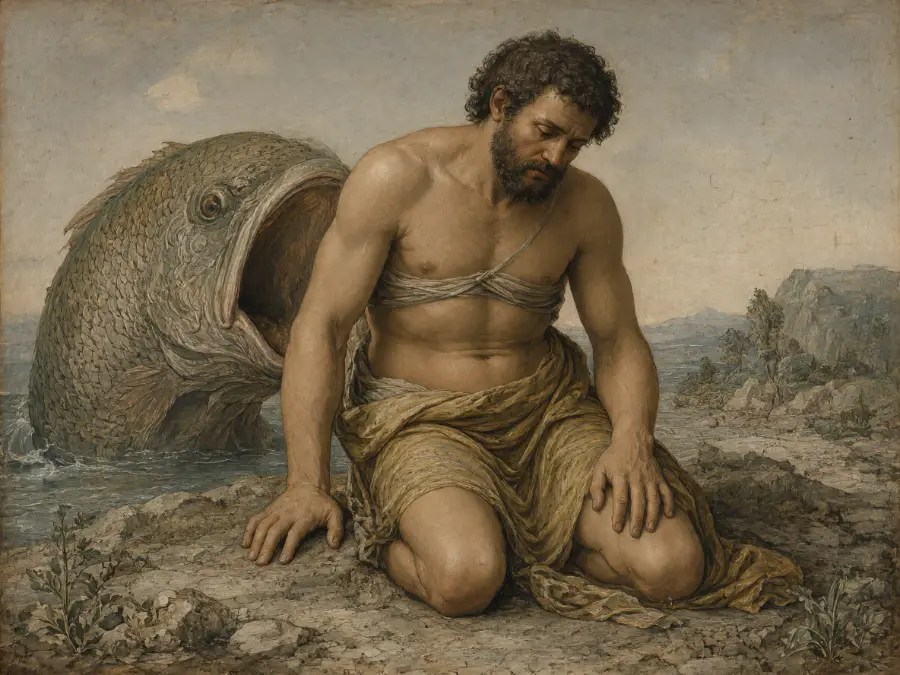
Much later the Lord answered Job “out of the whirlwind” (Job 38:1). To Eliphaz he said, “ye have not spoken of me the thing that is right, as my servant Job hath” (Job 42:7). Four times in two verses God calls the man in the ashes “my servant Job” (Job 42:7–8). He sends the friends back to Job with a burnt offering and tells them, “my servant Job shall pray for you” (Job 42:8). Imagine having the friend you tried to correct pray for you.
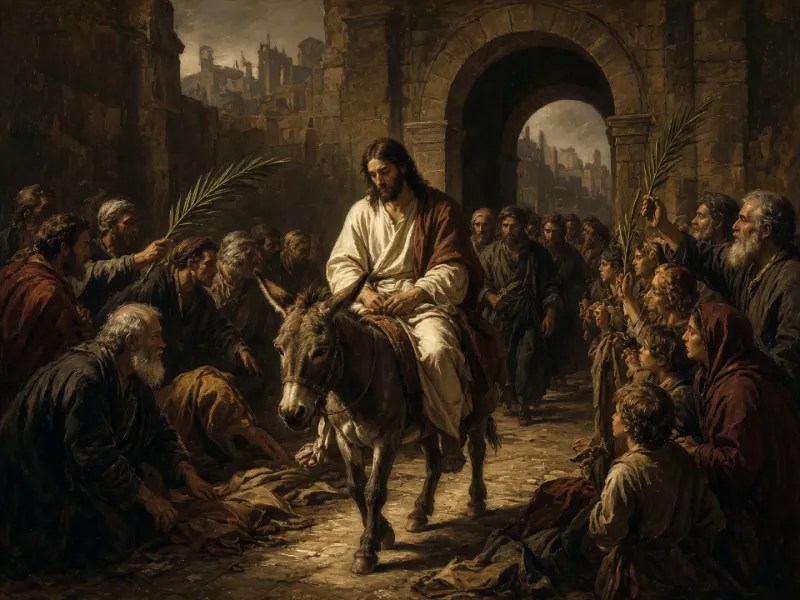
Was Eliphaz’s vision from God?
Matthew Poole believed God had sent the vision to Eliphaz. He and John Gill both knew of readers who thought Eliphaz had made the story up or that the devil had deceived him, and both rejected those readings. Gill could call Eliphaz “a mistaken man in the case of Job” and still call him “a good man,” and he reminds us that Paul thought him worth quoting. “He taketh the wise in their own craftiness,” Eliphaz says (Job 5:13). Paul takes up his very words, “For it is written, He taketh the wise in their own craftiness” (1 Corinthians 3:19). We can hear the truth in what Eliphaz said and still wish he had been gentler with his friend.
Even if we agree with Poole that God sent the message, we can still wonder how Eliphaz heard it. The Pulpit Commentary says it “may have been a mere vision, impressed upon his mind in sleep,” or a spirit whom Eliphaz could barely see may have spoken to him. Either way, when Eliphaz told Job what he had heard, he was speaking to a friend whose suffering he had misunderstood.
Crushed by a moth, or crushed like one?
When you hear “crushed before the moth” (Job 4:19), which seems more fragile to you, the person or the moth? If you read the Spanish Reina-Valera, you might well ask how frail we must be for even a moth to crush us. But perhaps your Bible says we are “crushed like the moth.” Picture one resting on your hand, so easily killed, as Matthew Poole put it, “by a gentle touch of the finger.” For someone sitting beside Job, that ought to be reason enough to speak gently.
Either reading brings us back to those houses of clay. Eliphaz reminded a grieving man how easily a life like ours can come apart. Now listen to what it means to the psalmist that we are made of dust. “Like as a father pitieth his children, so the Lord pitieth them that fear him. For he knoweth our frame; he remembereth that we are dust” (Psalm 103:13–14). The very thing Eliphaz felt he had to tell Job is something his Father already knew about him.

What does a moth mean elsewhere in Scripture?
如果你在希伯来圣经中追踪 the moth through the Bible, you’ll usually find yourself looking at someone’s clothes. Job says a man wears away “as a garment that is moth eaten” (Job 13:28). James tells the rich, “Your riches are corrupted, and your garments are motheaten” (James 5:2). We might put a wool coat away for safekeeping without knowing a moth has already laid its eggs in the cloth. Only the grubs that hatch there eat the wool.
That is the coat I think of when Jesus says, “Lay not up for yourselves treasures upon earth, where moth and rust doth corrupt, and where thieves break through and steal” (Matthew 6:19). What if the moth you remember was flying toward a light? Does that mean your soul is drawn to God, or that your life is about to change?
In the 66-book King James Bible, you’ll find “moth” ten times across Job, the Psalms, Isaiah, Hosea, Matthew and Luke. James adds “motheaten” once. In all those verses we never see a moth fly toward a lamp or watch it change its shape. The King James Bible never even names a butterfly. If you’re wondering what may happen tomorrow, Jesus’ words about the coat give you no reason to read your dream as a prediction.
Why does God compare himself to a moth?
If you dreamed of moths in wood, you may recognize both halves of Hosea’s picture. “Therefore will I be unto Ephraim as a moth, and to the house of Judah as rottenness” (Hosea 5:12). The Pulpit Commentary quotes the Jewish commentator Kimchi, who pictured a moth eating through clothing and a woodworm consuming “bones and wood.” Why would God compare himself to something that quietly eats away what we love?
Consider how long it takes a moth to ruin a garment. Calvin understood Hosea to mean that “the Lord would by a slow corrosion consume both the people.” Matthew Henry heard mercy in the time it took. “Slowly, for the Lord gives them space to repent.” A few lines on, God tells us what he is waiting for. “I will go and return to my place, till they acknowledge their offence, and seek my face” (Hosea 5:15). There is still time for the people he loves to say to one another, “Come, and let us return unto the Lord: for he hath torn, and he will heal us; he hath smitten, and he will bind us up” (Hosea 6:1).
What if I dreamed of a giant moth or a swarm?
If the moth was enormous, or a whole swarm came at you, you may remember every detail. Scripture gives no special meaning to the size or number of moths in a dream. Nowhere does it tell of moths actually attacking someone. When Isaiah says that the moth will eat people up, he means that those who mock God’s people will one day lose the power to hurt them.
Imagine hearing that promise while the insults are still in your ears. “Hearken unto me, ye that know righteousness, the people in whose heart is my law; fear ye not the reproach of men, neither be ye afraid of their revilings. For the moth shall eat them up like a garment, and the worm shall eat them like wool: but my righteousness shall be for ever, and my salvation from generation to generation” (Isaiah 51:7–8). If you’ve ever been mocked for trying to live as God asks, there is comfort here. Those who mock will wear out like an old coat. To the people who carry his law in their hearts, God promises a salvation that will still be here for their children.
How can we weigh a dream?
God has spoken to people in their sleep. Elihu tells Job that God speaks “In a dream, in a vision of the night, when deep sleep falleth upon men, in slumberings upon the bed; Then he openeth the ears of men, and sealeth their instruction” (Job 33:15–16). Who, then, could tell Pharaoh what his dreams meant? Even Joseph said, “It is not in me: God shall give Pharaoh an answer of peace” (Genesis 41:16). Daniel told Nebuchadnezzar that the king’s wise men could not answer him either, “But there is a God in heaven that revealeth secrets” (Daniel 2:28). The same God who gave the dreams gave their meaning. Nobody had to look up a symbol in a book.
For our own dreams the question Scripture teaches us to ask is where they would lead us. Suppose “a dreamer of dreams” gives a sign and it comes true. If his next words are “Let us go after other gods,” Israel must refuse, “for the Lord your God proveth you, to know whether ye love the Lord your God with all your heart and with all your soul” (Deuteronomy 13:1–3). Even a sign that comes true has no claim on that love. And if all we have to go on is how vivid the dream was, remember how Eliphaz trembled. For most of our nights the counsel in Ecclesiastes is enough. “For in the multitude of dreams and many words there are also divers vanities: but fear thou God” (Ecclesiastes 5:7).

How do Christians understand dreams today?
If a dream makes you wonder what God might let you see of the future, the Catechism of the Catholic Church says that “God can reveal the future to his prophets or to other saints,” and describes “a sound Christian attitude” as putting the future “confidently into the hands of Providence” and giving up “all unhealthy curiosity about it.” It includes “interpretation of omens” among the forms of divination Catholics should reject (paragraphs 2115–2116). We can entrust tomorrow to God even when a dream has made us curious about it.
If you dreamed that someone you love was in trouble, would the dream alone be reason to believe it? John Climacus, the Orthodox abbot of St Catherine’s monastery on Mount Sinai, wrote to monks who had left their families and might dream of someone at home grieving or dying. Think how much a man might want news of the family he had left. Even so, Climacus tells him in 《天梯》 that “he who believes in dreams is like a person running after his own shadow and trying to catch it.”
A monk could love his family and let the dream go. In fact, Climacus says that “he who distrusts all dreams is a wise man.” The one warning he would have us take to heart concerns our own torment and judgment, and even then he tells us to distrust a dream that drives us to despair. If you wake afraid for someone you love, you can pray for them without taking the dream as news of what has happened to them.
Suppose someone tells you the moth means you’re going to lose something. On what grounds could they say that? In Article I of 《浸信会信仰与信息》 (2000), the Southern Baptist Convention calls Scripture “the supreme standard by which all human conduct, creeds, and religious opinions should be tried.” Applying that standard to a dream, I would ask them to show me the verse that gives the moth that meaning.
A Pentecostal Christian might turn with you to what Peter said at Pentecost, “your young men shall see visions, and your old men shall dream dreams” (Acts 2:17). The Assemblies of God, in its 2010 paper on baptism in the Holy Spirit, sees in that day the fulfillment of Joel’s promise of “prophesying, dreams, and visions.” We can take Peter at his word without having to find a message in every dream we remember.
If the dream frightened you, you can tell God about it in your own words or borrow one of these 针对噩梦的简短祷告 before you sleep again. We know how Eliphaz shook that night, and we know how much he still had to learn about his friend in the ashes. You can ask God for a peaceful night without first having to explain the last one.
When Jesus speaks of the moth, he gives us something we can take to heart while we are wide awake. We know what becomes of the wool we put away for safekeeping. What a kindness, then, to hear him name a place a moth can never reach. “But lay up for yourselves treasures in heaven, where neither moth nor rust doth corrupt, and where thieves do not break through nor steal: For where your treasure is, there will your heart be also” (Matthew 6:20–21).
相关阅读
- What the Bible says about moths, verse by verse
- Are butterflies in the Bible?
- 关于梦的22节圣经经文
- 12个简短的噩梦祈祷文
- 圣经中的蝗虫:灾难、食物和军队


发表回复