
 Arabic
 English
 Chinese
 Dutch
 Spanish
 Portuguese
 Russian
 French
 Italian
 German
 Japanese
Catholics say yes, and so do the Eastern Orthodox and Coptic Orthodox churches. The Catholic Church counts marriage among its seven sacraments, and in the Orthodox churches marriage is a holy sacrament in which the priest sets crowns on the heads of the bride and groom. Most Protestants hold marriage to be holy and made by God without counting it a sacrament, and many of them call it a covenant instead.
Some churches stand between those answers, or apart from them. The Church of England’s Thirty-nine Articles put matrimony among the rites “commonly called Sacraments” that are not sacraments of the Gospel, and the Episcopal Church’s catechism counts it a “sacramental rite.” Latter-day Saints are sealed as husband and wife in the temple “for time and all eternity.” Friends in Britain marry in a meeting for worship, with no one to marry them, because, as George Fox wrote in 1669, “we marry none; it is the Lord’s work, and we are but witnesses.”
Every one of these churches goes back to the same garden, where a man will “leave his father and his mother, and shall cleave unto his wife: and they shall be one flesh” (Genesis 2:24), and to Jesus, who quoted those words and added, “What therefore God hath joined together, let not man put asunder” (Matthew 19:6). Where they part is a single sentence of Paul’s. He has told husbands to love their wives “even as Christ also loved the church, and gave himself for it,” he quotes Genesis once more, and then he says, in the King James Version, “This is a great mystery: but I speak concerning Christ and the church” (Ephesians 5:25, 31–32). The Douay-Rheims Bible, translated from the Latin, gives the same verse as “This is a great sacrament; but I speak in Christ and in the church.”
Yet the churches are not quarrelling over a translation. The Catechism of the Catholic Church quotes the verse as “This is a great mystery” too (paragraph 1616), and in the Orthodox Church the sacraments themselves are “officially called the ‘holy mysteries.’” What divides them is whether the mystery Paul names is a sacrament of the Church. Catholics and the Orthodox say that it is. The Reformers said it points to Christ and his Church, so that a wedding can be holy without being a sacrament, and we have been reading his sentence those two ways for five hundred years.
| الكنيسة | What it calls marriage | بكلماتها الخاصة |
|---|---|---|
| كاثوليكي | A sacrament, one of seven | “Raised by Christ the Lord to the dignity of a sacrament” |
| الأرثوذكسية الشرقية | A sacrament; the couple is crowned | “The sacrament of Christian marriage in the Church” |
| الأقباط الأرثوذكس | A sacrament; the couple is crowned | “Matrimony is a holy sacrament, officiated by a priest” |
| كنيسة إنجلترا | Not a sacrament of the Gospel | “Not to be counted for Sacraments of the Gospel” (Thirty-nine Articles) |
| Anglican Church in North America | A lifelong covenant | “Commonly called a Sacrament” (its canons) |
| الكنيسة الأسقفية | A sacramental rite | “A life-long union” with “the grace and blessing of God” |
| اللوثرية | Not a sacrament like baptism and the Supper | “Not first instituted in the New Testament, but in the beginning” (Apology of the Augsburg Confession) |
| المشيخية والإصلاحية | A covenant, not a sacrament | “A covenant in which God has an active part” (PC(USA)) |
| الميثودية | A covenant, not a sacrament | “Does not recognize marriage as a sacrament” (United Methodist) |
| الناصريون | A covenant | “A reflection of the covenant between God and the people of God” |
| المعمدانية | A covenant | “Covenant commitment for a lifetime” (Southern Baptist) |
| الخمسينية والخمسينية الوحدوية | A lifelong union | “The historic Christian standard” (Assemblies of God) |
| غير طائفي وإنجيلي | A covenant | “A lifetime covenantal relationship” (National Association of Evangelicals) |
| كنائس المسيح | A covenant | “A life-long union” (Christian Courier, a teaching site) |
| المينونات | A covenant | “A covenant made in the context of the church” (Mennonite Church USA) |
| الأميش | An honorable state for believers | “Two free, believing persons” (Dordrecht Confession) |
| جيش الخلاص | A covenant | “A holy relationship, sanctioned and blessed by Christ” (UK and Ireland) |
| كنيسة المسيح المتحدة | A covenant | “The covenantal relationship of marriage” |
| تلاميذ المسيح | No churchwide definition found | Welcome “regardless of their sexual orientation” (2013) |
| الكويكرز (جمعية الأصدقاء الدينية) | God’s work, witnessed by the meeting | “We marry none; it is the Lord’s work” (George Fox) |
| السبتيون | A lifelong union | “Divinely established in Eden” |
| قديسو الأيام الأخيرة | A temple ordinance, the sealing | “For time and all eternity” |
| شهود يهوه | A bond God instituted | “A special bond between a man and a woman” |
أداتنا المجانية، قارن بين الطوائف المسيحية, sets any two of 23 churches side by side on marriage and on 54 other questions.
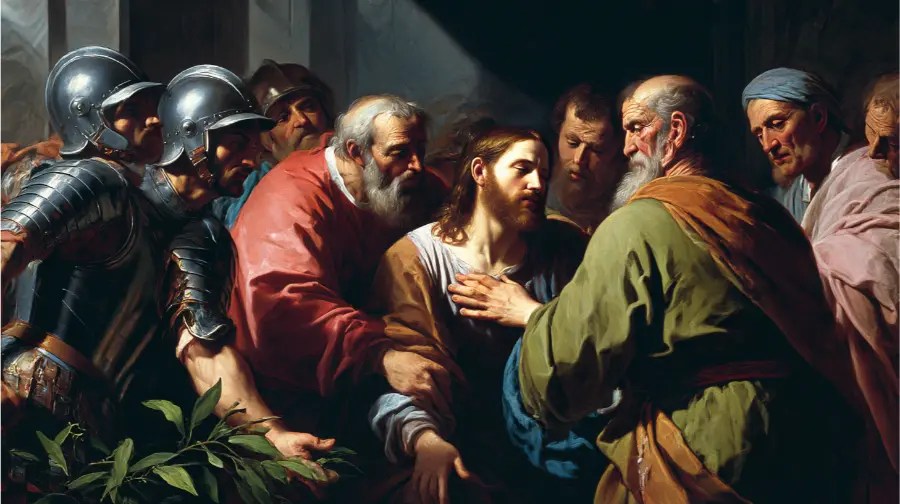
Why do Catholics and the Orthodox call marriage a sacrament?
When the Catechism comes to Jesus and marriage, it starts with Cana. “On the threshold of his public life Jesus performs his first sign – at his mother’s request – during a wedding feast,” it says (paragraph 1613). John tells it this way: “There was a marriage in Cana of Galilee; and the mother of Jesus was there: And both Jesus was called, and his disciples, to the marriage” (John 2:1–2), and it was there that Jesus worked “This beginning of miracles” (John 2:11). The Catechism reads that wedding beside Paul’s great mystery of husband and wife, and of Christ and his Church, and draws its conclusion: “Christian marriage in its turn becomes an efficacious sign, the sacrament of the covenant of Christ and the Church” (paragraph 1617).
When the Council of Trent met on 11 November 1563, it read Paul as “This is a great sacrament,” and its first canon on matrimony condemned anyone who says “that matrimony is not truly and properly one of the seven sacraments of the evangelic law.” The whole decree is in our Council of Trent, Session 24. The Catechism of the Catholic Church teaches today, in words taken from the Church’s Code of Canon Law, that the marriage covenant “between baptized persons has been raised by Christ the Lord to the dignity of a sacrament” (paragraph 1601). So a Catholic wedding is a covenant as well, and between two baptized people Christ has made that covenant a sacrament.
“Marriage was not invented or instituted by Christ,” the Orthodox Church in America says in its book الإيمان الأرثوذكسي, and yet the love of a man and a woman, as Christ teaches it, “must be unique, indestructible, unending and divine,” and he “gives the power to fulfill it in the sacrament of Christian marriage in the Church.” In the service the couple confess their faith and hear God’s Word, and then they “are crowned with the crowns of God’s glory to be his children and witnesses (martyrs) in this world, and heirs of the everlasting life of his Kingdom,” and they receive Communion together. There is nothing in it for them to swear, since the service “contains no vows or oaths.” We follow it step by step in مراسم الزفاف الأرثوذكسي.
The Coptic Orthodox Church teaches that “Matrimony is a holy sacrament, officiated by a priest, of uniting a man to a woman,” and it finds the holiness of that sacrament in Paul’s own “This is a great mystery.” Coptic priests crown the couple too: “the priest places two crowns on the heads of the bride and groom; hereby ordaining them king and queen of their new kingdom – their house.”
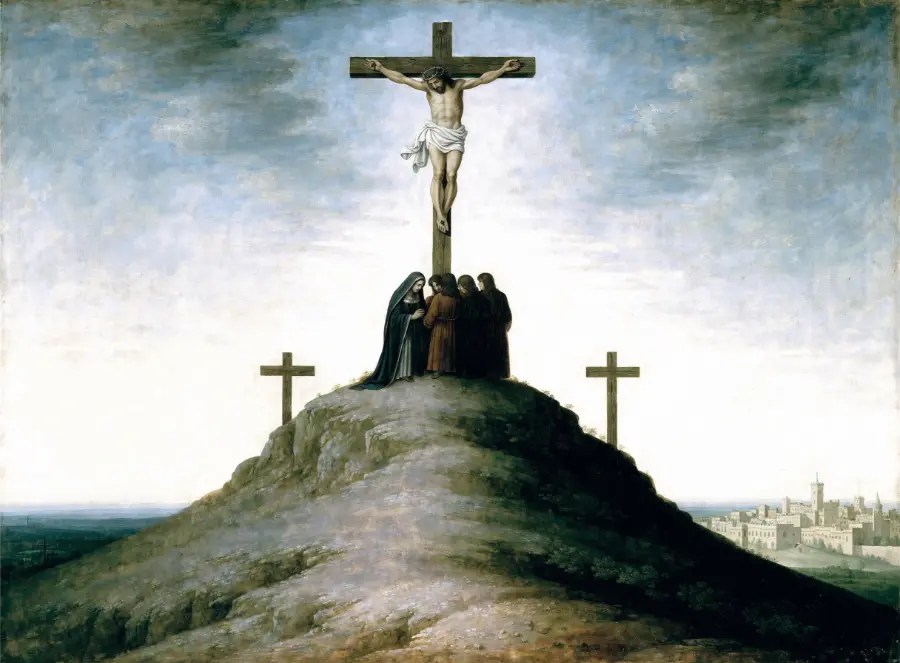
Why do most Protestants call marriage a covenant?
Martin Luther went back to Paul’s sentence in 1520, in أسر بابل للكنيسة, and read it in Greek. “Where we have the word sacrament the Greek text reads mystery,” he wrote, though that word alone did not settle it for him. His deeper reason went back to the garden: “since marriage existed from the beginning of the world and is still found among unbelievers, it cannot possibly be called a sacrament of the New Law and the exclusive possession of the Church.”
The confessions of the Reformation agree that Christ gave his Church two sacraments of the Gospel, baptism and the Lord’s Supper. Lutherans keep Luther’s reason for leaving marriage out, that it is older than both, in the Apology of the Augsburg Confession: “Matrimony was not first instituted in the New Testament, but in the beginning, immediately on the creation of the human race.” The same article allows that “if any one should wish to call it a sacrament, he ought still to distinguish it from those preceding ones,” meaning baptism and the Supper. The Church of England’s Thirty-nine Articles count matrimony among “Those five commonly called Sacraments” which “are not to be counted for Sacraments of the Gospel.” The Westminster Confession names the two: “There be only two sacraments ordained by Christ our Lord in the Gospel; that is to say, baptism, and the Supper of the Lord.” How each church arrives at its number is the subject of كم عدد الأسرار المقدسة الموجودة.
The Reformation churches kept the wedding holy all the same, and the Book of Common Prayer of 1662 shows how. Its marriage service calls matrimony “an honourable estate, instituted of God in the time of man’s innocency, signifying unto us the mystical union that is betwixt Christ and his Church; which holy estate Christ adorned and beautified with his presence, and first miracle that he wrought, in Cana of Galilee.” Cana and Ephesians are both in that one sentence, the same two passages the Catholic Church reads, and here they make the wedding a sign of Christ and his Church. The Episcopal Church’s catechism of 1979 counts holy matrimony among the “Other sacramental rites,” in which the couple “receive the grace and blessing of God to help them fulfill their vows.” The Anglican Church in North America keeps the old phrase in its canons, “Holy Matrimony, commonly called a Sacrament,” and calls it “a lifelong covenant between one man and one woman.”
Most other Protestants call marriage a covenant, and several of them hear Paul’s “Christ and the church” inside the word. Southern Baptists confess that “Marriage is the uniting of one man and one woman in covenant commitment for a lifetime,” given “to reveal the union between Christ and His church.” The Nazarenes call the marriage covenant “a reflection of the covenant between God and the people of God.” The Presbyterian Church (U.S.A.) says it is “a covenant in which God has an active part, and which the community of faith publicly witnesses and acknowledges.” Mennonite Church USA believes “that God intends marriage to be a covenant between one man and one woman for life.” The United Methodist Church says what the word leaves out: “While The United Methodist Church does not recognize marriage as a sacrament, we celebrate and cherish this union as an expression of the couple’s faith, grounded in their relationship with God and one another.”
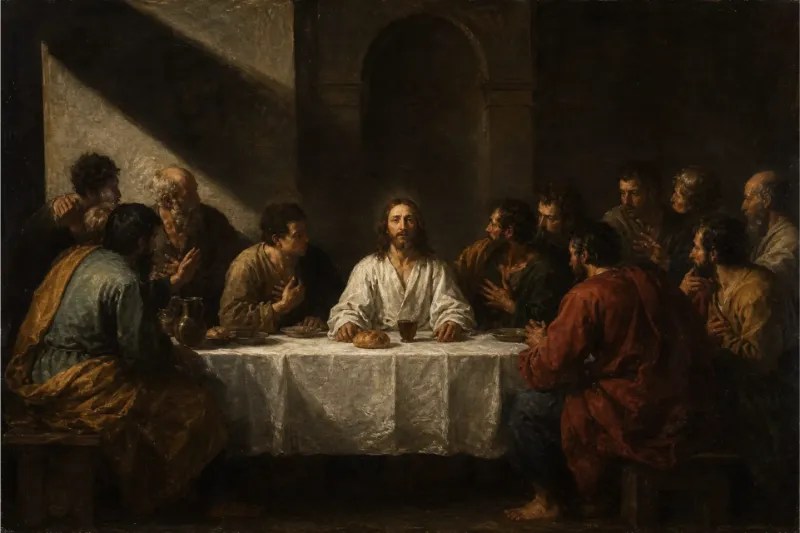
من الذي يعقد قران الزوجين؟
In a Catholic wedding the bride and groom marry each other, for the Catechism teaches that “In the Latin Church, it is ordinarily understood that the spouses, as ministers of Christ’s grace, mutually confer upon each other the sacrament of Matrimony by expressing their consent before the Church,” while in the Eastern churches the priest or bishop is the minister, and he “successively crowns the bridegroom and the bride as a sign of the marriage covenant” (paragraph 1623). George Fox gave Quakers their answer in 1669: “For the right joining in marriage is the work of the Lord only, and not the priests’ or magistrates’.” So Friends in Britain marry in a meeting for worship, where the couple “take each other freely and equally as lifelong partners” and the Friends gathered with them are witnesses. Evangelical Friends Church Mid-America Yearly Meeting has pastors instead, and a pastor’s certificate there covers “the performing of wedding ceremonies.”
Who may marry in church?
Paul said that a widow “is at liberty to be married to whom she will; only in the Lord” (1 Corinthians 7:39), and many churches ask the same of every Christian. The Dordrecht Confession of 1632, which the Amish hold, teaches that matrimony is for “two free, believing persons,” who marry among “the chosen generation and spiritual kindred of Christ,” and this “is called, marrying in the Lord.” Mennonite Church USA says that “Christians who marry should marry in the Lord, to a Christian spouse.” The Seventh-day Adventist Church teaches in its Fundamental Belief 23 that marriage is “a lifelong union between a man and a woman in loving companionship,” and that it “should be entered into only between a man and a woman who share a common faith.”
The Catholic and Orthodox churches will marry a member to a baptized Christian of another church, and they say what it can cost. The Catechism warns that in such a home “the spouses risk experiencing the tragedy of Christian disunity even in the heart of their own home,” and says that “a mixed marriage needs for liceity the express permission of ecclesiastical authority.” A Catholic may even marry someone who has never been baptized, though then “an express dispensation from this impediment is required for the validity of the marriage” (paragraphs 1633–1635). The Orthodox Church in America teaches that the sacrament is “only for baptized communicants,” and allows a marriage with “a baptized non-Orthodox Christian on the condition that both members of the marriage sincerely work and pray for their full unity in Christ.”
Does marriage last after death?
The Sadducees once asked Jesus about a woman married in turn to seven brothers, wanting to know whose wife she would be in the resurrection, and he answered, “For in the resurrection they neither marry, nor are given in marriage, but are as the angels of God in heaven” (Matthew 22:30). The Evangelical Lutheran Church in America cites that verse when it says, “Even marriage is an earthly blessing on this side of heaven,” and the old English vows promise faithfulness “till death us do part.”
The Orthodox Church in America believes the bond reaches past the grave: “In Christian marriage the Holy Spirit is given so that what is begun on earth does not ‘part in death’ but is fulfilled and continues most perfectly in the Kingdom of God.” So it “encourages widows and widowers to remain faithful to their spouses who are dead to this world but alive in Christ.” The Church of Jesus Christ of Latter-day Saints teaches that in the temple “a man and a woman can be sealed to one another for time and all eternity,” and that “Those who are sealed in the temple have the assurance that their relationship will continue forever if they are true to their covenants.”
Whether a marriage can end before death is another question the churches answer differently. The Catholic Church’s Code of Canon Law holds that “A marriage that is ratum et consummatum can be dissolved by no human power and by no cause, except death” (canon 1141), and we set every church’s teaching beside it in الطلاق والزواج الثاني: ما تسمح به كل كنيسة.
Which churches marry same-sex couples?
Several of these churches now do, or let their ministers do so, and each decision has a date. The United Church of Christ’s General Synod resolved on 4 July 2005 that it “affirms equal marriage rights for couples regardless of gender.” Britain Yearly Meeting of Quakers discerned in 2009 “that love and truth compel Friends to solemnise the marriage of same-sex couples equally with opposite-sex couples.” In March 2015 the presbyteries of the Presbyterian Church (U.S.A.) gave its ministers “wider discretion in whose weddings they may conduct,” and its Book of Order now calls marriage “a unique commitment between two people, traditionally a man and a woman.” On 1 July 2015 the Episcopal Church’s General Convention removed “language defining marriage as between a man and a woman” and authorized marriage rites for “same-sex or opposite-sex couples.”
The Methodist Church in Britain made “the decision in 2021 to acknowledge two understandings of marriage, allowing both to be practised in the Church.” In May 2022 the delegates of Mennonite Church USA voted 404 to 84 to retire the church’s Membership Guidelines, and the writers of that resolution said that “Pastors, congregations and area conferences discern the appropriateness of performing same-sex marriages in their contexts,” though Article 19 of the Confession of Faith, which the church still publishes, speaks of one man and one woman. In May 2024 the General Conference of the United Methodist Church “voted to end decades-old bans on the ordination of ‘self-avowed practicing’ gay clergy and the officiation of same-sex weddings,” and its Social Principles now affirm marriage between “an adult man and woman of consenting age, or two adult persons of consenting age.”
The Evangelical Lutheran Church in America took its step in August 2009, when its churchwide assembly opened the church’s ministry to people in committed same-gender relationships. Its social statement on sexuality, adopted that week, admitted that “consensus does not exist concerning how to regard same-gender committed relationships.” Then the assembly voted 559 to 451 to find a way for people in “publicly accountable, lifelong, monogamous, same-gender relationships to serve as rostered leaders of this church.” Earlier at the same assembly it had committed the church to find ways for congregations that choose to do so to “recognize, support and hold publicly accountable life-long, monogamous, same gender relationships,” though, as the church’s own news release noted, “the resolution did not use the word ‘marriage.’”
The Church of England’s Canon B 30 still teaches that marriage is “a union permanent and lifelong, for better for worse, till death them do part, of one man with one woman.” In October 2023 the House of Bishops agreed “to commend the Prayers of Love and Faith for use in existing church services,” prayers “asking for God’s blessing for same-sex couples,” and in November the General Synod voted, narrowly, for a trial of separate services built on them. In February 2026 the Synod heard that the prayers “are now in use as part of regular Church of England services,” while separate services for same-sex couples “would need full formal authorisation under canon law.” The Archbishop of York, Stephen Cottrell, told the Synod that the Church remains “deeply divided” on questions of sexuality and marriage.
Most of the churches here hold that marriage is the union of a man and a woman, and many of them go back to Jesus’ own words, “he which made them at the beginning made them male and female” (Matthew 19:4). The Catholic Church’s canon law speaks of the covenant “by which a man and a woman establish between themselves a partnership of the whole of life.” For the Assemblies of God, “Marriage between one man and one woman for a lifetime is the historic Christian standard.” The United Pentecostal Church International resolved in 1990, and again in 2012, to oppose “any attempt to change the definition of marriage.” The National Association of Evangelicals calls marriage “a lifetime covenantal relationship between one man and one woman.” The Salvation Army in the United Kingdom and Ireland “believes that God ordained marriage to be an exclusive and lifelong relationship between one man and one woman.” Jehovah’s Witnesses teach that “From the beginning, God created marriage to be a union of one man and one woman.” The leaders of the Church of Jesus Christ of Latter-day Saints proclaim that “marriage between a man and a woman is ordained of God.”
Some of them share a family name with churches we have just met, so it helps to know which body is speaking. The Global Methodist Church affirms sexuality “within the legal and spiritual covenant of a loving and monogamous marriage between one man and one woman.” The Lutheran Church–Missouri Synod holds that “on the basis of Scripture, marriage [is] the lifelong union of one man and one woman.” Evangelical Friends Church Mid-America Yearly Meeting teaches that “marriage is a God ordained, covenant relationship between a biologically born male and a biologically born female.” The Presbyterian Church in America and the Orthodox Presbyterian Church keep the Westminster Confession, whose sentence on marriage was written against taking more than one wife or husband: “Marriage is to be between one man and one woman: neither is it lawful for any man to have more than one wife, nor for any woman to have more than one husband, at the same time.”
The Churches of Christ have no one who can speak for them all, for, as the preacher Batsell Barrett Baxter put it, there is “no organization superior to the elders of each local congregation.” Wayne Jackson’s Christian Courier, one teaching site among them, says that “Marriage is a covenant between a man and woman, whereby they pledge to belong to one another in a life-long union.” The Christian Church (Disciples of Christ) has no churchwide statement defining marriage that we could find; the nearest is a General Assembly resolution of 2013 calling the church “to affirm the faith, baptism and spiritual gifts of all Christians regardless of their sexual orientation or gender identity,” and it does not speak of weddings.
The wedding at the end of the Bible
These churches give marriage different names, and yet they keep reaching for the same few words of Scripture, from “one flesh” in the garden to Paul’s “great mystery,” and many of them see in a husband and wife something of Christ and the people he loves. The Catechism notices that the whole Bible is shaped this way, for it “begins with the creation of man and woman in the image and likeness of God and concludes with a vision of ‘the wedding-feast of the Lamb.’” Near the end of his vision John hears of that feast, and he is told, “Write, Blessed are they which are called unto the marriage supper of the Lamb” (Revelation 19:9).
قراءة ذات صلة
- قارن بين الطوائف المسيحية: ما تعلمه 23 كنيسة حول 55 سؤالاً
- What Do Orthodox Christians Believe?
- What Do Methodists Believe?
- عهود الزواج المسيحي: الكلمات التقليدية ومعانيها
- حفلات زفاف شهود يهوه: ماذا يحدث، العهود والقواعد
- 15 آية من الكتاب المقدس عن الزواج


اترك تعليقاً