
 German
 English
 Chinese
 Dutch
 Arabic
 Spanish
 Portuguese
 Russian
 French
 Italian
 Japanese
A Baptist church and most nondenominational churches teach very nearly the same faith on the things a visitor meets first. Both baptize people who have trusted Christ for themselves, both keep the Lord’s Supper as a remembrance of his death, and both teach that we are saved by faith in Christ, as God’s free gift. Where they part is over who decides. A Southern Baptist church shares a written confession with the rest of its convention and settles its business by the members’ vote, while a nondenominational church writes its own statement of faith, answers to no convention, and is often led by a board of elders.
When they explain what a church is, both of them go back to the same morning in Jerusalem. The Southern Baptist confession points to the day of Pentecost for the church, for baptism and for the Lord’s Supper, and Gateway Church in Texas, one of the largest nondenominational churches in America, points to one of the same verses for its Communion: “Then they that gladly received his word were baptized: and the same day there were added unto them about three thousand souls. And they continued stedfastly in the apostles’ doctrine and fellowship, and in breaking of bread, and in prayers” (Acts 2:41–42). First the word received, then baptism, then the bread and the prayers, and a Baptist church and a nondenominational church keep that order alike.
| Frage | Baptist (Southern Baptist confession) | Nondenominational (North Point, Gateway, Willow Creek) |
|---|---|---|
| Wer wird getauft | Nur Gläubige, durch Untertauchen | Believers only; no mode set in the statements |
| Was die Taufe bewirkt | Symbolizes faith already held | Shows a salvation already received |
| Letzten Abendmahl | A symbolic memorial for church members | A remembrance for believers; Willow’s table is open to any follower of Christ |
| Wie oft | Quarterly in most churches (2012 survey) | Each church decides; Willow about every six weeks |
| Heil | By faith in Christ; true believers never fall away | A free gift received by faith; secure, at Gateway for those abiding in Christ |
| Maria | Virgin birth; no other article names her | Nothing beyond the virgin birth in their statements |
| Letzte Autorität | Scripture; confessions are guides | Scripture alone, summed up in each church’s statement |
| Wer entscheidet | Die Mitglieder, durch Abstimmung | Varies; at Gateway a board of elders |
| Mitgliedschaft | Baptism comes first | Varies; North Point has no traditional membership |
| Gehört zu | A convention, by choice | No denomination; sometimes a network |
Nobody can speak for every nondenominational church, since none of them answers to another, so the right-hand column comes from three of the largest: North Point Ministries in Alpharetta, Georgia, Gateway Church in Southlake, Texas, and Willow Creek Community Church in South Barrington, Illinois. All three are listed as nondenominational on the Outreach 100, the list of large churches that Lifeway Research compiles each year, and we have read their statements of faith, bylaws and church pages. The Baptist column follows the Southern Baptist Convention’s confession, the Baptist Faith and Message 2000. Other Baptists have confessions of their own, and the Southern Baptists’ own 1925 statement, which the convention still prints, says that “any group of Baptists, large or small, have the inherent right to draw up for themselves and publish to the world a confession of their faith whenever they may think it advisable to do so.”
Why so many nondenominational churches sound Baptist
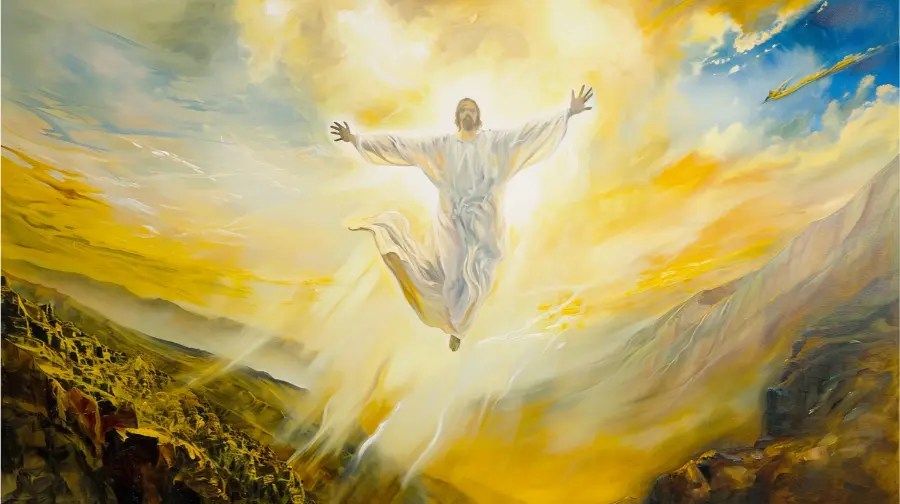
When the political scientist Ryan Burge set out in 2018 to learn whether nondenominational Christians are Southern Baptists by another name, the first thing he found was that they go to church at the same rate: 48.5 percent of nondenominational Christians said they went at least once a week, and 48.9 percent of Southern Baptists. His answer to the question was “a tentative ‘yes’, with some caveats.” The nondenominational churches were younger and more racially diverse, and fewer of their people took the Bible as literally true, 44 percent, sixteen points below the Southern Baptists.
Who is baptized, and what baptism does
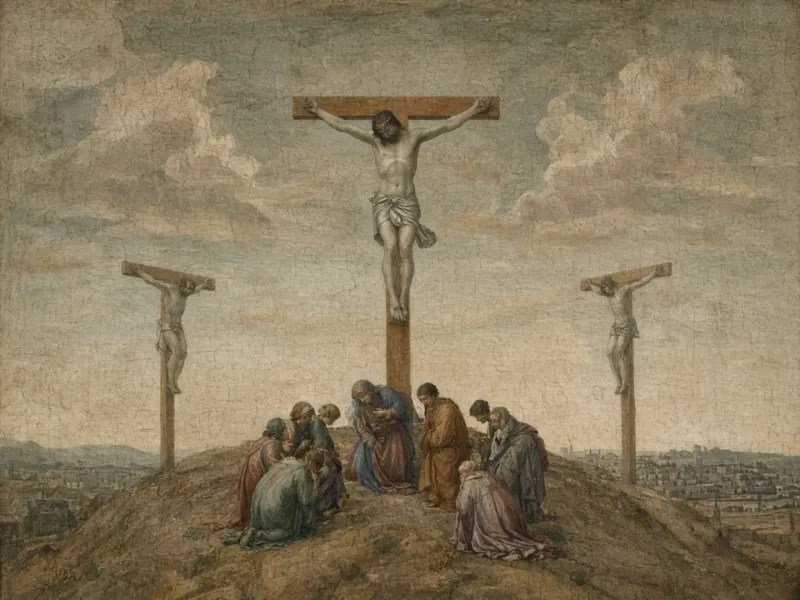
Southern Baptists baptize only believers, and only by immersion, as the first sentence of their confession on the subject says: “Christian baptism is the immersion of a believer in water in the name of the Father, the Son, and the Holy Spirit.” It goes on to call baptism “an act of obedience symbolizing the believer’s faith in a crucified, buried, and risen Saviour,” so in Baptist teaching the water pictures a faith the believer already has. Baptism is also the door into the church, “prerequisite to the privileges of church membership and to the Lord’s Supper.”
Nondenominational churches such as North Point, Gateway and Willow Creek baptize only people who have decided to follow Jesus, and they teach that baptism shows a salvation already received rather than bringing it about. North Point says it in two short sentences: “Baptism does not make you a Christian. It shows that you already are one.” It does not baptize babies, though it recognizes “the right of other churches to practice infant baptism.” Gateway calls baptism “the outward sign of what God has already done in the individual’s life,” and to Willow Creek it is “the public demonstration of an individual making their own decision to place their faith in the life, death, and resurrection of Jesus.”
The Baptist confession requires immersion, and none of these three churches’ statements sets a mode in words, though North Point speaks of the new believer “going under the water.” All of them are reading the picture Paul gives us of the believer buried with Christ and raised with him, and Gateway, Willow Creek and the Baptist confession each cite it: “Therefore we are buried with him by baptism into death: that like as Christ was raised up from the dead by the glory of the Father, even so we also should walk in newness of life” (Romans 6:4).
The Lord’s Supper, and who may come to the table
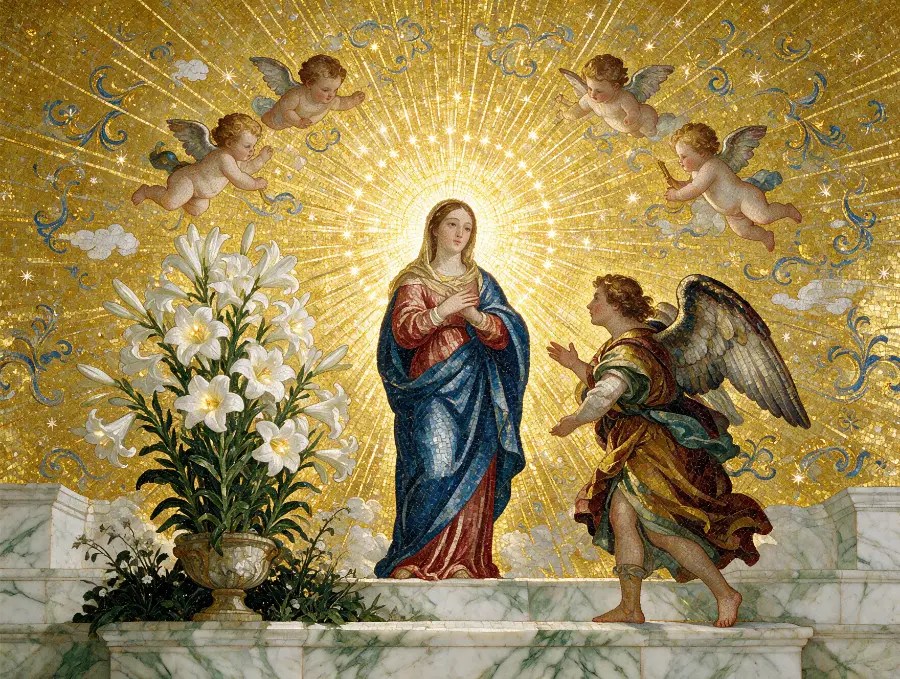
Southern Baptists keep the Lord’s Supper as a memorial of Christ’s death, and most of their churches hold it once a quarter. Their confession calls it “a symbolic act of obedience whereby members of the church, through partaking of the bread and the fruit of the vine, memorialize the death of the Redeemer and anticipate His second coming.” When Lifeway Research asked 1,066 Southern Baptist pastors about it in 2012, 57 percent said their churches observe it quarterly, 18 percent monthly and only 1 percent weekly.
The same survey found that Baptist practice differs in places from the confession’s wording. The Baptist Faith and Message speaks of “members of the church,” yet 96 percent of the churches let people who are not their members take part, and 52 percent invite “anyone who has put their faith in Jesus Christ.” Scott McConnell, who directed LifeWay Research at the time, said the survey “points out a difference between the beliefs expressed in the Baptist Faith & Message, and the Lord’s Supper practices of many Southern Baptist churches.”
Nondenominational churches such as Gateway and Willow Creek keep the Lord’s Supper as a remembrance of Christ’s death for those who believe in him, and Willow Creek serves it about every six weeks to any follower of Christ, member or not. Gateway’s bylaws call it “a commemoration of the death of the Lord” that “is done in remembrance of Him until He comes again, and is a sign of our participation in Him,” and they restrict both baptism and the Supper “to those who are believers.” At Willow Creek the people share “the symbolic meal elements of bread and juice,” and the table is open “to any follower of Christ, regardless of membership at Willow, denominational affiliation, or spiritual tradition,” which is the way about half of Southern Baptist churches set their own table. At each of these tables the bread and the cup do what Paul said they do: “For as often as ye eat this bread, and drink this cup, ye do shew the Lord’s death till he come” (1 Corinthians 11:26).
How a person is saved, and whether it can be lost
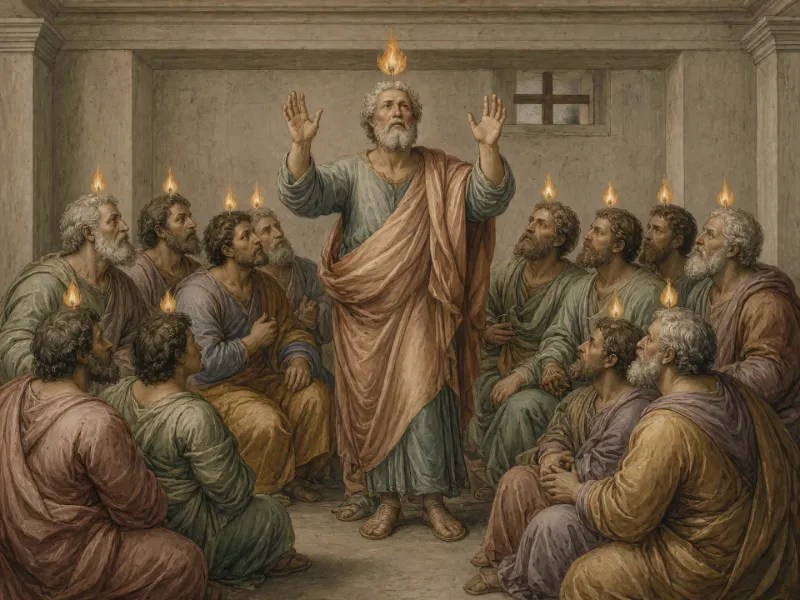
Southern Baptists teach that a person is saved by personal faith in Jesus Christ, and that a true believer will never lose that salvation. Their confession says salvation “is offered freely to all who accept Jesus Christ as Lord and Saviour” and that there is “no salvation apart from personal faith in Jesus Christ as Lord.” On assurance it is just as clear: “All true believers endure to the end. Those whom God has accepted in Christ, and sanctified by His Spirit, will never fall away from the state of grace, but shall persevere to the end.” It does not say believers stop sinning. They may fall into sin, it says, and “grieve the Spirit,” yet “they shall be kept by the power of God through faith unto salvation.”
Nondenominational churches such as North Point, Gateway and Willow Creek teach that a person is saved by faith in the death and resurrection of Jesus, as God’s free gift and not by baptism, and Gateway and Willow Creek describe that salvation as secure, Gateway “for those abiding in Christ until their death or His return.” Willow Creek puts its assurance as a promise, that “God’s Word assures individuals that He will continue His saving work in them forever.” Gateway calls salvation “an act of free will in response to God’s personal love for mankind,” and none of the three uses the Baptist words “never fall away.”
Whether a true believer can fall away has a page of its own, with both sides set out: is once saved, always saved biblical?
What they teach about Mary
Southern Baptists teach about Mary only what their confession says of Christ, that “He was conceived of the Holy Spirit and born of the virgin Mary,” and no other article of the Baptist Faith and Message mentions her. The statements of faith of nondenominational churches such as Gateway and Willow Creek say nothing of Mary beyond the virgin birth. Gateway’s bylaws say that Christ “became incarnate by the Holy Spirit of the Virgin Mary,” and Willow Creek speaks of his “miraculous conception and virgin birth” without naming her, in core beliefs that it says “are not exhaustive.” North Point’s summary of its beliefs does not name her either; it says that Jesus “became flesh to reveal God to humanity.” None of these statements calls her the Mother of God, teaches her perpetual virginity or speaks of praying to her. What all of them hold is the sign Matthew records: “Behold, a virgin shall be with child, and shall bring forth a son, and they shall call his name Emmanuel, which being interpreted is, God with us” (Matthew 1:23).
Who has the last word
Acts says the first believers “continued stedfastly in the apostles’ doctrine,” and Baptists and nondenominational churches both look for that doctrine in the Bible. They differ most over who reads the Bible for the congregation, and who holds a church to what it reads there.
Southern Baptists hold that the Bible alone has authority over what they believe and do, that their confession is a guide to reading it, and that each congregation governs itself by the members’ vote. Their confession calls Scripture “the supreme standard by which all human conduct, creeds, and religious opinions should be tried,” and says each church “operates under the Lordship of Christ through democratic processes.” The 1925 statement puts the confession in its place: “the sole authority for faith and practice among Baptists is the Scriptures of the Old and New Testaments. Confessions are only guides in interpretation, having no authority over the conscience.” The committee that wrote the 2000 text also calls confessions “instruments of doctrinal accountability,” and the convention leaves every church its freedom, for associations and conventions, the confession says, “have no authority over one another or over the churches.”
Nondenominational churches such as North Point, Gateway and Willow Creek answer to no convention and no shared confession, and each one takes its teaching from the Bible and sums it up in its own statement of faith. Gateway calls the Bible “alone the only infallible inspired Word of God,” and Willow Creek calls it “the sole basis of our central beliefs.” At Gateway, a nondenominational church in Southlake, Texas, the bylaws give final authority to a board of elders, and the members “are not entitled to cast a vote in person, by proxy, or otherwise that is binding upon the Church.”
So on a Sunday in churches like these, the pastor who opens the Bible for the congregation answers to that church and its own leaders, with no denomination above them. Scott Thumma of the Hartford Institute for Religion Research, who has studied these churches, summed it up in 1999: “only God, the Bible, and God’s spokesperson in the form of the pastor, are seen as spiritual authorities in and for the congregation.” In most of them that pastor is a man, as in a Southern Baptist church. The Baptist confession, as amended in 2023, says that “the office of pastor/elder/overseer is limited to men as qualified by Scripture,” and Thumma’s census of 2019–20 found nondenominational churches “led predominantly by male clergy, even more so than evangelical churches,” though no shared confession requires it of them.
In a Baptist church baptism is the door to membership, and the members are the ones who vote. North Point has set traditional membership aside: “Since we don’t have traditional membership, you won’t be able to ‘join’ the church as a ‘member,’” its FAQ says. It names four ways to be fully engaged instead, serving on a ministry team, joining a group, giving to the church and inviting people to it, and “those who are fully engaged with us are considered our members.” When a matter needs a congregational vote, everyone fully engaged at some time in the two years before may take part. Gateway keeps a membership roll, with new-member classes, a signed membership agreement and “submission to the decisions, vision, and direction established by the Board of Elders.” Mark Wingfield of Baptist News Global sees the two families moving the same way: “more and more nondenoms have moved to elder governance, and more conservative Baptist churches have been moving that way too.”
Not every nondenominational church believes the same
Thumma’s census listed more than 60,000 nondenominational churches, with at least 12 million people in them, and found that “the dominant theological perspective is evangelical Christian.” The three churches we read are evangelical too, but the word nondenominational promises nothing by itself. Gateway’s bylaws teach that “the baptism of the Holy Spirit, subsequent to conversion, releases the fullness of the Spirit and is evidenced by tongues,” which is a charismatic belief, while the Baptist confession says the Spirit “baptizes every believer into the Body of Christ” at the moment of regeneration. That is the same line that runs between Baptists and Pentecostals, set out in Pfingstler vs. Baptisten. Across the churches he studied, the beliefs pastors stressed “ranged from Fundamentalism to Prosperity doctrines, to charismatic emphasis on Spirit Baptism and the gifts of the Spirit.”
Wingfield traces American nondenominationalism to more than one root: the Stone-Campbell Restoration Movement, the Jesus Movement of the 1970s and the networks of churches it sparked, such as Calvary Chapel, and the Bible churches that grew after Dallas Theological Seminary was founded in 1924. The surest way to know what a nondenominational church believes is to read its own statement of faith, and all three of these churches post theirs.
Life.Church in Edmond, Oklahoma, the largest church on the Outreach 100 with 85,000 people a weekend, has no denominational word in its name, yet the list gives its denomination as Evangelical Covenant.
Are nondenominational churches Protestant?
Yes, and the Pew Research Center’s 2023–24 Religious Landscape Study counts them as “the second-largest family of Protestant denominations.” Nondenominational Protestants are 7 percent of U.S. adults beside the Baptists’ 12 percent, and theirs is the only Protestant family that has grown as a share of the population since Pew’s first study. Every statement we read puts the Bible first and teaches that we are saved by faith. Nondenominational churches are Protestants who have joined no denomination, as Baptist churches are Protestants who have joined a convention by choice.
How do both compare with the Catholic Church?
Set beside the Catholic Church, Baptists and these nondenominational churches stand furthest apart on the Lord’s Supper. They call it a memorial or a commemoration, while the Catholic Catechism teaches that in the Eucharist “the body and blood, together with the soul and divinity, of our Lord Jesus Christ and, therefore, the whole Christ is truly, really, and substantially contained.” That difference and the others are set out in Evangelikal vs. Katholisch and in Baptist vs Catholic, listed below.
For all that divides them over who decides, the Baptist confession speaks of “the Body of Christ which includes all of the redeemed of all the ages,” and Willow Creek of “One Church with One Head: Christ Himself.” Both are describing the church Paul wrote to: “There is one body, and one Spirit, even as ye are called in one hope of your calling; One Lord, one faith, one baptism, One God and Father of all, who is above all, and through all, and in you all” (Ephesians 4:4–6).
Weiterführende Literatur
- Was ist eine konfessionslose Kirche?
- Baptisten vs. Christen: Baptisten sind Christen, eine protestantische Familie
- Baptisten vs. Southern Baptists: Die SBC ist ein Zweig der Baptistenfamilie
- Christi Gemeinde vs. Baptisten: Taufe, Musik und Erlösung
- Baptistische vs. katholische Glaubensansichten: Taufe, Abendmahl, der Papst und das Heil


Schreibe einen Kommentar