
 French
 English
 Chinese
 Dutch
 Arabic
 Spanish
 Portuguese
 Russian
 Italian
 German
 Japanese
Mennonites believe what Christians everywhere confess: one God, Father, Son and Holy Spirit, Jesus Christ born of the Virgin Mary, the Bible as the Word of God, and salvation by God’s grace. What marks them out is what they believe that grace is for. It sets a person out to follow Jesus with the whole of life, so they baptize only those old enough to ask for it, they try to love their enemies, and their confessions teach that they will not go to war. They give a plain yes or no instead of an oath, and they live simply. Mennonite Church USA puts it in three lines: “Jesus is the center of our faith. Community is the center of our lives. Reconciliation is the center of our work.”
Hans Denck, one of the first Anabaptist leaders, had a motto that still explains them: “No one may truly know Christ except one who follows Him in life.” Mennonites come from that Anabaptist stream, and Mennonite Church USA says where it leaves them: “Technically, Anabaptists are neither Catholic nor Protestant, although they do share some beliefs of both.”
It began in Zurich on the night of 21 January 1525, just after the city council had ordered every unbaptized infant to be baptized. Fifteen brethren met to pray in the house of Felix Manz, George Blaurock asked Conrad Grebel to baptize him “on the confession of his faith,” and Grebel did. “Anabaptism literally means to re-baptize,” Mennonite Church USA explains, and the first Anabaptists paid dearly for it. “During the movement’s first century,” the Young Center at Elizabethtown College writes, “as many as 2,500 were executed, often burned at the stake or decapitated.” Lutherans had a hand in that persecution, and in July 2010, meeting in Stuttgart, the Lutheran World Federation voted unanimously to ask forgiveness “from God and from our Mennonite sisters and brothers,” both for the persecution and for the theological arguments Lutheran reformers had given in its support.
The name came eleven years after that first baptism. Menno Simons, a Dutch priest who was pastor of his home church at Witmarsum, left the Catholic Church “most likely in January 1536,” giving up, as he put it, his “worldly reputation, name and fame.” He died in 1561, and “In time, many of his followers became known as Mennonites.” In 2026 Mennonite World Conference counted the whole family at “2.03 million baptized believers in 87 countries,” 45 percent of them in Africa and 29 percent in North America, and in the United States, Mennonite Church USA is “one of about 40 different Mennonite/Anabaptist groups.”
The family has many branches, and they do not all keep the same confession. Mennonite Church USA and Mennonite Church Canada share one, the Confession of Faith in a Mennonite Perspective, adopted in 1995. The Mennonite Brethren began as a renewal movement in Russia in 1860 and now have churches in both countries; they keep their own Confession of 1999, and the U.S. Mennonite Brethren rewrote one article of it in 2014. The conservative churches, the Keystone Mennonite Fellowship among them, still keep the Mennonite Confession of 1963, and Keystone added supplements of its own in 1998. Mennonite World Conference, which joins 109 national churches in 60 countries, agreed a short statement of Shared Convictions in 2006. Behind them all stand the creeds of the early Church, which the 1995 Confession calls “basic to this confession as well,” and two old Anabaptist confessions, Schleitheim (1527) and Dordrecht (1632).
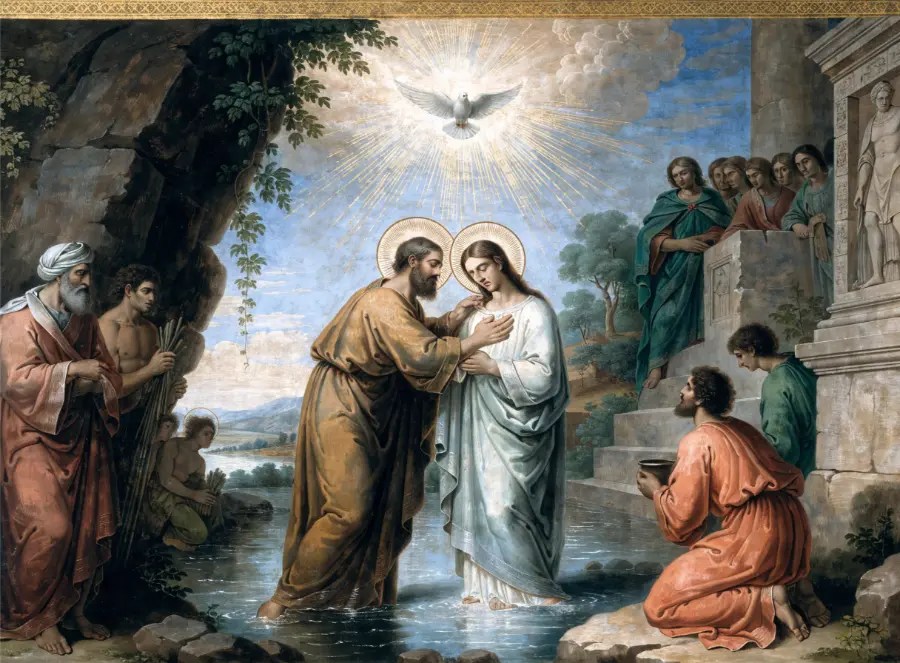
Jesus at the center
God, Christ and the Bible
The 1995 Confession opens where the creeds open: “We worship the one holy and loving God who is Father, Son, and Holy Spirit eternally.” Jesus “was conceived of the Holy Spirit and born of the Virgin Mary,” and the Confession adds a line about him that runs through all Mennonite teaching: “In his suffering, he loved his enemies and did not resist them with violence, thus giving us an example to follow.”
They hold the Bible to be “the fully reliable and trustworthy standard for Christian faith and life,” and they read all of it through Christ, for “Scripture as a whole has its center and fulfillment in him.” Tradition, culture, experience, reason and “political powers” all “need to be tested and corrected by the light of Holy Scripture.”
à partir d' Confession of Faith in a Mennonite Perspective, Article 4, Scripture
Saved by grace to follow Christ
Mennonites speak of salvation as God’s gift. “We are saved by God’s grace, not by our own merits,” the Confession says, and we receive it “when we repent of sin and accept Jesus Christ as Savior and Lord.” What they stress is where the gift leads. By grace “we may be saved from sin to follow Christ in this life and to know the fullness of salvation in the age to come.”
Since salvation is a life of following, the older confession warns about someone who stops. The 1963 Confession, which conservative Mennonites still keep, speaks of “the one who goes on to full apostasy and spiritual ruin” and says he “has severed his relation with Christ and His body.”
à partir d' Confession of Faith in a Mennonite Perspective, Article 8, Salvation
Discipulat
Jesus said, “If any man will come after me, let him deny himself, and take up his cross daily, and follow me” (Luke 9:23), and the Confession turns his words straight into a belief: “We believe that Jesus Christ calls us to take up our cross and follow him.” It will not let being saved and following come apart, for “Our participation in Christ includes both salvation and discipleship.”
Paul wrote, “be not conformed to this world” (Romans 12:2), and following Christ sets a person a little apart, for “Conformity to Christ necessarily implies nonconformity to the world.” Among other things, the Confession says, that means “seeking first the reign of God in simplicity, rather than pursuing materialism.” Yet nobody follows alone: “Discipleship is to be lived out in the context of Christian community.”
à partir d' Confession of Faith in a Mennonite Perspective, Article 17, Discipleship and the Christian Life
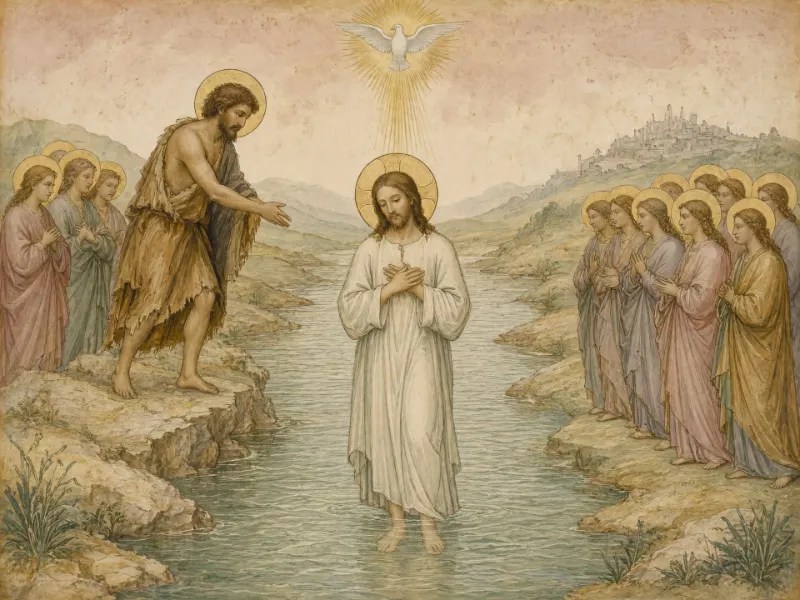
Baptism, the Supper and washing feet
Baptism for believers
Baptism on confession of faith is where the movement began, and the Schleitheim Confession of 1527 put it first: “Baptism shall be given to all those who have learned repentance and amendment of life, and who believe truly that their sins are taken away by Christ.” The 1995 Confession says the same thing today, and it does not leave the little ones out of God’s care: “Infants and children have no need for baptism, since they are safe in the care of God.”
Baptism is “a pledge before the church of their covenant with God to walk in the way of Jesus Christ through the power of the Holy Spirit,” and the Confession does not hide what that promise may cost. Those baptized “commit themselves to follow Jesus in giving their lives for others, in loving their enemies, and in renouncing violence, even when it means their own suffering or death.” The water may be given by “pouring, immersion, or the sprinkling of water,” and the 1963 Confession explains the older custom: “Since baptism with the Holy Spirit is a pouring out, we generally practice pouring as our mode of water baptism.” The Mennonite Brethren immerse, as Paul pictured it, “buried with him by baptism into death” (Romans 6:4). “We practice water baptism by immersion administered by the local church,” their 1999 Confession says.
à partir d' Amish vs Mennonite : mêmes racines anabaptistes, modes de vie différents
La Cène
Mennonite Church USA and Mennonite Church Canada call baptism and the Supper signs. “In this confession of faith, these ceremonies are called signs,” their 1995 Confession says, and the Supper is “a sign by which the church thankfully remembers the new covenant which Jesus established by his death.” At that table “the members of the church renew our covenant with God and with each other,” and the Supper “both represents Christ and is a way in which Christ is present again (“re-present”) in the body of believers.”
The Mennonite Brethren and the conservative churches use the older word, ordinance. “The Anabaptist position is that the Supper is an ordinance and not a sacrament,” the Mennonite Brethren commentary on their Confession says, and the 1963 Confession calls water baptism “an ordinance of Christ” and keeps the Supper “as an ordinance instituted by Jesus Christ to symbolize the New Covenant.” Because the meal renews a promise made to one another, the 1995 Confession asks for peace first. The table is open to those “who have been baptized into the community of faith, are living at peace with God and with their brothers and sisters in the faith, and are willing to be accountable in their congregation.”
à partir d' Croyances quakers vs mennonites
Washing one another’s feet
Just before his death, Jesus washed his disciples’ feet and told them, “If I then, your Lord and Master, have washed your feet; ye also ought to wash one another’s feet. For I have given you an example, that ye should do as I have done to you” (John 13:14–15). Mennonites have kept the washing for centuries. In 1632 the Dordrecht Confession kept it “as a sign of true humility,” and in the conservative churches it is still, in the words of the 1963 Confession, “an ordinance instituted by the Lord Jesus.”
In the 1995 Confession it is a picture of the servant Jesus chose to be: “Rather than seeking to lord it over others, we are called to follow the example of our Lord, who chose the role of a servant by washing his disciples’ feet.” Those who wash one another’s feet “acknowledge their frequent need of cleansing, renew their willingness to let go of pride and worldly power, and offer their lives in humble service and sacrificial love.” Not every congregation keeps it now; “some practice foot washing, while others have discontinued the practice or have never observed it.” When the Lutherans asked forgiveness in 2010, Mennonite World Conference answered by giving the federation’s president a wooden foot-washing tub. We have written more on pourquoi Jésus a lavé les pieds de ses disciples.
à partir d' Confession of Faith in a Mennonite Perspective, Article 13, Foot Washing
Community at the center
A church of people who chose to belong
For Mennonites the church is “the assembly of those who voluntarily commit themselves to follow Christ in life and to be accountable to one another and to God,” and the same sentence calls it “imperfect and thus in constant need of repentance.” It leans on “the Spirit’s presence and power, rather than on the power or benevolence of government.” The Confession says that living together this way is how we come to know our Lord: “Following Christ in life … is a way of knowing Christ.” It is Hans Denck’s motto again. When they gather, they sing, and traditionally, Mennonite Church USA says, the church is “best known for its four-part a cappella singing.”
Under “the rule of Christ” in Matthew 18, members help and correct one another, for “all believers are to offer mutual encouragement, correction, and forgiveness to each other,” and even when a member is set outside, “the church continues to pray for them and seeks to restore them to its fellowship.” In hard times the help is practical. A congregation steps in, Mennonite Church USA says, “through mutual aid and by providing food, transportation, babysitting and other types of assistance.”
à partir d' Confession of Faith in a Mennonite Perspective, Article 9, The Church of Jesus Christ
Who leads the congregation
In Mennonite Church USA and Mennonite Church Canada, “The church calls, trains, and appoints gifted men and women to a variety of leadership ministries on its behalf.” The Keystone Mennonite Fellowship reads Scripture otherwise. Its 1998 supplement says, “We believe Scripture teaches that God has delegated leadership in the church to men,” and it keeps the lot, as the apostles used it when “the lot fell upon Matthias” (Acts 1:26): “if there is more than one qualifying brother we believe the use of the lot is a biblical means of finding God’s choice.”
à partir d' Amish vs Mennonite : mêmes racines anabaptistes, modes de vie différents
Reconciliation at the center
Peace and nonresistance
Jesus said, “Love your enemies, bless them that curse you, do good to them that hate you, and pray for them which despitefully use you, and persecute you” (Matthew 5:44), and Mennonites have long taken those words to rule out war. In 1632 the Dordrecht Confession said Christ “has forbidden and set aside to His disciples and followers all revenge and retaliation.” The old name for this is nonresistance, and the 1995 Confession explains it: “Nonresistance means ‘not resisting.’” Mennonite Church USA and Mennonite Church Canada hold to it: “As disciples of Christ, we do not prepare for war, or participate in war or military service.” They will not treat it as a side matter, for “Peace and justice are not optional teachings, counsel that Christians can take or leave,” and peace for them “is more than the absence of war.” They witness “against all forms of violence,” abortion and capital punishment among them.
The Mennonite Brethren put it differently. Their 1999 Confession says they “view violence in its many different forms as contradictory to the new nature of the Christian,” and that in war “we believe we are called to give alternative service where possible.” In July 2014, meeting in Santa Clara, California, the U.S. Mennonite Brethren rewrote that article. The 2014 article says that many of them, as in some peace churches, choose not to serve in the military and look instead for other forms of service, and that because Jesus is Lord, his example and teaching come before nationalism and the demands of human authorities. Across the world, Mennonite World Conference asks its churches to be “peacemakers who renounce violence, love our enemies, seek justice, and share our possessions with those in need.”
à partir d' Amish vs Mennonite : mêmes racines anabaptistes, modes de vie différents
A plain yes or no
Jesus said, “Swear not at all,” and “let your communication be, Yea, yea; Nay, nay” (Matthew 5:34, 37). Mennonites have taken him at his word since Schleitheim, whose seventh article says Christ “prohibits all swearing to His [followers], whether true or false,” so in court they affirm rather than swear. “We commit ourselves to tell the truth, to give a simple yes or no, and to avoid swearing of oaths,” the 1995 Confession says, and it gives the reason: “An oath is often sworn as a guarantee that one is telling the truth. This implies that when one has not taken an oath, one may be less careful about telling the truth.”
“As Christians, our first allegiance is to God,” the Confession says, and yet “we are to respect those in authority and to pray for all people, including those in government.” Mennonite Church USA says that “Traditionally, Mennonites did not vote or participate in political processes,” but that “Today, voting is widely accepted among contemporary Mennonites.”
à partir d' Confession of Faith in a Mennonite Perspective, Article 20, Truth and the Avoidance of Oaths
Simple living and service
The first believers in Jerusalem “had all things common” (Acts 2:44), and Mennonites have tried to live close to that. Everything, as they see it, belongs to God, so they are “to live simply, practice mutual aid within the church, uphold economic justice, and give generously and cheerfully.” They do it out of trust rather than thrift; their tradition of simple living, the Confession says, is “rooted not in frugality for its own sake, but in dependence on God, the owner of everything, for our material needs.” The conservative churches add rules for the body, and the 1963 Confession asks believers to “avoid such things as harmful drugs, beverage alcohol, and tobacco.” Mennonite Church USA says that some Mennonites today “may abstain from smoking, drinking, dancing and gambling.”
Their best-known work of service began with hunger: “MCC was formed in 1920 to provide food for families suffering from famine and disease in southern Russia (present-day Ukraine).” Mennonite Central Committee still works “through relief, development and peacebuilding.”
à partir d' Confession of Faith in a Mennonite Perspective, Article 21, Christian Stewardship
Plain dress among conservative Mennonites
Mennonite women once wore coverings or prayer veils on their heads “all the time” and dressed plainly. “Today only the most conservative Mennonites do this,” Mennonite Church USA says; “most Mennonites look like anyone else you meet on the street.” Among those who still do, the 1963 Confession asks for “attire that is modest, economical, simple, and becoming to those professing Christian faith,” and Keystone’s supplement goes further: “We encourage the wearing of the caped dress for sisters and the plain coat for the brethren.”
Among the plain churches, some Old Order groups, the Young Center explains, still “use horse-and-buggy transportation,” while other conservative groups “dress in plain clothing but drive cars.” We have written more about what Mennonite women wear and which groups keep it.
à partir d' Who are the Mennonites? FAQ about Mennonites, Mennonite Church USA
Where Mennonites have parted
Mariage et sexualité
The 1995 Confession says, “We believe that God intends marriage to be a covenant between one man and one woman for life.” That sentence has not changed, but both churches that share the Confession have since voted on what it asks of their congregations. On 9 July 2016, in Saskatoon, 85 percent of the delegates of Mennonite Church Canada (277 to 50) voted to let congregations differ from one another on same-sex relationships. As Anabaptist World reported the recommendation, it affirmed the 1995 Confession and asked the church to make room within its body “to test alternative understandings from that of the larger Body to see if they are a nudging of the Spirit of God.”
On 29 May 2022, in Kansas City, the delegates of Mennonite Church USA voted 404 to 84 to retire the Membership Guidelines, “a 20-year-old document that prohibits pastors from officiating same-sex marriages,” as Anabaptist World describes it, and 267 to 212 for A Resolution for Repentance and Transformation, which it calls “a wide-ranging statement affirming LGBTQ inclusion and confessing that exclusion has caused harm.” The minutes add that the Confession of Faith “remains a core document in the denomination.” One delegate who spoke for the resolution said, “Mennonites know peace requires action,” and one who asked them to vote it down said, “We need both the traditional and the progressive.”
The Mennonite Brethren keep the older teaching, “Marriage is a covenant relationship intended to unite a man and a woman for life,” and so does the Keystone Mennonite Fellowship, whose supplement names homosexuality among the relationships that “need to be viewed as sin.”
à partir d' Minutes of the Special Session of the Delegate Assembly, Mennonite Church USA, May 2022
Mennonites and the Amish
The Amish are Anabaptists too, and the two have gone separate ways since 1693. That year Jacob Ammann, a Swiss Anabaptist leader, “felt that the church leaders were not holding to strict separation from the world,” and he “did not believe that the ban, or shunning, was being practiced as it should be.” The two still “agree on basic Christian doctrine,” and differ over “how those practices should be lived out.” Though they generally live apart, Amish and Mennonites work side by side through Mennonite Central Committee and Mennonite Disaster Service, which helps people recover from hurricanes, floods and tornadoes.
à partir d' Who are the Mennonites? FAQ about Mennonites, Mennonite Church USA
Death and the end
The hope ahead
The last article of the Confession looks to the end: “We believe in God’s final victory, in the end of this present age of struggle between good and evil, in the resurrection of the dead, and in the appearance of a new heaven and a new earth. There the people of God will reign with Christ in justice, righteousness, and peace.” It also says that “The righteous will rise to eternal life with God, and the unrighteous to hell and separation from God.”
à partir d' Confession of Faith in a Mennonite Perspective, Article 24, The Reign of God
Menno Simons printed one verse on the front of every book and every little pamphlet he wrote, and the 1995 Confession still quotes it, in its article on Jesus Christ. It is the ground under all the rest. In the King James words it reads, “For other foundation can no man lay than that is laid, which is Jesus Christ” (1 Corinthians 3:11).

How Mennonites differ from their neighbours
- Amish vs Mennonite : mêmes racines anabaptistes, modes de vie différents
- Les Amish et les Mennonites sont-ils apparentés ? Oui, ils se sont séparés en 1693
- Croyances quakers vs mennonites
- Que croient les baptistes ? Le baptême, la Bible et les églises locales
- Que croient les catholiques ? Dieu, la messe, le pape et Marie
See every answer for Mennonites and compare with another church
Plus de cette sérieComparaison des dénominationsVoir les 163 articles

Laisser un commentaire