
 Japanese
 English
 Chinese
 Dutch
 Arabic
 Spanish
 Portuguese
 Russian
 French
 Italian
 German
Quakers believe that the light of Christ shines in every person who comes into the world, so that anyone may know God directly, with no priest standing in between. Almost everything they are known for grows out of that. They wait on God together, often in silence. Most keep no outward baptism and no bread and wine, holding both to be the inward work of the Spirit. And they live by what they call testimonies: they refuse war and oaths, and they try to speak plain truth. They have no single creed, and their branches differ a good deal. Evangelical Friends confess the Trinity, the cross and the Bible in a written statement of faith, while in the liberal meetings, Friends General Conference says, many follow Jesus and some would not call themselves Christian.
It began with a man who had run out of people to ask. George Fox, クエーカーの信仰と実践 tells us, “turned without success to one person after another,” and in 1647 he wrote down what happened once he had given up on them all: “when all my hopes in them and in all men were gone, so that I had nothing outwardly to help me, nor could tell what to do, then, oh then, I heard a voice which said, ‘There is one, even Christ Jesus, that can speak to thy condition’, and when I heard it my heart did leap for joy.” The people who gathered round him called themselves Friends, after Jesus’ words, “Ye are my friends, if ye do whatsoever I command you” (John 15:14). The other name was given to them. “This was Justice Bennet of Derby, who was the first that called us Quakers, because I bid them tremble at the word of the Lord. This was in the year 1650,” Fox wrote in his Journal. It was meant as an insult, Friends United Meeting says, and it “was soon embraced.”
In its count of March 2017 the Friends World Committee for Consultation found 367,243 Friends, and more of them lived in Kenya, 119,285, than in any other country. The United States had 76,360 and the United Kingdom 23,067. Friends gather in yearly meetings, regional bodies of local meetings and churches that come together once a year to do their business, and the yearly meetings have grown apart over the centuries. Friends General Conference sorts the North Americans into four families: liberal Friends, mostly in its own meetings, who “meet in silent (waiting) worship”; Conservative Friends in Ohio, Iowa and North Carolina, who keep “silent worship, some instances of plain dress, and a Christian identity”; pastoral Friends, many in Friends United Meeting, with pastors, hymns and a sermon; and evangelical Friends in Evangelical Friends Church International, who worship much as other Protestants do. Britain Yearly Meeting, which was called London Yearly Meeting until 1995, worships in silence and gathers its teaching in a book of Christian discipline, クエーカーの信仰と実践.
The Light of Christ in every person
That of God in everyone
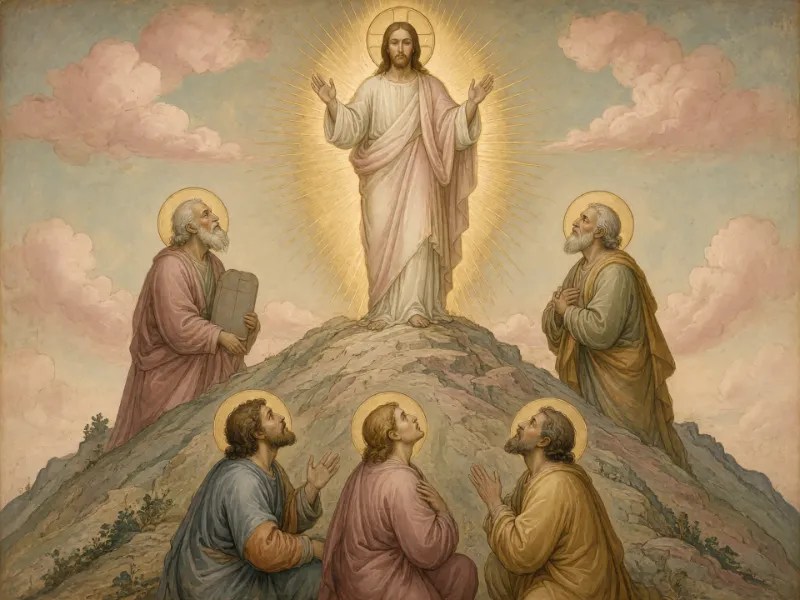
The verse Friends keep coming back to is in the first chapter of John: “That was the true Light, which lighteth every man that cometh into the world” (John 1:9). Fox “identified it with the divine Light of Christ,” Britain Yearly Meeting’s book recalls, and it says of the first Friends: “The Inward Light is the light of Christ. It is a universal Light, which can be known by anyone, of either sex, of any age, of whatever religion.” Ohio Yearly Meeting, a Conservative body, says it most simply of all: “There is a Light that shines in the heart of every person. The Light is Christ, who reveals our darkest secrets and then turns us away from them and to Himself.”
The phrase most people have heard is Fox’s own. He wrote in 1656 of Friends walking “cheerfully over the world, answering that of God in every one,” and the liberal meetings take it up today: “Broadly speaking, we affirm that ‘there is that of God in everyone,’” says Friends General Conference.
The Orthodox branch words it differently. In 1827 and 1828 five American yearly meetings split over the teaching of Elias Hicks, and the two sides came to be called Orthodox and Hicksite. In September 1887, 95 delegates from 12 yearly meetings of the Orthodox branch met in Richmond, Indiana, and drew up the Richmond Declaration of Faith. Six of those yearly meetings adopted it afterwards, while London, New England and Ohio did not. Wilmington Yearly Meeting, part of Friends United Meeting, cites it in its Faith and Practice, and the Evangelical Friends of Mid-America print it in theirs.
“We own no principle of spiritual light, life or holiness, inherent by nature in the mind or heart of man,” the Declaration says. The light is “the influence of the Holy Spirit of God, bestowed on mankind, in various measures and degrees, through Jesus Christ our Lord.”
第一の死から Quaker faith & practice, chapter 19, Openings (19.25)
イエス・キリスト
Are Quakers Christians? The first Friends answered plainly. In 1671 Fox wrote to the Governor of Barbados, “we own and believe in Jesus Christ, His beloved and only-begotten Son, in whom He is well pleased; who was conceived by the Holy Ghost, and born of the Virgin Mary; in whom we have redemption through His blood, even the forgiveness of sins.” Evangelical Friends Church International confesses “Jesus Christ to be the only begotten Son of God,” both God and man, “the God-man,” and it names the Trinity: “in the unity of the Godhead, there exists three persons; Father, Son, and Holy Spirit.”
Britain Yearly Meeting puts it to each Friend as a question. Its advices, which all Friends are asked to consider, say that “The Religious Society of Friends is rooted in Christianity and has always found inspiration in the life and teachings of Jesus,” and then ask, “How does Jesus speak to you today?” Among liberal Friends the answers vary. “Many Quakers consider themselves Christian, and some do not,” says Friends General Conference.
第一の死から クエーカーはイエスを信じているか?他のキリスト教徒と比較したクエーカーの信仰
The Bible and the Spirit
In 1675, at Ury in Scotland, Robert Barclay wrote his Apology for the True Christian Divinity and addressed it to Charles II. It was “the first systematic exposition of Quaker theology,” in the words of クエーカーの信仰と実践. Barclay honoured the Scriptures as “a true and faithful Testimony of the first Foundation,” and yet he called them “only a Declaration of the Fountain, and not the Fountain itself.” The fountain is the Spirit who gave them, and so, he said, the Scriptures “may be esteemed a Secondary Rule, subordinate to the Spirit.” That is where the first Friends parted from the Reformers’ 聖書のみという規則.
Ever since, Friends have put either the Spirit or the Scriptures first. The Orthodox Friends at Richmond put Scripture first: there “can be no appeal from them to any other authority whatsoever,” and anything said “contrary to the Scriptures, though under profession of the immediate guidance of the Holy Spirit, must be reckoned and accounted a mere delusion.” Evangelical Friends Church International keeps that wording for “the 66 books of the Holy Bible.” Conservative and British Friends keep Barclay’s order, with the Spirit first. Ohio Yearly Meeting calls Christ himself the Word of God, and so it says outright, “The Bible is not the Word of God.” And in 1986 London Yearly Meeting said that what matters is the Spirit “which gives us understanding of it” rather than “the literal words of scripture.”
第一の死から Robert Barclay, An Apology for the True Christian Divinity, Proposition III
Worship that waits on God
Silent worship
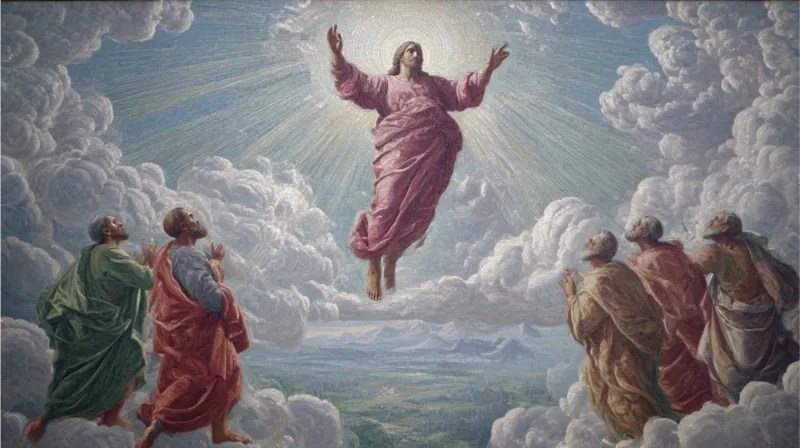
Barclay also wrote of what he found when he first came among Friends: “when I came into the silent assemblies of God’s people, I felt a secret power among them, which touched my heart; and as I gave way unto it I found the evil weakening in me and the good raised up.” An unprogrammed meeting has the same shape today. “A meeting for worship usually lasts for an hour. In Quaker worship there are no ministers or creeds,” Britain Yearly Meeting explains. “We first gather together in silence to quiet our minds – we don’t have set hymns, prayers or sermons.” Anyone who feels moved may speak, “including visitors,” and then the silence comes back.
Friends General Conference calls it a living silence: “In this living silence, we listen for the still, small voice that comes from God through the Inward Light.” A still small voice is what Elijah heard on the mountain, after the earthquake and the fire (1 Kings 19:12). Nobody in the room is idle, either. “The ministry of silence demands the faithful activity of every member in the meeting,” says クエーカーの信仰と実践. When the hour is over, someone shakes hands with a neighbour, and “then everyone shakes hands with those seated nearby.”
第一の死から Quaker faith & practice, chapter 2, Approaches to God (2.01)
Programmed worship and Quaker pastors
Asked whether Friends just sit in silence, Friends United Meeting answers, “This is not generally true.” Its meetings run from “waiting worship,” the unprogrammed kind, through semi-programmed worship with “a healthy time of silence (15 minutes or more)” alongside singing and a sermon, to programmed worship that “will often look like a more typical protestant-evangelical worship service.” In every form, it says, “it is God who is directing the worship service.”
Programmed churches have pastors, “women and men who have experienced a call to serve within the Quaker fellowship,” and Friends United Meeting gives the pastor “a unique role in the life of the congregation but not an elevated role.” In the Evangelical Friends Church, Mid-America Yearly Meeting, “Worship may be silent or vocal, taking various forms,” and a service “will usually include times of prayer, praise, and preaching.”
第一の死から Friends United Meeting, Frequently asked questions about Friends
Ministry for women and men
Under both kinds of worship lies one conviction, which London Yearly Meeting put into words in 1986: “The priesthood of all believers is a foundation of our understanding of the church.” Friends believe the Spirit can lead a church “without the need for a separated clergy.” From the beginning that ministry belonged to women as much as to men. “Women were to play a full part in the life of the church alongside men,” クエーカーの信仰と実践 says of the first Friends, and in 1683 Elizabeth Bathurst wrote, close to Paul’s “there is neither male nor female” (Galatians 3:28), “as male and female are made one in Christ Jesus, so women receive an office in the Truth as well as men.”
第一の死から Quaker faith & practice, chapter 27, Reflections (27.35)
Baptism and the Lord’s Supper, kept inwardly
Baptism with the Spirit
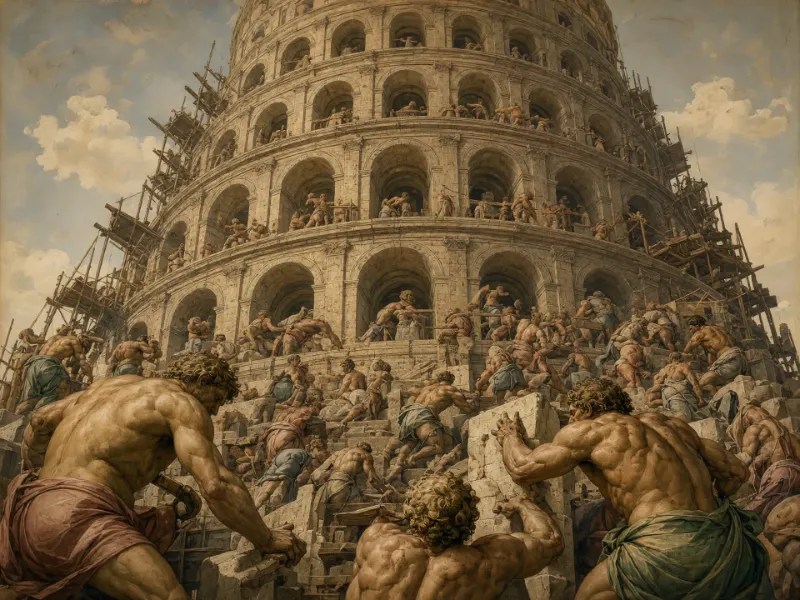
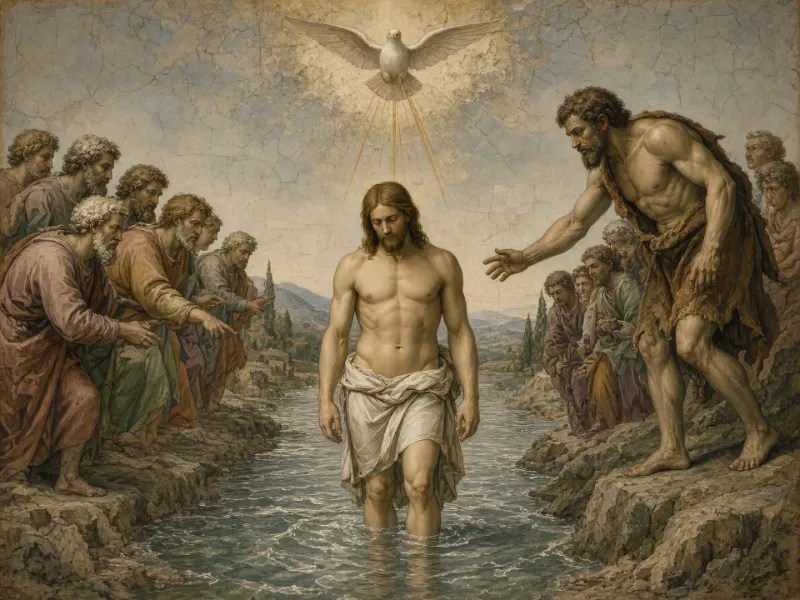
Most Friends, Friends United Meeting says, do not practise water baptism, and they point to a promise of Jesus. The risen Lord told his disciples, “For John truly baptized with water; but ye shall be baptized with the Holy Ghost not many days hence” (Acts 1:5). John Wilhelm Rowntree wrote in 1902 that “the Quaker position is really summed up” in those words, because what belongs to the Kingdom of God is “the inward change, the inward purification, the spiritual fact and not the outward symbol.” The Orthodox Friends at Richmond said it in their own words: “our Lord appointed no outward rite or ceremony for observance in His church,” and the one baptism “is not an outward baptism with water, but a spiritual experience.” Other churches teach a baptism of the Holy Spirit alongside water; for these Friends it is the only one.
Not every Friend goes without the water. Evangelical Friends, Friends General Conference says, “participate in sacraments such as baptism and communion.” And when London Yearly Meeting set out its own view in 1986, it did not tell the rest of the church it was wrong to baptize: “However valid and vital outward sacraments are for others, they are not, in our experience, necessary for the operation of God’s grace. We believe we hold this witness in trust for the whole church.”
第一の死から Quaker faith & practice, chapter 27, Reflections (27.37–27.38)
Communion at every table
Friends keep the Lord’s Supper inwardly too. “The eating of His body and the drinking of His blood cannot be an outward act,” says the Richmond Declaration. British Friends hear the Last Supper as an invitation to remember God’s self-giving love “at every meal and every meeting with others, and to allow our own lives to be broken open and poured out for the life of the world.” Gerald Hibbert wrote in 1941 that “To Fox and the early Friends the whole of life seemed sacramental,” and that “every week-day should be a Lord’s Day.”
Among evangelical Friends there is more room for the bread and the cup. The Evangelical Friends Church, Mid-America Yearly Meeting grants its Friends liberty over “the use (or non-use) of the physical elements,” and at its 2019 Ministry Conference it said that communion and baptism “are inward works of the Holy Spirit that can never be supplanted by the outward signs, but can be supported by them when practiced by Friends.” Our article on how many sacraments the churches keep sets Friends beside everyone else.
第一の死から Quaker faith & practice, chapter 27, Reflections (27.41)
The testimonies
What Friends mean by a testimony
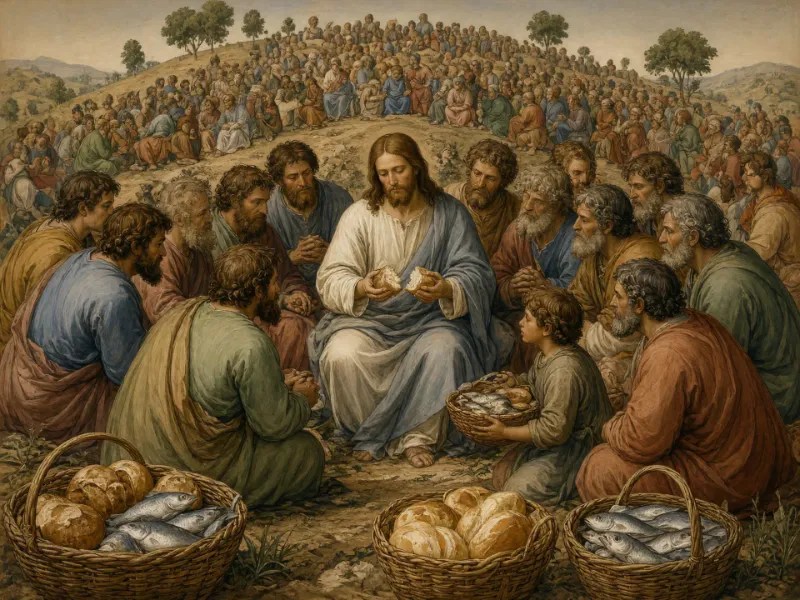
A testimony, for Friends, is a belief lived where others can see it. The first Friends spoke of particular testimonies: against hat honour, to plain language, against tithes, against oaths, against war. Today you will often see a short list of values instead, and クエーカーの信仰と実践 itself says the list is a modern way of putting what the first Friends did: “We express the principles they discovered in terms such as Truth, Equality, Simplicity, and Peace,” while “Early Friends expressed them in the ways of action which they called the testimonies, and for which they were prepared to suffer and to die.” Nobody has fixed the list, because, as John Punshon wrote in 1987, the testimonies “are ways of behaving but are not ethical rules.” British Friends usually speak of four, simplicity, truth, equality and peace, while Friends General Conference’s list runs to six: “peace, integrity, equality, community, simplicity, and care for the environment.”
第一の死から Quaker faith & practice, chapter 19, Openings (19.33)
The peace testimony
The peace testimony goes back to a declaration Friends gave to Charles II, which クエーカーの信仰と実践 dates 1660, and Britain Yearly Meeting still prints its words: “All bloody principles and practices we do utterly deny, with all outward wars, and strife, and fightings with outward weapons, for any end, or under any pretence whatsoever, and this is our testimony to the whole world.” And they gave their reason, that “the spirit of Christ which leads us into all Truth will never move us to fight and war against any man with outward weapons, neither for the kingdom of Christ, nor for the kingdoms of this world.” And they ended on Isaiah’s promise, “nation shall not lift up sword against nation, neither shall they learn war any more” (Isaiah 2:4).
The branches hold it in their own ways. The Evangelical Friends Church, Mid-America Yearly Meeting will “unequivocally support young Friends who as conscientious objectors to war refuse military service,” and it also says, “we support and pray for individuals (and their families) serving in our Armed Forces.” Among liberal Friends, Friends General Conference says, the choice “is left to the individual as conscience dictates,” and “Some Quakers, however, have served in the military,” though meetings “generally hold to a pacifist position.”
第一の死から Quaker faith & practice, chapter 24, Our peace testimony (24.04)
Truth, oaths and plain speech
Jesus said, “Swear not at all,” and “let your communication be, Yea, yea; Nay, nay” (Matthew 5:34, 37), and Friends took him at his word. Mid-America’s Friends still “refrain from profanity of speech and from swearing to legal oaths.” So a British Friend in the witness box affirms, and クエーカーの信仰と実践 reminds its readers that “Evidence given by a person who affirms is legally of equal value with ‘sworn’ evidence.”
The same plain truth reached the way they spoke to people. “When the Lord sent me forth into the world, he forbade me to put off my hat to any, high or low; and I was required to Thee and Thou all men and women, without any respect to rich or poor, great or small,” Fox wrote, and as for the hat, “because I could not put off my hat to them, it set them all into a rage.” Most Friends today, Friends General Conference says, “blend in” with their neighbours, and Friends United Meeting says plain dress is kept by “a small subset of Friends to this day.”
第一の死から The Journal of George Fox, vol. 1 (1901 edition)
Simplicity and equality
North Carolina Yearly Meeting (Conservative) wrote in 1983 that “The testimony of outward simplicity began as a protest against the extravagance and snobbery which marked English society in the 1600s,” and it added that “Simplicity does not mean drabness or narrowness.” Inwardly it is “spiritual detachment from the things of this world as part of the effort to fulfil the first commandment.”
Because Quakers believe “there is that of God in everyone,” Britain Yearly Meeting says, “they seek to ‘meet’ this in all people and see all humans as equal and deserving of equal treatment and respect.” The Evangelical Friends of Mid-America count among the testimonies of the early Friends “opposition to slavery and civil bondage,” “prison reform” and “compassionate care of the mentally ill.”
第一の死から Quaker faith & practice, chapter 20, Living faithfully today (20.27)
A church without votes
The sense of the meeting
Friends make their church decisions in a meeting for worship, and they do not vote, Britain Yearly Meeting explains, “because we believe that this would emphasise the divisions between differing views and inhibit the process of seeking to know the will of God.” They wait together, and the clerk watches for the meeting to come to unity and then offers a written minute. When Friends accept it, they “express, not a sudden agreement of everyone present with the prevailing view, but rather a confidence in our tried and tested way of seeking to recognise God’s will.” The Evangelical Friends of Mid-America work the same way. Their presiding clerk “announces what is discerned to be the sense of the meeting and asks for approval,” and “Voting under all ordinary circumstances is discouraged.”
第一の死から Quaker faith & practice, chapter 3, General counsel on church affairs (3.06)
Where the branches part
結婚
Fox explained in 1669 why Friends marry no one: “Friends cannot consent that they should join them together: for we marry none; it is the Lord’s work, and we are but witnesses.” British Friends still marry the way he described. The couple exchange their declarations of marriage in a meeting for worship, and those who witnessed it are encouraged to sign the marriage certificate. On who may marry, the branches have gone different ways. Britain Yearly Meeting decided in 2009 “that love and truth compel Friends to solemnise the marriage of same-sex couples equally with opposite-sex couples,” while Evangelical Friends Church International holds that “marriage is a God ordained, covenant relationship between a biologically born male and a biologically born female.”
第一の死から Quaker faith & practice, chapter 16, Quaker marriage procedure
Heaven and the life to come
On what comes after this life the branches speak very differently. Evangelical Friends look for Christ to return: “We believe in the second coming of Christ; that at His coming the dead shall be resurrected, some to everlasting glory and others to everlasting condemnation,” says Evangelical Friends Church International. Liberal Friends say less about what is to come and more about today. “The emphasis of a Quaker’s life is on present time―on experiencing and following the leadings of the Light in our lives today,” Friends General Conference says, and it leaves the rest to each Friend, for “Individual Quakers hold a variety of beliefs about what follows our lives on earth.” Ohio’s Conservative Friends turn to the words of Jesus: “Our Lord has taught us not to look for heaven in some distant time and place, ‘…for behold, the kingdom of God is within you.’”
第一の死から Evangelical Friends Church International, Statement of Faith
Britain Yearly Meeting ends its advices with Fox’s words of 1656 in full, and they bring us back to the light in every person: “Be patterns, be examples in all countries, places, islands, nations, wherever you come, that your carriage and life may preach among all sorts of people, and to them; then you will come to walk cheerfully over the world, answering that of God in every one.”
How Quakers differ from their neighbours
- アーミッシュとクエーカー:異なる国、時代、信念
- クエーカーとメノナイトの信念の比較
- クエーカーはイエスを信じているか?他のキリスト教徒と比較したクエーカーの信仰
- サクラメント(秘跡)はいくつあるのか?カトリックは7つ、多くのプロテスタントは2つと答える
- なぜ一部の教会は楽器を使わずに歌うのか
- 教会の統治形態:監督制、長老制、会衆制
- プロテスタントは何を信じているのか?共通点と相違点
See every answer for Quakers and compare with another church
このシリーズの他の記事宗派の比較163件すべてを見る 記事

コメントを残す