
 English
 Chinese
 Dutch
 Arabic
 Spanish
 Portuguese
 Russian
 French
 Italian
 German
 Japanese
Jehovah Rapha means “the LORD who heals”. The words come from Exodus 15:26, where God tells Israel at the spring of Marah, “I am the LORD that healeth thee.” God speaks them as a sentence about himself. Jehovah Rapha, the two-word name, is a later label for that verse.
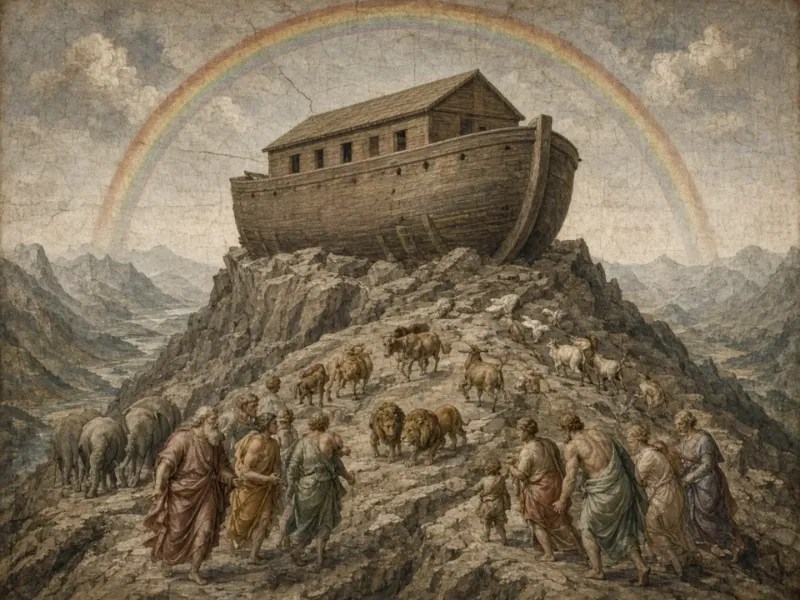
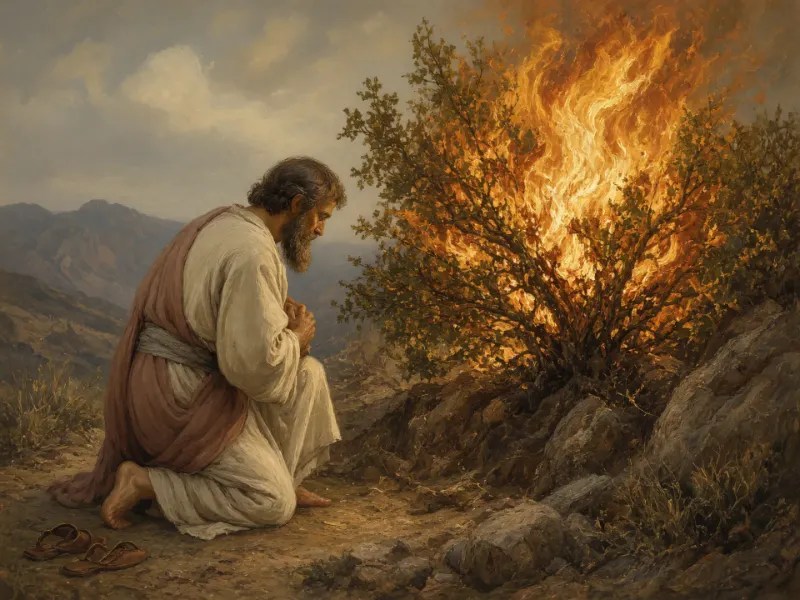
The place matters. After crossing the Red Sea, the people “went three days in the wilderness, and found no water,” and when they came to Marah “they could not drink of the waters of Marah, for they were bitter” (Exodus 15:22–23). They complained, Moses cried to the LORD, “and the LORD shewed him a tree, which when he had cast into the waters, the waters were made sweet” (Exodus 15:25). Only then did God speak these words about himself. He named himself healer beside a bitter spring, with his people still thirsty and grumbling. If we come to this verse with something bitter of our own, we have come to the right place.
What does Rapha mean in Hebrew?
Rapha (רָפָא) is the ordinary Hebrew verb “to heal”. Strong’s concordance traces it to a root meaning “to mend (by stitching)”, and the Brown–Driver–Briggs lexicon notes that in Arabic the same root means “darn, mend, repair”. If that history is right, it began as a homely word for closing a tear.
The Old Testament uses it for every kind of mending. God heals bodies: “I have heard thy prayer, I have seen thy tears: behold, I will heal thee,” he tells Hezekiah (2 Kings 20:5). He heals water, as when Elisha threw salt into the spring at Jericho and said, “Thus saith the LORD, I have healed these waters” (2 Kings 2:21). He heals a land (2 Chronicles 7:14), a nation’s unfaithfulness (“I will heal your backslidings”, Jeremiah 3:22) and the inner life: “He healeth the broken in heart, and bindeth up their wounds” (Psalm 147:3). Its participle is the Hebrew word for a physician, and Jeremiah uses it in his famous cry: “Is there no balm in Gilead; is there no physician there?” (Jeremiah 8:22).
In Exodus 15:26 the word takes the form rophekha, “your healer” or “who heals you”. That is why you will also see the title written Jehovah Rophe or Yahweh Rophekha. They all point to the same verse. The angel Raphael of the Book of Tobit, which is in Catholic and Orthodox Bibles, bears a name built on the same root. Strong’s lists the same name, borne by a man called Rephael in 1 Chronicles 26:7, and explains it as “God has cured”.
Where is Jehovah Rapha in the Bible?
Only in Exodus 15:26, and there as a sentence:
“If thou wilt diligently hearken to the voice of the LORD thy God, and wilt do that which is right in his sight, and wilt give ear to his commandments, and keep all his statutes, I will put none of these diseases upon thee, which I have brought upon the Egyptians: for I am the LORD that healeth thee.” (Exodus 15:26)
Some of the “Jehovah” names are names in the text itself. Abraham “called the name of that place Jehovahjireh” (Genesis 22:14), Moses built an altar “and called the name of it Jehovahnissi” (Exodus 17:15), and Gideon called his altar “Jehovahshalom” (Judges 6:24). The King James Version prints those three as names, and Strong’s gives each its own number. Exodus 15:26 names no place and no altar, so the King James translators rendered it as a sentence, and Strong’s has no entry for a name “Jehovah Rapha”. The label seems to come from later teaching on the names of God, which turns his sayings about himself into titles and sets them beside Jehovah Jireh and the rest.
“Jehovah” is itself a later form. It joins the four letters of God’s name, YHWH, to the vowels of Adonai, the word Jewish readers say in its place. The ancient Greek translation of the verse reads, in Brenton’s English, “for I am the Lord thy God that heals thee,” and the Catechism of the Catholic Church quotes it as “For I am the Lord, your healer.”
Is the promise in Exodus 15:26 conditional?
It begins with “if”. God made it to Israel, at the start of the covenant, and it asks them to hearken, do right and keep his statutes. The diseases it names are “these diseases … which I have brought upon the Egyptians”, probably the plagues Israel had just watched. The condition belonged to the covenant’s terms with Israel at Marah. It is not a test that a sick reader today has failed. The same God says of himself in the Song of Moses, “I kill, and I make alive; I wound, and I heal” (Deuteronomy 32:39), and Hosea’s people answer him with hope: “he hath torn, and he will heal us” (Hosea 6:1).
That “if” has been misused to tell sick people that their illness proves a hidden sin. Scripture does not pretend that sin and sickness never touch: Jesus told a man he had healed, “sin no more, lest a worse thing come unto thee” (John 5:14), and the Catechism says Israel learned that illness is “mysteriously linked to sin and evil.” But Jesus refused the verdict that a sick person must be paying for his own sin. His disciples saw a man blind from birth and asked, “Master, who did sin, this man, or his parents, that he was born blind?” He answered, “Neither hath this man sinned, nor his parents: but that the works of God should be made manifest in him” (John 9:2–3). The God of Marah asks us to listen to him. He does not ask us to read our sickness as a verdict.
How did Jesus show God as healer?
He healed. Matthew tells of an evening when “they brought unto him many that were possessed with devils: and he cast out the spirits with his word, and healed all that were sick,” and he sees a prophecy fulfilled: “Himself took our infirmities, and bare our sicknesses” (Matthew 8:16–17). In the synagogue at Nazareth Jesus read from Isaiah, “he hath sent me to heal the brokenhearted” (Luke 4:18). To the woman who touched his garment he said, “Daughter, thy faith hath made thee whole; go in peace” (Mark 5:34).
He also showed what the deepest healing is. When four men let a paralysed man down through a roof, Jesus first said, “Son, thy sins be forgiven thee,” and only after he knew the scribes were “reasoning in their hearts” did he add, “Arise, and take up thy bed” (Mark 2:5, 11). Psalm 103 had already put the two side by side: “Who forgiveth all thine iniquities; who healeth all thy diseases” (Psalm 103:3). Peter, writing of the cross, borrows Isaiah’s words for the healing of sin: Christ “bare our sins in his own body on the tree, that we, being dead to sins, should live unto righteousness: by whose stripes ye were healed” (1 Peter 2:24).
Does God always heal when we pray?
Christians agree that God heals. They do not all teach the same thing about how often, and the difference matters to anyone praying beside a sickbed.
The Assemblies of God, a Pentecostal church, puts it in its statement of faith: “Divine healing is an integral part of the gospel. Deliverance from sickness is provided for in the atonement, and is the privilege of all believers.” The statement rests on Isaiah 53, Matthew 8 and James 5.
The Catholic Church teaches that Christ “is the physician the sick have need of,” and also that “he did not heal all the sick. His healings were signs of the coming of the Kingdom of God.” Its Catechism adds that “even the most intense prayers do not always obtain the healing of all illnesses.” Catholics anoint the sick as one of the seven sacraments, following James: “Is any sick among you? let him call for the elders of the church; and let them pray over him, anointing him with oil in the name of the Lord” (James 5:14). The Orthodox Church keeps the same anointing as Holy Unction, and the Orthodox Church in America says plainly that “it is not always the will of God that there should be physical healing.”
Scripture shows both. Paul prayed three times for his “thorn in the flesh” to go and was told, “My grace is sufficient for thee: for my strength is made perfect in weakness” (2 Corinthians 12:7–9). He left his companion Trophimus “at Miletum sick” (2 Timothy 4:20) and told Timothy to take “a little wine for thy stomach’s sake and thine often infirmities” (1 Timothy 5:23). Even Luke, by tradition the writer of a Gospel full of healings, was “the beloved physician” (Colossians 4:14). The Book of Sirach, read in Catholic and Orthodox Bibles, holds medicine and prayer together: “Honour the physician for the need thou hast of him: for the most High hath created him,” and, “My son, in thy sickness neglect not thyself, but pray to the Lord, and he shall heal thee” (Sirach 38:1, 9). If you are ill, brothers and sisters, pray and see your doctor; the God who sweetened Marah’s water used a tree to do it. The verses gathered in Bible verses about physical healing include the people who were not healed, and they are a kind companion for a long illness.
How did the early Church read the tree at Marah?
The early Church read the story slowly. Ambrose, bishop of Milan in the fourth century, explained it to new Christians in his teaching on baptism: “Marah was a fountain of most bitter water: Moses cast wood into it and it became sweet.” For him the wood was a sign of the cross, and the sweetened water a picture of baptism: “after it has been consecrated by the mystery of the saving cross, it is made suitable for the use of the spiritual laver and of the cup of salvation.”
Scripture ends beside another tree and other waters. In the city of God there is a river, and “on either side of the river, was there the tree of life,” and “the leaves of the tree were for the healing of the nations” (Revelation 22:2). The God who healed a spring in the desert means to heal the world, and on that day “there shall be no more death, neither sorrow, nor crying, neither shall there be any more pain” (Revelation 21:4). Until then we pray as Jeremiah did, with the same verb: “Heal me, O LORD, and I shall be healed; save me, and I shall be saved: for thou art my praise” (Jeremiah 17:14).


Leave a Reply