
 English
 Chinese
 Dutch
 Arabic
 Spanish
 Portuguese
 Russian
 French
 Italian
 German
 Japanese
Adonai means “my Lord”, and Scripture uses it almost always for God. The Hebrew word, אֲדֹנָי, comes about 440 times in the Old Testament, and the King James Version prints it “Lord”, with one capital letter. It is also the word Jewish readers say aloud wherever God’s own name, the four letters YHWH, stands on the page.
So Adonai is a word for speaking to God, and one psalm holds it in a single line: “O my soul, thou hast said unto the LORD, Thou art my Lord” (Psalm 16:2). In Hebrew, what the psalmist says to God begins with two words, Adonai attah: my Lord art thou. The name tells us who God is. The title tells him who he is to us. Abram said it when he had no son, Moses when he begged to be excused, Daniel when the sanctuary in Jerusalem lay desolate. Whenever we begin a prayer with “Lord”, we are speaking the same word in our own language.
What does Adonai mean in Hebrew?
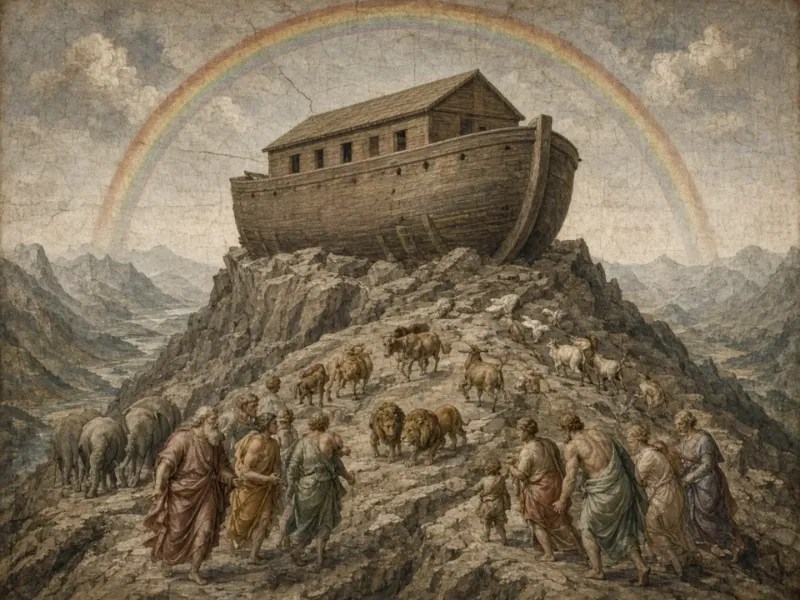
It grows from a plain word, adon, which the Brown–Driver–Briggs lexicon defines as “lord, master.” An adon could be the master of a household, a king, or a husband. Sarah, laughing in her tent, calls Abraham “my lord” (Genesis 18:12), and Peter remembers it centuries later: “Even as Sara obeyed Abraham, calling him lord” (1 Peter 3:6).
Adonai adds the ending for “my” and takes a plural form, so word for word it is “my lords”. The same lexicon calls this an “intensive plural of rank”, and the Jewish Encyclopedia calls it a “plural of majesty”: one Lord, spoken of with the whole weight of lordship. Elohim, the common Hebrew word for God, works the same way, and there is more on that in what Elohim means.
The consonants of “my lord” said to a man, “my lords” said to several, and Adonai said to God are the same. The difference lies in the vowel signs, which the Masoretes, the scribes who handed down the Hebrew text, added to the letters. The lexicon says the three spellings “are variations of Masoretic pointing to distinguish divine reference from human”. Strong’s concordance gives the result: Adonai is “the Lord (used as a proper name of God only)”. A few places stay uncertain. When Abraham runs to meet three strangers and bows, saying “My Lord, if now I have found favour in thy sight” (Genesis 18:3), the lexicon marks the verse with a question mark: was he speaking to God or to an honoured guest? The King James translators gave it a capital. When Lot pleads with the two angels at Sodom (Genesis 19:18), the same word is uncertain again, and the New American Standard Bible reads “my lords”.
That is why the count is “about 440”. The concordance on Bible Hub lists 448 places under Strong’s number 136. About 440 of them are the form Adonai, and the rest are a handful of related forms. English Bibles differ a little, because some verses are read as God’s name and some as a human “lord”.
Where does Adonai first appear in the Bible?
Its first use is Abram’s question in the dark years before Isaac was born: “Lord GOD, what wilt thou give me, seeing I go childless” (Genesis 15:2). He asks again a few verses later, “Lord GOD, whereby shall I know that I shall inherit it?” (Genesis 15:8). The first time anyone in Scripture calls God Adonai, he is waiting on a promise he cannot see.
Moses uses it when he would rather not go to Pharaoh. “O my Lord, I am not eloquent,” he pleads, and then, “O my Lord, send, I pray thee, by the hand of him whom thou wilt send” (Exodus 4:10, 13). Isaiah uses it for the Lord he saw in the temple: “I saw also the Lord sitting upon a throne, high and lifted up” (Isaiah 6:1). Daniel, praying for a ruined city, says it three times in one breath (Daniel 9:19).
The prophets use it most, and above all Ezekiel. By the count of the Brown–Driver–Briggs lexicon, his book says “thus saith the Lord GOD” 131 times and “saith the Lord GOD” another 80. In the Psalms it is the word of someone in trouble or at prayer: “O Lord, open thou my lips; and my mouth shall shew forth thy praise” (Psalm 51:15).

How does the King James Version print Adonai?
The capitals show where God’s name stands. The King James Version prints God’s name YHWH as LORD in small capitals, Adonai as “Lord”, and the two together as “Lord GOD”. The English Standard Version does the same: its preface calls LORD for the name “common among English translations today” and treats “Lord GOD” as an exception to it.
| Hebrew text | Read aloud as | KJV prints | Example |
|---|---|---|---|
| YHWH | Adonai | LORD | Exodus 20:7 |
| Adonai | Adonai | Lord | Isaiah 6:1 |
| Adonai YHWH | Adonai Elohim | Lord GOD | Genesis 15:2 |
| YHWH Elohim | Adonai Elohim | LORD God | Genesis 2:4 |
The third row needs a word of explanation. Where Adonai already stands before the divine name, a reader saying “Adonai” for both would say it twice. So, as the Jewish Encyclopedia explains, in that place the name is “written by the Masorites with the vowels of Elohim, in which case Elohim is read instead”. That is why the King James Bible prints “GOD” in capitals there.
A plain “Lord” does not always mean Adonai. Two famous verses use a different word. “O LORD our Lord, how excellent is thy name in all the earth!” (Psalm 8:1) has adonenu, “our lord”, from the plain adon. And “The LORD said unto my Lord, Sit thou at my right hand” (Psalm 110:1) has adoni, the “my lord” used of men. Jesus asked the Pharisees about that verse: “If David then call him Lord, how is he his son?” (Matthew 22:45). Even “Lord GOD” can stand on the plain word: at Exodus 34:23, “before the Lord GOD, the God of Israel”, the Hebrew is ha-adon YHWH, “the Lord” with the name.
Why do Jews say Adonai instead of God’s name?
Out of reverence for the name itself. Lavinia Cohn-Sherbok, writing on Judaism, puts it this way: “by the third century BCE the consonants were regarded as so sacred that they were never articulated. Instead, the convention was to read the letters as Adonai, which means ‘Lord.’” Behind the custom stands the commandment: “Thou shalt not take the name of the LORD thy God in vain” (Exodus 20:7).
The Jewish Encyclopedia records how long the name was still spoken. The priests in the Temple pronounced it when they blessed the people, and “outside the Temple they used the title ‘Adonai.’” The high priest spoke it on the Day of Atonement. Once the Second Temple was destroyed, “there remained no trace of knowledge as to the pronunciation of the Name.” The sages even found the silence in a verse. God told Moses, “this is my name for ever” (Exodus 3:15), and the Hebrew word for “for ever” there is spelled so that it can also be read “to conceal”.
In time Adonai itself came to feel too holy for ordinary talk. Cohn-Sherbok writes that most Orthodox Jews today say HaShem instead, “which simply means ‘the Name,’” and many write G-d in English. In the liturgy the name is still read as Adonai: she gives the example of the words for “the Lord our God”, read aloud as Adonai Eloheynu. A verse that begins with Adonai stands at the doorway of Jewish prayer. The Talmud tells that Rabbi Yochanan spoke “God, open my lips that my mouth may tell Your praise” (Psalm 51:17 in Hebrew Bibles) as he stood to pray the Amidah, the standing prayer that Rabbi James Ponet calls “the literary heart of prayer”, and, in Ponet’s words, “His practice became the norm.”
Christians received the habit through the Greek Bible. The Septuagint, the translation of the Old Testament into Greek, wrote kyrios, “Lord”, for both Adonai and the name, and the New Testament follows it. The form Jehovah came much later, from the consonants YHWH read with the vowels of Adonai. The fuller story of the name and its titles is in the names of God and their meanings.
Is Jesus called Adonai?
The New Testament is written in Greek, so the word it uses is kyrios, the Septuagint’s word for Adonai. Thayer’s lexicon lists Adonai first among the Hebrew words kyrios translates. When the apostles call Jesus “Lord”, they use the word the Greek Old Testament had used for God’s own name.
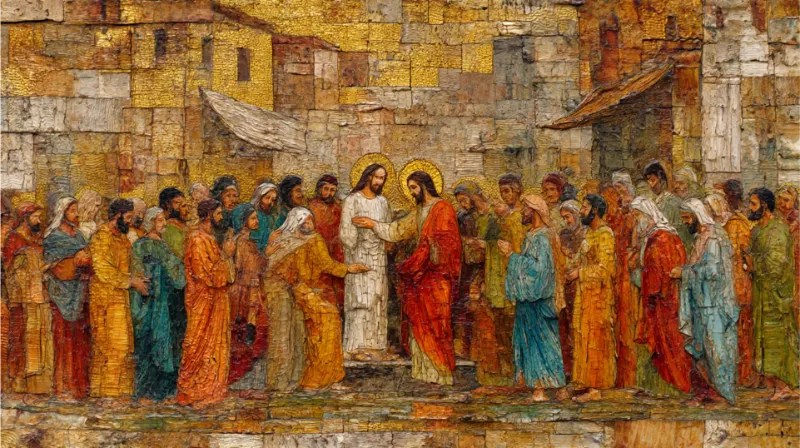
When Thomas saw the wounds, he said, “My Lord and my God” (John 20:28). A psalmist had prayed the same words in the other order, “my God and my Lord” (Psalm 35:23), and in that psalm the Hebrew is Adonai. Paul writes that God gave Jesus the name above every name, “that every tongue should confess that Jesus Christ is Lord, to the glory of God the Father” (Philippians 2:11), and that “no man can say that Jesus is the Lord, but by the Holy Ghost” (1 Corinthians 12:3). The difference between the two words in English Bibles is set out in the difference between God and Lord in the Bible.
So the word Abram spoke while he waited, the word Moses used to plead, and the word Thomas spoke before the risen Christ come down to us as the first word of many of our prayers. Daniel shows us how to say it, for a ruined city and for a heart that needs mercy: “O Lord, hear; O Lord, forgive; O Lord, hearken and do; defer not, for thine own sake, O my God” (Daniel 9:19).


Leave a Reply