
 English
 Chinese
 Dutch
 Arabic
 Spanish
 Portuguese
 Russian
 French
 Italian
 German
 Japanese
The Bible’s teaching on communication comes down to a few repeated points: listen before you speak, say what is true, and speak to build others up.
Proverbs returns to speech again and again, and James gives most of a chapter to the tongue, which he compares to a fire and says no human being can tame (James 3:8). He includes himself: “we all stumble in many ways” (James 3:2). The twenty passages below cover what the tongue does, listening, what to say instead, and what speech is for.
What the tongue actually does

Proverbs 18:21
“Death and life are in the power of the tongue, and those who love it will eat its fruits.”
Reflection: The second half says that those who love to talk will live with the results of their words, good or bad.

James 3:5-6
“So also the tongue is a small member, yet it boasts of great things. How great a forest is set ablaze by such a small fire!”
Reflection: James contrasts the size of the tongue with the size of the damage. Verse 6 calls it a fire and says it is “set on fire by hell.”

James 3:2
“For we all stumble in many ways. And if anyone does not stumble in what he says, he is a perfect man, able also to bridle his whole body.”
Reflection: James includes himself in “we all stumble.” The verse before warns that teachers will be judged with greater strictness (3:1).

James 3:9-10
“With it we bless our Lord and Father, and with it we curse people who are made in the likeness of God. From the same mouth come blessing and cursing.”
Reflection: The same mouth blesses God and curses people made in his likeness. James says plainly, “these things ought not to be so,” and compares it to a spring pouring out both fresh and salt water (3:11).

Proverbs 12:18
“There is one whose rash words are like sword thrusts, but the tongue of the wise brings healing.”
Reflection: The damage comes from rash words, spoken without thought. The tongue of the wise does the opposite and heals.
Listening, which costs more

James 1:19
“Know this, my beloved brothers: let every person be quick to hear, slow to speak, slow to anger.”
Reflection: Hearing is the one thing James asks people to be quick about. The next verse gives the reason for slowness to anger: human anger “does not produce the righteousness of God” (1:20).
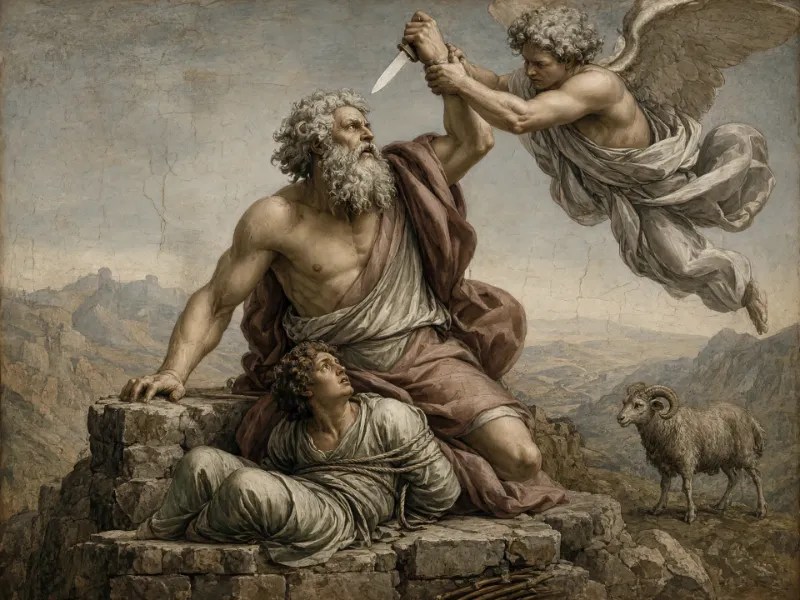
Proverbs 18:13
“If one gives an answer before he hears, it is his folly and shame.”
Reflection: Answering before hearing the whole matter is called folly and shame. Two verses later the proverb says that the ear of the wise seeks knowledge (18:15).

Proverbs 11:12
“Whoever belittles his neighbor lacks sense, but a man of understanding remains silent.”
Reflection: Silence is the mark of understanding here, set against belittling a neighbor.
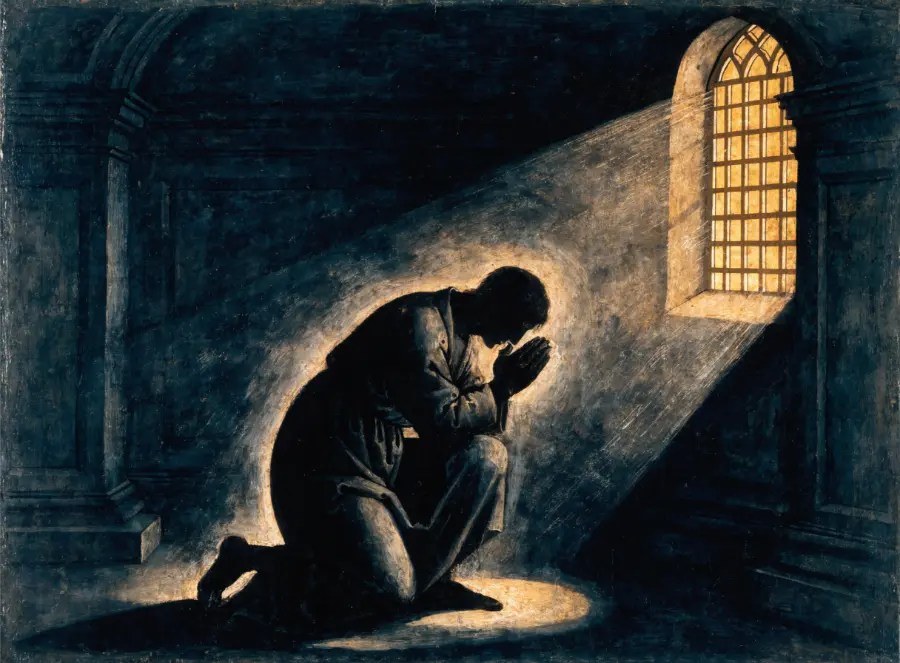
Psalm 141:3
“Set a guard, O Lord, over my mouth; keep watch over the door of my lips!”
Reflection: David asks God to guard his mouth, and in the next verse to keep his heart from turning to evil (141:4). It is a prayer to use before a hard conversation.

Proverbs 13:3
“Whoever guards his mouth preserves his life; he who opens wide his lips comes to ruin.”
Reflection: Guarding the mouth is tied to preserving life, and speaking without restraint to ruin.
What to say instead

Ephesians 4:29
“Let no corrupting talk come out of your mouths, but only such as is good for building up, as fits the occasion, that it may give grace to those who hear.”
Reflection: Paul’s test for speech is whether it builds up and fits the occasion, so that it gives grace to those who hear.
Colossians 4:6
“Let your speech always be gracious, seasoned with salt, so that you may know how you ought to answer each person.”
Reflection: The verse before is about conduct toward outsiders (4:5). Salt preserved food and gave it flavor; Paul applies it to speech that is gracious and suited to each person.

Proverbs 16:24
“Gracious words are like a honeycomb, sweetness to the soul and health to the body.”
Reflection: Proverbs says kind words affect the body as well as the mind.

Ephesians 4:25
“Therefore, having put away falsehood, let each one of you speak the truth with his neighbor, for we are members one of another.”
Reflection: Paul is quoting Zechariah 8:16, which is also on this page. His reason is that believers are members of one body, so lying to a neighbor harms the body both belong to.

Zechariah 8:16
“These are the things that you shall do: Speak the truth to one another; render in your gates judgments that are true and make for peace.”
Reflection: The prophet joins truth and peace in one instruction: the judgments given in the gates are to be both true and peaceable. The town gate was where disputes were settled.

Ephesians 4:31
“Let all bitterness and wrath and anger and clamor and slander be put away from you, along with all malice.”
Reflection: “Clamor” means shouting. Paul lists the loudness along with bitterness and slander, and the next verse gives the alternative: kindness and forgiveness (4:32).
What speech is finally for

1 Thessalonians 5:11
“Therefore encourage one another and build one another up, just as you are doing.”
Reflection: Paul tells them to keep doing what they are already doing. His own sentence is an example of the encouragement he asks for.

Romans 12:14
“Bless those who persecute you; bless and do not curse them.”
Reflection: Paul echoes Jesus’ words in Luke 6:28, “bless those who curse you.” For more on this, see Bible verses about respect.

2 Corinthians 1:3-4
“Blessed be the God and Father of our Lord Jesus Christ, the Father of mercies and God of all comfort, who comforts us in all our affliction, so that we may be able to comfort those who are in any affliction.”
Reflection: The comfort Paul received becomes something he can pass on to others in any affliction, and much of it is passed on in words.

Psalm 19:14
“Let the words of my mouth and the meditation of my heart be acceptable in your sight, O Lord, my rock and my redeemer.”
Reflection: The psalm closes with this prayer after praising God’s law as more desirable than gold (19:10). David asks that both his words and his thoughts be acceptable.
Before the next difficult conversation
James offers no technique for taming the tongue; he says no one can (3:8). What he offers is the admission that everyone stumbles in speech and the instruction to be quick to hear and slow to speak.
In practice that means praying Psalm 141:3 before the conversation, hearing the whole matter before answering, and choosing words that fit the occasion and build up the person in front of you.


Leave a Reply