
 English
 Chinese
 Dutch
 Arabic
 Spanish
 Portuguese
 Russian
 French
 Italian
 German
 Japanese
The Bible forbids sex between men in the law of Moses and names it among wrongdoing in Paul’s letters. The texts are Leviticus 18:22 and 20:13, Romans 1:26-27, 1 Corinthians 6:9-10 and 1 Timothy 1:9-10, and Genesis 2:24, quoted by Jesus in Matthew 19:4-6, describes marriage as a man united to his wife.
The story of Sodom in Genesis 19 and its later mentions in Ezekiel 16:49-50 and Jude 1:7 belong to the same discussion.
Each of these verses sits inside a longer passage. Jesus was answering a question about divorce, Leviticus 18 and 20 set the prohibition among other forbidden relations, and Paul’s words in Romans and 1 Corinthians stand in lists of wrongdoing that include greed and slander. The Catholic Church and the Southern Baptist Convention have each set out a teaching on these texts. The Evangelical Lutheran Church in America’s social statement on sexuality, adopted in 2009 and amended in 2025, works with what it calls “four positions of bound conscience,” a concept the church is now reconsidering.
Creation and marriage
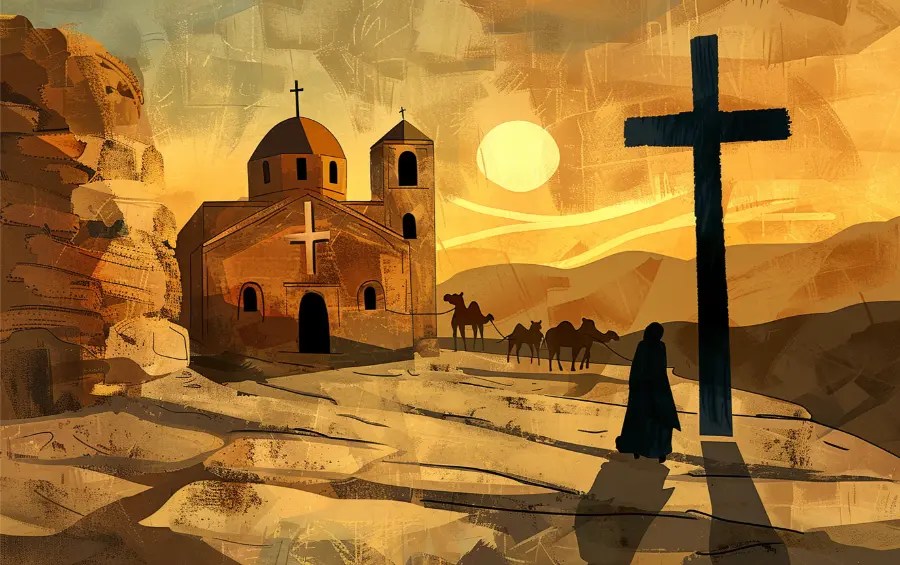
Genesis 1:27-28
“So God created mankind in his own image, in the image of God he created them; male and female he created them. God blessed them and said to them, ‘Be fruitful and increase in number; fill the earth and subdue it. Rule over the fish in the sea and the birds in the sky and over every living creature that moves on the ground.’”
Reflection: The account of the sixth day says that God made humankind in his image and made them “male and female.” The blessing that follows is addressed to both together: “Be fruitful and increase in number; fill the earth and subdue it.” Jesus quotes the words “male and female” from this verse in Matthew 19:4.

Genesis 2:24
“That is why a man leaves his father and mother and is united to his wife, and they become one flesh.”
Reflection: God has said, “It is not good for the man to be alone” (Genesis 2:18), and no animal the man names is a suitable helper. After the woman is made from the man’s rib, he calls her “bone of my bones and flesh of my flesh,” and the narrator draws the rule from the story with “That is why”: a man leaves his parents, is united to his wife, and they become one flesh.

Matthew 19:4-6
“Haven’t you read,” he replied, “that at the beginning the Creator ‘made them male and female,’ and said, ‘For this reason a man will leave his father and mother and be united to his wife, and the two will become one flesh’? So they are no longer two, but one flesh. Therefore what God has joined together, let no one separate.”
Reflection: Pharisees asked Jesus whether a man may divorce his wife “for any and every reason” (Matthew 19:3). He answered by joining two verses from Genesis, “made them male and female” (1:27) and the one-flesh union of 2:24, and concluded, “what God has joined together, let no one separate.” His answer describes marriage as the joining of a man and a woman.
The law of Moses
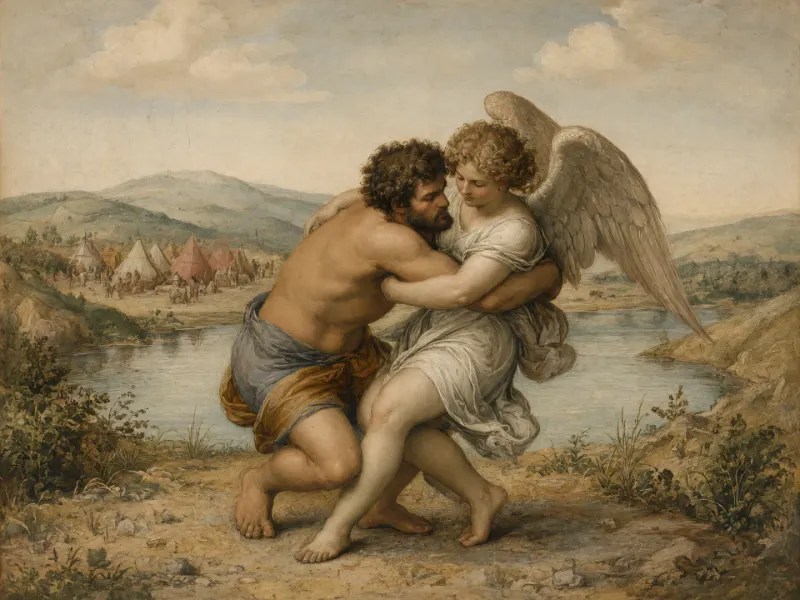
Leviticus 18:22
“Do not have sexual relations with a man as one does with a woman; that is detestable.”
Reflection: The verse sits in a list of forbidden sexual relations addressed to Israel: with a neighbor’s wife (18:20), with a man “as one does with a woman” (18:22), and with an animal (18:23), with a ban on sacrificing children to Molek between them (18:21). Verse 24 gives the reason for the whole list: “this is how the nations that I am going to drive out before you became defiled.”
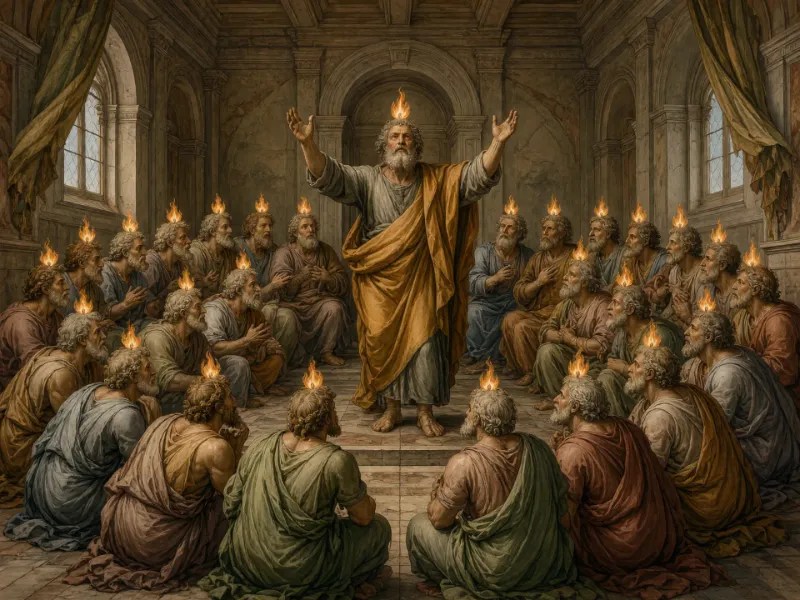
Leviticus 20:13
“If a man has sexual relations with a man as one does with a woman, both of them have done what is detestable. They are to be put to death; their blood will be on their own heads.”
Reflection: Leviticus 20 repeats several of the chapter 18 prohibitions and attaches penalties to them. The death penalty given here is also given for adultery with a neighbor’s wife (20:10), for relations with a father’s wife (20:11) and for relations with a daughter-in-law (20:12). Verses 11, 12 and 13 close with the same words: “their blood will be on their own heads.”
Sodom
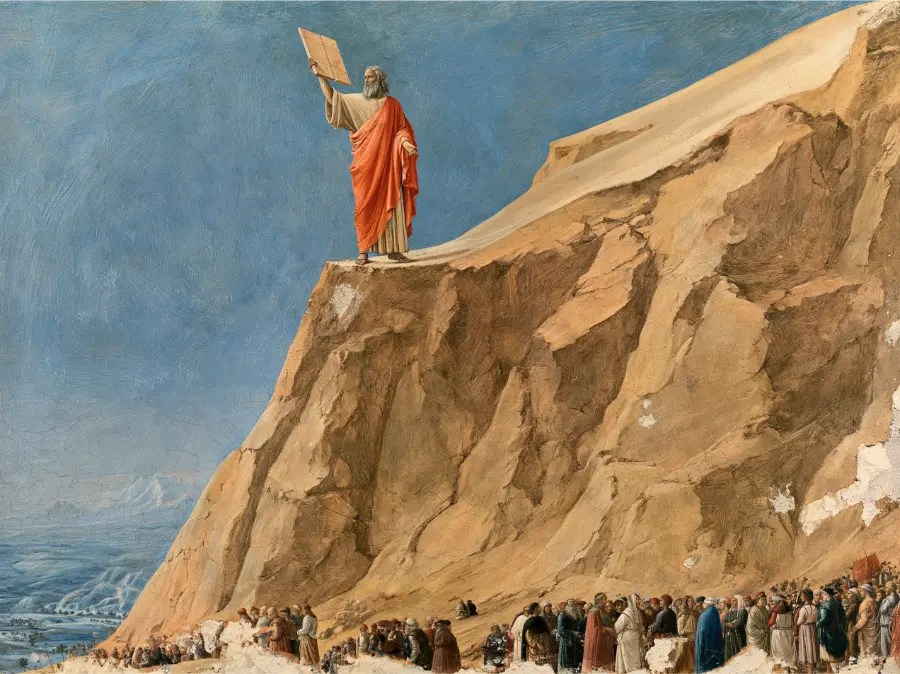
Genesis 19:4-5
“Before they had gone to bed, all the men from every part of the city of Sodom—both young and old—surrounded the house. They called to Lot, ‘Where are the men who came to you tonight? Bring them out to us so that we can have sex with them.’”
Reflection: Two angels have come to Sodom in the evening, and Lot has taken them into his house (Genesis 19:1-3). The men of the city, “both young and old,” surround the house and demand the visitors. Lot calls it a “wicked thing,” offers his two daughters instead, and pleads that the men “have come under the protection of my roof” (19:7-8).
Ezekiel 16:49-50
“Now this was the sin of your sister Sodom: She and her daughters were arrogant, overfed and unconcerned; they did not help the poor and needy. They were haughty and did detestable things before me. Therefore I did away with them as you have seen.”
Reflection: Ezekiel is told to “confront Jerusalem with her detestable practices” (Ezekiel 16:2), and in the course of that oracle he compares the city with “your sister Sodom.” The sins he names are arrogance, excess of food, unconcern, and failing to help the poor and needy, and then “detestable things” left unspecified.
Jude 1:7
“In a similar way, Sodom and Gomorrah and the surrounding towns gave themselves up to sexual immorality and perversion. They serve as an example of those who suffer the punishment of eternal fire.”
Reflection: Jude sets Sodom and Gomorrah in a row of three warnings: the Israelites destroyed after the exodus for unbelief, the angels who “abandoned their proper dwelling” (Jude 1:5-6), and the cities of the plain. “In a similar way” ties the cities to the angels, and the NIV names the cities’ sin as “sexual immorality and perversion.”
Paul’s letters

Romans 1:26-27
“Because of this, God gave them over to shameful lusts. Even their women exchanged natural sexual relations for unnatural ones. In the same way the men also abandoned natural relations with women and were inflamed with lust for one another. Men committed shameful acts with other men, and received in themselves the due penalty for their error.”
Reflection: Paul’s argument begins with people who knew God but “exchanged the glory of the immortal God for images” (Romans 1:23). Three times, in verses 24, 26 and 28, he says that “God gave them over,” and these verses, which speak of women as well as men, come in the middle. After these verses comes a long list that includes envy, gossip, arrogance and disobeying parents (1:29-31), and the next chapter turns on the reader: “You, therefore, have no excuse, you who pass judgment on someone else” (2:1).
1 Corinthians 6:9-10
“Or do you not know that wrongdoers will not inherit the kingdom of God? Do not be deceived: Neither the sexually immoral nor idolaters nor adulterers nor men who have sex with men nor thieves nor the greedy nor drunkards nor slanderers nor swindlers will inherit the kingdom of God.”
Reflection: The NIV phrase “men who have sex with men” translates two Greek words, and the NIV’s own footnote says they “refer to the passive and active participants in homosexual acts.” The first, malakos, means soft and is used of fine clothing in Matthew 11:8; the second, arsenokoites, is defined in Thayer’s lexicon as “one who lies with a male as with a female.” The same list names the sexually immoral, idolaters, adulterers, thieves, the greedy, drunkards, slanderers and swindlers.
1 Corinthians 6:11
“And that is what some of you were. But you were washed, you were sanctified, you were justified in the name of the Lord Jesus Christ and by the Spirit of our God.”
Reflection: The next sentence is addressed to the Corinthian church: “And that is what some of you were.” Paul describes their change in three verbs, washed, sanctified and justified, all “in the name of the Lord Jesus Christ and by the Spirit of our God.”
1 Timothy 1:9-10
“We also know that the law is made not for the righteous but for lawbreakers and rebels, the ungodly and sinful, the unholy and irreligious, for those who kill their fathers or mothers, for murderers, for the sexually immoral, for those practicing homosexuality, for slave traders and liars and perjurers—and for whatever else is contrary to the sound doctrine…”
Reflection: Paul opens with “the law is good if one uses it properly” (1 Timothy 1:8) and then lists those the law is made for. “Those practicing homosexuality” translates arsenokoites, the second of the two words in 1 Corinthians 6:9, and it stands in the list beside murderers, the sexually immoral, slave traders, liars and perjurers.
How churches read these verses
The Catechism of the Catholic Church (2357) cites Scripture, “which presents homosexual acts as acts of grave depravity,” and says that “homosexual acts are intrinsically disordered” and “Under no circumstances can they be approved.” Paragraph 2358 speaks of “men and women who have deep-seated homosexual tendencies”: “This inclination, which is objectively disordered, constitutes for most of them a trial. They must be accepted with respect, compassion, and sensitivity. Every sign of unjust discrimination in their regard should be avoided.” Paragraph 2359 begins, “Homosexual persons are called to chastity.”
The Southern Baptist Convention’s confession, the Baptist Faith and Message (2000), says that “Christians should oppose racism, every form of greed, selfishness, and vice, and all forms of sexual immorality, including adultery, homosexuality, and pornography,” and defines marriage as “the uniting of one man and one woman in covenant commitment for a lifetime.”
The Evangelical Lutheran Church in America adopted its social statement Human Sexuality: Gift and Trust in 2009. A first reconsideration reviewed its wording “in light of public acceptance of marriage of same-gender and gender-non-conforming couples”; it was completed at the 2025 Churchwide Assembly, where edits to Section IV were adopted by a two-thirds vote (724-46). A second reconsideration, now under way, is a “fresh consideration” of the “church’s current concept of the four positions of bound conscience” set out in the 2009 statement.


Leave a Reply