
 English
 Chinese
 Dutch
 Arabic
 Spanish
 Portuguese
 Russian
 French
 Italian
 German
 Japanese
In the Bible the lion stands for strength, and that strength can belong to God, to his people or to their enemies. God roars like a lion in Amos 3:8, and the devil “prowls around like a roaring lion” in 1 Peter 5:8.
Three accounts describe people who faced real lions: Samson (Judges 14:6), David (1 Samuel 17:37) and Daniel (Daniel 6:22).
God compared to a roaring lion
Amos 3:8
“The lion has roared; who will not fear? The Lord GOD has spoken; who can but prophesy?”
Reflection: Amos ends a run of questions about cause and effect, among them “Does a lion roar in the forest, when he has no prey?” (Amos 3:4), with this pair. A roar makes people afraid, and the Lord’s speaking makes a prophet speak. The book opens with the same image: “The LORD roars from Zion” (Amos 1:2).
Isaiah 31:4
“For thus the LORD said to me, ‘As a lion or a young lion growls over his prey, and when a band of shepherds is called out against him he is not terrified by their shouting or daunted at their noise, so the LORD of hosts will come down to fight on Mount Zion and on its hill.’”
Reflection: Isaiah is speaking to people who “go down to Egypt for help and rely on horses” (Isaiah 31:1). The lion in his picture is not frightened off its prey by a band of shouting shepherds, and the LORD of hosts will come down to fight on Mount Zion in the same way. The next verse changes the image to birds hovering over Jerusalem to protect it.
Hosea 11:10
“They shall go after the LORD; he will roar like a lion; when he roars, his children shall come trembling from the west.”
Reflection: Here the roar calls people home. The verse before has God say, “I will not again destroy Ephraim,” and the next one completes the picture: his children come trembling “like birds from Egypt, and like doves from the land of Assyria,” and he returns them to their homes.
Hosea 13:8
“I will fall upon them like a bear robbed of her cubs; I will tear open their breast, and there I will devour them like a lion, as a wild beast would rip them open.”
Reflection: Two chapters later the same prophet uses the lion for judgment. God had cared for Israel in the wilderness, but “when they had grazed, they became full, they were filled, and their heart was lifted up; therefore they forgot me” (Hosea 13:6). He says he will be to them like a lion, a leopard and a bear robbed of her cubs.
Judah, Israel and the Lion of Revelation
Genesis 49:9
“Judah is a lion’s cub; from the prey, my son, you have gone up. He stooped down; he crouched as a lion and as a lioness; who dares rouse him?”
Reflection: Jacob speaks this over his son Judah when he gathers his sons to tell them “what shall happen to you in days to come” (Genesis 49:1). The lion crouches after the kill, and no one dares disturb it. The next verse gives Judah the scepter and the ruler’s staff.
Numbers 23:24
“Behold, a people! As a lioness it rises up and as a lion it lifts itself; it does not lie down until it has devoured the prey and drunk the blood of the slain.”
Reflection: Balak, king of Moab, brought Balaam from Aram to curse Israel (Numbers 23:7), and this is part of what Balaam says instead: a people that rises like a lioness and does not lie down until it has eaten. In a later oracle he applies Jacob’s words about Judah to the whole people: “He crouched, he lay down like a lion and like a lioness; who will rouse him up?” (Numbers 24:9).
Revelation 5:5
“And one of the elders said to me, ‘Weep no more; behold, the Lion of the tribe of Judah, the Root of David, has conquered, so that he can open the scroll and its seven seals.’”
Reflection: John weeps because no one is found worthy to open the scroll, and one of the elders tells him to stop: the Lion of the tribe of Judah has conquered. When John looks, he sees “a Lamb standing, as though it had been slain” (Revelation 5:6), and the song that follows calls the Lamb worthy “for you were slain, and by your blood you ransomed people for God” (Revelation 5:9).
People compared to lions
Proverbs 28:1
“The wicked flee when no one pursues, but the righteous are bold as a lion.”
Reflection: The proverb sets two kinds of people side by side. The wicked run when nobody is chasing them, and the righteous hold their ground like a lion. The chapter comes back to the pair at its end: “When the wicked rise, people hide themselves, but when they perish, the righteous increase” (Proverbs 28:28).
2 Samuel 1:23
“Saul and Jonathan, beloved and lovely! In life and in death they were not divided; they were swifter than eagles; they were stronger than lions.”
Reflection: David sings this lament after Saul and Jonathan died on the mountains of Gilboa (2 Samuel 1:21). He praises them as swifter than eagles and stronger than lions, and three times the song repeats “How the mighty have fallen” (2 Samuel 1:19, 25, 27).
1 Chronicles 12:8
“From the Gadites there went over to David at the stronghold in the wilderness mighty and experienced warriors, expert with shield and spear, whose faces were like the faces of lions and who were swift as gazelles upon the mountains.”
Reflection: The Chronicler lists the men who came over to David at the stronghold in the wilderness. These Gadites had faces like lions and were swift as gazelles, and verse 14 adds that “the least was a match for a hundred men and the greatest for a thousand.” Their names follow, beginning with Ezer the chief.
When the lion is the enemy
Psalm 22:13
“They open wide their mouths at me, like a ravening and roaring lion.”
Reflection: The psalm opens with “My God, my God, why have you forsaken me?”, the words Jesus cries from the cross in Matthew 27:46. In verse 12 the attackers are strong bulls of Bashan, and in verse 13 they open their mouths like a roaring lion. Later the psalmist prays, “Save me from the mouth of the lion!” (Psalm 22:21).
Psalm 57:4
“My soul is in the midst of lions; I lie down amid fiery beasts— the children of man, whose teeth are spears and arrows, whose tongues are sharp swords.”
Reflection: The heading places the psalm when David “fled from Saul, in the cave.” The lions here are people, whose teeth are spears and arrows and whose tongues are swords. Two verses later the ones who dug a pit in his way “have fallen into it themselves” (Psalm 57:6).
Psalm 10:9
“He lurks in ambush like a lion in his thicket; he lurks that he may seize the poor; he seizes the poor when he draws him into his net.”
Reflection: The psalm describes a wicked man who lies in wait like a lion in a thicket to catch the poor, and the next verse says the helpless “fall by his might.” A few verses on, the psalm prays, “Arise, O LORD; O God, lift up your hand; forget not the afflicted” (Psalm 10:12).
1 Peter 5:8
“Be sober-minded; be watchful. Your adversary the devil prowls around like a roaring lion, seeking someone to devour.”
Reflection: The warning follows the call to humble yourselves “under the mighty hand of God” and cast all your anxieties on him (1 Peter 5:6-7). The next verse says how to meet the devil, “Resist him, firm in your faith,” knowing that believers elsewhere are suffering the same things. Verse 10 then promises that God “will himself restore, confirm, strengthen, and establish you.”
2 Timothy 4:17
“But the Lord stood by me and strengthened me, so that through me the message might be fully proclaimed and all the Gentiles might hear it. So I was rescued from the lion’s mouth.”
Reflection: Paul writes of his “first defense,” when “no one came to stand by me, but all deserted me” (2 Timothy 4:16). The Lord stood by him and strengthened him, and he was rescued from the lion’s mouth, the same image as Psalm 22:21. He goes on to expect that the Lord “will rescue me from every evil deed and bring me safely into his heavenly kingdom” (2 Timothy 4:18).
Psalm 91:13
“You will tread on the lion and the adder; the young lion and the serpent you will trample underfoot.”
Reflection: The promise is spoken to “he who dwells in the shelter of the Most High” (Psalm 91:1). The two verses before it are the ones the devil quotes to Jesus in Matthew 4:6, about angels bearing him up, and the quotation stops before this verse about treading on the lion and the serpent.
People who faced real lions
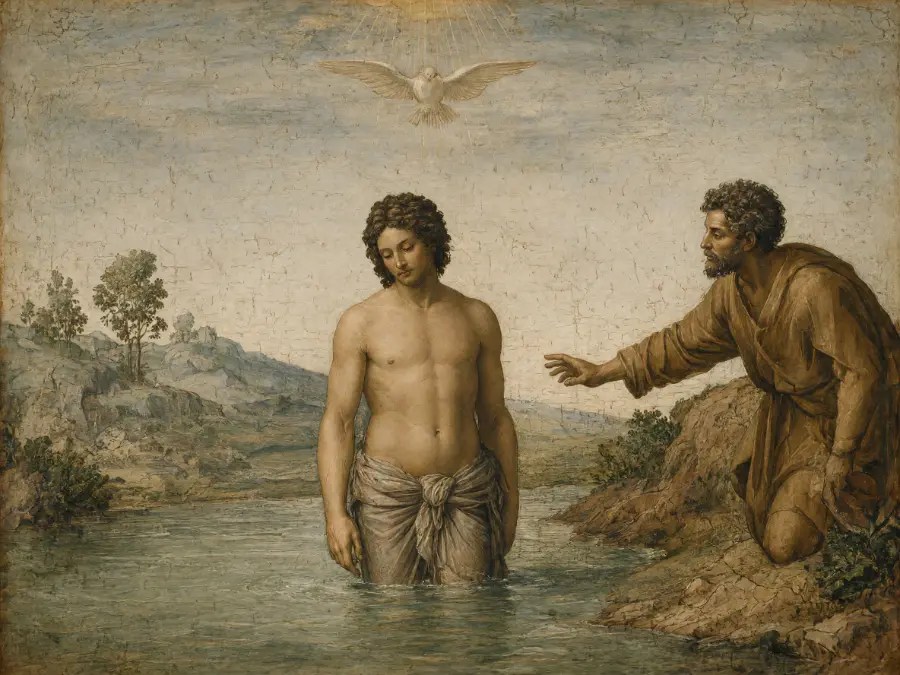
Judges 14:6
“Then the Spirit of the LORD rushed upon him, and although he had nothing in his hand, he tore the lion in pieces as one tears a young goat. But he did not tell his father or his mother what he had done.”
Reflection: A young lion comes roaring at Samson in the vineyards of Timnah, and “the Spirit of the LORD rushed upon him.” He kills it with his bare hands and tells neither his father nor his mother. Later he finds bees and honey in the carcass, and his riddle, “Out of the strong came something sweet” (Judges 14:14), is answered with “What is sweeter than honey? What is stronger than a lion?” (Judges 14:18).
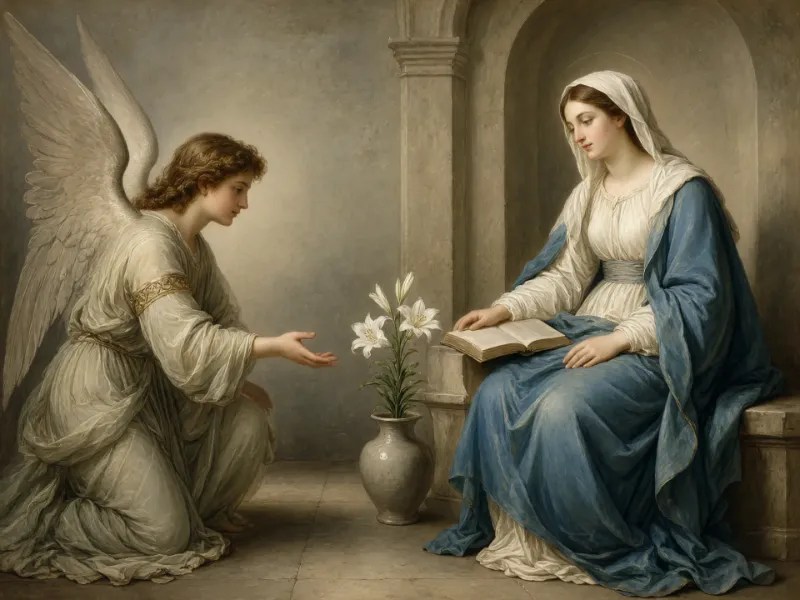
1 Samuel 17:37
“And David said, ‘The LORD who delivered me from the paw of the lion and from the paw of the bear will deliver me from the hand of this Philistine.’ And Saul said to David, ‘Go, and the LORD be with you!’”
Reflection: Saul tells David he is too young to fight Goliath (1 Samuel 17:33). David answers that as a shepherd he went after the lions and bears that took lambs from his father’s flock and killed them (1 Samuel 17:34-35), and in this verse he credits those rescues to the LORD and expects the same against the Philistine.
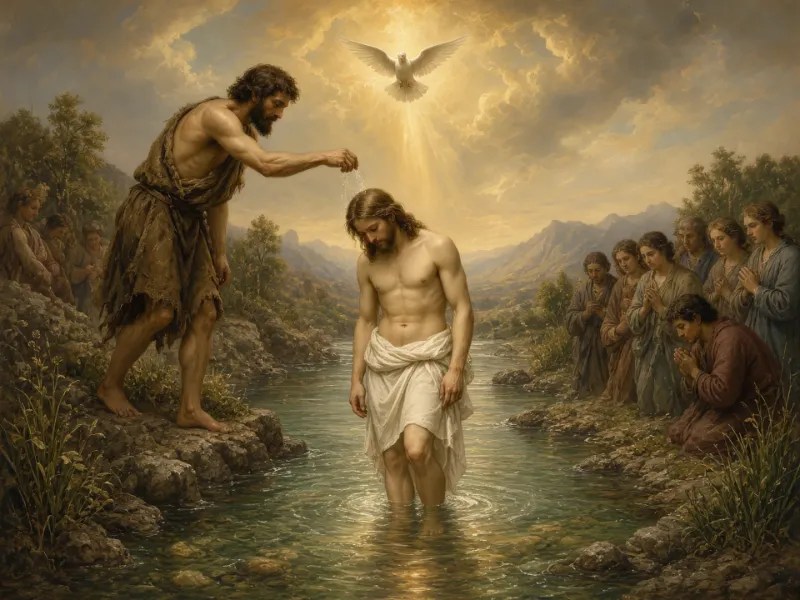
Daniel 6:22
“My God sent his angel and shut the lions’ mouths, and they have not harmed me, because I was found blameless before him; and also before you, O king, I have done no harm.”
Reflection: Daniel calls this up to the king from the den where he was thrown for praying to his God. The narrator adds that no harm was found on him “because he had trusted in his God” (Daniel 6:23). The lions themselves had lost none of their strength: the men who had accused Daniel were thrown in, and the lions overpowered them before they reached the bottom of the den (Daniel 6:24).
Lions in creation and in the coming peace
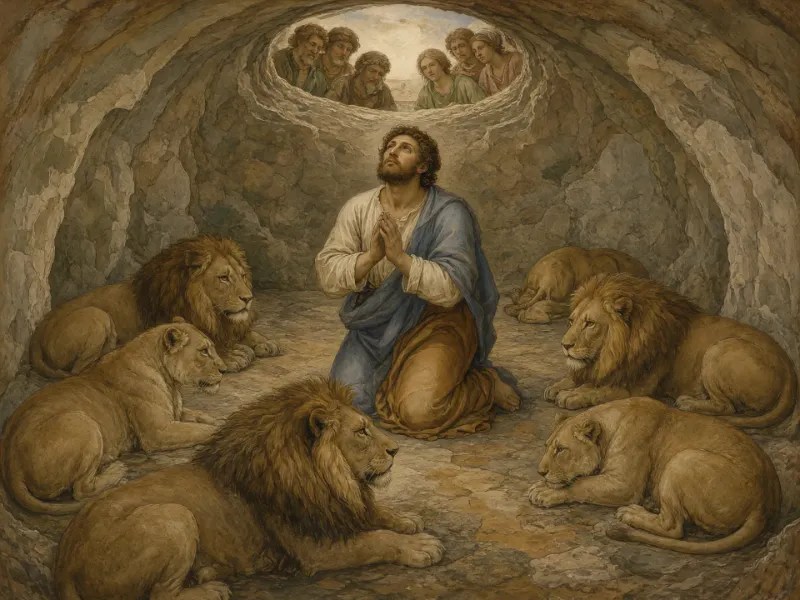
Proverbs 30:30
“The lion, which is mightiest among beasts and does not turn back before any.”
Reflection: In the words of Agur son of Jakeh (Proverbs 30:1), four things are “stately in their stride” (Proverbs 30:29), and the lion heads the list as the mightiest among beasts, the one that “does not turn back before any.” The list ends with “a king whose army is with him” (Proverbs 30:31).

Psalm 104:21
“The young lions roar for their prey, seeking their food from God.”
Reflection: Psalm 104 praises God for the order of creation by night and by day. At night the young lions roar for prey, and the psalm calls that roar seeking their food from God. At sunrise the lions go back to their dens, and people go out to their work (Psalm 104:22-23).
Psalm 34:10
“The young lions suffer want and hunger; but those who seek the LORD lack no good thing.”
Reflection: The heading ties Psalm 34 to the time David “changed his behavior before Abimelech.” The verse before it says “those who fear him have no lack,” and the next verse begins “Come, O children, listen to me; I will teach you the fear of the LORD” (Psalm 34:11).
Isaiah 11:6
“The wolf shall dwell with the lamb, and the leopard shall lie down with the young goat, and the calf and the lion and the fattened calf together; and a little child shall lead them.”
Reflection: The chapter opens with “a shoot from the stump of Jesse” (Isaiah 11:1), a descendant of David’s father, and describes the peace that follows. The calf and the lion are together, and in the next verse the lion “shall eat straw like the ox.” Isaiah 65:25 repeats the line about straw, and both passages say “They shall not hurt or destroy in all my holy mountain.”


Leave a Reply