
 English
 Chinese
 Dutch
 Arabic
 Spanish
 Portuguese
 Russian
 French
 Italian
 German
 Japanese
The Unveiling of Hope: Answering Your Deepest Questions About the Birth of Jesus
The story of Christmas is a cherished one, woven into the fabric of our faith and culture. We know the gentle images by heart: a silent night, a humble manger, a brilliant star, and the soft glow of candlelight illuminating the faces of shepherds and kings. Yet, its very familiarity can sometimes veil its breathtaking power. We can become so accustomed to the story that we miss the earth-shattering reality of what truly happened.
This journey is an invitation to look closer, to peel back the beautiful layers of tradition and encounter the gritty, historical reality and the powerful spiritual truths of the Nativity. Together, we will explore the facts and details that anchor this miraculous event in the real world, not to diminish its wonder, but to deepen it. The goal is to move beyond simply knowing the story to being transformed by it—to see with fresh eyes the God who stepped into our world in the most unexpected and humble way imaginable, and to understand why this single birth changed everything, forever.
When Was Jesus Really Born?
One of the first questions that often arises when we look closer at the Nativity story is about the date. For centuries, the world has celebrated the birth of Christ on December 25th. While this date is rich with meaning, the Bible itself does not specify the day or month of Jesus’s arrival.¹ So, how did we arrive at this tradition, and what can history tell us about the actual timing of this world-changing event?
The Meaning Behind December 25th
The tradition of celebrating Christmas on December 25th was established centuries after Jesus’s life, likely taking firm root in the 4th century during the reign of the Roman Emperor Constantine.³ The choice of this date was not arbitrary; it was filled with powerful spiritual symbolism. In the Roman Empire, late December was the time of the winter solstice, the shortest and darkest day of the year. It was also the date of a major pagan festival celebrating the “birthday of the unconquered sun” (
Dies Natalis Solis Invicti).⁴
Early Christians brilliantly co-opted this timing to make a powerful theological statement. By celebrating the birth of Jesus on this day, they declared that Christ is the true “Light of the World” (lux mundi), the one who came to pierce the deepest spiritual darkness.⁴ As the days begin to lengthen after the solstice, it serves as a beautiful physical metaphor for the hope and light that Christ’s arrival brings to all of humanity. Although the date is traditional rather than historical, it remains a powerful and meaningful time for the global Church to collectively honor the moment God became man.
Uncovering the Historical Year and Season
Although the Gospels are silent on the exact date, they provide crucial historical clues that allow scholars to pinpoint a likely timeframe for Jesus’s birth. These details anchor the Nativity in real, verifiable history, confirming it is not a myth or fairy tale.
The first anchor is the reign of King Herod the Great. Both Matthew and Luke explicitly state that Jesus was born “during the time of King Herod”.⁶ Historical records from sources like the Jewish historian Josephus place Herod’s death in what we now call 4 BC. Matthew’s account tells us that after the Magi visited the young child, a paranoid Herod ordered the massacre of all male infants in Bethlehem aged two years and under. This terrible decree implies that Jesus could have been born up to two years before Herod’s death.⁸
The second anchor comes from Luke’s Gospel, which mentions a decree from Caesar Augustus that a census should be taken. Luke specifies this was “the first registration when Quirinius was governor of Syria”.⁶ Although the chronology of this census has been debated by scholars, there is historical evidence for a Roman registration that included Judea around 6-5 BC, which aligns with the timeframe established by Herod’s reign.⁸
By carefully weaving these historical threads together, the vast majority of biblical scholars and historians have reached a strong consensus. They conclude that the birth of Jesus Christ most likely occurred sometime between the years 6 BC and 4 BC.⁴
Further clues in the narrative point to the season of His birth. Luke 2:8 describes shepherds “living out in the fields nearby, keeping watch over their flocks at night”.¹ This detail is major. The winters in the Judean hills can be cold and harsh, and it was not the custom for shepherds to keep their flocks in the open fields overnight during the winter months.² They were typically in the fields from the spring lambing season through the warmer months of autumn.² This has led many to believe that Jesus was likely born in the spring or the fall, seasons rich with the symbolism of Jewish feasts like Passover or the Feast of Tabernacles.³
The Scriptures do not prioritize the calendar date. The overwhelming message of the Gospels is not when He was born, but that He was born. The historical details serve a greater purpose: to ground the miracle of the Incarnation firmly in time and space, proving that God entered our world at a specific moment, in a specific place, to bring salvation to all.
Where Exactly Was Jesus Born?
The traditional image of Jesus’s birth is etched in our minds: a lonely, wooden stable, separate from a bustling inn that had no room. This picture, while quaint, is more a product of Western European culture than the reality of 1st-century Bethlehem. A closer look at the biblical text, language, and archaeology reveals a setting that is both more historically accurate and theologically powerful.
The City of Prophecy
The Gospels of Matthew and Luke are unequivocal that Jesus was born in Bethlehem, a small but major town located about six miles south of Jerusalem.⁶ This location was not a matter of chance; it was a divine appointment. God, in His sovereignty, used the decree of a pagan Roman emperor to move Mary and Joseph from their home in Nazareth to the precise place foretold by the prophet Micah over 700 years earlier: “But you, Bethlehem Ephrathah, though you are small among the clans of Judah, out of you will come for me one who will be ruler over Israel” (Micah 5:2).¹³
Bethlehem, whose name in Hebrew (Beit Lehem) means “house of bread,” was the ancestral home of King David.¹³ It was fitting that the ultimate King, the one who would later declare Himself the “bread of life” (John 6:35), would be born in this very town, fulfilling the lineage and the prophecy.¹³
Rethinking the “Inn” and the Manger
The popular image of a heartless innkeeper turning away the holy family stems from a simple, centuries-old mistranslation. To understand what really happened, we must look at a single Greek word: kataluma.
In Luke 2:7, the English Bible often reads that there was “no room for them in the inn.” But the Greek word used here is kataluma.¹ This is major because the author, Luke, knew the specific Greek word for a commercial inn or hotel, which was
pandocheion. He uses that exact word later in his Gospel, in the Parable of the Good Samaritan, when the Samaritan takes the wounded man to a roadside inn (pandocheion) and pays the innkeeper.¹⁶ His choice to use a different word,
kataluma, in the Nativity story is deliberate and changes the entire scene.
The word kataluma is more accurately translated as a “guest room” or “lodging space” within a private family home.¹ In fact, Jesus uses the very same word when instructing his disciples to prepare for the Last Supper, asking the owner of a house, “Where is the guest room (
kataluma), where I may eat the Passover with my disciples?” (Luke 22:11).
Archaeological discoveries of 1st-century Palestinian homes support this understanding. A typical peasant home was a simple, often one-room structure, sometimes built on two levels or adjacent to a cave carved out of the limestone hillside.¹⁴ The lower level or cave area was where the family’s most valuable animals—a donkey, a cow, a few sheep—were brought in at night for warmth and for protection from thieves.¹⁶ The family lived, ate, and slept in the main, often slightly raised, living space. A manger, which is simply a feeding trough for animals, was a common feature in this lower area, often carved from stone or built into the floor.⁶
With this context, the story comes into sharper focus. Joseph, returning to his ancestral hometown, would have naturally sought shelter with his relatives. The phrase “there was no room for them in the kataluma” does not mean they were rejected by a commercial innkeeper. It means that due to the census, Joseph’s family home was already overflowing with other relatives, and the designated guest room was already occupied.¹
In an act of familial hospitality, not rejection, Mary and Joseph were given space in the main family living area—the humble, lower part of the house where daily life happened and where the animals were kept. The birth of Jesus was not a story of isolated rejection, but of being welcomed into the messy, noisy, and crowded reality of a humble family home. This makes the Incarnation even more tangible and raw. Christ was not born in a sterile, lonely stable, but chose His first home among the common people, in their common space, sharing the air with them and their animals. His humility is not one of exclusion, but of radical, loving inclusion.
This understanding also aligns perfectly with the ancient Christian tradition, dating back to at least the 2nd century, that Jesus was born in a cave.⁶ As many homes in the hilly terrain of Bethlehem were built directly into the limestone hillsides, the “cave” was simply the lower level of a family dwelling.¹⁹ The revered Church of the Nativity, a sacred site of pilgrimage for over 1,700 years, is built over just such a cave, which tradition holds as the very spot where Christ was born.⁶
What Was the World Like When Jesus Arrived?
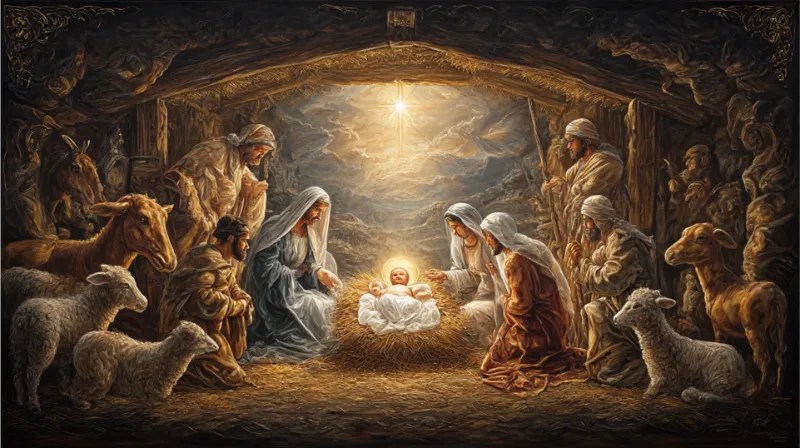
To truly appreciate the light that entered the world at Christmas, we must first understand the darkness it pierced. The world into which Jesus was born was a place of political tension, military occupation, and deep spiritual longing. His quiet arrival in Bethlehem was a silent thunderclap in a world desperate for a savior.
The land of Israel was suffocating under the iron fist of the Roman Empire, ruled from afar by the powerful Caesar Augustus.⁶ Roman legions patrolled the roads, and Roman tax collectors extracted heavy tributes from the people. This was a daily reality of humiliation and oppression. When Jesus later taught his followers, “If anyone forces you to go one mile, go with him two miles” (Matthew 5:41), he wasn’t speaking of a hypothetical situation. He was referring to the hated Roman law of
angaria, which allowed a Roman soldier to compel any local citizen to carry his heavy pack and equipment for a Roman mile.⁷ It was into this world of constant, grinding subjugation that the Prince of Peace was born.
While Rome ruled from a distance, the local authority was a man who embodied cruelty: King Herod the Great.⁶ Known for his magnificent building projects, like the expansion of the Jerusalem Temple, he was also infamous for his brutal paranoia. He executed his own wife and sons, and his reign was marked by bloodshed and fear. It was into the violent, final years of this ruthless tyrant’s life that the true, eternal King arrived, not in a palace, but in a feeding trough.
Spiritually, the nation was just as desperate. It had been 400 years since the voice of a prophet had been heard in Israel—four centuries of divine silence.³ The people clung to the ancient promises, the prophecies that spoke of a Messiah, a Savior, who would come to deliver them. They longed for a mighty warrior-king who would throw off the yoke of Roman oppression, just as God had delivered their ancestors from slavery in Egypt centuries before.³ They were looking for a political revolution, little knowing that God was sending a spiritual one that would change the world from the inside out.
The Gospels of Matthew and Luke each paint a unique portrait of this arrival, written for different audiences but harmonizing to tell the complete story. Matthew, writing primarily for Jewish Christians, emphasizes Jesus as the fulfillment of Old Testament prophecy—the long-awaited King. Luke, writing for a Gentile (non-Jewish) audience, highlights Jesus as the Savior for all humanity, with a special focus on the poor, the humble, and the outcast. Their accounts are not contradictory but are like two distinct, beautiful portraits of the same divine person.
| Feature | Gospel of Matthew | Gospel of Luke |
|---|---|---|
| Primary Audience | Jewish Christians | Gentile (non-Jewish) Christians |
| Starting Point | Joseph’s perspective and genealogy from Abraham | Mary’s perspective and the announcement by Gabriel |
| Key Figures | Joseph, the Magi, King Herod | Mary, Elizabeth, Zechariah, the Shepherds |
| Angelic Visit | An angel appears to Joseph in a dream | The angel Gabriel appears to Mary while she is awake |
| Journey | The family flees to Egypt to escape Herod | The family journeys from Nazareth to Bethlehem for the census |
| First Visitors | The Magi (wise men from the East) | The Shepherds from the fields of Bethlehem |
| Central Theme | Jesus as the fulfillment of Old Testament prophecy; the promised King | Jesus as the Savior for all people, especially the poor and humble |
| Source Snippets | 6 | 1 |
What Do We Know About Mary and Joseph?
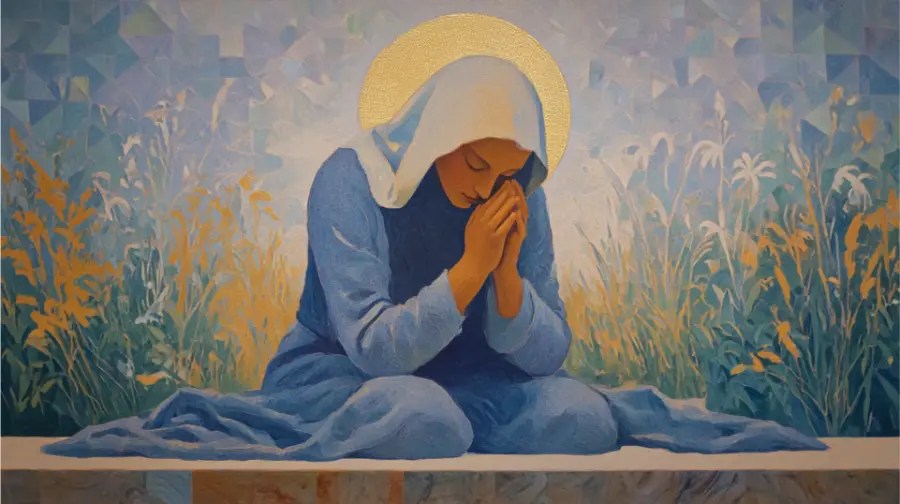
At the heart of the Nativity story are two ordinary people who were called to an extraordinary task. God did not choose the wealthy or the powerful to raise His Son. He chose a young, humble girl from a small town and a righteous, merciful craftsman. Their character and faith are as central to the Christmas story as the star and the manger.
Mary: A Vessel of Courageous Faith
The Mary of our Christmas pageants is often a serene, adult woman. The historical reality is that she was likely a very young teenager, perhaps only 12 to 14 years old, which was the common age for betrothal in her culture.²² At this young age, she was already betrothed to Joseph. In 1st-century Jewish culture, a betrothal was not a casual engagement; it was a legally binding covenant, a promise that could only be broken by a formal divorce.¹⁰
When the angel Gabriel appeared to her, the news of a miraculous pregnancy placed her in a position of extreme peril. In a society that prized female purity, her condition would have been seen by all as the result of adultery. This was a crime punishable not just by public shame, but by death by stoning according to the Law of Moses (Deuteronomy 22:23-24).³ The suspicion and gossip would follow her for the rest of her life, a fact hinted at years later when Jesus’s opponents sneer at him, “We were not born of fornication” (John 8:41), a cruel jab likely aimed at the circumstances of his birth.¹⁰
It is against this terrifying backdrop that Mary’s response becomes one of the most powerful moments in Scripture. Faced with potential disgrace and death, she replies with complete surrender and trust: “I am the Lord’s servant. May your word to me be fulfilled” (Luke 1:38). This is not passive resignation; it is an act of breathtaking courage and powerful faith.
Joseph: A Model of Righteous Mercy
The Bible gives us a simple but powerful description of Joseph: he was a tsaddîyq, a “righteous man”.²² This meant he was a devout and faithful Jew, a man who lived his life in obedience to God’s Law. As a descendant of King David, he provided Jesus with a legal claim to the royal throne of Israel.⁶ His profession is described by the Greek word
tekton, which means “craftsman” or “builder”.²² While often translated as “carpenter,” in the stone-based economy of Galilee, it is far more likely that he was a skilled builder or stonemason, a man who worked with his hands to create and to build.²²
Yet, it is Joseph’s character that shines most brightly. When he discovered that Mary, his betrothed, was pregnant, he knew he was not the father. As a righteous man, the Law gave him the clear right to bring her to public judgment, a path that could have led to her execution.³ His honor had been publicly wounded, and justice was on his side.
But Joseph’s first response was not to seek justice for himself, but to show mercy to Mary. The Gospel of Matthew tells us that he, “not wanting to expose her to public disgrace, had in mind to divorce her quietly” (Matthew 1:19).¹⁰ This decision, made
before the angel ever appeared to him in a dream, reveals a heart of extraordinary compassion. He chose to protect the one who had seemingly wronged him, valuing mercy over his own reputation.
After the angel confirmed the divine nature of Mary’s child, Joseph’s obedience required another form of sacrifice. By taking Mary as his wife, he was choosing to accept a lifetime of suspicion. The community would have assumed one of two things: either he was the sinner who had violated Mary before their marriage was finalized, or he was a fool who was raising another man’s child.³ In his quiet strength, his protective love, and his unwavering obedience to God, Joseph models a powerful form of godly masculinity. He was the perfect guardian for the Son of God and His mother, a man whose strength was found not in pride, but in righteous mercy.
Who Were the Mysterious Wise Men?
No Nativity scene is complete without the figures of the wise men, draped in regal robes and bearing precious gifts. They represent the first Gentiles to worship Christ, a sign that Jesus came for all nations. But much of our popular understanding of these visitors is based more on tradition and song than on the biblical account. When we look at what the Bible actually says, a more historically fascinating picture emerges.
The Gospel of Matthew calls them magoi (Magi) who came “from the east”.²³ The term
magoi originally referred to the priestly caste of the ancient Zoroastrian religion in Persia (modern-day Iran).²³ By the time of Jesus’s birth, the term had broadened to describe a class of wise men, philosophers, scholars, and astrologers who were highly regarded for their knowledge, particularly their study of the stars and celestial events for signs and omens.²⁴ They were undoubtedly distinguished, wealthy, and high-ranking foreigners.²³
Correcting Common Myths
Over the centuries, several traditions have grown up around the Magi that are not found in Scripture.
- Myth #1: There Were Three of Them. The Bible never specifies the number of wise men who visited Jesus.¹⁰ The tradition of three almost arose because they brought three distinct gifts: gold, frankincense, and myrrh.¹ While a logical assumption, it is not a biblical fact. Some Eastern Christian traditions, particularly in Syriac Christianity, hold that there were twelve Magi, symbolizing the twelve tribes of Israel.²³
- Myth #2: They Were Kings. The popular Christmas carol “We Three Kings” has cemented this idea in our minds, but the Bible never calls them kings.²⁵ This tradition began to develop later in Church history, around the 3rd century, likely as theologians connected their visit to Old Testament prophecies like Psalm 72:10-11, which foretells that “kings of Tarshish and of distant shores” will bring tribute to the Messiah.²⁴ Although they were men of high status and influence, their role was that of scholars, not monarchs.
- Myth #3: They Arrived on the Night of the Birth. This is perhaps the most common misconception, reinforced by our nativity displays that place the shepherds and the Magi together at the manger. Matthew’s Gospel, however, makes it clear that their visit happened sometime “after Jesus was born” (Matthew 2:1).²⁵ Importantly, it says they came to a “house” (Greek:
oikian), not the initial, humble place of birth.¹ The timing is further clarified by King Herod’s horrific reaction. After questioning the Magi about when the star had first appeared, he ordered the killing of all boys in and around Bethlehem who were
two years old and under.⁸ This strongly suggests that the Magi’s visit could have occurred anywhere from a few weeks to as much as two years after Jesus’s birth.
What Was the Miraculous Star of Bethlehem?
The Star of Bethlehem is one of the most wondrous and mysterious elements of the Christmas story. It was a heavenly sign that guided foreign seekers on a long journey to find and worship the newborn King. But what was it? For centuries, theologians, historians, and astronomers have pondered this question, offering explanations that range from natural phenomena to a purely miraculous event.
A Sign Unlike Any Other
According to the account in Matthew’s Gospel, this was no ordinary star. Its behavior was intelligent and purposeful, unlike any known celestial body. The narrative reveals several unique characteristics:
- It appeared specifically to the Magi in their homeland in the East, signaling to them the birth of the King of the Jews.²⁷
- It prompted them to begin their long journey to Jerusalem, the capital city of Judea.²⁸
- It seems to have disappeared or been hidden from them for a time, as they had to ask King Herod where the Messiah was to be born.
- It reappeared to them joyfully after they left Jerusalem and began their short journey south to Bethlehem.²⁷
- Most remarkably, it “went ahead of them until it stopped over the place where the child was” (Matthew 2:9).²⁷
Scientific and Natural Explanations
Fascinated by this account, astronomers have tried to identify a natural event that could explain the star. Several compelling theories have been proposed:
- A Planetary Conjunction: This occurs when two or more planets appear to be very close together in the sky from our vantage point on Earth. Some have pointed to a rare triple conjunction of Jupiter and Saturn in 7 BC, or a particularly brilliant and close conjunction of Jupiter and Venus in 2 BC, as events that ancient astrologers would have interpreted as highly major.²⁸
- A Comet: A comet, with its bright head and long tail, would have been a dramatic sight. Some have suggested Halley’s Comet, which was visible in 12 BC, or another “broom star” that was recorded by Chinese astronomers around 5 BC.³⁰
- A Supernova: This is the powerful and brilliant explosion of a star. A new, bright star suddenly appearing in the heavens would have caught the attention of ancient stargazers. Chinese records do mention a possible nova around 5 BC.²⁸
A Divine and Targeted Miracle
Although these natural theories are intriguing, none of them can fully account for the star’s intelligent and purposeful behavior as described by Matthew. Natural celestial bodies follow predictable paths; they do not start, stop, and lead travelers to a specific house.²⁷
This leads to a deeper understanding. The text implies that the star was a private revelation, a “targeted miracle” intended for the Magi alone. When the Magi arrived in Jerusalem, King Herod and the city’s inhabitants were troubled by the news of the star, not by having seen it themselves (Matthew 2:3). If a brilliant new supernova or comet had been hanging in the sky, everyone would have seen it.
Therefore, the most satisfying explanation is a theological one: the star was a unique, supernatural sign sent by God for a specific purpose. Some theologians have suggested it was an angel. A more compelling theory is that it was a manifestation of the Shekinah Glory—the visible, fiery, brilliant presence of God that led the Israelites as a pillar of cloud by day and fire by night in the wilderness.²⁷ The Shekinah Glory was known to be a divine guide that could lead people to specific locations.
We do not have to choose between science and faith. God, the creator of the cosmos, is able to use the natural phenomena He created—like planets and stars—for His supernatural purposes. The Star of Bethlehem was a divine sign that spoke to the Magi in a language they would understand—the language of the stars—to personally guide them on their journey of faith. It was a divine appointment, not a random astronomical event, proving that God actively guides all who sincerely seek Him.
| Theory Type | Description | Key Evidence / Proponents | Pastoral Reflection |
|---|---|---|---|
| Planetary Conjunction | Two or more planets appear very close in the sky, creating a bright point of light. | Kepler noted Jupiter-Saturn conjunctions in 7 BC; others point to a Jupiter-Venus conjunction in 2 BC.28 | Could be seen as an astrological sign for a king’s birth, but doesn’t explain the star’s intelligent movement and guidance. |
| Comet | An icy body that brightens as it nears the sun, often appearing to hang in the sky. | Chinese astronomers recorded a “broom star” in 5 BC. It is famously depicted in Giotto’s 1305 fresco of the Nativity.30 | While a comet moves, they were often seen as bad omens in the ancient world, making it an unlikely sign for a king’s birth. |
| Supernova / Nova | A new, exploding star that appears suddenly and shines brightly for a time. | Chinese records mention a possible nova in 5 BC, which would have been a dramatic, unpredicted event.28 | A supernova would have been stationary in the sky, unable to “lead” the Magi from Jerusalem to Bethlehem. |
| Miraculous Sign | A supernatural event created by God, not bound by the normal laws of nature. | The star’s intelligent movement (starting, stopping, guiding to a specific house). Some suggest it was an angel or the Shekinah Glory.27 | Affirms God’s direct, personal intervention in history and His loving guidance for all those who earnestly seek Him. |
What Is the Deeper Meaning of Gold, Frankincense, and Myrrh?
The gifts brought by the Magi are among the most iconic elements of the Christmas story. They were not random trinkets but were gifts of immense value, rich with layers of symbolic, prophetic, and even geopolitical meaning. Unpacking their significance reveals the incredible depth of this first act of Gentile worship.
The Traditional Symbolic Meaning
For centuries, the Church has taught that these three gifts prophetically point to the identity and mission of the child in the manger.³²
- Gold: This is the most straightforward of the gifts. Gold has always been the currency of kings and a symbol of royalty. In offering gold, the Magi were acknowledging Jesus’s status as the newborn King of the Jews, the ruler prophesied to sit on David’s throne.³³
- Frankincense: This is a fragrant, hardened gum resin harvested from the Boswellia tree. When burned, it produces a sweet-smelling smoke. In the ancient world, it was a key component of temple worship, used as incense offered to a deity.³⁵ The gift of frankincense was a clear acknowledgment of Jesus’s divinity, recognizing him not just as a human king, but as God in the flesh. It also points to His role as our great High Priest, the one who bridges the gap between God and humanity.³³
- Myrrh: This was another valuable aromatic resin, used in the ancient world to make expensive perfumes and ointments. Critically, however, its primary use was in embalming and anointing the dead for burial.³⁵ This gift, therefore, was a somber and prophetic one. In the midst of the joy of His birth, the gift of myrrh pointed to the reality of Jesus’s full humanity—that He was born to suffer and to die. It was a foreshadowing of the sacrificial death He would endure to save the world.³³
A Prophetic and Historical Fingerprint
Beyond this beautiful symbolism, the gifts themselves provide a stunning clue to the Magi’s identity and the breathtaking precision of God’s plan. In the ancient world, it was a common diplomatic custom for visiting dignitaries or kings to present tribute gifts that were representative of their home country’s most famous and valuable products.³⁵
Astounding historical and archaeological research has revealed that the three signature exports of the ancient Nabatean kingdom—a powerful civilization located in what is now Jordan and Saudi Arabia—were gold, frankincense, and myrrh.³⁵ The Nabateans controlled the lucrative incense trade routes and had access to the legendary gold mines of Arabia. This provides a powerful historical fingerprint, a strong clue that the Magi were likely diplomats from the court of the Arabian King Aretas IV. This view is even supported by the 2nd-century Christian writer Justin Martyr, who wrote that the Magi came from Arabia.³⁷
This historical reality connects directly and precisely with Old Testament prophecies. The prophet Isaiah foretold that people from the Arabian region of Sheba would come to the Messiah: “And all from Sheba will come, bearing gold and incense and proclaiming the praise of the Lord” (Isaiah 60:6). Likewise, Psalm 72:15 prophesied of the Messiah, “May gold from Sheba be given him.”
The gifts of the Magi are therefore a stunning convergence of truth on multiple levels. They are theologically symbolic, pointing to Christ’s identity as King, God, and suffering Savior. They are also historically and geographically specific, identifying the likely origin of these wise men. And they are prophetically precise, marking the direct fulfillment of ancient promises that the nations would come to worship the King of Israel, bringing the very treasures of their lands as tribute. God’s redemptive plan is woven not just into Scripture, but into the very fabric of human history, trade, and politics.
What Do the Virgin Birth and Incarnation Mean for Our Faith?
At the very core of the Christmas story lie two of the most powerful and foundational miracles of the Christian faith: the Incarnation and the Virgin Birth. These are not minor details or optional doctrines; they are the essential truths that make our salvation possible. Understanding them helps us grasp the full weight and wonder of what God did when He sent His Son into the world.
The Incarnation: God Became One of Us
The doctrine of the Incarnation is beautifully summarized in the opening of John’s Gospel: “The Word became flesh and made his dwelling among us” (John 1:14).³⁸ The term “Incarnation” literally means “in-fleshing.” It is the belief that the eternal Son of God, the second person of the Holy Trinity, who had existed with the Father from all eternity, took on a complete human nature.⁴⁰
This means He became truly and fully human—with a human body, a human mind, a human will, and human emotions—without ever ceasing to be fully and completely God.⁴⁰ He did not simply put on a human costume or appear to be a man. In the person of Jesus of Nazareth, two distinct natures, divine and human, were perfectly and eternally united in one person.
The Virgin Birth: The “How” of the Incarnation
If the Incarnation is the what—God becoming man—then the Virgin Birth is the how. It is the miracle by which the Incarnation took place.⁴³ The Bible teaches in the Gospels of Matthew and Luke that Jesus was conceived in the womb of his mother, Mary, by the direct and supernatural power of the Holy Spirit, without the participation of a human father.¹⁰ This is why the angel Gabriel told Mary, “The Holy Spirit will come on you, and the power of the Most High will overshadow you. So the holy one to be born will be called the Son of God” (Luke 1:35). The key biblical accounts that describe this miracle are found in Matthew 1:18-25 and Luke 1:26-38.⁴³
Why These Miracles Are Essential for Our Salvation
These two doctrines are inextricably linked and are absolutely central to the Christian faith for three crucial reasons:
- They Unite God and Humanity. Because Jesus is both fully God and fully man, He is the one and only perfect bridge, the great High Priest and Mediator who can stand in the gap and reconcile a holy God with sinful humanity.⁴² He can represent us to God because He is one of us, and He can represent God to us because He is one with God.
- They Provide a Sinless Savior. The Bible teaches that sin entered the human race through the first man, Adam, and has been passed down through all subsequent generations. To pay the price for our sin, a perfect, unblemished sacrifice was required—someone who was human, but not tainted by this inherited sin. Because Jesus was conceived by the Holy Spirit and not by a human father, He was born outside the direct line of Adam’s sin. The Virgin Birth ensures that Jesus is a “new Adam,” a sinless representative for the human race, who was qualified to die in our place and offer a perfect sacrifice for our sins.⁴³
- They Reveal the Depth of God’s Love. The Incarnation is the ultimate, breathtaking expression of God’s love for us. He did not remain distant and detached from our suffering. He chose to enter into it. He took on our human frailty, experienced our pain, and ultimately died our death in order to rescue us. It is God’s personal, radical, and sacrificial intervention into human history, proving that His love for us knows no bounds.³⁹
What Does the Catholic Church Teach About the Nativity?
The Catholic Church’s teaching on the birth of Jesus is rich and layered, emphasizing that the Nativity is both a real, historical event and a powerful spiritual mystery. This approach insists that the tangible, historical details are the very means through which the transcendent, spiritual truths are revealed to the faithful.
The Church strongly affirms the historicity of the Nativity. The beautiful Christmas Proclamation, which can be recited from the Roman Martyrology before Christmas Mass, firmly places the birth of Jesus within the timeline of salvation and secular history. It anchors the event by referencing creation, Abraham, Moses, King David, and specifically, “the forty-second year of the reign of Caesar Octavian Augustus”.⁴⁷ Official Vatican documents refer to Christmas as a “Fact, an Event that changed the course of history,” explicitly stating that it is “not a ‘fairy tale'”.⁴⁸
At the same time, the Church teaches that the events of Jesus’s life are mysteries of faith. The Catechism of the Catholic Church (CCC) explains that “everything in Jesus’ life was a sign of his mystery” (CCC 515).⁴⁹ This means that the physical details recorded in the Gospels—the swaddling clothes, the manger, the shepherds—are not just historical facts. They are also signs that point to the deeper reality of who Jesus is and what He came to do. The poverty of His birth, for example, is a sign of His humility and His solidarity with the poor, and it foreshadows the ultimate poverty of the Cross.⁴⁹
Central to the Church’s teaching is the Virginal Conception of Jesus. The Catechism calls this a “divine work that surpasses all human understanding and possibility” (CCC 497).⁵⁰ It is the miraculous sign that the child born of Mary is truly the divine Son of God who has come into the world.
To safeguard and highlight the unique holiness of the Incarnation, the Church also holds specific doctrines concerning Mary. These include the Immaculate Conception, which is the belief that Mary herself, from the first moment of her conception, was preserved free from all stain of original sin by a singular grace from God. This was done in view of the merits of her Son, making her a fitting vessel to carry the all-holy God.³⁸ The Church also teaches the
Perpetual Virginity of Mary, meaning she remained a virgin before, during, and after the birth of Jesus. These teachings are intended to emphasize the miraculous nature of Christ’s birth and the unique role of His mother in salvation history.⁴⁵
Finally, the Church actively encourages popular traditions that help the faithful enter into the wonder of the Nativity. In an official Papal letter, Pope Francis called the beloved tradition of setting up a nativity scene (or crèche) a “living Gospel rising up from the pages of sacred Scripture.” He described it as a simple and joyful way to contemplate the mystery of God’s love made visible and to be drawn into the humility of the God who became one of us.⁵¹
The Catholic Church teaches that Jesus Christ, the eternal Son of God, was conceived by the power of the Holy Spirit and born of the Virgin Mary in the town of Bethlehem. This is a real historical event that is also the central mystery of the Incarnation, where God became fully human in order to save us from our sins.⁶
How Does the Nativity Story Still Speak to Us Today?
The story of Jesus’s birth is far more than a historical account or a collection of interesting facts. It is a living story that continues to speak with powerful power and relevance to our lives today. When we look past the familiar decorations and into the heart of the Nativity, we find a message that challenges, comforts, and invites us into a deeper relationship with God.
A Story of Revolutionary Humility
The true story of the Nativity is one of radical reversal. The King of the universe, the Creator of all things, is born not in a magnificent palace but in the humble, crowded living space of a peasant family’s home.¹³ The divine birth announcement comes not to the powerful religious leaders or the Roman authorities, but to lowly, overlooked shepherds in a field—men who were often considered social outcasts.⁴¹ This is a story that turns the world’s values upside down. It shows us a God who does not measure greatness by power, wealth, or status, but by humility, love, and service. It challenges our own pursuits of importance and reminds us that God’s heart is with the humble, the poor, and the forgotten.
A Story of Hope in the Darkness
Jesus was born into a world groaning under political oppression, spiritual darkness, and a deep human longing for rescue. His arrival as “the Light of the world” is an eternal promise that God does not abandon us in our own times of darkness.⁴⁸ Whether we face personal struggles, societal turmoil, or spiritual doubt, the message of the manger is that God is not distant. He enters into our messy, complicated, and often painful reality to bring hope, healing, and salvation. The birth of Jesus is the definitive proof that light is more powerful than darkness and that hope will always have the final word.⁴⁶
A Personal Invitation
The Nativity is more than an event to be studied; it is a personal invitation from God to each one of us. The story presents us with a series of responses. The shepherds heard the good news and said, “Let us go over to Bethlehem and see this thing that has happened.” They responded with immediate, joyful faith. The Magi saw the sign in the heavens and traveled for months, perhaps years, to seek the newborn King, responding with persevering worship.
The story asks us the same question today. We have heard the good news. We have seen the signs of God’s love. How will we respond? Like the crowded family home in Bethlehem, our lives are often full—full of work, worries, ambitions, and distractions. The invitation of Christmas is to ask ourselves: will we make room for Him? Will we, like the shepherds and the Magi, seek Jesus with expectant hearts and respond to His presence with joy and worship?.²⁵
Let us pray that this season, we might see the Nativity with fresh eyes. May we look past the tinsel and the traditions to behold the breathtaking reality of the God who loved us so much that He became one of us, so that we, in turn, might become one with Him. May the wonder of that truth fill our hearts with peace, our lives with purpose, and our world with His light. Amen.


Leave a Reply