
 English
 Chinese
 Dutch
 Arabic
 Spanish
 Portuguese
 Russian
 French
 Italian
 German
 Japanese
No, Mormons are not Catholics, and the two churches differ most about God himself. Catholics believe in one God in three persons, the Trinity. Latter-day Saints, the name the church’s members prefer, believe the Father, the Son and the Holy Ghost are three separate beings, and that the Father has a body of flesh and bones.
The night before he died, Jesus prayed for everyone who would come to believe in him: “That they all may be one; as thou, Father, art in me, and I in thee, that they also may be one in us” (John 17:21). Both churches treasure that prayer, and they hear different things in it. Latter-day Saints read it as a window on the Godhead: three divine beings, distinct, and perfectly one in purpose, as the disciples are to be. Catholics read in it the prayer of the eternal Son, one God with the Father, for a Church the Catechism says must “always pray and work” for unity. Much of what divides the two churches can be heard in those two readings.
| Topic | Latter-day Saints | Catholic Church |
|---|---|---|
| God | The Godhead: three separate beings, “one in purpose and doctrine” | The Trinity: “one God in three persons” |
| God the Father | Has “a body of flesh and bones as tangible as man’s” | “Pure spirit,” without a body |
| Jesus Christ | “The Firstborn of the Father,” the Jehovah of the Old Testament | The eternal Son, “consubstantial with the Father” |
| Human beings | Spirit children of heavenly parents who lived before birth | Each soul “created immediately by God” |
| Creation | God organized the universe from existing elements | God creates “out of nothing” |
| Scripture | The Bible, the Book of Mormon, the Doctrine and Covenants, the Pearl of Great Price | The Bible, read with Sacred Tradition |
| Leaders | A living prophet, with the First Presidency and Twelve Apostles | The pope and bishops, successors of the apostles |
| Church history | A Great Apostasy, then a Restoration through Joseph Smith | An unbroken line of bishops from the apostles |
| Baptism | By immersion, from age eight | Infants as well as adults |
| Weekly sacrament | Bread and water, in remembrance of Christ | The Eucharist, Christ truly present |
| After death | Three kingdoms of glory | Heaven, purgatory and hell |
| Marriage | Temple sealing “for time and all eternity” | Until death |
Where Catholics and Latter-day Saints differ
Each answer is quoted from the church’s own documents or from one of our articles.
Trinity
Catholic
The Trinity is One. We do not confess three Gods, but one God in three persons, the "consubstantial Trinity".
Latter-day Saints
The Father and the Son have tangible bodies of flesh and bones, and the Holy Ghost is a personage of spirit. Although the members of the Godhead are distinct beings with distinct roles, they are one in purpose and doctrine.
Revelation today
Catholic
"The Christian economy, therefore, since it is the new and definitive Covenant, will never pass away; and no new public revelation is to be expected before the glorious manifestation of our Lord Jesus Christ."
Latter-day Saints
Revelation is communication from God to His children. This guidance comes through various channels according to the needs and circumstances of individuals, families, and the Church as a whole. When the Lord reveals His will to the Church, He speaks through His prophet.
Books of the Bible
Catholic
The Church accepts and venerates as inspired the 46 books of the Old Testament and the 27 books of the New.
Latter-day Saints
The official, canonized scriptures of the Church, often called the standard works, are the Bible, the Book of Mormon, the Doctrine and Covenants, and the Pearl of Great Price.
Creation
Catholic
Evolution in nature does not conflict with the notion of Creation, because evolution presupposes the creation of beings who evolve.
From Pope Francis, address to the Pontifical Academy of Sciences, 27 October 2014
Latter-day Saints
Under the direction of Heavenly Father, Jesus Christ created the heavens and the earth. From scripture revealed through the Prophet Joseph Smith, we know that in the work of the Creation, the Lord organized elements that had already existed. He did not create the world “out of nothing,” as some people believe.
Salvation
Catholic
Justification is conferred in Baptism, the sacrament of faith. It conforms us to the righteousness of God, who makes us inwardly just by the power of his mercy.
Latter-day Saints
We believe that through the Atonement of Christ, all mankind may be saved, by obedience to the laws and ordinances of the Gospel.
Original sin
Catholic
The account of the fall in Genesis 3 uses figurative language, but affirms a primeval event, a deed that took place at the beginning of the history of man. Revelation gives us the certainty of faith that the whole of human history is marked by the original fault freely committed by our first parents.
Latter-day Saints
We believe that men will be punished for their own sins, and not for Adam’s transgression.
Sacraments
Catholic
Christ instituted the sacraments of the new law. There are seven: Baptism, Confirmation (or Chrismation), the Eucharist, Penance, the Anointing of the Sick, Holy Orders and Matrimony.
Latter-day Saints
The priesthood includes the authority to administer gospel ordinances that are necessary for salvation and exaltation. People make sacred covenants with God as they receive these ordinances.
From General Handbook 18.1: Ordinances of Salvation and Exaltation
After death
Catholic
The New Testament speaks of judgment primarily in its aspect of the final encounter with Christ in his second coming, but also repeatedly affirms that each will be rewarded immediately after death in accordance with his works and faith.
Latter-day Saints
The postmortal spirit world is a place where the spirits of those who have died dwell before the Resurrection. The spirit world consists of paradise, where the righteous dwell, and spirit prison, where those who did not know the gospel or who were wicked in mortality dwell.
To see what Latter-day Saints teach beside what Catholics teach on 55 questions, open our free tool, Compare Christian Denominations.
How do Latter-day Saints and Catholics differ about God?
Latter-day Saints begin with their first Article of Faith: “We believe in God, the Eternal Father, and in His Son, Jesus Christ, and in the Holy Ghost.” The church calls the three the Godhead and says plainly where it parts from other Christians: “in their belief that God and Jesus Christ are glorified, physical beings and that each member of the Godhead is a separate being.” A revelation to Joseph Smith puts it in one sentence: “The Father has a body of flesh and bones as tangible as man’s; the Son also; but the Holy Ghost has not a body of flesh and bones, but is a personage of Spirit” (Doctrine and Covenants 130:22). The three, the church teaches, are “one in purpose and doctrine.”
Latter-day Saints also believe that every person is “a beloved spirit son or daughter of heavenly parents,” a Heavenly Father and a Heavenly Mother, and that God’s children can grow to become like him. Lorenzo Snow, the church’s fifth president, put it in a couplet: “As man now is, God once was: As God now is, man may be.” The church adds that “little has been revealed about the first half of this couplet, and consequently little is taught,” and it rejects the charge of worshipping many gods: “Latter-day Saints believe that God’s children will always worship Him.” Its teaching on creation follows from this: “God organized the universe out of existing elements.”
Catholics confess the Trinity. “We do not confess three Gods, but one God in three persons,” the Catechism says (paragraph 253), and it calls the Trinity “the central mystery of Christian faith and life” (paragraph 234). The persons are “really distinct from one another,” yet each is “God whole and entire.” God has no body: “God is pure spirit” (paragraph 370). He made the world from nothing, needing “no pre-existent thing or any help in order to create” (paragraph 296). And every human soul “is created immediately by God; it is not ‘produced’ by the parents” (paragraph 366).
So the two churches use the same three names and mean different things by them. That is why, in 2001, the Vatican’s Congregation for the Doctrine of the Faith, with the approval of Pope John Paul II, answered “Negative” when asked whether Latter-day Saint baptism is valid, although it is given “in the name of the Father, and of the Son, and of the Holy Ghost.” An article published with the ruling explained that these words “have for the Mormons a meaning totally different from the Christian meaning.”
Is Jesus the same in both churches?
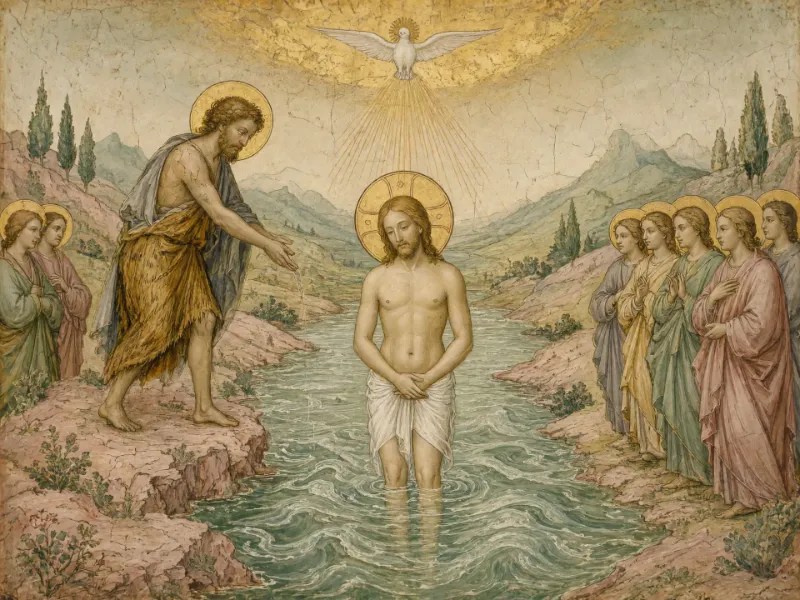
Both churches worship Jesus Christ as the Son of God and Savior of the world, and both read the same Gospels. They differ on who he was before Bethlehem. “The Living Christ,” a statement signed in 2000 by the church’s First Presidency and Twelve Apostles, says: “He was the Great Jehovah of the Old Testament, the Messiah of the New.” It calls him “the Firstborn of the Father, the Only Begotten Son in the flesh, the Redeemer of the world.” In Latter-day Saint teaching he is a separate being from the Father.
Catholics confess with the Council of Nicaea that the Son is “consubstantial” with the Father, “that is, one only God with him,” and with the Creed of 381, “eternally begotten of the Father, light from light, true God from true God, begotten not made” (Catechism, paragraph 242). The Latter-day Saint teaching on Jesus is set out further in Do Mormons believe that Jesus is God?
Why do Latter-day Saints have more scripture, and Catholics a pope?
Both churches believe God guides his church through apostles, and they disagree about where the apostles’ authority went. Latter-day Saints teach that after the apostles died, “men corrupted the principles of the gospel,” and “the Lord withdrew the authority of the priesthood from the earth.” They believe the Father and the Son appeared to Joseph Smith in 1820, that angels brought back the priesthood, and that their church is “‘restored,’ not ‘reformed,’ Christianity.” It is led by “living prophets”: the President of the Church, sustained as “prophet, seer, and revelator,” with his counselors and the Quorum of the Twelve Apostles.
So revelation, for Latter-day Saints, did not close. “We believe the Bible to be the word of God as far as it is translated correctly; we also believe the Book of Mormon to be the word of God,” says the eighth Article of Faith, and the ninth adds that God “will yet reveal many great and important things.” Their scriptures are the Bible, the Book of Mormon, the Doctrine and Covenants and the Pearl of Great Price.
Catholics believe the apostles’ authority never left the earth. “The apostles left bishops as their successors,” the Catechism says, so that the Gospel would be “preserved in a continuous line of succession until the end of time” (paragraph 77). The pope, “Bishop of Rome and Peter’s successor,” is “the perpetual and visible source and foundation of the unity both of the bishops and of the whole company of the faithful” (paragraph 882). Scripture and Tradition flow “out from the same divine well-spring” (paragraph 80), and the Church “does not derive her certainty about all revealed truths from the holy Scriptures alone” (paragraph 82). Catholics hold no scripture beyond the Bible.
How is a person saved in each church?
Both churches teach that salvation comes through Jesus Christ, by God’s grace. Latter-day Saints call grace “the divine help or strength extended to us through the Atonement of the Lord Jesus Christ,” and teach that through it “everyone who has lived will be resurrected.” Their third Article of Faith says that “through the Atonement of Christ, all mankind may be saved, by obedience to the laws and ordinances of the Gospel,” and the fourth names the first steps: faith, repentance, “Baptism by immersion for the remission of sins,” and the laying on of hands for the gift of the Holy Ghost. Children are baptized at eight, “the age of accountability.”
After the resurrection, Latter-day Saints teach, almost everyone receives a place in one of “three kingdoms of glory: the celestial kingdom, the terrestrial kingdom, and the telestial kingdom.” Temple marriage is “a requirement for obtaining the highest degree of celestial glory,” and the church adds that “all who are worthy to enter into the new and everlasting covenant of marriage will have that opportunity, whether in this life or the next.” Couples sealed in a temple are joined “for time and all eternity.”
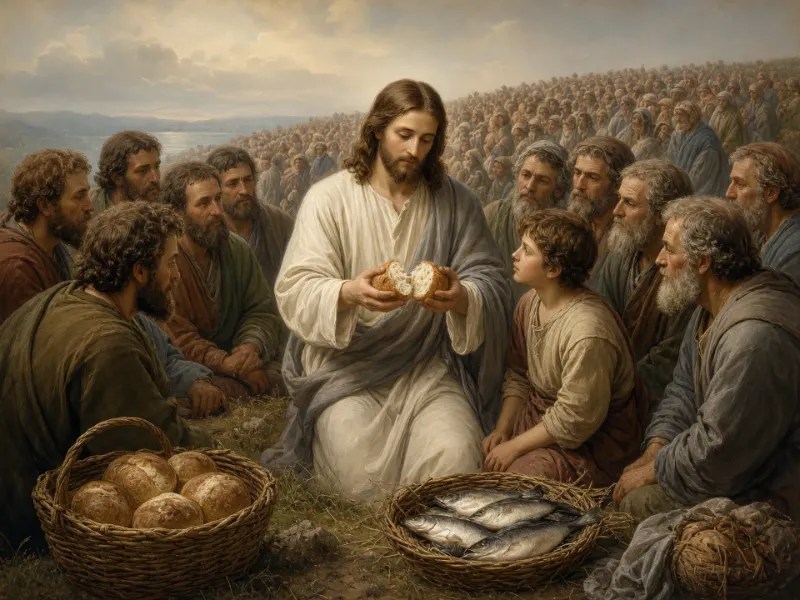
The Catechism calls grace “the free and undeserved help that God gives us to respond to his call to become children of God” (paragraph 1996). Catholics baptize infants, because “children also have need of the new birth in Baptism.” At every Mass they receive the Eucharist, in which, the Catechism says, “the whole Christ is truly, really, and substantially contained.” Latter-day Saints, for their part, take bread and water each Sunday “in remembrance of Jesus Christ’s atoning sacrifice.”
After death, Catholics believe, those who die in God’s grace “live for ever with Christ.” Some first pass through purgatory, a purification “so as to achieve the holiness necessary to enter the joy of heaven.” Those who die in unrepented mortal sin remain “separated from him for ever by our own free choice.” There are no degrees of glory in Catholic teaching, only heaven, reached directly or through purgatory, and hell.
Marriage, for Catholics, is a bond for this life: a consummated sacramental marriage “can be dissolved by no human power and by no cause, except death” (Code of Canon Law, canon 1141). Catholics point to Jesus’ words, “in the resurrection they neither marry, nor are given in marriage” (Matthew 22:30). Latter-day Saints read the same words to mean that no marriage is made after this life, so a marriage meant to last must be sealed now: those not married by God’s word, a revelation to Joseph Smith says, “are not bound by any law when they are out of the world” (Doctrine and Covenants 132:15).
Are Mormons Catholic, and can you be both?
No to both. The Church of Jesus Christ of Latter-day Saints says that its members “unequivocally affirm themselves to be Christians,” and that “Latter-day Saints are not Roman Catholic, Eastern Orthodox, or Protestant.” Joining it requires its own baptism, which the church calls “necessary for an individual to become a member.” Since the Catholic Church does not accept that baptism, a Latter-day Saint who becomes Catholic is baptized as a Catholic.
Members of the two churches can marry, under each church’s rules. For the Catholic Church, a Latter-day Saint counts as unbaptized, and a marriage between a Catholic and an unbaptized person “is invalid” without a dispensation (Code of Canon Law, canon 1086). For Latter-day Saints, temple marriage is the goal; a member who marries in a civil ceremony is married, its handbook says, “for as long as a couple lives. It does not endure beyond mortal life.” The church asks to be called by its full name rather than “Mormon,” as explained in Latter-day Saints vs. Mormon, and how other Christian churches judge its claim to be Christian is set out in Are Mormons Christian?, with the rules on marriage between members of the two churches.
How do Latter-day Saints and Catholics treat each other?
With frank disagreement, and with more kindness than many expect. Latter-day Saints believe the churches of the creeds lost the apostles’ authority. The Catholic Church’s act was the 2001 “Negative” on baptism, and the Vatican article explaining the ruling says that Latter-day Saint teaching “has a completely different matrix.” Yet the Latter-day Saints’ own essay says they “wish to work together with other Christians,” and that “there is no good reason for Christian faiths to ostracize each other.” The Catholic Church, for its part, calls “the desire to recover the unity of all Christians” “a gift of Christ and a call of the Holy Spirit” (paragraph 820).
The two have often worked side by side. When the church’s humanitarian arm, then called LDS Charities and now Latter-day Saint Charities, began working with other relief organizations, its first partner, in 1985, was Catholic Relief Services, during the Ethiopian famine. The church’s newsroom tells an older story too. In 1879 Father Lawrence Scanlon, a Catholic priest assigned to Utah, wanted to gather his southern Utah parishioners and had no place to meet near St. George. The Latter-day Saint leaders of the town offered their tabernacle for the Mass. Their own choir learned the Latin to sing it, and when the building did not fill, they sat in the empty seats.
We should not pretend the difference about God is small. It is the deepest there is between them. But the prayer both churches love was prayed for people who did not yet agree, and Jesus prayed it with the world in view: “that they also may be one in us: that the world may believe that thou hast sent me” (John 17:21).
Related reading
- Do Mormons Believe In Jesus Christ?
- What are the books of the Mormon Bible?
- Are Jehovah’s Witnesses and Mormons the Same? How the Two Religions Differ
- Jehovah’s Witnesses vs Catholic: What’s the Difference?
- What Does the Bible Say About the Holy Trinity?
- What Do Catholics Believe? God, the Mass, the Pope and Mary
- What Do Mormons Believe? Latter-day Saint Teaching in Their Own Words


Leave a Reply