
 English
 Chinese
 Dutch
 Arabic
 Spanish
 Portuguese
 Russian
 French
 Italian
 German
 Japanese
Entire sanctification is the teaching that God can make a believer perfect in love in this life. John Wesley taught it in the 1700s, and the churches that came out of his revival describe it as a work of grace after conversion, received by faith and often in a single moment, in which the Holy Spirit frees the heart from the power of sin so that it loves God and neighbour with all its strength. None of them means that a sanctified Christian can no longer sin or make a mistake. The Church of the Nazarene, the Wesleyan Church, the Free Methodist Church and the Salvation Army teach it today, and the United Methodist and Global Methodist churches keep it in their Confession of Faith. The Lutheran, Reformed and Anglican confessions answer that holiness grows all our lives and is never finished before death. Southern Baptists speak of growth that goes on for a whole life, and the Catholic and Orthodox churches call every believer to perfection and expect the climb to take a lifetime.
Ministers in the Global Methodist Church are still asked the question in nearly those words. A candidate to be ordained an elder there gives written answers to questions “historically asked by bishops since the time of John Wesley,” and one of them is this: “Do you expect to be made perfect in love in this life?” Nearly two hundred years before Wesley, Martin Luther gave a troubled Christian the other answer, and gave it just as kindly: “Brother, you can never be perfect in this life, but you can be holy.” When the two sides go to Scripture, they open the same short letter. The holiness churches hear a promise in John’s “perfect love casteth out fear” (1 John 4:18), and the Church of England’s Articles of Religion answer from his first chapter, “if we say we have no sin, we deceive ourselves, and the truth is not in us” (1 John 1:8). What lies between us is how much God has promised to finish in us before we die.
| Church | Perfect in love in this life? | In its own words |
|---|---|---|
| Church of the Nazarene | Yes, a second work of grace, received in an instant | “the holy obedience of love made perfect” |
| Wesleyan Church, Free Methodist Church | Yes, a crisis followed by lifelong growth | Wesleyan: “perfects the believer in love” |
| The Salvation Army | Yes, the privilege of every believer | “wholly sanctified”; yet “not yet sinlessly perfect” |
| United Methodist, Global Methodist | Yes, in the Confession of Faith both keep | Confession of Faith: “both gradually and instantaneously” |
| Church of God (Cleveland), Pentecostal Holiness Church | Yes, after the new birth and before Spirit baptism | Church of God: “sanctification subsequent to the new birth” |
| Assemblies of God | Holiness by daily faith; no second crisis named | “the faith reckoning daily” |
| Oneness Pentecostal (UPCI) | Sin’s power broken at the new birth | “the power of sin in the flesh is destroyed” |
| Catholic | All are called to the perfection of charity; the Church holds that only Mary avoided every venial sin | “the perfection of charity” |
| Eastern Orthodox, Coptic Orthodox | A lifelong growth into God’s likeness | Coptic: “In heaven, we will be perfect too” |
| Lutheran | No: renewal is begun, not finished | “not complete, but only begun” |
| Presbyterian and Reformed, United Church of Christ | No: holiness grows but stays imperfect | Westminster: “imperfect in this life” |
| Church of England | No, in the Thirty-Nine Articles | “yet offend in many things” |
| Episcopal Church | No statement on perfection; the Spirit helps us grow | “grow in the likeness of Christ” |
| Southern Baptist, nondenominational | Growth for life; no state of perfection named | Southern Baptist: “progress toward moral and spiritual maturity” |
| Churches of Christ | One teacher’s site: perfect only in a relative sense | Christian Courier: “only in a relative sense” |
| Disciples of Christ | Not without sin in this life | Not “holy ones who can boast that we are without sin” |
| Mennonite (1963 confession) | Christ’s forgiveness needed for life | “As long as the believer lives” |
| Amish | Not asked directly; a call to holy living | “put on the new man” |
| Quakers (Friends) | Renewal into God’s image | George Fox: “renewed up into his image” |
| Seventh-day Adventist | Power for a holy life, through the Spirit | “the power to live a holy life” |
| Latter-day Saints | Perfect through Christ’s grace | “may become perfect through His grace” |
| Jehovah’s Witnesses | We stay imperfect, and God knows it | “he understands that we are imperfect” |
Our free tool, Compare Christian Denominations, sets any two of 23 churches side by side on this question and 54 others.
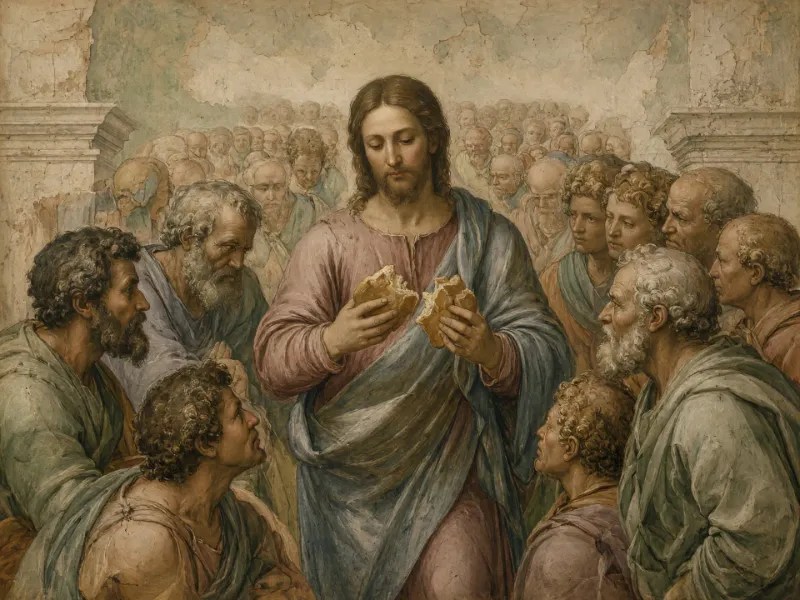
What did John Wesley mean by Christian perfection?
Wesley said the hope took hold of him in 1725, “being in the twenty-third year of my age,” when he read Bishop Taylor’s Rule and Exercises of Holy Living and Dying, and a year or two later William Law’s books “convinced me, more than ever, of the absolute impossibility of being half a Christian.” He told the story in A Plain Account of Christian Perfection, which he went on revising until 1777, and there he gives the answer he published after the Methodist conference of 1759. “What is Christian perfection?” he asks. “The loving God with all our heart, mind, soul, and strength. This implies, that no wrong temper, none contrary to love, remains in the soul; and that all the thoughts, words, and actions, are governed by pure love.” It is the great commandment of Mark 12:30–31 made the whole of a life.
His next question is the one people still ask: does this perfection exclude “all infirmities, ignorance, and mistake?” “I continually affirm quite the contrary, and always have done so,” Wesley answers. “A man may be filled with pure love, and still be liable to mistake,” he says, and even our involuntary transgressions need “the atoning blood,” so “sinless perfection is a phrase I never use, lest I should seem to contradict myself.”
Does it come slowly or all at once? Wesley answered with the picture of a man who is dying. He may be dying for some time, “yet he does not, properly speaking, die, till the instant the soul is separated from the body,” and in the same way a believer “may be dying to sin for some time; yet he is not dead to sin, till sin is separated from his soul; and in that instant he lives the full life of love.” Even then he goes on growing in grace, “not only till death, but to all eternity.” Wesley wanted it preached “always by way of promise; always drawing, rather than driving,” and he was still urging it at the end. On 15 September 1790, his body “almost worn out,” he wrote from Bristol that this doctrine “is the grand depositum which God has lodged with the people called Methodists.”

Is entire sanctification in the Bible?
The name comes from Paul’s prayer for the Thessalonians: “And the very God of peace sanctify you wholly; and I pray God your whole spirit and soul and body be preserved blameless unto the coming of our Lord Jesus Christ” (1 Thessalonians 5:23). The Salvation Army’s Handbook of Doctrine says so in as many words: “The term ‘entire sanctification’ is derived from 1 Thessalonians 5:23 (KJV).” The holiness churches hear the same promise when Jesus says, “Be ye therefore perfect, even as your Father which is in heaven is perfect” (Matthew 5:48), in the old promise that “the Lord thy God will circumcise thine heart” (Deuteronomy 30:6), and in the call of Hebrews, “let us go on unto perfection” (Hebrews 6:1). The Church of the Nazarene lists all of these beside its article.
The churches that say no listen to Paul’s cry in Romans, “the good that I would I do not: but the evil which I would not, that I do” (Romans 7:19), and to his word to the Galatians that “the flesh lusteth against the Spirit, and the Spirit against the flesh” (Galatians 5:17), which the Westminster Confession takes up almost as it stands. They read John’s “If we say that we have no sin” as a word to every Christian. The Pentecostal Holiness Church hears it another way: “these words apply to those who deny the need for cleansing, not to those who have experienced it and are living the sanctified life,” and it points to the same letter’s “Whosoever is born of God doth not commit sin” (1 John 3:9).
Paul himself seems to hold both thoughts in one breath. “Not as though I had already attained, either were already perfect,” he tells the Philippians, “but I follow after,” and three verses on, “Let us therefore, as many as be perfect, be thus minded” (Philippians 3:12, 15). Christian Courier, the site of one Churches of Christ teacher, Wayne Jackson, takes that second “perfect” as maturity: “Whenever man is referred to as ‘perfect’ it is only in a relative sense, i.e., he is spiritually mature, in comparison to his fellows.” Some Methodists say much the same of Wesley, and a United Methodist explainer quotes retired Bishop William H. Willimon: “By ‘perfection,’ Wesley did not mean moral flawlessness or sinlessness. He meant perfection in the sense of maturity.” What the Bible means by being sanctified, before any of these churches took up the word, is the subject of our Bible study on being sanctified.
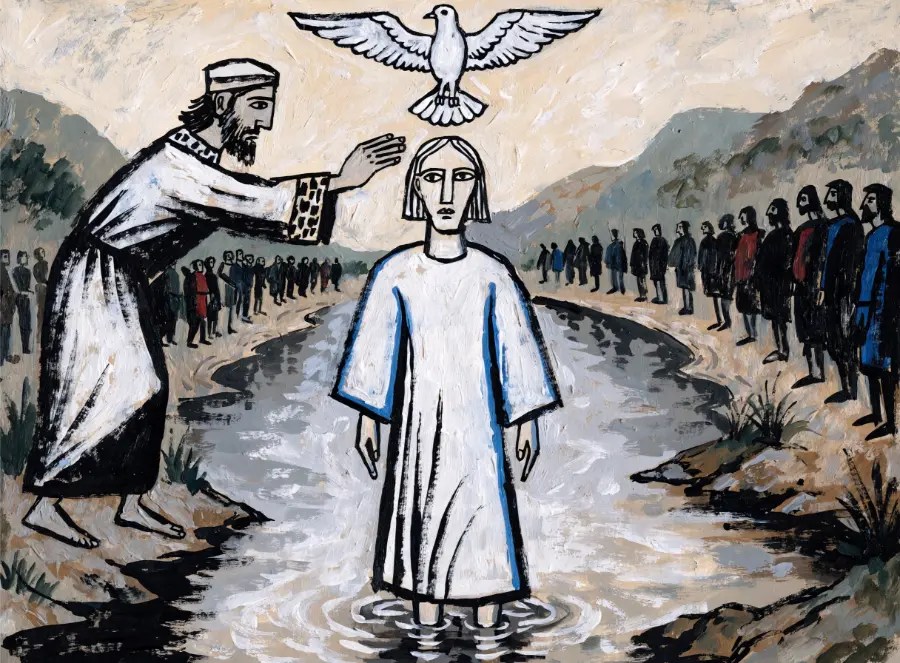
Which churches teach entire sanctification?
The Church of the Nazarene puts the doctrine at the heart of its Articles of Faith. “We believe that entire sanctification is that act of God, subsequent to regeneration, by which believers are made free from original sin, or depravity, and brought into a state of entire devotement to God, and the holy obedience of love made perfect,” says Article X, and it is “wrought instantaneously by grace through faith, preceded by entire consecration.” The same article says it is “wrought by the baptism with or infilling of the Holy Spirit,” so for Nazarenes the cleansing of the heart and the Spirit’s filling come in one experience, where the Holiness Pentecostal churches look for them one after the other. Nazarenes also call it “perfect love” and “heart purity,” and they are careful to say what it leaves unfinished: “there is a marked distinction between a pure heart and a mature character.”
The Nazarene constitution is written to preserve “especially the doctrine and experience of entire sanctification as a second work of grace,” and how this sits beside Methodist teaching is set out in Church of the Nazarene beliefs compared with Methodist beliefs.
The Nazarene Manual tells where these churches came from. “A renewed emphasis on Christian holiness developed in the mid-19th century,” it says. Phoebe Palmer led “the Tuesday Meeting for the Promotion of Holiness,” the holiness camp meetings began in 1867, and the Church of the Nazarene “was born from the impulse to unite many of these into one holiness church.” For a time it was called the Pentecostal Church of the Nazarene, because “‘Pentecostal’ was a synonym for ‘Holiness’ to these and other Nazarene founders.”
The Wesleyan Church walks through the whole road in one article. Sanctification “is initiated at the moment of justification and regeneration,” grows “as the believer walks with God,” and prepares for “the crisis of entire sanctification which is wrought instantaneously when believers present themselves as living sacrifices,” which echoes Romans 12:1. “The crisis of entire sanctification perfects the believer in love and empowers that person for effective service. It is followed by lifelong growth in grace.” The Free Methodist Church teaches that “As believers surrender to God in faith and die to self through full consecration, the Holy Spirit fills them with love and purifies them from sin,” a change that comes “through crisis and process.”
The Salvation Army’s tenth doctrine says, “We believe that it is the privilege of all believers to be wholly sanctified, and that their whole spirit and soul and body may be preserved blameless unto the coming of our Lord Jesus Christ.” The Palmers’ meetings and books, its Handbook of Doctrine says, “were a source of inspiration for William and Catherine Booth.” The Handbook steers between two mistakes: “Care should be taken to avoid gloomy defeatism on the one hand, and pretentious perfectionism on the other,” since “We are already sanctified but not yet sinlessly perfect.” Frederick Coutts, who was General of the Salvation Army, put the rest in a line: “The crisis must be followed by a process.”

Do Methodists still believe in Christian perfection?
Article XI of the Confession of Faith, which the United Methodist Church received from the Evangelical United Brethren and which the Global Methodist Church prints in its Book of Doctrines and Discipline, says that “Entire sanctification is a state of perfect love, righteousness and true holiness which every regenerate believer may obtain by being delivered from the power of sin,” and that it “may be received in this life both gradually and instantaneously, and should be sought earnestly by every child of God.” The same article says it “does not deliver us from the infirmities, ignorance, and mistakes common to man, nor from the possibilities of further sin.”
The Global Methodist Church adds, “With John Wesley, we believe that a life of holiness and, ultimately, ‘entire sanctification’ should be the goal of each person’s journey with God.” On the United Methodist website, Ask The UMC says, “We may not be there yet; but by God’s grace, as United Methodists say, ‘we’re going on to perfection!’” The rest of the Methodist family’s teaching, on grace, assurance and the sacraments, is in what Methodists believe.
What do Pentecostal churches teach?
The Holiness Pentecostal churches look for two experiences after the new birth, sanctification first and then the baptism in the Holy Spirit. The Church of God (Cleveland, Tennessee) declares its belief “In sanctification subsequent to the new birth, through faith in the blood of Christ; through the Word, and by the Holy Ghost,” and “In the baptism with the Holy Ghost subsequent to a clean heart.” The International Pentecostal Holiness Church keeps the same order: sanctification “includes a definite, instantaneous work of grace achieved by faith subsequent to regeneration,” and the baptism of the Holy Ghost comes to “the fully cleansed believer.” It calls that cleansing “the circumcision of the heart,” and it is clear about what it is not: “We do not believe it is impossible for the sanctified to commit sin; but we do believe it is possible for a sanctified person not to commit sin.”
The Assemblies of God speaks of holiness without naming a second crisis. Its Statement of Fundamental Truths says sanctification “is realized in the believer by recognizing his identification with Christ in His death and resurrection, and by the faith reckoning daily upon the fact of that union.” Oneness Pentecostals of the United Pentecostal Church International look to the new birth itself, and their 1977 position paper on holiness says, “The birth of the Spirit makes a person a new creature. His old life is exterminated, obliterated, and buried; the power of sin in the flesh is destroyed.”
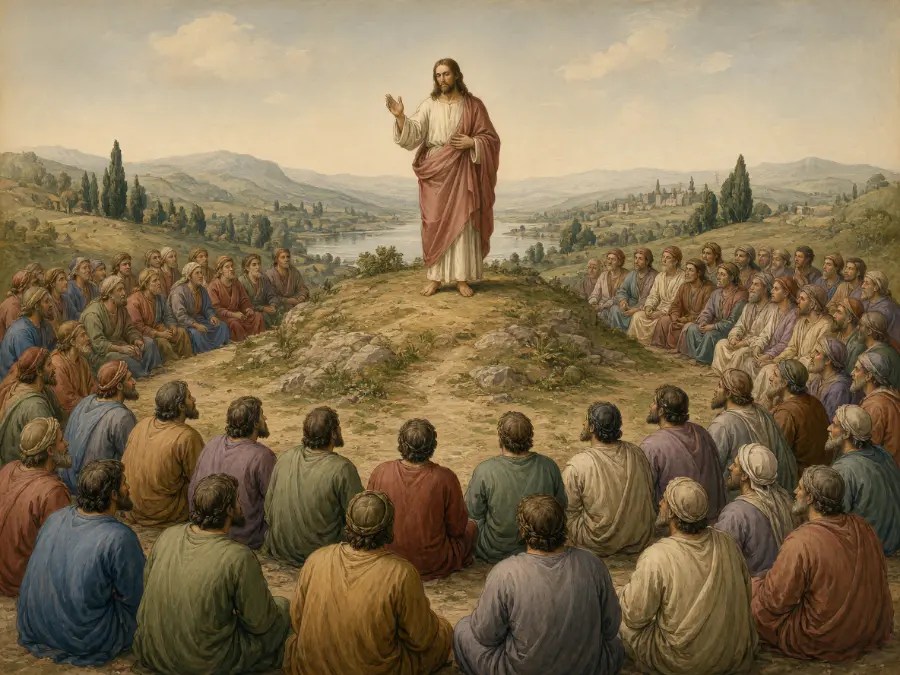
Why do Lutheran, Reformed and Anglican churches say no?
These churches teach sanctification too, and expect to see it in a believer’s life, but they say it is never finished this side of death. The Westminster Confession, which many Presbyterian churches hold, says that “This sanctification is throughout, in the whole man; yet imperfect in this life,” and speaks of “a continual and irreconcilable war” in every believer, though it goes straight on to hope: “the saints grow in grace, perfecting holiness in the fear of God.” The Heidelberg Catechism of 1563, which the United Church of Christ counts among its heritage, comes closest to the question in one line: “In this life even the holiest have only a small beginning of this obedience.”
The Formula of Concord, one of the Lutheran confessions, teaches that in believers “in the present life this regeneration and renewal is not complete, but only begun, and believers are, by the spirit of their mind, in a constant struggle against the flesh.” Luther meant this as comfort. In his commentary on Galatians, from lectures he gave in 1531, he says that “a Christian is both right and wrong, holy and profane, an enemy of God and a child of God,” and when the troubled Christian asks him, “How can I be holy when I feel my sins?” Luther answers, “You feel sin? That is a good sign.”
The Church of England’s Thirty-Nine Articles say in Article XV that Christ alone was without sin, “But all we the rest, although baptized, and born again in Christ, yet offend in many things,” and Article XVI condemns those who “say, they can no more sin as long as they live here.” The Episcopal Church’s catechism of 1979 does not take up perfection directly; the nearest it comes is to say that the Holy Spirit “enables us to grow in the likeness of Christ.”
What do Baptists and other Protestant churches say?
Southern Baptists describe a lifetime of growth and name no point where it is complete. Their confession, the Baptist Faith and Message of 2000, says the believer “is enabled to progress toward moral and spiritual maturity through the presence and power of the Holy Spirit,” and that “Growth in grace should continue throughout the regenerate person’s life.” Nondenominational churches have no shared confession to quote. The nearest thing is the Lausanne Movement, an evangelical movement rather than a church, and its Seoul Statement of 2024 says the good news “does not bring the fullness of transformation or bear the fruit of transformation all at once.”
Two more churches say that Christians go on needing forgiveness for as long as they live. The Disciples of Christ confess it in a 1989 report of their Commission on Theology: “We have not been, and are not now, holy ones who can boast that we are without sin.” The Mennonites say it in their Confession of Faith of 1963, which the Keystone Mennonite Fellowship still prints: “As long as the believer lives, he stands in need of the forgiveness, cleansing, and grace of Christ.”
The Amish and the Quakers both speak of being made new in righteousness and holiness. The Amish keep the Dordrecht Confession of 1632, which does not ask this question in so many words but calls believers to “put off the old man with his deeds, and put on the new man, which after God is created in righteousness and true holiness.” Quakers in Britain keep in their book of discipline George Fox’s hope that men and women “are renewed up into his image, righteousness and holiness by Christ.”

What do Catholics and Orthodox Christians teach about perfection?
The Catholic Church calls every one of its members to perfection and expects the road to run through the cross. “All Christians in any state or walk of life are called to the fullness of Christian life and to the perfection of charity,” the Catechism of the Catholic Church teaches, and “The way of perfection passes by way of the Cross.” It closes the passage with a climber: “He who climbs never stops going from beginning to beginning, through beginnings that have no end.” The Council of Trent, in January 1547, condemned anyone who says that a justified person “is able, during his whole life, to avoid all sins, even those that are venial,” and added, “except by a special privilege from God, as the Church holds in regard of the Blessed Virgin.” So Catholics hope to be made holy, but they do not expect anyone except Mary to pass a whole life without even small sins.
Eastern Orthodox Christians name this calling theosis, which, the Orthodox Church in America explains, “literally means deification or divinization”: a sharing in what Peter calls “the divine nature” (2 Peter 1:4). Athanasius of Alexandria put it in one sentence, “He was made man that we might be made God.” For the Orthodox it is a road walked for a whole life, and the OCA teaches that “Salvation includes a process of growth of the whole person whereby the sinner is transformed into the image and likeness of God.” The Coptic Orthodox Church sets the finish in heaven: “God is perfect. In heaven, we will be perfect too; because there will be no more sin.”
What do Adventists, Latter-day Saints and Jehovah’s Witnesses believe?
All three churches speak of what God does for believers who still fall short, and they end in different places. Seventh-day Adventists teach in their tenth Fundamental Belief that “Through the Spirit we are born again and sanctified; the Spirit renews our minds, writes God’s law of love in our hearts, and we are given the power to live a holy life.” The Church of Jesus Christ of Latter-day Saints says in its Guide to the Scriptures, “Only Christ was totally perfect. True followers of Christ may become perfect through His grace and Atonement.” Jehovah’s Witnesses teach that “we are born imperfect and inclined toward error,” and they write on jw.org that God “understands that we are imperfect, and he does not expect more of us than he knows is reasonable.”
So Christians who love the same Lord answer the elders’ question in different ways, and even the answers furthest apart leave room to grow. The Nazarene who testifies to a pure heart still looks for a mature character, and Wesley expected growth in grace “not only till death, but to all eternity.” The Lutheran who expects no perfection before death still hears Luther tell the struggling Christian, “you can be holy.” And Paul gave all of us words we can pray together: “forgetting those things which are behind, and reaching forth unto those things which are before, I press toward the mark for the prize of the high calling of God in Christ Jesus” (Philippians 3:13–14).
Related reading
- Compare Christian Denominations: what 23 churches teach on 55 questions
- 20 Bible verses about perfection
- Bible study: what is holiness?
- The Salvation Army vs Catholic beliefs
- Pentecostal vs Methodist beliefs
- Calvinism vs Arminianism: the five points side by side


Leave a Reply