
 English
 Chinese
 Dutch
 Arabic
 Spanish
 Portuguese
 Russian
 French
 Italian
 German
 Japanese
No. Christmas is the feast of Jesus’ birth, and the evidence does not show that Christians copied it from a pagan festival. How its date was chosen is still debated. Some of its customs, such as greenery, gifts and candles, look like older Roman and northern winter customs, and in some places the Church took old customs over on purpose.
What the faith brought to the old feasts it met was someone to thank. In June 601 Pope Gregory the Great wrote to Mellitus, an abbot on his way to the English, about the people’s sacrifices of oxen. Let them keep a feast instead on the day a church is dedicated or a martyr remembered, he said, “and no more offer beasts to the Devil, but kill cattle to the praise of God in their eating, and return thanks to the Giver of all things for their sustenance.” He did not pretend the change would be quick: “he who endeavours to ascend to the highest place, rises by degrees or steps, and not by leaps.” His letter says nothing about Christmas. It is the clearest evidence we have of what the Church did when it took over an old custom, and why.
Did Christians steal Christmas from pagans?
Augustine heard the charge sixteen centuries ago, from Faustus the Manichaean, who told Christians, “You keep the same holidays as the Gentiles; for example, the calends and the solstices.” The calends of January were the Roman New Year, and the solstices were the sun’s turning days, in June and December. So if the charge troubles you, you are in old company, and Christians have been answering it since Augustine’s day.
| The claim heard today | An early witness | Written |
|---|---|---|
| Christmas is the Saturnalia renamed | Macrobius, on the Saturnalia | Fifth century |
| Christmas was the Sun’s birthday | Rome’s calendar of 354 | 354 |
| Christmas grew out of Yule | Bede; Snorri Sturluson on King Hakon | About 725; about 1225 |
| Christmas gifts and greenery are older | Libanius on New Year gifts; Stow on London’s churches | Fourth century; 1598 |
| The Church took over pagan customs on purpose | Pope Gregory’s letter to Mellitus | 601 |
What was Saturnalia, and does Christmas come from it?
The Saturnalia honoured Saturn, the god the old Latin people credited with teaching them to farm. As Macrobius describes it, the feast came to run for seven days, from 17 to 23 December, ending with a fair of little figures, so it was over before Christmas Eve. For that week the law courts closed, gambling was allowed, and slaves sat down to a banquet in their masters’ clothes while their masters waited on them. People gave each other wax tapers and little clay figures as presents. In a playful dialogue the writer Lucian gave the feast a mock law: “All men shall be equal, slave and free, rich and poor, one with another.” For Rome it was a game that lasted a week. We know a Master who made it the rule of his kingdom, and who asked his apostles at the Passover table, before he suffered, “For whether is greater, he that sitteth at meat, or he that serveth? is not he that sitteth at meat? but I am among you as he that serveth” (Luke 22:27).
You can see why people hear Christmas in the Saturnalia, with its gifts and candles and feasting in the dark of the year. Yet no ancient Christian writer says that Christmas came from it, and Clement Miles, who believed in 1912 that much of Christmas came from older feasts, noticed something else: the Saturnalia “is not mentioned in ecclesiastical condemnations after the institution of Christmas.” When bishops preached against pagan winter customs, they had a different feast in their sights, the Roman New Year on 1 January.
Was 25 December the birthday of the Sun?
Anyone who tells you the Sun’s feast came first is claiming more than the record holds. The oldest witness to both birthdays on 25 December, the Sun’s and Christ’s, is one book, Rome’s calendar of 354. The two explanations historians give for the date are weighed in why Christmas is on 25 December.
Does Christmas come from Yule?
Yule was the name of a winter season among the Germanic peoples of the north, and in 1912 it was still the everyday word for Christmas in the Scandinavian languages. Where the name comes from is disputed, and what the old feast was is harder still to say. Miles reported that the research of his day had cast “the gravest doubts upon the existence of any Teutonic festival at the winter solstice,” and he thought the northern customs later joined to Christmas came from a feast at the beginning of winter, in November. The English monk Bede, writing about 725, gives another picture. His people of old, he says, named two winter months Giuli after the turning of the sun and began their year on 25 December, keeping ceremonies all that night, and they called it Modranecht, “mother’s night”, a name Bede supposes came from those ceremonies. We should speak modestly here, because the sources are few and they do not agree.
The order of events gives a firmer answer than the scattered sources on the old feast: Rome kept Christmas by 354, more than two centuries before Gregory’s missionaries reached the English and longer still before Christians reached Norway. And in Norway, at least, it was the old feast that moved. Snorri Sturluson, writing in Iceland about 1225 of a Norwegian king who had lived long before, says that Hakon the Good “made a law that the festival of Yule should begin at the same time as Christian people held it.” Before him, the saga says, Yule began on midwinter night and was kept for three days. The king brought his people’s midwinter feast to the Church’s day, and from then on the Norwegians feasted on the day Christians gave thanks for the birth of Christ.
Did the Church take over pagan customs on purpose?
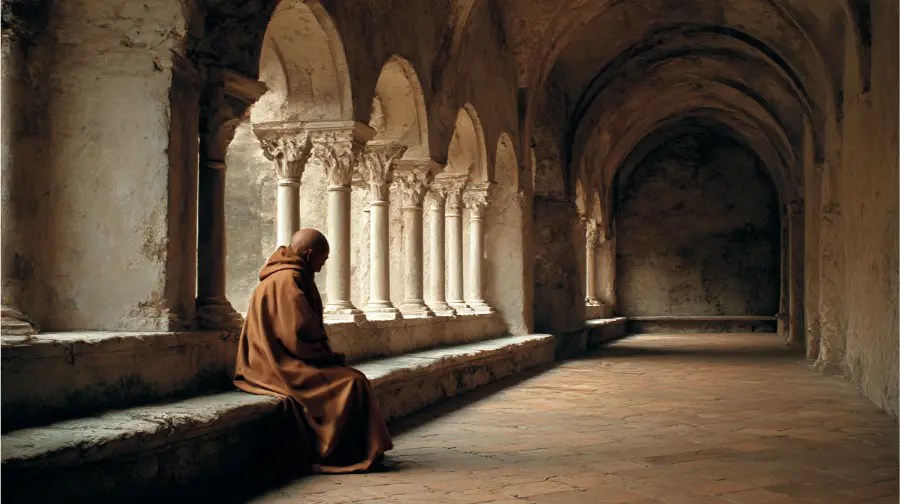
Gregory’s letter shows that in some places the Church did, and said so openly. Andrew McGowan, a historian of early Christian worship, finds that from the middle of the fourth century Christians adapted pagan festivals on purpose, with that letter as the famous example. “At this late point, Christmas may well have acquired some pagan trappings,” he writes. “But we don’t have evidence of Christians adopting pagan festivals in the third century, at which point dates for Christmas were established.” Before then, he adds, the persecuted Christians were “greatly concerned with distancing” themselves from the public sacrifices, games and holidays of their neighbours. So the order runs this way: while they were persecuted, Christians kept away from the public feasts, and by the time the Church began to take old customs over, the date of Christmas was already set. When it did take them over, Gregory tells us the reason, so that the people would return thanks to the Giver.
Other bishops, before Gregory and after him, would give the old customs no room at all. A preacher, probably of the sixth century, scolded people, some of them baptized, who at the New Year “both receive and give diabolical presents,” and he called the faithful to fast on those days instead. Two centuries later the missionary Boniface met New Year customs of the same kind among the peoples of Germany, who told him they would not give them up because they had seen New Year processions in Rome itself. The people Boniface was teaching pointed to the Pope’s own city to excuse themselves, and when he took the complaint to Pope Zacharias, a council in Rome sided with its missionary and forbade those practices. If Christians today disagree about which customs to keep, the bishops of those centuries disagreed too.
Where do Christmas gifts, greenery and candles come from?
Christmas gifts look back to two kinds of giving. At the New Year, Romans gave each other presents called strenae, and the French word for New Year presents, étrennes, comes from it. It was a season of giving everywhere; “a stream of presents pours itself out on all sides,” wrote Libanius, a Greek teacher of the fourth century, and the Catholic Encyclopedia of 1908 thought the strenae “survive as Christmas presents, cards, boxes.” The other kind of giving began with a child. The wise men came to Bethlehem, “and when they had opened their treasures, they presented unto him gifts; gold, and frankincense and myrrh” (Matthew 2:11). Even Santa Claus belongs to this second line of giving, for in the United States and other countries he became one with Saint Nicholas, a bishop of Myra in the fourth century, whose feast on 6 December was already a day for secret gifts to children in Germany, Switzerland and the Netherlands. When we give at Christmas we stand in both lines, and the wise men show us whom the giving is for.
Romans decked their houses with laurel and green branches at the New Year, and bishops went on condemning it as late as the sixth century, a story told in whether Christmas trees are pagan. The green came into the churches all the same. John Stow, whose Survey of London first appeared in 1598, describes the London of his forebears: “Against the feast of Christmas every man’s house, as also the parish churches, were decked with holm, ivy, bays, and whatsoever the season of the year afforded to be green.” Holm and ivy hung in the parish churches in midwinter for the birth of Christ, and the old greenery had found someone new to honour. In Miles’s day only the mistletoe was still kept out of most churches, though at York Minster some was even laid on the altar. The decorated Christmas tree is a younger custom: no record ties it to a pagan rite, and its story begins in German towns in the 1500s.
Candles were among the Saturnalia gifts, and the Romans lit lamps at the New Year. When we light candles at Christmas, we light them for Christ, who called himself the light of the world.
Is it wrong for a Christian to keep Christmas if some customs are older?
If you have worried that a wreath or a feast honours a false god, you can set the worry down, because it is not wrong, and the first Christians faced the same question. When believers in Rome were divided over holy days, Paul let each one keep a day or leave it, so long as he did it to the Lord and gave God thanks (Romans 14:6). Some Christians still keep no Christmas for conscience’ sake while others keep it gladly, and both are heard in is it a sin to celebrate Christmas?
Barnabas and Paul once stood where the old gods were still worshipped, at Lystra. The priest of Jupiter “brought oxen and garlands unto the gates” to offer sacrifice to them. The two apostles tore their clothes and ran in among the people, crying out, “Sirs, why do ye these things?” They told the crowd to turn to the living God, who had been giving good gifts to the nations all along: “he left not himself without witness, in that he did good, and gave us rain from heaven, and fruitful seasons, filling our hearts with food and gladness” (Acts 14:17). At Christmas we thank him for the greatest of his gifts, his Son, born for us at Bethlehem. When we sit down to the Christmas meal this year, we return thanks to the Giver of all things, as Gregory hoped the English would, and we thank him first for the Child.
Related reading
- Why is Christmas on December 25?
- Are Christmas trees pagan?
- Is it a sin to celebrate Christmas?
- Is Santa Claus in the Bible?
- What is the true meaning of Christmas?


Leave a Reply