
 English
 Chinese
 Dutch
 Arabic
 Spanish
 Portuguese
 Russian
 French
 Italian
 German
 Japanese
Gnosticism is the name scholars use for a set of early teachers who promised salvation through gnosis, a hidden knowledge. They show up most plainly among Christians of the second century, though where they first came from is still argued. In the picture many of them painted, the true God lives far beyond our world, lesser powers who never knew him built it, and Christ came down to stir a spark of the divine buried in human beings.
For nearly eighteen hundred years after Irenaeus, the teachers reached us almost only through what their opponents wrote about them. Irenaeus, bishop of Lyons in Gaul, is the opponent we lean on most: he studied their writings, talked with some of them, and around 180 put out five books against them. In 1945 Egyptian soil near Nag Hammadi gave up a collection of Coptic books copied in the fourth century, and some of them came from the teachers’ own side. Many scholars today doubt that these teachers ever formed a single movement.
The first words of one of those books are “These are the hidden sayings that the living Jesus spoke and Didymos Judas Thomas wrote down.” We know a Thomas from John’s Gospel as well, “one of the twelve, called Didymus” (John 20:24). He was away when the risen Lord first came to the disciples, and he would not take their word for it: “Except I shall see in his hands the print of the nails, and put my finger into the print of the nails, and thrust my hand into his side, I will not believe” (John 20:25). Jesus came again “after eight days”, and this time Thomas was in the room. “Reach hither thy finger, and behold my hands; and reach hither thy hand, and thrust it into my side: and be not faithless, but believing,” Jesus told him (John 20:27). Put those two side by side, the Thomas who writes down secrets and the Thomas who is invited to touch the nail wounds of a crucified man now living, and you have most of what Irenaeus and the teachers fought over. His answer to them came out of that same Gospel of John: “the Word was made flesh, and dwelt among us” (John 1:14).
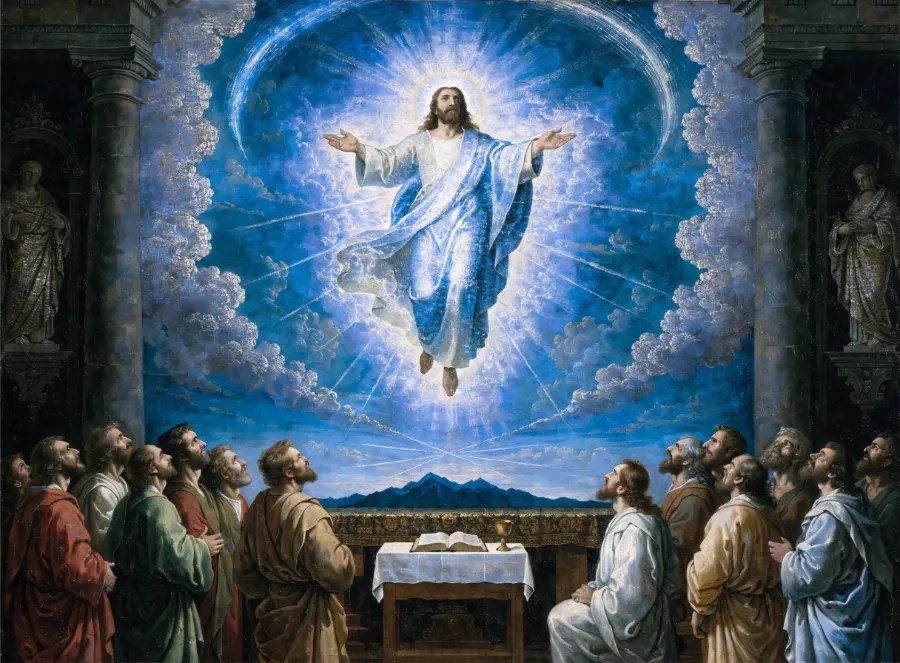
Where the word Gnostic comes from
The Greek word gnosis simply means knowing. Strong’s gives it as “knowing (the act), i.e. (by implication) knowledge,” and the King James Bible turns it into “knowledge” in every place but one. The exception is a warning to Timothy near the close of the first letter addressed to him, where the word comes out as “science”: “O Timothy, keep that which is committed to thy trust, avoiding profane and vain babblings, and oppositions of science falsely so called” (1 Timothy 6:20). Irenaeus echoes that warning when he describes his own work as “the exposure and refutation of knowledge falsely so called.”
In Irenaeus’s day the word was already the name of a heresy. He says Valentinus “adapted the principles of the heresy called Gnostic to the peculiar character of his own school,” and that “a multitude of Gnostics have sprung up, and have been manifested like mushrooms growing out of the ground.” Of those who followed Carpocrates he says, “They style themselves Gnostics.” He also writes of what is taught “according to certain of the Gnostics,” and so lays the name over still more groups himself. The modern quarrel over the term grows out of exactly that: a name that belonged to one heresy and that at least one school wore, and a label that Irenaeus and later authors put on many.
What did the Gnostics believe?
Our main guide here is still Irenaeus. When he was young he saw Polycarp, who had been made bishop of the church at Smyrna, and he writes that Polycarp “was not only instructed by apostles, and conversed with many who had seen Christ.” So the chain from the apostles to Irenaeus had only one link in it. Later Irenaeus was bishop of Lyons, and Eleutherius, who led the Roman church from about 174 to 189, was in office when he wrote his third book. He tells us how he learned what he reports: “after reading some of the Commentaries, as they call them, of the disciples of Valentinus, and after making myself acquainted with their tenets through personal intercourse with some of them.” Still, it is an opponent’s testimony.
What the Valentinians told him begins high above everything, with “a certain perfect, pre-existent Æon, whom they call Proarche, Propator, and Bythus.” Counting this first one, Irenaeus lists thirty Aeons, which came forth two by two and filled what they called the Pleroma, or Fullness. The thirty were said to be “known to none [except these professing teachers].” Their proof of the number came from the parable of the workers in the vineyard. Add up the hours at which the workers were hired, one, three, six, nine and eleven, and you get thirty.
Our world, they said, lies outside that Fullness, and a lower being made it, the Demiurge, whom Irenaeus’s translator calls the Framer, meaning a builder or craftsman. They named his mother Achamoth, and also Sophia, which is Greek for wisdom. The son, Irenaeus reports, made things he did not understand: “He formed the heavens, yet was ignorant of the heavens; he fashioned man, yet knew not man.” He even “imagined himself to be God alone, and declared through the prophets, I am God, and besides me there is none else.” They had taken the God who speaks through Israel’s prophets and made him a craftsman working in the dark, who never knew the true Father and thought no one stood above him. Unknown to him, his mother had planted her spiritual offspring in the man he formed, so that this man was “rendered a spiritual man by the simultaneous inspiration received from Sophia.” In their scheme, it is this planted seed that the knowledge wakes.
From there everyone falls into one of three classes. Material people perish. “Animal” people stand in between and may be saved or lost. Spiritual people are “formed and perfected by Gnosis (knowledge),” and Irenaeus notes that “they represent themselves to be these persons.” Ordinary Christians belonged to the middle group, described as “such men, namely, as are established by their works, and by a mere faith, while they have not perfect knowledge. We of the Church, they say, are these persons.” In this scheme faith is second best and knowledge is best, and Irenaeus says the teachers treated the rest of the church as “utterly contemptible and ignorant persons.”
They spoke of Christ as the Saviour, “for they do not please to call Him Lord,” as Irenaeus remarks in passing. Their low view of matter reached as far as him: they “deny that He assumed anything material [into His nature], since indeed matter is incapable of salvation.” Basilides, who taught at Alexandria, rewrote the crucifixion itself: Christ “did not himself suffer death, but Simon, a certain man of Cyrene, being compelled, bore the cross in his stead,” and Jesus, in Simon’s form, was “standing by” and “laughed at them.” John’s first letter gives believers a plain test for such teaching: “Every spirit that confesseth that Jesus Christ is come in the flesh is of God” (1 John 4:2).
Irenaeus’s reports on how they lived point in opposite directions. He charges some with doing whatever they liked, on the grounds that a spiritual person is like gold that, “submersed in filth,” “loses not on that account its beauty.” In the same work he describes the school of Saturninus teaching “that marriage and generation are from Satan,” with many of its followers refusing meat in what he calls “a feigned temperance.”
What was found at Nag Hammadi in 1945?
Near Nag Hammadi, a town in southern Egypt some 70 miles north of Luxor, the books came to light, reportedly in 1945. There were “12 papyrus volumes and fragments of another one,” as the Biblical Archaeology Society describes them, carrying “a total of 52 separate texts, which make up 48 individual titles.” They were copied around the middle of the fourth century in Coptic, Egypt’s language in those days. It is generally assumed that the works were first composed in Greek, and they are older than the copies. So some sixteen hundred years passed between the copying and the finding. They are held today in Cairo’s Coptic Museum, and anyone can read them in English or in many other languages.
Mixed in with the Gnostic writings are a copy of Plato’s Republic, altered to include some Gnostic ideas, and other works that are not Gnostic at all. That makes the find look less like one sect’s scripture than a mixed collection whose owner we do not know. Because two of the volumes had monastery papers stuffed into their covers, some scholars think the Pachomian monks had something to do with them, though no one has yet proved that the monks either produced or read them.
The discovery is often told as a drama, with a blood feud, a buried jar and men digging up soil to fertilise their fields. James Robinson assembled that version in the 1970s from the finder’s memories, some three decades after the event. When Mark Goodacre of Duke University compared Robinson’s tellings in 2013, they contradicted each other on how many people were present and on who first laid hands on the jar. Goodacre judged that it “may be safest to conclude” that the account Jean Doresse had published in 1958 is “more reliable,” and his last sentence was, “Sometimes, admitting our ignorance is a virtue.”
Truth, Thomas, Judas, Mary and Philip: the other gospels
Irenaeus had mentioned two of the teachers’ gospels by name, one called the Gospel of Truth and one called the Gospel of Judas. Books with those titles have since resurfaced, the first at Nag Hammadi and the second by way of antiquities dealers, nearly eighteen hundred years after he wrote. Whether they are exactly the books he knew cannot be proved. But scholars before 1945 had very little that the teachers wrote themselves, and now we hold enough of it to set beside his report.
The Gospel of Truth
Irenaeus was indignant that the Valentinians went so far “as to entitle their comparatively recent writing the Gospel of Truth, though it agrees in nothing with the Gospels of the Apostles.” The opening volume from Nag Hammadi contains a work whose first line is “The Gospel of Truth is a joy for those who’ve received grace from the Father of Truth, that they might know him through the power of the Word.” If it is the same book, there is very little story in it. Most of it is a long reflection on knowing the Father. It traces our misery to ignorance, saying that “ignorance of the Father caused anguish and terror,” and compares that ignorance to sleep and its nightmares: “The ignorant have acted like they’re asleep; those who’ve come to knowledge have acted like they’ve awakened.” The crucifixion appears in the line that Jesus “was nailed to a tree, and published the Father’s edict on the cross.” Beyond that we glimpse only a few moments of his life, such as his teaching in places of learning and the little children coming to him, and nowhere in it is there an empty tomb.
The Gospel of Thomas
Thomas’s “hidden sayings” make up the Gospel of Thomas, a string of 114 sayings of Jesus with hardly any narrative. Greek fragments of it had been found at Oxyrhynchus, in Egypt, about the start of the twentieth century, on copies made in the third century or a little earlier, and only when the complete Coptic version surfaced at Nag Hammadi could anyone say which book they belonged to. Some of the sayings will sound familiar from the Gospels, the parable of the sower among them, and some will not, such as “Whoever has known the world has found a corpse.” Writing in Biblical Archaeology Review, Simon Gathercole observes that in Thomas the body and the world “are seen in a negative light,” yet the book has no evil creator and no Aeons, a fact he calls “something of an embarrassment for the ‘Gnostic’ view of Thomas.” So scholars still debate whether Thomas counts as Gnostic at all. Debated or not, the Thomas of this gospel never gets to touch a wound, since the book tells nothing of a crucifixion or a resurrection.
The Gospel of Judas
Irenaeus describes a group that claimed Cain, Esau, Korah and the men of Sodom as their forebears and taught that Judas, “knowing the truth as no others did, accomplished the mystery of the betrayal.” They possessed, he says, “a fictitious history of this kind, which they style the Gospel of Judas.” A Coptic book of that name has reappeared in our own time, though for most of its road back we have only the dealers’ word. Their version runs like this. Sometime in the 1970s Egyptian labourers looking for antiquities came across it, and a Cairo dealer took it and tried to find a buyer. It was stolen from him in the early 1980s and he recovered it, and after failing to sell it in the United States he locked it in a safe deposit box on Long Island, New York, where it sat for close to two decades. None of that can be independently confirmed.
The solid ground starts in 1983, in a Geneva hotel, where American scholars examined the codex and could not meet the price. In 1999 another dealer, Frieda Tchacos Nussberger, after whom it is now called Codex Tchacos, tried to sell it to Yale, which declined. By then it was in very poor shape. The National Geographic Society funded its restoration, translation and publication, and in April 2006 announced it to the world as the gospel in which Judas is the hero. Inside a year that claim was coming apart. Among the scholars who disagreed was April DeConick, who by December 2007 was arguing in the New York Times, with a book on the way, that the Judas of this text is a typical Gnostic villain and that the received translation had it wrong. Translators have differed even over what Jesus calls him. The word is daimon. Marvin Meyer, who answered DeConick in the same newspaper, first translated it “spirit,” and Karen King later made it “god.” In Jewish and Christian writing, though, a daimon was plainly an evil spirit, and Mark Mattison’s translation has Jesus call Judas “you thirteenth demon.”
Not far into the book Jesus finds the disciples praying over the bread and laughs, though he tells them, “I’m not laughing at you.” The last line is the sale: “Then Judas received some money and handed him over to them.” The book has neither a cross nor a resurrection. The Gospels’ Judas Iscariot is “one of the twelve,” and it is he who goes to the chief priests with an offer: “What will ye give me, and I will deliver him unto you? And they covenanted with him for thirty pieces of silver” (Matthew 26:14–15). He betrays Jesus with a kiss, and Jesus says to him, “Judas, betrayest thou the Son of man with a kiss?” (Luke 22:48). Afterward, seeing Jesus condemned, he takes the money back to the priests and confesses, “I have sinned in that I have betrayed the innocent blood” (Matthew 27:4).
The Gospels of Mary and Philip
Two more books are known mostly for one thing they share: in both, the disciples are troubled that Jesus loved Mary more than them. Mary’s gospel did not come from Nag Hammadi. About half of it survives, in a fifth-century Coptic book now kept in Berlin and in two third-century Greek fragments. It shows Mary consoling the grieving disciples and telling them of a vision she was given of the Lord. Peter objects: “Did he prefer her to us?” Levi defends her: “Surely the Savior knows her very well. That’s why he loved her more than us.”
Philip’s gospel did come from Nag Hammadi, in the second volume, and it is a collection of short teachings on baptism, anointing, the Eucharist and what it names the bridal chamber. It calls Mary “Magdalene, who is called his companion.” In another passage the text reads “[… he] kissed her on her [… many] times,” and the disciples ask, “Why do you love her more than all of us?” A gap in the papyrus follows “on her,” so where he kissed her is lost.
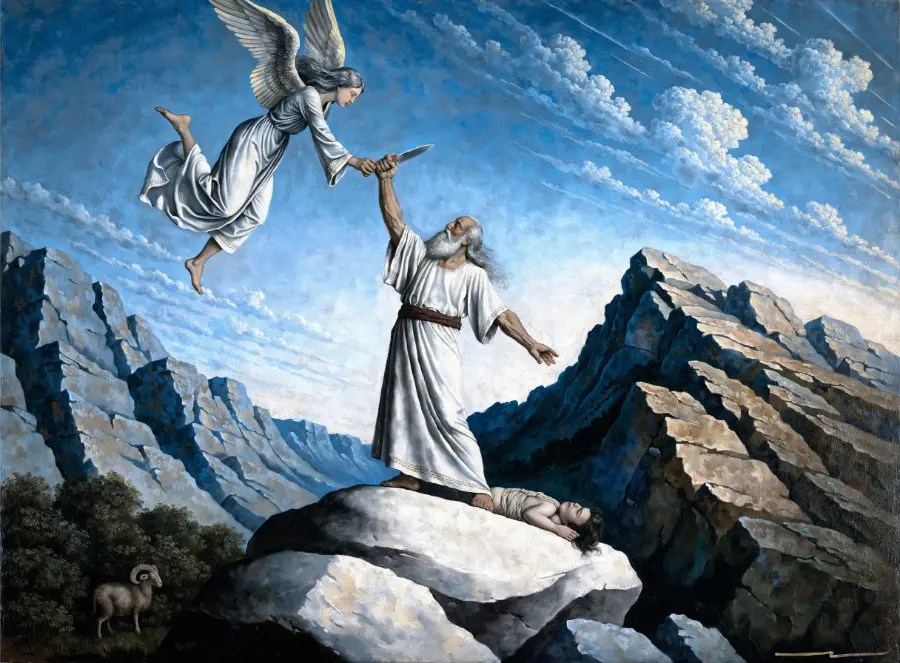
How are the Gnostic gospels different from the four Gospels?
The four Gospels tell a story with an ending: Jesus teaches, is crucified, and rises from the grave in his body. In Matthew the angel at the empty tomb says it plainly: “He is not here: for he is risen, as he said. Come, see the place where the Lord lay” (Matthew 28:6). Thomas, Truth and Judas offer a teacher who reveals secrets, with little or nothing to say of the cross and nothing at all of an empty tomb, and that is true of Thomas whether or not it ends up classed as Gnostic. Here is how they compare.
| Book | What it is | Death and rising |
|---|---|---|
| Matthew, Mark, Luke, John | Jesus’ teaching, death and resurrection | Told in full, with the empty tomb |
| Gospel of Thomas (whether it is Gnostic is argued) | 114 sayings with almost no story | Not told |
| Gospel of Truth | A meditation on knowing the Father | The cross as a teaching; no empty tomb |
| Gospel of Judas | Secret talks between Jesus and Judas | Ends as Judas hands him over |
Luke’s account of the risen Lord dwells on his body: “Behold my hands and my feet, that it is I myself: handle me, and see; for a spirit hath not flesh and bones, as ye see me have” (Luke 24:39). The first letter of John opens on the same note, speaking of what “our hands have handled, of the Word of life” (1 John 1:1). What the apostles proclaimed was someone they had touched, and in John’s Gospel Thomas was given the same chance.
Why are the Gnostic gospels not in the Bible?
Irenaeus, writing around 180, already treated the Gospels as four and no more. Of the church he wrote, “It is fitting that she should have four pillars, breathing out immortality on every side,” and he called the four a single Gospel “under four aspects, but bound together by one Spirit.” A common claim is that the Council of Nicaea settled the contents of the Bible in 325. Its twenty canons in fact say nothing about which books are Scripture. The full story of how the canon of the Bible came together is long, and the four Gospels come early in it. Irenaeus had already given the reason a book like the Gospel of Truth stayed out: it was a “comparatively recent writing,” and it “agrees in nothing with the Gospels of the Apostles.”
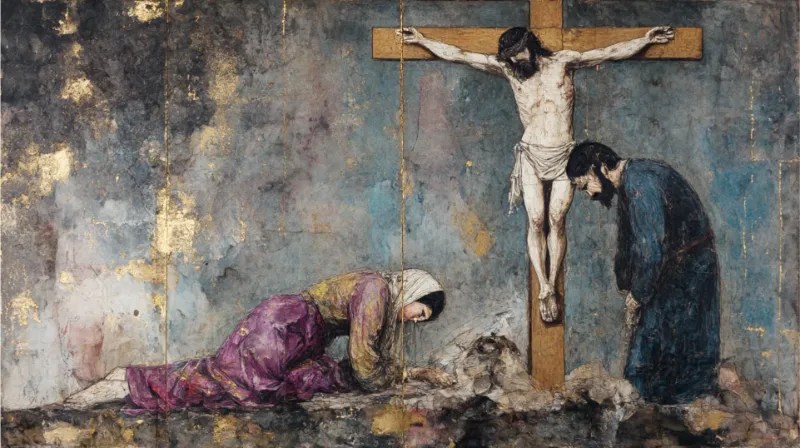
Was there one religion called Gnosticism?
Michael Williams, whose book Rethinking “Gnosticism” appeared in 1996, says there was not. Nicola Denzey of Bowdoin College sums the book up as calling “for the abandonment of the term ‘Gnosticism’ altogether, stating that it is best not to imagine that anything like ‘Gnosticism’ or ‘the Gnostic religion’ ever existed.” Williams wants us to see instead many separate groups and teachers within early Christianity, sidelined only later, on his reading, by an orthodoxy that was then emerging. If we must have a name, he proposes “biblical demiurgical”, meaning the groups who taught that a lower maker formed the world.
Karen King of Harvard Divinity School published What Is Gnosticism? in 2003. She argues that the category was born in the early church’s fight over orthodoxy and heresy and has outlived that fight. She calls Williams’s replacement cumbersome and keeps the old word, on a condition: “It is important not so much to eliminate the term per se, but to recognize and correct the ways in which reinscribing the discourses of orthodoxy and heresy distort our reading and reconstruction of ancient religion.” Put simply, we may still say Gnosticism, so long as we catch the old heresy quarrel when it starts steering how we read. She adds that even the subgroups scholars use, the Sethians and the Valentinians, strain to stay coherent.
David Brakke takes a third path in The Gnostics. He grants that the old category is flawed and has to be reformed, and he keeps the word for one ancient Christian movement, the school of thought known as the Gnostics. Other writers still use it for the wider family of teachers with a lower world-maker, which is just the family Williams wanted renamed. Outside the universities, people interested in creation myths, in Jung, or in “secret teachings” in ancient Judaism and Christianity have been drawn to the word as well.
As for where the teachers came from, their books were written in the first three centuries after Christ. Some draw on Jewish ways of thinking, and some are Gnostic tracts that were later given a Christian form. Scholars of an earlier day traced the roots to the religions of the East, and King argues that the Nag Hammadi books made that kind of search largely moot.
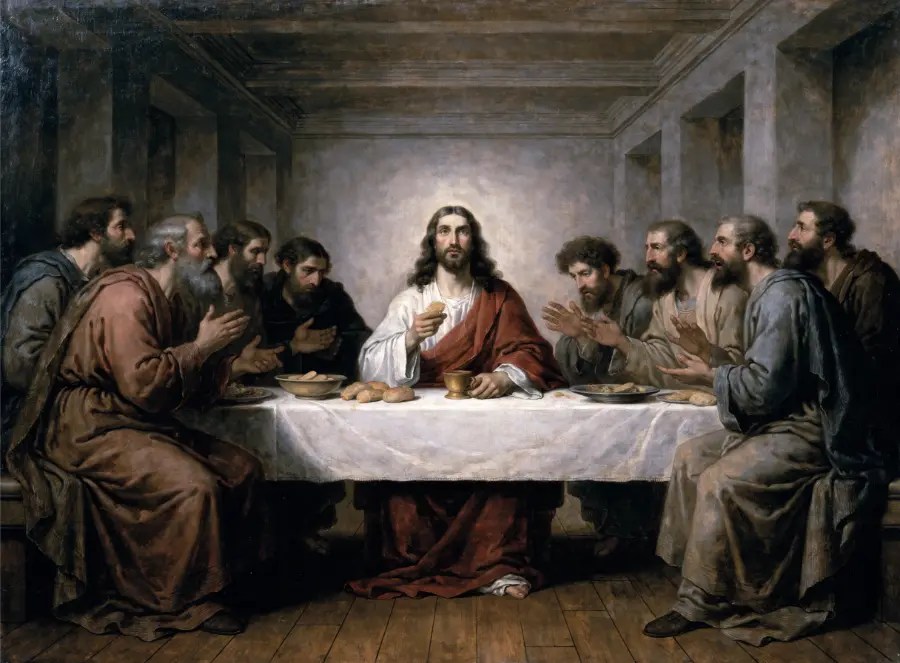
What do the churches teach about Gnosticism?
Against all this Irenaeus set the faith that had come down to the churches, in words that already have the shape of a creed: “The Church, though dispersed throughout the whole world, even to the ends of the earth, has received from the apostles and their disciples this faith: [She believes] in one God, the Father Almighty, Maker of heaven, and earth, and the sea, and all things that are in them; and in one Christ Jesus, the Son of God, who became incarnate for our salvation.” Hold it up against the teachers and each clause answers one of them. God is one, and the Maker of heaven and earth is God himself, not a lesser power who never knew him. Christ Jesus became flesh in truth. And the faith belongs to the church spread “throughout the whole world”, not to an inner circle.
Christians still confess the same things in the Nicene Creed. The 1928 Book of Common Prayer gives it as belief in “one God the Father Almighty, Maker of heaven and earth, And of all things visible and invisible,” and in a Lord who “was incarnate by the Holy Ghost of the Virgin Mary, And was made man.” The Catechism of the Catholic Church, among the answers to the question of origins that have challenged the faith, names Gnosticism as the teaching that “the world (at least the physical world) is evil, the product of a fall, and is thus to be rejected or left behind.” Against that stands the last verse of the Bible’s first chapter: “And God saw every thing that he had made, and, behold, it was very good” (Genesis 1:31).
The teachers had scorned “a mere faith.” That faith, though, was in a God who came close enough to be touched, and at the start of his fifth and final book Irenaeus puts it in one line about Jesus Christ, “who did, through His transcendent love, become what we are, that He might bring us to be even what He is Himself.”
We have the apostles’ word that he is risen, as Thomas once had the other disciples’ word, and none of us has seen the nails. Jesus’ answer to Thomas’s “My Lord and my God” is a blessing on exactly such people: “Thomas, because thou hast seen me, thou hast believed: blessed are they that have not seen, and yet have believed” (John 20:28–29).


Leave a Reply