
 English
 Chinese
 Dutch
 Arabic
 Spanish
 Portuguese
 Russian
 French
 Italian
 German
 Japanese
A man named John wrote the Book of Revelation, and he tells us where he was when he saw it: “I John, who also am your brother, and companion in tribulation, and in the kingdom and patience of Jesus Christ, was in the isle that is called Patmos, for the word of God, and for the testimony of Jesus Christ” (Revelation 1:9). Which John he was, Christians have asked for almost as long as they have read the book. About the middle of the second century Justin Martyr called him “one of the apostles of Christ”, and the Church has long read the book as the work of the apostle John, the son of Zebedee. Some Christians doubted it as early as AD 200, and in the next century Dionysius of Alexandria kept the book as holy while he questioned who wrote it. Today the Council of Trent’s list of the Scriptures, the Orthodox Church and the Belgic Confession of the Reformed churches name the apostle, and many scholars think the writer was another John, whom they call John of Patmos.
In the book he calls himself God’s “servant John” (1:1) and our brother in tribulation, and never an apostle, or the disciple whom Jesus loved. Near the end he falls down to worship at the feet of the angel who showed him the visions, and the angel stops him with the same word: “See thou do it not: for I am thy fellowservant, and of thy brethren the prophets” (22:9). So an angel of God called this John his fellow servant. Whichever John he was, that is how he came to the seven churches, as a brother who was suffering with them and had been given something to tell them.
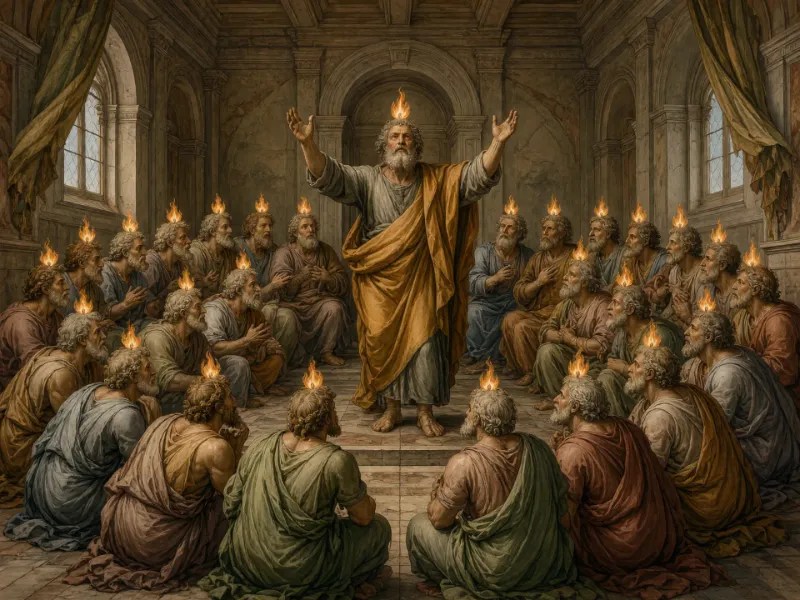
What does Revelation say about the man who wrote it?
He opens by telling us how the book came to him: “The Revelation of Jesus Christ, which God gave unto him, to shew unto his servants things which must shortly come to pass; and he sent and signified it by his angel unto his servant John” (Revelation 1:1). God gave it to Christ, Christ sent it by his angel, and John, at the end of that line, saw it and wrote it down. He calls what he wrote “this prophecy” (1:3), and he sends it as a letter, “John to the seven churches which are in Asia: Grace be unto you, and peace, from him which is, and which was, and which is to come” (1:4). What he saw is opened up in the seven seals of Revelation.
The voice that spoke to him named the seven churches one by one, from Ephesus to Laodicea (1:11). The King James Bible, which heads his book “The Revelation of Saint John the Divine”, has him give his name again as the holy city comes down, “And I John saw the holy city, new Jerusalem, coming down from God out of heaven” (21:2), and at the close he signs it once more: “And I John saw these things, and heard them” (22:8). Beyond his name, his island and his troubles, he tells us nothing about himself. He expected seven congregations to know who John was without another word. Those who hold that he was the apostle hear in that a man so well known in Asia that his first name was enough. Dionysius of Alexandria heard the same silence the other way.
Who did the early Church say wrote Revelation?
Justin Martyr, writing about the middle of the second century, speaks in his Dialogue with Trypho, a conversation with a Jew of that name, of the thousand years and of the man who foretold them: “there was a certain man with us, whose name was John, one of the apostles of Christ, who prophesied, by a revelation that was made to him, that those who believed in our Christ would dwell a thousand years in Jerusalem.”
The churches of Asia remembered John living among them after his exile. Clement of Alexandria tells a story “concerning John the apostle” that begins as he comes home: “after the tyrant’s death, he returned from the isle of Patmos to Ephesus”. Irenaeus says the church in Ephesus, “where John remained until the time of Trajan, is a faithful witness of the apostolic tradition.” And at Sardis, one of the seven churches the book was sent to, Bishop Melito wrote a book On the Apocalypse of John.
Irenaeus, bishop of Lyons in Gaul late in the second century, had learned the faith from Polycarp, who had been among the disciples of John, and the old Catholic Encyclopedia says for that reason that “In all matters of Joannine tradition Irenaeus deserves exceptional credit.” When he writes about the number 666, he appeals to “those men who saw John face to face” (Against Heresies V.30.1). He quotes the vision of Christ among the golden candlesticks as the words of “John also, the Lord’s disciple” (IV.20.11), and he gives the same title to the John who wrote the Gospel: “John, the disciple of the Lord, who also had leaned upon His breast, did himself publish a Gospel during his residence at Ephesus in Asia” (III.1.1). For Irenaeus, then, the seer and the evangelist were one man, the disciple who leaned on Jesus at the Last Supper, whose story is told in why John is called the disciple whom Jesus loved.
Around AD 200, though, some Christians gave the book to the heretic Cerinthus, and Caius, a presbyter at Rome, thought much the same. He wrote, “Cerinthus also, by means of revelations which he pretends were written by a great apostle, brings before us marvelous things which he falsely claims were shown him by angels” (in Eusebius, Church History III.28).
Why did Dionysius of Alexandria doubt the apostle wrote it?
Half a century later the question came up again in Alexandria, by a different road. Dionysius was bishop there from 247 or 248 until 264 or 265. He had studied under Origen, and both Eusebius and Basil called Dionysius “the Great”. His trouble began with a fellow bishop. Nepos, a bishop in Egypt, had taught from Revelation that there would be “a certain millennium of bodily luxury upon this earth”, and some found his book very convincing. Dionysius answered him in two books On the Promises, and he began by saying what he loved in the man: “I confess that in many other respects I approve and love Nepos, for his faith and industry and diligence in the Scriptures.” Then he went on, “But the truth should be loved and honored most of all.”
Because Nepos had built his teaching on Revelation, Dionysius had to say what he made of the book. “Some before us,” he wrote, had thrown it out altogether, claiming that Cerinthus “prefixed the name”. He would not follow them: “But I could not venture to reject the book, as many brethren hold it in high esteem. But I suppose that it is beyond my comprehension, and that there is a certain concealed and more wonderful meaning in every part.” Only then did he come to the writer: “Therefore that he was called John, and that this book is the work of one John, I do not deny. And I agree also that it is the work of a holy and inspired man. But I cannot readily admit that he was the apostle, the son of Zebedee, the brother of James, by whom the Gospel of John and the Catholic Epistle were written.”
His first reason is the one we noticed in the book itself: the Gospel and the First Letter of John never give their writer’s name, and Revelation does. “But that he who wrote these things was called John must be believed, as he says it; but who he was does not appear. For he did not say, as often in the Gospel, that he was the beloved disciple of the Lord, or the one who lay on his breast, or the brother of James, or the eyewitness and hearer of the Lord.” Many Christians, he thought, had taken the apostle’s name out of love for him, “as many of the children of the faithful are called Paul or Peter.” He ruled out John Mark, who had left Paul and Barnabas at Perga and gone back to Jerusalem, and guessed at “some other one of those in Asia; as they say that there are two monuments in Ephesus, each bearing the name of John.”
Then he listened to the words. The Gospel and the Letter keep coming back to “the life,” “the light,” “truth,” “grace,” “joy,” while “the Apocalypse is different from these writings and foreign to them; not touching, nor in the least bordering upon them; almost, so to speak, without even a syllable in common with them.” The Gospel’s Greek is correct and even elegant, he says, but of the seer he writes, “I do not deny that the other writer saw a revelation and received knowledge and prophecy. I perceive, however, that his dialect and language are not accurate Greek, but that he uses barbarous idioms, and, in some places, solecisms.” He took care to add that he had not said these things “in a spirit of ridicule”. The name and the Greek are still at the heart of the case against the apostle, and in 1907 the Catholic Encyclopedia said he had drawn up “a list of differences to which modern authors have had little to add”. The writer of an evangelical introduction to Revelation on bible.org, who holds to the apostle, says of him, “Indeed, his case is so strong that for some time I was persuaded by it!”
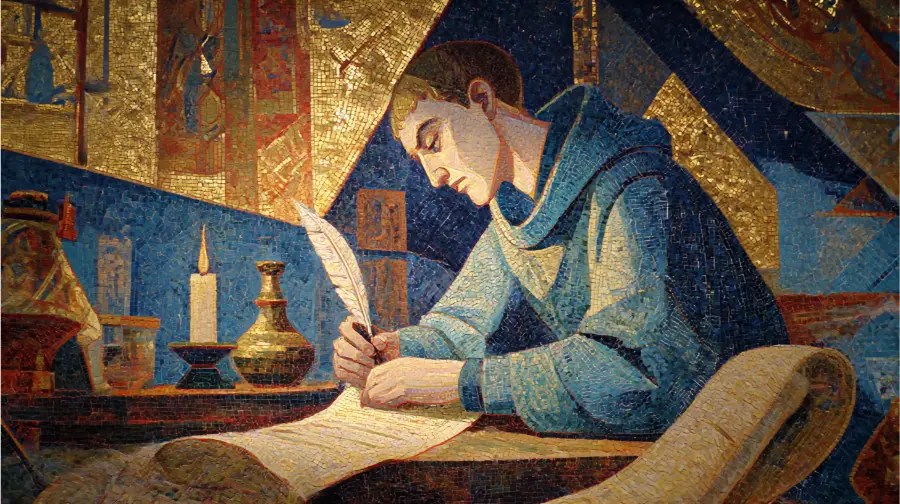
Were there two Johns at Ephesus?
The two tombs bring in Papias, bishop of Hierapolis, whose words Eusebius kept for us. Papias says he used to ask anyone who had followed the elders what the apostles had said, from Andrew and Peter on, “or by John, or by Matthew, or by any other of the disciples of the Lord, and what things Aristion and the presbyter John, the disciples of the Lord, say.” Eusebius saw two Johns in that sentence, the one among the Lord’s disciples and “the presbyter” named after Aristion, and he set them beside the two tombs: “there were two tombs in Ephesus, each of which, even to the present day, is called John’s. It is important to notice this. For it is probable that it was the second, if one is not willing to admit that it was the first that saw the Revelation, which is ascribed by name to John” (Church History III.39).
The writer of the evangelical introduction thinks Dionysius more than likely took his second John from this reading of Papias, and doubts the reading itself: “there is some doubt that Papias actually mentions two men by the name of John”, and even if he did, “this proves nothing as to the authorship of the Apocalypse.”
Eusebius himself, who died in 339, never quite made up his mind. “In regard to the Apocalypse, the opinions of most men are still divided,” he wrote, and in his list of the books he placed it among the accepted, “if it really seem proper”, and a few lines later among the rejected, “if it seem proper”. In the East that hesitation went on for a long time. Cyril of Jerusalem, in one of his Catechetical Lectures, gave a list of the New Testament without Revelation, and the Syriac Bible, the Peshitta, left the book out. Athanasius of Alexandria ended the New Testament in his Easter letter for 367 with “And besides, the Revelation of John.” In the West, as the Catholic Encyclopedia puts it, “the Church persevered in its tradition of apostolic authorship.”
When was Revelation written?
There are two old answers. The older puts the vision near the end of the reign of the emperor Domitian, who ruled from AD 81 to 96. Irenaeus says of it, “For that was seen no very long time since, but almost in our day, towards the end of Domitian’s reign,” and Clement’s tyrant, after whose death John came home from Patmos, Eusebius took to be Domitian. Victorinus, bishop of Pettau, who died a martyr, wrote that on Patmos John was “condemned to the labour of the mines by Cæsar Domitian”, and that he was set free when Domitian was killed and afterward gave out the book. Jerome puts the banishment in the fourteenth year of Domitian’s reign, which falls about AD 95.
The other is told in the Orthodox Church in America’s life of the saint. There John is taken to Rome during the persecution under Nero and sent to Patmos, where his disciple Prochorus writes down what he says, and the life concludes, “Thus in about the year 67 the Book of Revelation was written.” The Catholic bishops of the United States, in the introduction to Revelation in their New American Bible, date the book in its present form “probably near the end of the reign of Domitian (A.D. 81–96), a fierce persecutor of the Christians.” The writer of the evangelical introduction agrees, while granting that “a good case could be made for a Neronic date”.
What do the churches teach today about who wrote Revelation?
The Catholic Church, at the Council of Trent on 8 April 1546, ended its list of the New Testament with “the Apocalypse of John the apostle” (the whole decree is in the Council of Trent’s fourth session). The same bishops, in their own New American Bible, say of the writer, “Although he never claims to be John the apostle, whose name is attached to the fourth gospel, he was so identified by several of the early church Fathers.” They think its “vocabulary, grammar, and style” make it doubtful that whoever wrote the fourth gospel put Revelation into its present form, though the two books share “definite linguistic and theological affinities”, and they hold it possible “that he was a disciple of John the apostle, who is traditionally associated with that part of the world.”
The Orthodox Church in America’s life of him calls him John the Theologian, “the son of Zebedee and Salome”. Among Protestants, the Belgic Confession of 1561, still a doctrinal standard of the Christian Reformed Church and the Reformed Church in America, ends its list of the books of Scripture “and the Revelation of the apostle John.”
Martin Luther’s first preface to the book, in 1522, begins, “About this book of the Revelation of John, I leave everyone free to hold his own opinions,” and goes on, “I miss more than one thing in this book, and it makes me consider it to be neither apostolic nor prophetic.” From 1530 his Bibles carried a much longer preface instead, one that explains the book’s symbols. Lutheran teaching has kept the old line between the books the early Church accepted and the antilegomena, the books some disputed, and Revelation is among the disputed. Charles Gieschen, academic dean of Concordia Theological Seminary in Fort Wayne, Indiana, wrote in 2015 that Chemnitz and other Lutheran theologians once held that doctrine should not be drawn from those books, though they drew on them fairly freely all the same, and that the study of Revelation “is far from embraced by most Lutheran pastors”. He does not think the son of Zebedee wrote it, and still he values the book “as apostolic teaching”.
Here are the voices in order, from Justin to the Belgic Confession, with what each said of the writer.
| Who | When | What he said of the writer |
|---|---|---|
| Justin Martyr | About AD 150 | “John, one of the apostles of Christ” |
| Irenaeus of Lyons | Late 2nd century | “John also, the Lord’s disciple” |
| Caius of Rome | Around AD 200 | A work of Cerinthus, falsely claimed for “a great apostle” |
| Dionysius of Alexandria | Bishop 247–265 | “a holy and inspired man”, but not the apostle |
| Eusebius of Caesarea | Died 339 | Perhaps the second John of Ephesus |
| Martin Luther | 1522 | “neither apostolic nor prophetic” |
| Council of Trent | 1546 | “the Apocalypse of John the apostle” |
| Belgic Confession | 1561 | “the Revelation of the apostle John” |
What do scholars say now?
Many scholars today think the seer and the evangelist were two men, and their reasons are the ones Dionysius gave. James F. McGrath of Butler University, writing for the Society of Biblical Literature, points to the Greek of Revelation, much poorer than the Greek of the Gospel and the letters, and to the way it even spells Jerusalem differently from the Gospel. He thinks it “extremely unlikely that the same person wrote all of these books”, and notes that some scholars call the writer John the seer or John of Patmos.
The writer of the evangelical introduction grants that the evidence inside the book is weaker for the apostle, and that this is what decides it for most scholars today. The answer given there is that the apostle wrote the Gospel some thirty years before Revelation, and that as he grew old the language of the Old Testament became his own, so that Revelation alludes to it as many as 460 times without one direct, formal quotation. The writer concludes that “the balance of evidence is still for apostolic authorship.”
Dionysius never doubted that the book was holy, or that a John wrote it. He asked which John, and he went on reading what he could not fully grasp: “And I do not reject what I cannot comprehend, but rather wonder because I do not understand it.” The blessing John set at the start of his book is for readers like him, and for us as much as for those seven churches: “Blessed is he that readeth, and they that hear the words of this prophecy, and keep those things which are written therein: for the time is at hand” (Revelation 1:3).


Leave a Reply